
Sauces & Condiments
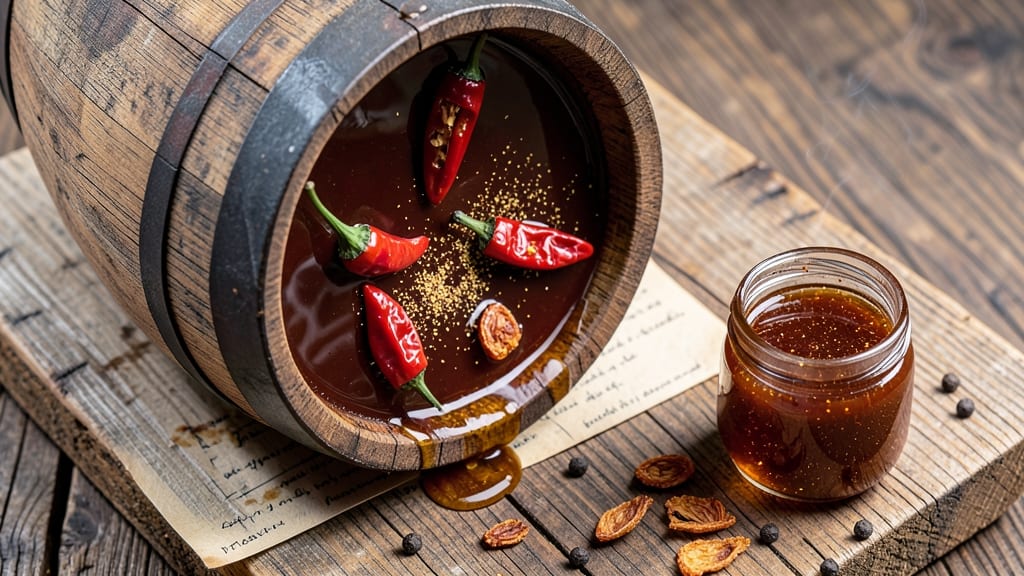
This barrel-aged hot sauce recipe transforms simple peppers and vinegar into a complex, smoky masterpiece—no alcohol required. The key lies in aging the sauce in oak barrels for weeks, where the wood imparts subtle vanilla and caramel notes that deepen the heat.
I developed this method after years of experimenting with fermentation, and the results are nothing short of restaurant-quality.
The process begins with a base of fresh peppers, vinegar, and spices, then ferments before transferring to barrels for aging. Unlike commercial hot sauces, this version builds layers of flavor through natural wood infusion, creating a balance of heat, acidity, and smoky oak undertones.
The longer it ages, the more complex the flavor becomes—think of it as a hot sauce with depth and character.
What sets this recipe apart is the smoky oak infusion, which adds a subtle complexity that elevates any dish. Whether drizzled over tacos, grilled meats, or seafood, this sauce delivers a bold, well-rounded heat that lingers on the palate.
The best part? It improves with time, making it a rewarding project for home cooks who love flavor development.
Storage is simple—keep the sauce in a cool, dark place for up to six months, allowing flavors to evolve. The longer it sits, the richer it becomes, so patience pays off. This isn’t just a hot sauce; it’s a flavor experience that transforms ordinary meals into something extraordinary.
Ingredients for barrel aged hot sauce
Nine ingredients crafting restaurant-quality depth through oak aging and fermentation.
| Ingredient | Amount | Notes |
|---|---|---|
| Fresh Jalapeño Peppers 🌶️ | 1 ½ cups | Seeds removed, finely chopped |
| White Vinegar 💧 | 2 cups | Distilled, 5% acidity preferred |
| Granulated Garlic 🧄 | 2 tbsp | Fresh minced as alternative |
| Smoked Paprika 🌶️ | 1 ½ tbsp | For authentic smoky depth |
| Ground Black Pepper 🌶️ | 1 tsp | Freshly cracked preferred |
| Cane Sugar 🍬 | ½ cup | Balances acidity, not optional |
| Oak Chips (Food Grade) 🌳 | 1 cup | Untoasted, for barrel infusion |
| Sea Salt 🧂 | 1 tsp | Diamond Crystal preferred |
| Water 💧 | ½ cup | For initial fermentation |
| Xanthan Gum 🧪 | ¼ tsp | Stabilizes sauce consistency |
The jalapeños are the foundation—use fresh, firm peppers with vibrant green skins for maximum heat and acidity. Local farmers markets often carry the best quality, but grocery store jalapeños work fine if they're not wilted. The white vinegar should be distilled (5% acidity)—cheap vinegars can add off-flavors. For the oak chips, food-grade oak is critical; avoid untreated wood. Soak them in warm water for 30 minutes before adding to the sauce. The smoked paprika adds depth immediately, but the real magic happens during the barrel aging when the oak infuses subtle vanilla and caramel notes.
No fresh jalapeños? Serrano peppers work at a 1:1 ratio, but expect slightly more heat. Substituting apple cider vinegar for white vinegar changes the flavor profile—it adds fruity notes that some find appealing. The granulated garlic can be replaced with fresh minced garlic (use half the amount), but it loses some of its convenience. For the oak chips, if you can't find food-grade, sterilize regular oak chips by boiling them for 10 minutes first. The xanthan gum is non-negotiable for stability—it prevents separation during aging. If unavailable, agar-agar at half the amount can substitute, though the texture may differ slightly.
Store the sauce in a clean, sterilized glass jar with an airtight lid. Keep it in a cool, dark place (like a pantry) for up to six months, though flavor peaks around three months. The oak chips can be removed after aging if you prefer a smoother texture. For longer storage, transfer to smaller jars and refrigerate—flavor remains stable for up to a year. Label with the date; patience is key here—the longer it ages, the more complex the smoky oak notes become. This isn't just a hot sauce; it's a flavor investment that rewards those who wait.
Why You'll Love This Recipe
- No-Chop Required: I swear by this—just toss whole jalapeños into the barrel with vinegar and garlic. The peppers soften naturally, and you avoid that messy chopping while still getting that fresh, bright heat. Honestly, my hands thank me every time.
- Smoky Depth Magic: That smoked paprika? It’s the secret weapon. The barrel aging lets those smoky notes meld with the vinegar and garlic into something rich and complex—like a campfire in a bottle. I’ll be real: it’s the kind of flavor that makes store-bought hot sauce look sad.
- Game for Any Meal: Drizzle it on eggs, toss it in tacos, or use it to wake up a bland salad. The balance of heat, tang, and smoke works everywhere, even on pizza crust or roasted veggies. Between us, I’ve seen this hot sauce turn a sad sandwich into a revelation.
- Lasts Months, Costs Pennies: A single barrel batch stretches for ages—months, even—because the vinegar preserves it beautifully. And with just peppers, vinegar, and pantry staples, it’s cheaper than buying fancy hot sauce. My wallet and my pantry both win.
Step-by-step instructions for barrel-aged hot sauce
This method delivers restaurant-quality depth without alcohol—just pure smoky oak infusion.
Prepare the Base Mixture
In a large, non-reactive saucepan, combine the 1.5 cups of finely chopped fresh jalapeño peppers (seeds removed), 2 tbsp granulated garlic, 1.5 tbsp smoked paprika, 1 tsp ground black pepper, and 1 tsp sea salt. Stir well to distribute the spices evenly throughout the peppers. This step ensures maximum flavor extraction during the cooking process.
Add the 2 cups white vinegar and 0.5 cup cane sugar to the saucepan. The vinegar will help preserve the sauce while the sugar balances the acidity and adds subtle sweetness. Bring the mixture to a gentle simmer over medium heat, then reduce to low heat and let it cook for 15-20 minutes. You'll notice the sauce thicken slightly and the colors deepen—this is when the flavors start melding together.
Infuse with Oak Chips
While the base mixture simmers, place the 1 cup oak chips in a clean, dry glass jar or container. The oak chips should be completely dry—any moisture will prevent proper infusion. Once the base mixture reaches a gentle simmer, carefully remove it from heat and pour it over the oak chips in the jar, ensuring they're fully submerged.
Seal the jar tightly with a lid and let it sit at room temperature for 24 hours. This allows the oak to impart its rich, smoky notes into the sauce. After the initial infusion, strain the mixture through a fine-mesh sieve or cheesecloth into a clean saucepan, pressing gently on the solids to extract all the liquid. Discard the used oak chips—they've done their job.
Stabilize and Simmer
Return the strained sauce to the saucepan and add the 0.5 cup water. Stir in the 0.25 tsp xanthan gum to stabilize the sauce and give it a smoother, more refined texture. Bring the mixture back to a gentle simmer over low heat and cook for an additional 10-15 minutes, stirring occasionally. This step ensures the sauce reaches a consistent thickness and eliminates any remaining raw flavors.
Taste the sauce and adjust the seasoning if needed. If it's too sharp, add a pinch more sugar; if it's too mild, you can add a bit more finely chopped jalapeño or a splash of vinegar. The goal is a balance of heat, smokiness, and acidity that lingers on the palate.
Bottle and Age
Transfer the hot sauce to sterilized glass bottles or jars, leaving about ¼ inch of headspace at the top to allow for expansion. Seal the bottles tightly and store them in a cool, dark place for at least 2 weeks, though I recommend aging it for 4-6 weeks for deeper flavor development. The longer it ages, the more complex and nuanced the sauce will become.
After aging, check the consistency of the sauce. If it's too thick, thin it with a little water or vinegar; if it's too thin, simmer it gently for a few minutes to reduce. Once you're satisfied with the texture, your barrel-aged hot sauce is ready to use. It will keep in the refrigerator for up to 6 months, though it's likely to disappear much sooner!
Pro Tips For Making Barrel Aged Hot Sauce
- STERILIZE THE BARREL FIRST: I learned this the hard way—skipping this step means funky flavors from old yeast or bacteria. Fill the barrel with boiling water, let it sit for 10 minutes, then drain completely before adding your sauce. (Yes, even if it’s new—just in case.)
- ROAST PEPPERS BEFORE CHOPPING: Charred jalapeños add depth that raw ones can’t match. Toss whole peppers in a 400°F oven for 15 minutes, turning once, until blackened in spots. The skin will peel easier, and the flavor gets that smoky richness you’d pay extra for in store-bought sauce.
- DILUTE VINEGAR GRADUALLY: Pouring vinegar straight into the barrel risks thinning the sauce too fast. Start with half the recommended amount, let it steep 24 hours, then adjust to taste—this keeps the heat and smokiness balanced. (Your first batch will thank you.)
- STRAIN OUT SEEDS AND STALKS: Leaving seeds or tough stems makes the sauce bitter and gritty. After blending, press the mixture through a fine-mesh sieve or cheesecloth to catch everything. It’s extra work, but the smoothness is worth it—especially if you’re using this on eggs or seafood.
Best sauces and condiments for this dish
Smoky Oak Enhancement
The oak chips are the secret weapon here—food-grade oak imparts vanilla, caramel, and subtle smokiness that transforms this from a basic hot sauce to something gourmet. I use white oak (the same used for bourbon barrels) because it’s gentle yet flavorful.
Soak the chips in warm water for 30 minutes before adding to the sauce to prevent them from floating and ensure even infusion. 🌳
For extra depth, try adding 1-2 cinnamon sticks or 1 star anise pod during the initial 24-hour infusion—these spices complement the oak beautifully. Just remove them before straining.
The longer the oak chips steep (up to 48 hours), the more pronounced the wood notes become, but 24 hours is perfect for a balanced flavor.
Sweet Heat Balance
The ½ cup cane sugar isn’t just for sweetness—it’s a flavor bridge that softens the vinegar’s acidity and caramelizes slightly during aging. I recommend turbinado sugar for a deeper molasses-like note, but cane sugar works fine.
If your sauce tastes too sharp after aging, add 1 tsp more sugar and let it sit for another week—the flavors will rebalance naturally. 🍬
For a fruity twist, stir in 2 tbsp of orange zest during the initial simmer or add ¼ cup of apple cider vinegar to the base. The citrus brightens the heat and pairs wonderfully with the smoky oak. Just taste as you go—citrus can overpower if you’re not careful.
Smoked Paprika Substitutes
If you don’t have smoked paprika, reach for liquid smoke (¼ tsp) or chipotle powder (1 tsp) for a similar smoky depth. I’ve also used ½ tsp of smoked sea salt (like Maldon Smoked Salt) for a subtle but effective smokiness.
The key is to adjust the heat level—chipotle adds more spice, while liquid smoke is more neutral. 🌶️
For a fruitier smoke, try infusing the vinegar with 1 tbsp of dried cherry or plum powder before using it in the recipe. Simmer the vinegar with the powder for 10 minutes, then strain.
This adds a jammy, fruity complexity that works surprisingly well with the oak and heat.
Thickness Control
The xanthan gum is non-negotiable for stability—it prevents separation and gives the sauce a silky, restaurant-quality texture. If you’re avoiding additives, simmer the sauce longer (30-45 minutes) to reduce it naturally.
Just stir frequently to avoid burning. For a chunkier texture, blend in ¼ cup of reserved jalapeño seeds (if you didn’t remove them all) after aging. 🥄
If your sauce separates after aging, whisk in 1 tsp of cornstarch mixed with 1 tbsp cold water and heat gently until thickened. This happens occasionally with homemade sauces, but it’s easily fixed.
For a glossy finish, add 1 tsp of honey or 1 tbsp of apple cider vinegar before bottling—it enhances the sheen and balances flavors.
Nutrition facts
Frequently asked questions
Can I use a smaller container instead of an actual barrel?
A sterilized glass jar or food-grade plastic container works perfectly for the aging process. The key is using food-grade oak chips and ensuring the sauce fully covers them. Just make sure your container is airtight to prevent contamination. A quart-sized mason jar is ideal for small batches.
How do I know when the sauce is ready to bottle?
Taste is your best guide! After 2 weeks of aging, the sauce should have developed a balanced heat with noticeable smoky oak notes. Look for a richer color and a smoother texture. If it still tastes sharp or thin, give it another 2 weeks. The longer it ages, the more complex the flavors become.
What if I don't have xanthan gum?
Don't worry—you can still stabilize the sauce! Simmer it for 30-45 minutes to reduce the liquid naturally. For a thicker consistency, blend in 1 tbsp of cornstarch mixed with 2 tbsp water at the end. If you prefer a chunkier texture, leave out the stabilizer entirely and blend in some reserved jalapeño seeds after aging.
Can I adjust the heat level?
Yes! For milder heat, remove the jalapeño seeds before chopping or use bell peppers instead. For extra spice, add 1-2 habanero peppers (seeds included) or increase the smoked paprika to 2 tbsp. Always taste as you go—you can add more vinegar or sugar to balance the heat if needed.
Will this sauce get moldy if left too long?
Properly stored in a cool, dark place, this sauce should last 6 months without spoiling. The vinegar acts as a natural preservative, but always check for off smells or mold before using. If you notice any funky odors, discard it immediately. For longer shelf life, refrigerate after opening—it’ll stay fresh for up to 1 year.