
Sauces & Condiments
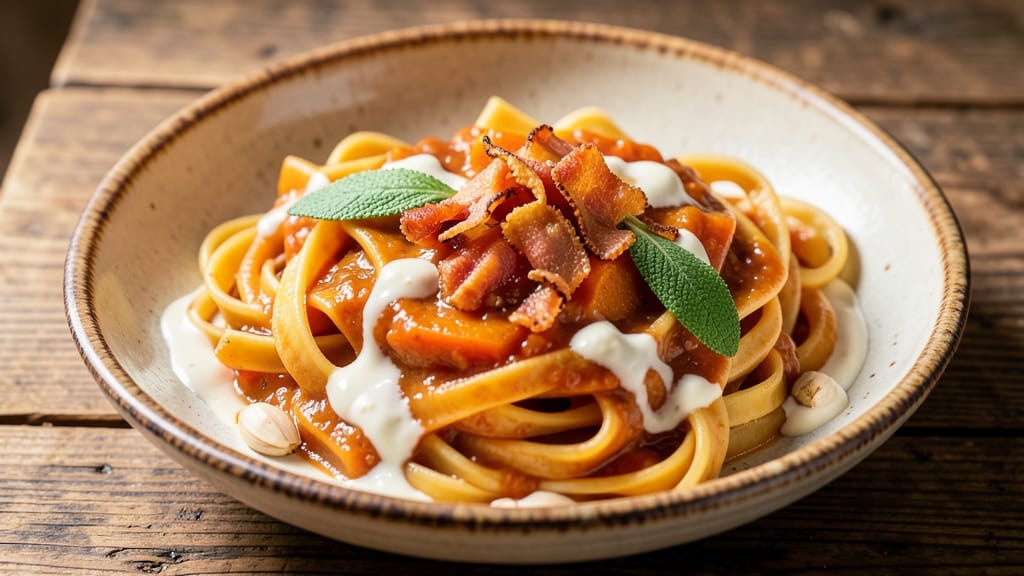
This autumn pasta sauce recipe transforms seasonal squash and earthy sage into a velvety, restaurant-worthy sauce that clings perfectly to every strand of pasta. 🍂 The secret lies in roasting butternut squash until caramelized, then blending it with fresh sage, garlic, and a touch of cream—creating a balance of sweet, savory, and herbal notes that define fall flavors.
Unlike store-bought sauces, this version builds depth through slow simmering, ensuring every bite delivers rich, complex taste without shortcuts.
The recipe starts with roasted squash, which develops natural sweetness and a tender texture that blends seamlessly into the sauce. Pancetta or mushrooms add umami depth, while fresh sage and rosemary infuse aromatic warmth.
The sauce thickens beautifully as it simmers, coating pasta with a luxurious, creamy consistency that’s neither heavy nor greasy—a perfect harmony for autumn’s bold flavors. Pappardelle or penne work best, their ridges catching every drop of the sauce.
What makes this sauce truly special is its versatility—it elevates simple pasta into a gourmet meal while requiring minimal effort. The roasted squash adds seasonal vibrancy, while the sage and cream create a velvety finish that feels indulgent yet balanced.
Whether paired with roasted chicken, crispy sage leaves, or a sprinkle of parmesan, this sauce turns weeknight dinners into memorable autumn feasts.
Best of all, the sauce keeps well for up to 3 days in the fridge, making it ideal for meal prep. Double the batch and freeze half for quick, flavorful dinners later in the season.
Here’s how to create it—step by step—for a sauce that tastes like fall in every bite.
Ingredients for autumn pasta sauce
Nine ingredients transform fall flavors into velvety, restaurant-worthy pasta sauce perfection.
| Ingredient | Amount | Notes |
|---|---|---|
| Butternut Squash 🎃 | 2 lb | Cubed, skin removed |
| Extra-Virgin Olive Oil 🫒 | ½ cup | For roasting and finishing |
| Fresh Sage Leaves 🌿 | ½ cup | Stems removed, loosely packed |
| Garlic Cloves 🧄 | 4 cloves | Peeled, lightly smashed |
| Heavy Cream 🥛 | ½ cup | Full-fat for richness |
| Pancetta 🥓 | 4 oz | Diced, or sub mushrooms |
| Fresh Rosemary 🌿 | 1 tbsp | Chopped, finely |
| Parmesan Cheese 🧀 | ½ cup | Freshly grated, aged |
| Salt 🧂 | 1 tsp | Diamond Crystal preferred |
| Black Pepper 🌶️ | ½ tsp | Freshly cracked |
The butternut squash is the star—look for small, dense squash at the market, not the giant ones. Trader Joe's and Whole Foods usually have the best selection. Roast it until caramelized (about 40 minutes at 400°F)—that sweetness is what makes this sauce sing. Fresh sage is non-negotiable here; dried just won’t cut it. I always grab extra because half gets torn over the pasta at the end. The pancetta adds that umami punch, but if you're vegetarian, swap in mushrooms (about 4 oz cremini, sliced).
No pancetta? Sautéed mushrooms or walnuts work beautifully. Short on heavy cream? Coconut milk or cashew cream keeps it rich without dairy. The Parmesan should be real aged Parmigiano-Reggiano—none of that pre-grated stuff. For the olive oil, California-grown brands like Corto or Otto have that perfect balance of fruity and peppery. And if you're roasting the squash ahead, store it in the fridge for up to 2 days—it reheats perfectly for the sauce.
This sauce keeps for 3 days in the fridge and freezes beautifully for up to 3 months. I always double the batch—half for dinner, half for freezing. When reheating, add a splash of water or pasta water to loosen it up. The sauce gets even better the next day as the flavors meld. Garnish with extra sage leaves or a sprinkle of Parmesan right before serving—that crispy texture makes all the difference.
Why You'll Love This Recipe
- One-Pot Magic: I swear by this—just roast the squash while you sauté the garlic in olive oil, then stir in the sage and cream. No extra pans, no stress, and the sauce practically makes itself while you finish dinner.
- Rich Without Guilt: That butternut squash brings natural sweetness, but the heavy cream and sage turn it into something decadent. It’s creamy, aromatic, and somehow still light enough for a weeknight—honestly, my picky eaters don’t even question the veggies.
- Weeknight to Dinner Party: Same sauce, endless uses. Toss it with pasta for a quick weeknight meal, or drizzle it over grilled chicken for a fancier dinner. I’ve even used it as a risotto base—flexible enough to impress without extra work.
- Leftovers That Beg for More: This sauce tastes better the next day—yes, really. The flavors meld overnight, and reheating it is a cinch. I make a double batch on Sundays because it’s my go-to for lazy lunches and last-minute takeout nights.
Step-by-step instructions for roasted squash and sage cream sauce
This rich autumn sauce delivers perfect balance—sweet roasted squash, crispy pancetta, and aromatic sage cream.
🔥 Step 1: Roast the Butternut Squash Until Caramelized
Preheat your oven to 400°F and line a baking sheet with parchment paper. Toss the 2 lb butternut squash cubes with 2 tablespoons of the extra-virgin olive oil, ½ teaspoon salt, and ¼ teaspoon black pepper. Spread them in a single layer—they need space to roast evenly.
Roast for 25-30 minutes until the edges are deep golden brown and the squash yields slightly when pressed with a fork. I like to flip them halfway through for even browning. The squash should smell sweetly caramelized—this is your cue it's ready. Remove from oven and set aside.
🍳 Step 2: Cook the Pancetta and Aromatics
In a large skillet, cook the 4 oz diced pancetta over medium heat until crispy and golden, about 8-10 minutes. Use a slotted spoon to remove the pancetta and set it aside, leaving the rendered fat in the pan.
In the same pan, add 2 tablespoons of the remaining extra-virgin olive oil and swirl to coat. Add the 4 smashed garlic cloves and 1 tablespoon finely chopped fresh rosemary, cooking for 30 seconds until fragrant. Don't let the garlic burn—it should smell sweet and nutty, not bitter.
🥘 Step 3: Build the Creamy Sage Sauce
Reduce heat to medium-low and stir in the ½ cup heavy cream and ½ cup fresh sage leaves. Let it simmer gently for 3-4 minutes until slightly thickened. The sauce should coat the back of a spoon—this is where the magic happens.
Add the roasted squash and crispy pancetta back to the pan. Stir gently to combine, letting the squash absorb the creamy sage flavors. The sauce should be velvety with pockets of crispy pancetta and tender squash. If it's too thick, add 1-2 tablespoons of pasta water to loosen it.
🍽️ Step 4: Finish and Serve Over Pasta
Remove from heat and stir in the ½ cup freshly grated Parmesan cheese and remaining ½ teaspoon black pepper. Taste and adjust seasoning—you might need a pinch more salt to balance the sweetness of the squash.
Serve immediately over cooked pasta, tossing gently to coat each strand. The sauce should cling beautifully, with visible chunks of roasted squash and crispy pancetta in every bite. Garnish with additional fresh sage leaves if you're feeling fancy!
Pro Tips For Making Autumn Pasta Sauce
- Roast Squash Until Caramelized: I learned this the hard way—squash straight from the oven into the sauce tastes bland. Roast the butternut squash at 400°F (200°C) for 40-45 minutes, cut-side down, until the edges are blackened and sticky. That caramelization is where the deep, nutty flavor lives.
- Toast Sage Leaves Whole: Crushing fresh sage before adding it releases bitter oils too fast. Toss whole leaves into the olive oil over medium-low heat for 30 seconds until they just start to crisp at the edges—then remove them. Strain out the leaves (or fish them out with tongs) and use the fragrant oil in the sauce. The aroma stays bright, not overpowering.
- Sweat Garlic Slowly: Low and slow is the only way with garlic here. Cook the minced cloves in olive oil over the lowest heat possible—you should barely see bubbles—until they’re golden, not brown. Rushed garlic burns and turns acrid, which fights the butternut squash’s sweetness. (Yes, even if you’re impatient like me.)
- Whisk in Cream Gradually: Heavy cream can curdle if dumped into a hot sauce all at once. Warm the cream separately to room temperature, then whisk it into the sauce in two additions while stirring constantly over low heat. If the sauce thickens too much, add a splash of pasta water—this keeps the texture silky, not grainy.
Dietary considerations for these flavors
Gluten-Free Adaptations
This sauce is naturally gluten-free, but always double-check your pancetta or broth for hidden gluten. I use Applegate Naturals pancetta, which is certified gluten-free. For extra insurance, swap pancetta with gluten-free mushrooms or walnuts—both add umami without gluten.
Just ensure your Parmesan is also gluten-free, like Barilla Gluten-Free or Ronny's brands. 🌾
Dairy-Free Options
Skip the heavy cream and Parmesan by using full-fat coconut milk and nutritional yeast for a cheesy flavor. I recommend 365 Organic Coconut Milk for richness. For the Parmesan, Follow Your Heart Dairy-Free Parmesan works well.
The sauce will still be creamy, just with a slightly different texture. Taste as you go—you may need extra salt to balance the coconut flavor.
Vegetarian Swaps
Replace pancetta with 4 oz cremini mushrooms or ½ cup walnuts for a meaty texture. Sauté the mushrooms in olive oil until golden, then proceed with the recipe. Walnuts add a nutty depth—just toast them first in the pancetta pan.
Both options keep the sauce hearty and satisfying. I often use mushrooms because they absorb the flavors beautifully. 🌱
Lower-Carb Modifications
Cut carbs by using zucchini noodles or shirataki noodles instead of pasta. The sauce clings perfectly to both! For extra richness, stir in 1 tablespoon butter at the end.
Shirataki noodles need rinsing first to remove excess sodium. If you prefer traditional pasta, opt for lentil-based pasta like Banza—it’s low-carb and holds up well to creamy sauces.
Allergen-Friendly Tips
For nut allergies, avoid walnuts and use mushrooms or extra pancetta. If you’re sensitive to garlic, reduce to 2 cloves or use garlic-infused olive oil for flavor without the raw garlic.
Always label your ingredients clearly—cross-contamination is a real risk. I keep separate cutting boards and utensils for allergens to stay safe. 🛡️
Nutrition facts
Frequently asked questions
Can I use sweet potatoes instead of butternut squash?
Sweet potatoes work beautifully—they add a deeper caramelized sweetness when roasted. Use the same quantity (2 lb) and roast until tender. For extra richness, add a splash of maple syrup to the sauce at the end. The texture will be slightly denser but equally delicious.
How do I prevent the sauce from separating?
Simmer the sauce gently on medium-low heat and avoid boiling. If it starts to split, whisk in 1 tablespoon cold butter or 1 tablespoon heavy cream—this helps emulsify the sauce. Stirring constantly while adding the Parmesan also keeps it smooth.
What pasta works best with this creamy sauce?
Look for wide, ridged pasta like pappardelle, fettuccine, or penne—they trap the sauce perfectly. For extra texture, try gluten-free brown rice pasta or whole wheat pappardelle. Avoid smooth, thin noodles like angel hair—they won’t hold the sauce.
Can I make this sauce ahead of time?
Yes! The sauce tastes even better the next day. Store it in an airtight container in the fridge for up to 3 days. When reheating, warm it gently on the stove with a splash of pasta water to restore creaminess. Freeze for up to 3 months—thaw overnight in the fridge.
What if I don’t have fresh sage?
Use ½ teaspoon dried sage (not the crumbled kind—it’s too potent). For extra depth, add ½ teaspoon smoked paprika or 1 teaspoon dried thyme. Fresh rosemary can also compensate—just double the amount to 2 tablespoons chopped.