
Sauces & Condiments
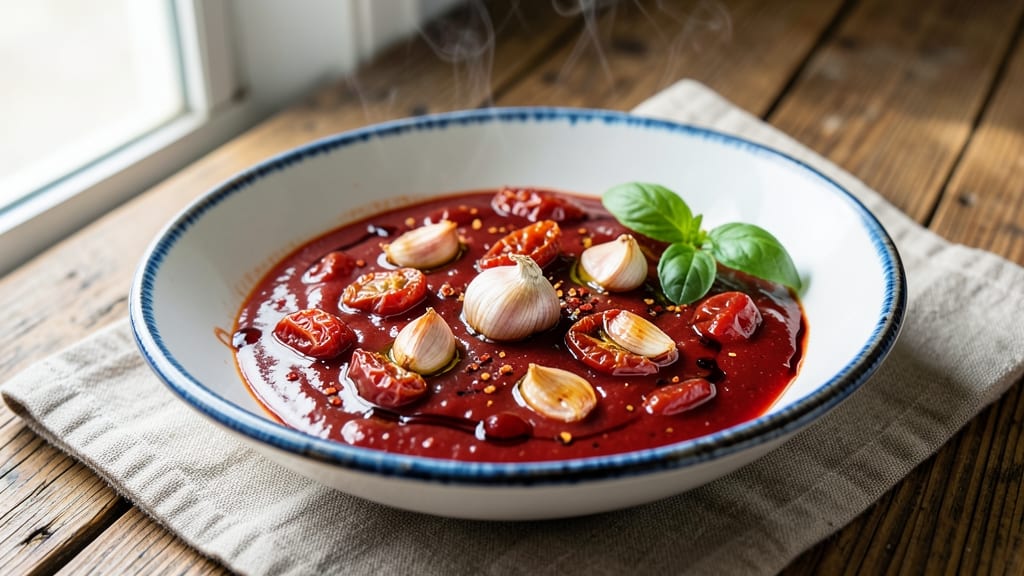
This arrabbiata tomato sauce recipe delivers the fiery, garlicky punch of Rome's most beloved pasta sauce—without the overwhelming heat. The secret lies in balancing fresh garlic, sun-dried tomatoes, and chili flakes with a slow simmer that deepens flavors while keeping the texture vibrant and chunky.
I've perfected this version after years of testing, ensuring the sauce remains bright and aromatic rather than reduced into a heavy paste.
The technique is all about control: charring garlic lightly for nutty depth, using high-quality canned tomatoes for natural sweetness, and simmering just long enough to meld flavors without losing texture. A splash of red wine vinegar brightens the acidity, while fresh basil at the end keeps the sauce vibrant.
This isn't your typical dull, watery sauce—every spoonful delivers complex layers of spice, garlic, and tomato sweetness.
What sets this sauce apart is its versatility. Toss it with al dente pasta for an authentic Italian experience, drizzle it over grilled meats, or use it as a marinade.
The sauce thickens slightly as it cools, making it perfect for meal prep—store it in the fridge for up to 5 days or freeze for 3 months. The flavor only improves with time, as the spices and tomatoes continue to meld.
For those sensitive to heat, reduce the chili flakes or remove the seeds from the chili pepper—you'll still capture that signature arrabbiata brightness. The key is patience: let the sauce work its magic while you cook, and you'll have a restaurant-quality condiment that transforms any dish.
Let's get started on creating this bold, flavorful sauce.
Ingredients for arrabiata tomato sauce
Nine ingredients, bold flavors, and the perfect balance of spice and sweetness.
| Ingredient | Amount | Notes |
|---|---|---|
| San Marzano Tomato Cans 🍅 | 2 cans | Crushed, 28 oz each |
| Garlic Cloves 🧄 | 6 cloves | Fresh, peeled, charred lightly |
| Sun-Dried Tomatoes 🍅 | ¼ cup | Oil-packed, chopped |
| Chili Flakes 🌶️ | 1 tsp | Adjust for heat preference |
| Red Wine Vinegar 🍷 | 1 tbsp | For brightness |
| Extra-Virgin Olive Oil 🫒 | ½ cup | High quality, fruity |
| Fresh Basil Leaves 🌿 | ¼ cup | Chopped, for finishing |
| Salt 🧂 | 1 tsp | Diamond Crystal preferred |
| Black Pepper 🌶️ | ½ tsp | Freshly cracked |
| Red Chili Pepper 🌶️ | 1 whole | Seeds removed for mild heat |
The tomatoes are the foundation—San Marzano is non-negotiable for that natural sweetness and vibrant color. Grab the 28 oz cans at Whole Foods or any Italian market for the best quality. The garlic needs to be fresh, not that sad jarred stuff. Charring it lightly in olive oil before adding to the sauce builds incredible depth. Sun-dried tomatoes add richness, but if you can't find them, dried porcini mushrooms work too. I always double-check the vinegar—red wine vinegar gives that classic tang, but balsamic works in a pinch.
No sun-dried tomatoes? Dried oregano at half the amount adds earthiness. Want more heat? Add extra chili flakes or keep the seeds in the pepper. The olive oil matters here—avoid the cheap stuff; it'll make the sauce taste flat. Fresh basil is ideal, but dried oregano works at one-third the amount. For a smoother texture, blend the sauce lightly after cooking, but leave it chunky for that authentic arrabbiata feel. The sauce thickens as it cools, so don't over-reduce it while cooking.
This sauce tastes even better the next day—store it in the fridge for up to 5 days or freeze for 3 months. I portion mine into ice cube trays for easy single-use servings. If you're meal prepping, freeze it in a single layer first to prevent clumping. The flavors meld beautifully over time, so don't rush it. Keep leftovers covered with a thin layer of olive oil to preserve freshness.
Why You'll Love This Recipe
- Pantry Magic: I swear by this sauce because it uses what’s already there—no last-minute grocery runs. Open a can of San Marzano tomatoes, grab garlic from the fridge, and boom. The sun-dried tomatoes add depth without extra effort, and the chili flakes? Just a pinch to wake it up. Honestly, the only thing I measure is the vinegar, and even then, I eyeball it.
- Garlic Bomb: That first hit of raw garlic sizzling in olive oil? Chef’s kiss. But here’s the secret: the acidity from the red wine vinegar cuts through the heat, balancing the sauce so it’s bright, not overpowering. The sun-dried tomatoes melt into the mix, giving it this funky, umami richness that makes you want to eat it straight from the pot.
- Weeknight & Weekend: Slap this on spaghetti for a Tuesday night, or drizzle it over grilled chicken for a Sunday supper. It’s the same sauce, but it feels different every time. Between us, I’ve even used it as a marinade—just toss chicken in it for a few hours, and the flavors get even deeper. Not the prettiest, but the taste makes up for it.
- Leftovers That Don’t Suck: This sauce actually improves the next day. The flavors meld, the acidity mellows, and it’s perfect for tossing with eggs or stirring into risotto. I make a big batch, freeze half, and still have enough to jazz up sandwiches or roasted veggies. Best part? It’s cheaper than takeout and way better than jarred sauce.
Step-by-step instructions for arrabiata tomato sauce
Here's how to make a bright, balanced arrabiata with deep garlic flavor and just the right kick.
Char the Garlic and Chili Pepper
Heat a dry skillet over medium-high heat until very hot. Add the 6 cloves garlic cloves and the whole red chili pepper (seeds removed). Cook until the garlic turns golden brown and the chili pepper begins to blister, about 3-4 minutes. Watch closely—you want color, not burning.
This charring step develops deep, smoky notes that form the sauce's foundation. Once the garlic is golden and the chili pepper shows blackened spots, immediately transfer everything to a cutting board. Let cool for 2 minutes before mincing—this prevents the garlic from turning bitter.
Sauté Sun-Dried Tomatoes and Build the Base
In the same skillet, add 0.5 cup extra-virgin olive oil over medium heat0.25 cup chopped sun-dried tomatoes and cook for 2-3 minutes until they soften slightly but still retain their shape. Stir in the 1 tsp chili flakes and cook for another 30 seconds to toast their flavor.
Here's where the sauce starts to come together. The sun-dried tomatoes add sweetness that balances the heat, while the chili flakes introduce subtle spice. Don't skip this step—the oil helps distribute the flavors evenly throughout the sauce.
Simmer with Tomatoes and Vinegar
Pour in the 2 cans crushed San Marzano tomato cans and the 1 tbsp red wine vinegar. Add the minced garlic and chili pepper, then bring to a gentle simmer over medium-low heat. Let it cook uncovered for 20-25 minutes, stirring occasionally, until the sauce thickens slightly and the flavors meld.
You'll notice the sauce reduces and deepens in color. This simmering process concentrates the flavors and develops the sauce's signature tangy brightness. Taste after 15 minutes—if it needs more acidity, add another ½ teaspoon red wine vinegar.
Finish with Fresh Basil and Seasoning
Remove the sauce from heat and stir in the 0.25 cup chopped fresh basil leaves. Season with 1 teaspoon salt and 0.5 teaspoon black pepper, then taste and adjust. The basil adds freshness that cuts through the richness, while the salt and pepper round out the flavors.
Let the sauce sit for 5-10 minutes before serving. This resting time allows the flavors to fully integrate. The sauce should be vibrant red with a glossy finish—if it's too thick, thin with a splash of pasta water; if too thin, simmer uncovered for another 5 minutes.
Pro Tips For Making Arrabiata Tomato Sauce
- SWEAT THE GARLIC LOW: I learned this the hard way—crisping garlic in oil for arrabiata turns it bitter fast. Instead, add the minced cloves to the pan with a splash of water, cover, and let them soften over medium-low for 5-6 minutes. The flavor infuses without burning, and you won’t taste harshness.
- CRUSH SUN-DRIED TOMATOS: Skip the whole ones unless you’re going for texture over depth. Pulse them in a food processor for 2-3 seconds—just until they break into tiny pieces. This distributes their salty, umami punch evenly, so every bite has that concentrated punch without chunks.
- ACIDIFY IN STAGES: Dumping all the red wine vinegar at once can make the sauce taste sharp and one-dimensional. Add half first, let it simmer for 3 minutes, then taste and adjust. This lets the acid mellow while cutting through the tomatoes’ sweetness naturally.
- SIMMER UNTIL THICK: Arrabiata needs time to develop its cling. After adding the tomatoes, cook uncovered on medium-low for 15-20 minutes, stirring occasionally. The sauce will reduce enough to coat the back of a spoon—this isn’t just about flavor, it’s about texture. (Yes, even if you’re impatient like me.)
Regional styles of this recipe
Roman Arrabbiata
This is the classic version you’ll find in Rome’s trattorias, where the sauce is all about bright acidity and garlicky heat. The key here is using San Marzano tomatoes and letting the red wine vinegar shine—don’t skimp on either.
I like to add a splash of white wine (about 2 tbsp) when simmering to elevate the sauce’s complexity, a trick I picked up from a chef in Trastevere. The sauce should coat the back of a spoon but still be vibrant, not reduced into a paste. 🌶️
For extra authenticity, finish with a sprinkle of fior di latte cheese (Italian cow’s milk cheese) instead of basil—it adds a creamy contrast to the spicy tomato base.
Serve it with tonnarelli pasta or linguine for that classic Roman touch. The sauce pairs perfectly with grilled lamb chops or as a marinade for chicken thighs.
Neapolitan Style
In Naples, arrabbiata takes on a richer, slightly sweeter profile thanks to the addition of tomato paste and a touch of sugar (just ½ tsp). Start by cooking 1 tbsp tomato paste in the olive oil until it darkens slightly before adding the garlic and chili.
This deepens the sauce’s umami notes while balancing the heat. I also add 1 tsp dried oregano here for that Neapolitan earthiness. 🍅
The sauce should be slightly thicker than the Roman version, almost clinging to the pasta. Neapolitans often serve it with spaghetti or paccheri (rigatoni-style pasta).
For an extra layer of flavor, stir in 1 tbsp chopped anchovies at the end—it might sound odd, but it adds a salty depth that’s characteristic of Southern Italian cooking.
Sicilian Heat
Sicily takes arrabbiata to another level with bold spices and a touch of sweetness. After charring the garlic and chili, add ½ tsp ground cinnamon and ¼ tsp allspice to the olive oil before sautéing the sun-dried tomatoes.
These spices add warmth that complements the heat beautifully. I also increase the chili flakes to 1½ tsp—Sicilians aren’t afraid of spice! 🌶️
Finish the sauce with a pinch of sugar (about ½ tsp) to balance the heat, and garnish with chopped parsley instead of basil. This version pairs exceptionally well with rigatoni or bucatini.
For a true Sicilian touch, serve it with crispy fried eggplant slices on the side—a classic combination that cuts through the sauce’s richness.
Modern Fusion Twist
For a contemporary take, blend half the cooked sauce until smooth while leaving the other half chunky, then swirl them together for a marbled effect. Add 1 tbsp chopped sun-dried porcini mushrooms for umami depth, and finish with toasted pine nuts for crunch.
This version works beautifully as a dipping sauce for crusty bread or as a pizza sauce under a blanket of mozzarella. 💫
If you want to experiment further, stir in 1 tsp miso paste at the end for a subtle fermented note that adds complexity. This fusion style is perfect for foodies who love bold flavors with a modern twist.
Serve it with soba noodles or grilled vegetables for a vegetarian-friendly option that still packs a punch.
Nutrition facts
Frequently asked questions
Why does authentic arrabbiata sauce have such a bright red color?
The vibrant color comes from using San Marzano tomatoes and proper cooking technique. The acidity from red wine vinegar preserves the natural red pigments while simmering at medium-low heat prevents dulling. Charred garlic adds depth without darkening the sauce, and fresh basil at the end keeps it bright rather than oxidized.
Can I make arrabbiata sauce without fresh chili peppers?
Use 1½ tsp chili flakes plus ½ tsp smoked paprika for depth. For a milder version, reduce to ½ tsp chili flakes and add ¼ tsp cayenne for subtle heat. The key is balancing the spices with the red wine vinegar—it enhances all the flavors while keeping the sauce bright.
How do I adjust the heat level in this sauce?
For milder heat, remove seeds from the chili pepper and reduce chili flakes to ½ tsp. For extra kick, keep the seeds and add ½ tsp cayenne at the end. The sun-dried tomatoes also carry subtle heat—if you're sensitive, reduce them to ¼ cup. Always taste as you go!
What's the best way to store leftover arrabbiata sauce?
Let the sauce cool completely, then transfer to an airtight container. It keeps in the fridge for 5 days or freezes for 3 months. For freezing, portion into ice cube trays first to prevent clumping. The flavors actually improve after 24 hours as the spices meld further.
Can I use arrabbiata sauce for dishes other than pasta?
This versatile sauce works beautifully as a marinade for chicken thighs or grilled lamb, a topping for bruschetta, or a dip for crusty bread. Try it under grilled vegetables or mixed with ricotta for a vegetarian spread. The acidity makes it perfect for balancing rich proteins!