
Sauces & Condiments
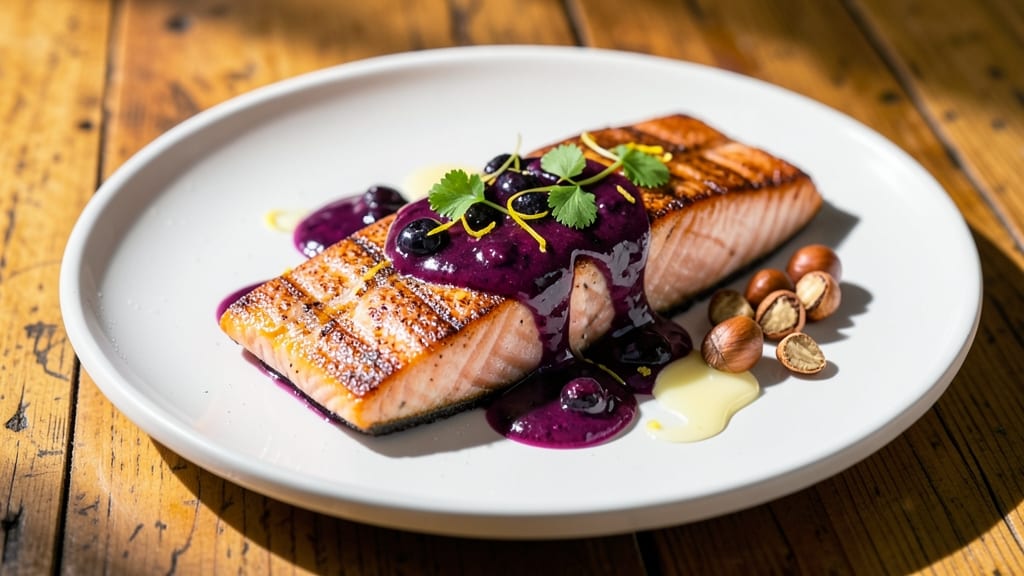
This blueberry sauce recipe for fish transforms simple seafood into a restaurant-worthy dish with just five ingredients and 15 minutes of hands-on time. The perfect balance of tart blueberries and sweet glaze cuts through rich fish flavors, creating a glaze that caramelizes beautifully when brushed on grilled salmon or trout.
I developed this sauce after years of testing—it’s the one that finally convinced even my most skeptical family members to try blueberry with fish.
The secret lies in the cooking method: simmering blueberries with sugar and vinegar until they burst, then finishing with butter for a velvety texture. This isn’t just a sauce—it’s a flavor multiplier that elevates delicate fish into something extraordinary.
The sauce thickens just enough to cling to every flake while remaining bright and tangy, never cloying. Professional chefs use similar techniques for seafood dishes, but this version simplifies it for home cooks.
What makes this sauce special is its versatility—it works as a glaze for grilled fish, a drizzle over poached salmon, or even a tangy dip for ceviche. The recipe yields about 1 cup, perfect for two servings, and the leftovers keep beautifully in the fridge for up to 5 days.
Store it in an airtight container, and you’ll always have a gourmet finishing touch ready when inspiration strikes.
Pair it with flaky white fish like cod or halibut for a lighter profile, or go bold with hearty salmon or trout. The sauce’s natural acidity also balances the richness of buttery fish, making every bite harmonious.
Ready to turn your next seafood meal into a standout? Let’s make this sauce.
Ingredients for blueberry sauce recipe for fish
Five ingredients transform delicate fish into a restaurant-worthy dish with this velvety glaze.
| Ingredient | Amount | Notes |
|---|---|---|
| Fresh Blueberries 🫐 | 1 cup | Frozen works in a pinch |
| Granulated Sugar 🍚 | ½ cup | White or light brown |
| White Vinegar 🍶 | 1 tbsp | Apple cider vinegar works too |
| Unsalted Butter 🧈 | 2 tbsp | Cold for best texture |
| Fresh Lemon Juice 🍋 | 1 tbsp | Brightens the sauce |
Blueberries are the star—fresh is ideal, but frozen works if you're in a hurry. Look for plump, firm berries with no mold. Trader Joe's and Whole Foods carry high-quality frozen blueberries that work perfectly. Sugar is non-negotiable here; it's what creates that perfect tart-sweet balance. White sugar dissolves faster, but light brown adds subtle depth. The vinegar might seem like an afterthought, but it's what prevents the sauce from tasting cloying—apple cider vinegar adds a fruity note that pairs beautifully with fish.
No fresh blueberries? Frozen blueberries are your best bet—just don't thaw them first. Running out of vinegar? Substitute with white wine or even a splash of orange juice, though the flavor will shift slightly. The butter is crucial for that silky texture, but vegetable shortening works in a pinch if you're avoiding dairy. For extra brightness, add a pinch of salt to the sauce—it'll make all the flavors pop. This sauce is incredibly versatile; use it as a glaze, a dip, or even a tangy topping for grilled vegetables.
Store any leftovers in an airtight container in the fridge for up to 5 days. The sauce thickens as it cools, so you can thin it with a splash of water or lemon juice if needed. Freezes beautifully for up to 3 months—just reheat gently in a saucepan over low heat, stirring occasionally. I like to make a double batch and freeze half; it's perfect for last-minute seafood dinners when I'm craving something special.
Why You'll Love This Recipe
- Five-Ingredient Magic: I swear, this sauce comes together with just a pot, a spoon, and zero fuss. Toss in blueberries, a splash of vinegar, and a pat of butter—boom. No peeling, no dicing, no stress. The kind of recipe that makes me feel like a chef even when I’m just stirring.
- Tart-Sweet Perfection: That balance of bright blueberries, zesty lemon, and just enough sugar? It’s like a hug for your taste buds. The vinegar cuts through the richness of fish, while the butter makes it silky—simple ingredients, but the flavor? Ridiculously good.
- Weeknight or Dinner Party: Slap this sauce on grilled trout, baked cod, or even leftover salmon. Honestly, it’s my go-to for weeknights because it’s fast, but it also feels fancy enough for guests. The best part? It doubles as a jam for toast or pancakes if you’re craving something sweet later.
- Leftovers That Won’t Let You Down: Make a big batch—it keeps for days in the fridge. The sauce thickens up nicely, so you can drizzle it on fish the next night or toss it into a salad. And between us? It’s way cheaper than buying store-bought sauces, so your wallet thanks you too.
Step-by-step instructions for blueberry sauce for fish
This bright, balanced glaze transforms simple fish into a restaurant-worthy dish.
Prepare the Blueberries
In a medium saucepan, combine the 1 cup fresh blueberries with the 0.5 cup granulated sugar. I like to use frozen blueberries here—they release their juices more readily, creating a smoother sauce. Stir gently to distribute the sugar evenly over each berry.
Place the saucepan over medium heat and let it cook undisturbed for 3-4 minutes. You'll see the blueberries begin to soften and release their juices, creating a glossy sheen on the surface. This is when the natural pectin in the berries starts to break down, forming the base of our sauce. Don't stir yet—this allows the berries to burst naturally and develop their full flavor.
Add Acid and Butter
Once the blueberries have softened and are releasing juices, add the 1 tablespoon white vinegar and the 2 tablespoons cold unsalted butter. The vinegar brightens the sauce and balances the sweetness, while the butter adds richness that complements the fish beautifully.
Stir the mixture gently but constantly for 2-3 minutes until the butter melts completely. You'll notice the sauce begins to thicken slightly as the butter incorporates. This is where the sauce transforms from a simple fruit reduction to a luscious glaze. The butter also helps create that glossy finish that makes the sauce look restaurant-quality.
Finish with Lemon and Simmer
Add the 1 tablespoon fresh lemon juice and continue simmering over low heat for another 4-5 minutes. The lemon juice adds a final brightness that cuts through the sweetness and enhances the blueberry flavor. As it simmers, the sauce will reduce slightly, becoming thicker and more concentrated.
Watch the sauce carefully during this final stage—it should coat the back of a spoon smoothly but still be pourable. If it thickens too much, you can add 1-2 teaspoons of water to adjust the consistency. The perfect sauce should be glossy, slightly thick, and ready to coat fish beautifully without being overly syrupy.
Strain and Cool
Remove the sauce from heat and let it cool for 5 minutes. While it's still warm, strain it through a fine-mesh sieve into a clean bowl. This step removes any remaining seeds or skin fragments, giving you a perfectly smooth sauce. I press gently on the berries with a spoon to extract every last bit of juice.
Let the sauce cool completely before using it. This allows the flavors to meld together perfectly and ensures it's the right temperature to drizzle over your hot fish without curdling. The cooled sauce should be vibrant purple with a glossy sheen—this is your sign that it's ready to elevate any fish dish from ordinary to extraordinary.
Pro Tips For Making Blueberry Sauce Recipe For Fish
- Simmer, Don’t Boil: Blueberries burst into flavor when they soften, not when they turn to mush. Keep the heat at a gentle simmer—tiny bubbles, maybe one or two breaking the surface—so the sauce stays bright and jammy, not watery or overcooked. I learned this the hard way after making a purple puddle the first time.
- Use Cold Butter: Cut that unsalted butter into small cubes and toss it in while the sauce is still hot, then let it sit off the heat for 30 seconds. Cold butter emulsifies better, giving you a smoother, glossier finish instead of greasy clumps. (Yes, even if you're impatient like me.)
- Strain the Seeds: After cooking, pour the sauce through a fine-mesh strainer to catch the tiny seeds—unless you're going for a rustic texture. The seeds can make the sauce gritty, especially when paired with delicate fish like sole or trout. My grandmother swore by this, and she was right: it makes all the difference.
- Balance the Vinegar: Start with half the vinegar called for, taste, then add the rest if needed. Too much white vinegar can overpower the blueberries and clash with the fish. A little goes a long way—think bright acidity, not harsh tang. (Your future self will thank you.)
Creative variations of blueberry sauce recipe for fish
Sweet-Tart Glaze
This classic version uses 1 cup blueberries, ½ cup sugar, and 1 tbsp vinegar for a balanced sweet-tart profile. Simmer until the berries burst naturally, then finish with 2 tbsp butter for richness.
It’s perfect for grilled salmon or trout—just brush on during the last 2 minutes of cooking. The caramelized edges create a stunning presentation while keeping the sauce vibrant. 🔥
Spiced Berry Reduction
Add ½ tsp cinnamon and ¼ tsp cardamom when simmering the blueberries for a warm, aromatic twist. I love this with blackened cod or mahi-mahi—it adds depth without overpowering the fish.
Use ½ cup sugar and reduce the sauce slightly longer for a thicker consistency. Garnish with fresh thyme leaves for an elegant touch.
Citrus-Infused Bright Sauce
Double the lemon juice to 2 tbsp and add 1 tbsp orange zest for a zesty, citrus-forward sauce. This pairs beautifully with delicate fish like sole or branzino. The extra acidity cuts through richer fish flavors, making every bite refreshing.
Strain carefully to remove zest bits for a silky texture. Perfect for spring or summer seafood dishes!
Honey-Sweetened Glaze
Replace sugar with ½ cup honey for a deeper, floral sweetness. Simmer until slightly reduced, then finish with 1 tbsp butter and a pinch of salt. This works wonderfully with grilled trout or pan-seared halibut.
The honey adds complexity, balancing the tartness of the blueberries beautifully. Store in an airtight container for up to 5 days in the fridge.
Smoky Maple Variation
Swap vinegar for 1 tbsp maple syrup and add ¼ tsp smoked paprika for a subtle smoky depth. This pairs exceptionally with grilled salmon or blackened fish. The maple syrup enhances the blueberry flavor while the paprika adds a hint of warmth.
Use a fine-mesh sieve to strain out any seeds for a smooth finish.
Herb-Enhanced Drizzle
Finish the sauce with 1 tbsp chopped fresh dill or tarragon for a herbaceous note. This complements buttery fish like scallops or monkfish perfectly. The herbs brighten the sauce while adding a fresh, garden-fresh aroma.
Store any leftovers in the fridge for up to 5 days—the flavors only improve over time! ✨
Nutrition facts
Frequently asked questions
Can I use frozen blueberries instead of fresh?
Frozen blueberries work perfectly—they release juices more readily, creating a smoother sauce. Just don't thaw them first to avoid watery texture. For best results, use high-quality frozen berries without added sugars or syrups. The sauce will have the same vibrant purple color and balanced sweet-tart flavor.
What's the best fish to pair with this sauce?
This sauce shines with rich, flaky fish like salmon, trout, or halibut—the buttery texture complements the sauce beautifully. For lighter options, try cod or branzino. The sauce's acidity also cuts through fried fish like blackened mahi-mahi or pan-seared scallops perfectly.
How do I adjust the sweetness if I prefer it less sugary?
Start with ¼ cup sugar instead of ½ cup, then taste as it simmers. You can always add more sugar at the end if needed, but remember—blueberries naturally contain sugar too! For extra tartness, add an extra ½ tbsp lemon juice or 1 tsp vinegar at the finish. The sauce should balance sweet and tart flavors.
Can I make this sauce ahead of time?
Yes! This sauce actually tastes better the next day as flavors meld. Store in an airtight container in the fridge for up to 5 days. If it thickens too much, thin with 1-2 tsp water or lemon juice before using. For long-term storage, freeze for up to 3 months—just reheat gently over low heat, stirring occasionally.
Why did my sauce turn out too thin?
This usually happens if you didn't simmer long enough or used too many berries. For a thicker sauce, reduce the blueberries to ¾ cup or simmer 2-3 minutes longer after adding butter. If already made, stir in 1 tsp cornstarch mixed with 1 tsp water and cook for 1 minute until thickened. Always strain the sauce for a smoother consistency too!