
Sauces & Condiments
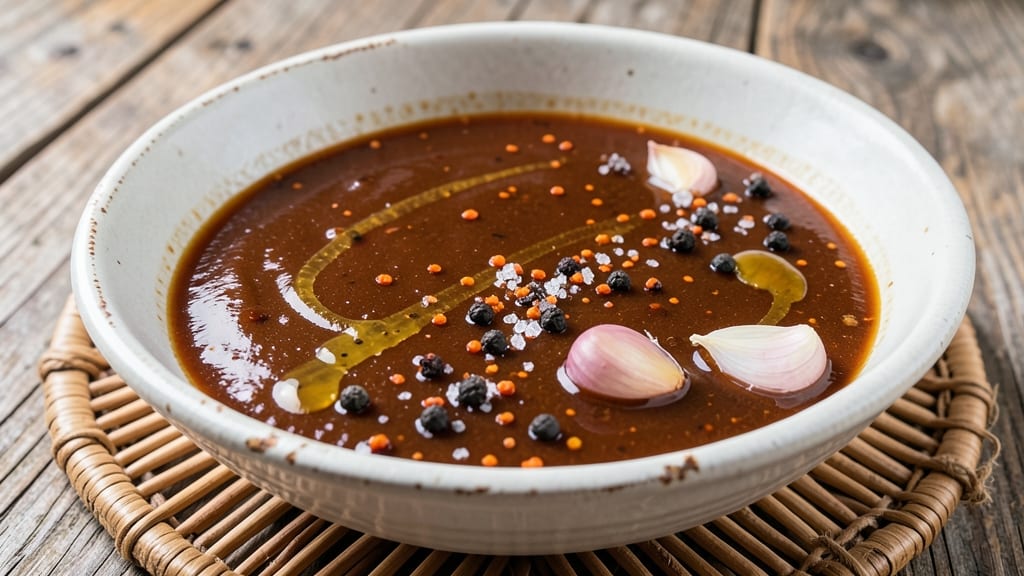
This Filipino-style barbecue sauce delivers the perfect balance of smoky sweetness and tangy vinegar kick that makes every grilled dish unforgettable. 🔥 Unlike the heavy, molasses-forward sauces you might know, this version stays true to Panlasang Pinoy roots with a lighter, more vibrant profile—built on garlic, annatto for color, and just the right amount of heat.
The secret lies in the slow reduction of vinegar and sugar, which creates that signature glossy glaze without overpowering the natural flavors of your meat.
What sets this sauce apart is the Filipino touch: a splash of patis (fish sauce) for deep umami, a pinch of annatto for that distinctive golden hue, and a blend of vinegar and sugar that mimics the balance you'd find in classic lechon or isaw dishes.
The sauce thickens beautifully into a spreadable consistency—thin enough to brush, thick enough to drizzle—making it equally perfect for grilled pork, chicken, or even as a marinade. No special equipment needed beyond a saucepan and a little patience.
Once you taste this sauce, you'll understand why it's a staple in Filipino households—it's the kind of glaze that transforms simple grilled meats into something extraordinary. The vinegar adds brightness, the sugar caramelizes into a subtle sweetness, and the spices bring just enough heat to keep things interesting.
Best of all, it keeps well in the fridge for up to two weeks, so you can make a big batch and enjoy it throughout the week.
This isn't just another barbecue sauce—it's a flavor experience that captures the heart of Filipino cooking. Whether you're grilling for a family gathering or just treating yourself to a weeknight meal, this sauce will elevate everything it touches. Let's get started!
Ingredients for barbeque sauce recipe panlasang pinoy
Nine simple ingredients transform into the ultimate Filipino barbecue sauce—smoky, tangy, and unforgettable.
| Ingredient | Amount | Notes |
|---|---|---|
| White Vinegar 💧 | 1 cup | Distilled white vinegar preferred |
| Granulated Sugar 🍚 | 1 cup | White or brown sugar works |
| Patis (Fish Sauce) 🐟 | 2 tbsp | Filipino fish sauce preferred |
| Garlic Cloves 🧄 | 6 cloves | Minced finely for depth |
| Annatto Seeds 🌶️ | 1 tsp | Ground into powder first |
| Ground Black Pepper 🌶️ | ½ tsp | Freshly ground preferred |
| Ground Cumin 🌿 | ½ tsp | Toasted for deeper flavor |
| Soy Sauce 🍶 | 2 tbsp | Filipino soy sauce preferred |
| Extra-Virgin Olive Oil 🫒 | 1 tbsp | For glossy finish |
| Salt 🧂 | 1 tsp | Kosher or sea salt |
The annatto seeds are non-negotiable—they give that signature golden hue you see on classic Filipino grilled dishes. Grab them at Asian markets or online if your regular grocery store doesn't carry them. Filipino fish sauce (patis) is the secret weapon here—it brings that deep umami that makes this sauce stand out. If you can only find regular fish sauce, use it, but you'll notice the difference. The garlic? Freshly minced is key—pre-minced loses its punch fast. I always double-check my patis bottle for that strong, salty aroma before using it—if it smells weak, it's past its prime.
No annatto? Turmeric at half the amount gives color, though it won't be quite the same. Short on fish sauce? Soy sauce plus a dash of Worcestershire gets you close (just skip the Worcestershire if you're avoiding anchovies). The vinegar can be apple cider if you prefer a milder tang, but white vinegar gives that classic Filipino brightness. Want more heat? Add ½ tsp of cayenne. The sauce thickens as it reduces, so don't worry if it looks thin at first—patience is key here. The olive oil at the end isn't just for flavor; it gives that beautiful glossy finish that makes everything look restaurant-worthy.
This sauce tastes even better the next day as the flavors meld. Store it in a clean glass jar in the fridge for up to 2 weeks. I always make a double batch—one for immediate use and one to freeze for 3 months. The frozen version works perfectly for quick grilling sessions. If you're making it ahead, let it cool completely before storing to prevent condensation. Pro tip: brush a thin layer of olive oil on the surface before sealing to keep that vibrant color.
Why You'll Love This Recipe
- Pantry Magic: I swear by this sauce—no special shopping trips, just what’s already lurking in your cabinet. That tangy vinegar and sweet sugar balance? Pure alchemy with ingredients you’ve probably forgotten about.
- Umami Bomb: The patis (fish sauce) and garlic cloves hit different—deep, savory, and just a little funky in the best way. It’s the kind of flavor that makes you reach for seconds without thinking.
- Weeknight Hero: Slap this on grilled pork, fried rice, or even eggs for breakfast—it’s my go-to when I’m too tired to plan. Honestly, it’s the sauce that saves dinner when I’ve got nothing else.
- Budget Stretch: A single batch feeds my whole family for days, and it costs next to nothing. Between us, this is how I keep my grocery bill low while still feeling like I’m cooking something special.
Step-by-step instructions for Panlasang Pinoy barbecue sauce
This tangy, smoky-sweet sauce comes together in minutes with bold Filipino flavors.
🍳 Step 1: Bloom the Annatto and Toast the Spices
Heat the 1 tablespoon extra-virgin olive oil in a medium saucepan over medium-low heat. Add the 1 teaspoon ground annatto seeds and toast for 1 minute until fragrant—you'll smell that earthy, slightly nutty aroma. Immediately add the 6 minced garlic cloves, ½ teaspoon ground black pepper, and ½ teaspoon ground cumin.
Toast the spices for another 30 seconds until the garlic turns golden and the spices release their oils. Be careful not to let the garlic burn—it should smell sweet and pungent, not bitter. This step builds the sauce's aromatic foundation, so don't rush it. The spices will deepen the sauce's complexity and give it that signature smoky warmth.
🔥 Step 2: Combine Wet Ingredients and Simmer
Pour in the 1 cup white vinegar and 2 tablespoons patis (fish sauce), stirring constantly to deglaze the pan and scrape up any browned bits. Add the 1 cup granulated sugar and 2 tablespoons soy sauce, then bring the mixture to a gentle boil over medium-high heat.
Once boiling, reduce heat to medium-low and let it simmer uncovered for 10-12 minutes until the mixture thickens slightly and reduces by about ¼. You'll notice the sauce darken and develop a glossy sheen—this is when the flavors meld together. Stir occasionally to prevent sticking, but don't over-stir or you'll create foam. The sauce should coat the back of a spoon with a syrupy consistency.
👨🍳 Step 3: Season and Adjust to Perfection
Remove the sauce from heat and stir in the 1 teaspoon salt. Taste immediately—this is your last chance to adjust the balance. If it needs more tang, add ½ teaspoon more vinegar. For extra sweetness, add 1 tablespoon more sugar. If it's too salty, thin with 1 tablespoon water.
Let the sauce cool for 5 minutes—this allows the flavors to settle. The sauce should be thick enough to coat the back of a spoon but still flow smoothly. If it's too thick, thin with 1-2 teaspoons water at a time. If it's too thin, simmer uncovered for another 2-3 minutes to reduce. The perfect sauce should be glossy, balanced between sweet, tangy, and umami-rich with a subtle smokiness from the spices.
⏰ Step 4: Finish and Store
Transfer the sauce to a clean jar or airtight container. Let it cool completely before sealing. The sauce will continue to develop flavor as it cools, so give it 1 hour before using it on your favorite grilled meats, fried chicken, or even as a dipping sauce.
This sauce keeps in the refrigerator for up to 2 weeks or can be frozen for 3 months. The longer it sits, the more complex the flavors become—trust me, it only gets better with time. The vinegar kick mellows slightly, and the sweetness deepens, making it perfect for marinating or glazing. Use it generously—this is one of those sauces that tastes even better the second time around!
Pro Tips For Making Barbeque Sauce Recipe Panlasang Pinoy
- CRUSH THE GARLIC FIRST: Don’t just toss in minced garlic—sauté it in a dry pan until it’s deep golden and fragrant (about 2 minutes). This removes the raw bite and builds flavor that vinegar alone can’t mask. I used to skip this, and my sauce always tasted sharp until I learned this.
- LOW AND SLOW FOR COLOR: Simmer the sauce on medium-low heat after adding sugar—high heat turns it into syrup fast. You want it to caramelize gradually for that glossy, balanced sweet-sour depth. Rushing it gives you a sticky mess instead of rich, glossy sauce.
- TOAST THE ANNATTO SEEDS: Dry-toast the annatto seeds in a separate pan for 30 seconds until they smell nutty—this unlocks their color and aroma. Skip this, and your sauce will look dull and taste like you used food coloring. (Yes, even if you’re impatient like me.)
- TASTE AS YOU GO: After 10 minutes of simmering, take a spoonful and check the balance—too tangy? Add a pinch more sugar. Too sweet? A splash of vinegar or dash of patis fixes it. I’ve ruined batches by waiting until the end to adjust; taste early, or regret it later.
Perfect pairings for this recipe
Filipino Grilled Favorites
This sauce was made for classic Filipino grilled dishes like lechon kawali (grilled pork belly) and isaw (grilled chicken intestines). Brush it generously on pork skewers or chicken thighs before grilling for that signature caramelized crust.
For extra flavor, marinate your meat in the sauce for at least 1 hour before cooking—this lets the spices penetrate deeply. 🔥
Try it on grilled pork ribs or chicken legs for a restaurant-quality experience. The sauce's tangy-sweet balance cuts through the richness of fatty cuts like pork belly, while its umami depth complements leaner meats like chicken breast.
For a quick weeknight meal, toss grilled shrimp in this sauce and serve with steamed rice.
Dipping Sauce Magic
Thin the sauce with 1-2 tablespoons warm water to create the perfect dipping sauce for fried chicken, spring rolls, or fish balls. The glossy texture clings beautifully, and the balance of sweet, tangy, and umami makes every bite irresistible.
I love serving it with crispy pork cracklings for a classic Filipino party appetizer.
For a modern twist, drizzle it over grilled vegetables like eggplant or zucchini. The sauce's bold flavors stand up to the earthiness of roasted veggies, making them feel like a main dish.
It also works wonderfully as a glaze for baked tofu—just brush it on before baking for a sticky, flavorful finish.
Breakfast Reinvented
This sauce isn't just for grilling—it's a breakfast game-changer! Use it as a dipping sauce for garlic rice or drizzle it over scrambled eggs for a Filipino-inspired brunch.
The tangy-sweet combo wakes up your taste buds perfectly. I also love adding it to sausage patties or fried rice for an instant flavor boost.
For a hearty meal, mix 1 tablespoon of the sauce into 2 cups of congee (Filipino rice porridge) and top with a fried egg. The sauce adds depth without overpowering the delicate rice texture. It's a comforting way to start the day with bold flavors.
Unexpected Pairings
Surprise your guests by using this sauce in unexpected ways. Mix 1 tablespoon into homemade mayonnaise for a tangy-sweet twist on sandwiches or burgers. The sauce's umami richness elevates simple dishes like grilled cheese or tuna salad. 💡
Drizzle it over pizza before baking for a Filipino-inspired glaze. The sweet-tangy notes pair beautifully with mozzarella and pepperoni. For a vegetarian option, brush it on portobello mushrooms before grilling and serve with a side of rice. The sauce's versatility makes it a pantry staple worth keeping on hand.
Nutrition facts
Frequently asked questions
Can I substitute white vinegar with apple cider vinegar?
Yes, you can use apple cider vinegar, but the flavor will be slightly milder and fruitier. White vinegar gives that classic sharp tang that's essential for authentic Filipino barbecue sauce. If you prefer apple cider, reduce the amount by ½ teaspoon since it's less acidic, and add ½ teaspoon more sugar to balance the sweetness.
How do I adjust the sweetness or tanginess if the sauce is too strong?
For extra sweetness, stir in 1 tablespoon more sugar while warm and let it dissolve. For more tang, add ½ teaspoon vinegar at a time until balanced. If it's too salty, thin with 1 tablespoon water. The sauce should have a harmonious blend where no single flavor overpowers—think of it like a dance between sweet, tangy, and umami.
Can I make this sauce without annatto? What's the best substitute?
If you can't find annatto, use ½ teaspoon turmeric for color, but the flavor won't be identical. For a closer match, add ½ teaspoon paprika along with the turmeric. The sauce will still taste delicious—just the golden hue will be slightly different. Annatto gives that signature Filipino color, but this combo works in a pinch!
Why does my sauce turn out too thin or too thick?
Sauce thickness depends on simmering time. If it's too thin, simmer uncovered for 2-3 more minutes to reduce. Too thick? Thin with 1 teaspoon water at a time while warm. The ideal consistency coats the back of a spoon but still flows smoothly—like honey. Patience is key; don't rush the reduction process!
Can I use this sauce as a marinade for non-meat dishes?
This sauce works wonderfully on tofu, portobello mushrooms, or even grilled vegetables. For tofu, marinate for 15-20 minutes before grilling or baking. For veggies, brush on after cooking to avoid sogginess. The umami and tang cut through the earthiness beautifully—perfect for vegetarian meals!