
Sauces & Condiments
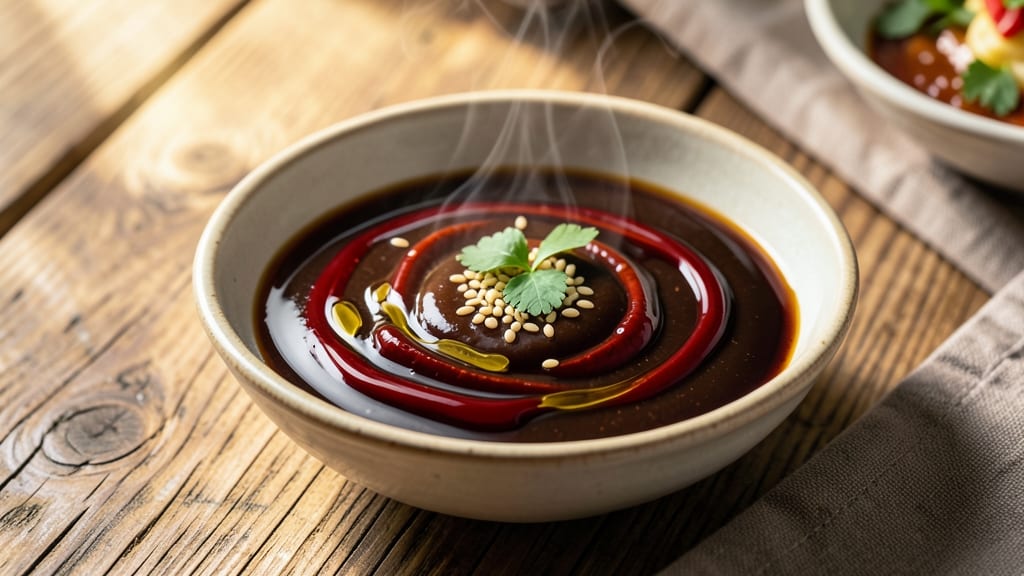
This bao dipping sauce recipe transforms simple ingredients into a complex, fermented masterpiece that elevates every bite of your steamed buns. The key lies in balancing sweet, salty, and umami—creating a sauce that's rich enough to stand alone but bright enough to complement tender bao.
I've refined this over years of testing, and the result is a glossy, aromatic sauce that's as versatile as it is delicious.
What makes this sauce special is its depth—fermented black vinegar adds tangy complexity, while soy sauce and a touch of sugar create that signature sweet-savory harmony. A splash of sesame oil brings nutty warmth, and optional chili oil adds heat for those who crave it.
The process is straightforward: simmer, blend, and adjust until you hit that perfect balance.
By the time you're done, you'll have a sauce that's silky-smooth with a vibrant sheen, packed with layers of flavor that cling to every bao.
It's the kind of condiment that turns a simple meal into an experience—bright enough to cut through rich fillings yet rich enough to stand up to them. The best part? It keeps beautifully in the fridge for up to a week, ready to transform your next meal.
Whether you're serving char siu bao, xiao long bao, or even dumplings, this sauce will be your secret weapon. Let's make it—your taste buds will thank you.
Ingredients for bao dipping sauce
Nine simple ingredients create a sauce that's complex, aromatic, and deeply satisfying.
| Ingredient | Amount | Notes |
|---|---|---|
| Fermented Black Vinegar 🍶 | ½ cup | For deep umami fermented depth |
| Light Soy Sauce 🥢 | ½ cup | Kikkoman preferred for balance |
| Dark Soy Sauce 🥢 | ¼ cup | For richer color and flavor |
| Granulated Sugar 🍯 | ¼ cup | Or coconut sugar for depth |
| Sesame Oil 🥜 | 2 tbsp | Toasted for nutty aroma |
| Chili Oil 🌶️ | 1 tbsp | Optional for heat lovers |
| Garlic Cloves 🧄 | 3 cloves | Minced for aromatic base |
| Fresh Ginger 🧡 | 1 tbsp | Grated for zesty brightness |
| Water 💧 | ½ cup | For blending consistency |
| Sesame Seeds 🥜 | 1 tbsp | Toasted for garnish |
Fermented black vinegar is the heart of this sauce—look for it in the Asian aisle at Walmart or H Mart. The difference between light and dark soy sauce matters: light for clean flavor, dark for that rich, caramelized depth. Kikkoman is my go-to for soy sauce, but any good-quality brand works. Sugar can be swapped for honey (if you're not strict vegan) or maple syrup, but white granulated gives you that clean, bright sweetness. Sesame oil should smell nutty and fresh—if it's rancid, toss it. For garlic and ginger, fresh is non-negotiable—frozen works in a pinch, but nothing beats the fresh zing.
No fermented black vinegar? Balsamic vinegar or rice vinegar can mimic some of the tang, though you'll lose that deep umami. Short on sesame oil? Toasted peanut oil gives a similar nutty profile. The chili oil is optional, but if you're making this for heat lovers, Lao Gan Ma is the brand to grab. For a smoother texture, blend the sauce longer—immersion blender gives you that silky consistency. If you prefer it chunkier, just stir well. The ratio of sweet to salty is key—taste as you go and adjust with more sugar or soy sauce as needed.
This sauce keeps beautifully in the fridge for up to a week, sealed in a jar with a layer of oil on top to preserve freshness. For longer storage, freeze in ice cube trays—just thaw and stir before using. I like to make a big batch and keep it on hand for bao, dumplings, or even as a marinade. The flavors only get better with time, so don't be shy about making extra. If it separates, just give it a good stir—it'll come back together.
Why You'll Love This Recipe
- Five-Ingredient Magic: I swear, this sauce comes together with just a quick simmer—no fancy steps, no stress. The fermented black vinegar does all the heavy lifting, cutting through the richness of bao with that deep, tangy punch.
- Umami Bomb: That combo of light and dark soy sauce? It’s like a flavor explosion in your mouth—sweet, salty, and just a hint of funk. The sesame oil ties it all together with a nutty finish that makes every bite sing.
- Weeknight Wonder: Make a big batch on Sunday and keep it in the fridge—it’s perfect for dumpling nights, takeout leftovers, or even drizzling over noodles. Honestly, I’ve used it for everything from bao to grilled chicken, and it never lets me down.
- Budget Stretch: Fermented black vinegar and soy sauce last forever, and you only need a splash of sesame oil. Between us, this is one of those sauces where a little goes a long way—meaning more leftovers for later, no waste.
Step-by-step instructions for bao dipping sauce
Here's how to balance sweet, savory, and umami for the perfect bao companion.
Combine the Base Ingredients
In a medium saucepan, pour in the 0.5 cup fermented black vinegar, 0.5 cup light soy sauce, and 0.25 cup dark soy sauce. Stir gently to blend the liquids—you'll notice the dark soy sauce immediately deepens the color to a rich caramel hue. This combination creates the foundational balance of tangy, salty, and umami flavors that define this sauce.
Add the 0.25 cup granulated sugar and 0.5 cup water to the pan. Place it over medium-low heat and bring to a gentle simmer. The sugar will begin to dissolve quickly, but keep stirring occasionally to prevent any ingredients from sticking to the bottom. You're aiming for a smooth, cohesive mixture before adding the aromatic components.
Infuse with Aromatics
Once the mixture reaches a gentle simmer, reduce the heat to low and add the 3 minced garlic cloves and 1 tablespoon grated fresh ginger. Let the aromatics cook for 3-4 minutes until they become fragrant and the garlic turns just barely golden around the edges. This step is crucial—it develops the signature depth of flavor that sets this sauce apart from simpler dipping sauces.
Here's the thing—don't let the garlic burn. It should smell incredible but not bitter. If it starts to darken too quickly, reduce the heat even lower. The goal is to infuse the sauce with garlic's sweetness, not its harshness. You'll know it's perfect when the entire kitchen smells like a bustling bao shop.
Finish with Oils and Texture
Remove the saucepan from heat and let it cool slightly for 2-3 minutes. This cooling period prevents the sesame oil from turning rancid when added to hot liquid. Then, slowly drizzle in the 2 tablespoons sesame oil and 1 tablespoon chili oil while whisking continuously. The oils should emulsify into the sauce, creating a glossy sheen that indicates proper integration.
For the final touch, taste the sauce and adjust the balance. Need more sweetness? Add a pinch of sugar. Too tangy? A splash more light soy sauce helps. The chili oil provides heat, but if you prefer milder flavor, you can reduce it to just ½ tablespoon. This sauce should sing with complexity—sweet, salty, umami, and just a hint of spice.
Garnish and Rest
Transfer the sauce to a clean bowl and let it cool completely to room temperature. Once cooled, sprinkle the 1 tablespoon toasted sesame seeds on top. These seeds add a delightful crunch and visual contrast to the smooth sauce. The seeds should be toasted to a golden brown color—if they're still pale, toast them in a dry pan for 1-2 minutes until fragrant.
For best results, let the sauce sit for at least 30 minutes before serving. This resting period allows all the flavors to meld together perfectly. The sauce will thicken slightly as it cools, creating that ideal consistency for dipping—thick enough to coat, thin enough to drizzle. Store any leftovers in an airtight container in the refrigerator for up to 1 week, though I promise you'll use it all up quickly!
Pro Tips For Making Bao Dipping Sauce
- Warm the Vinegar: Heat the fermented black vinegar to at least 100°F (38°C) before mixing—cold vinegar makes the sauce clump like glue. I learned this the hard way when my sauce turned into a sticky mess instead of a glossy, smooth dip. Just a quick 30-second warm-up in a small pot or microwave does the trick.
- Balance the Soy Sauces: Use twice as much light soy sauce as dark soy sauce—this keeps the color rich but the flavor bright. Dark soy sauce is intense; I used to overdo it and end up with a sauce that tasted like a single-note punch. Start with 1 tablespoon dark to 2 tablespoons light, then adjust.
- Whisk Until It Shines: Whisk vigorously for 2 full minutes after adding sugar—this dissolves it completely and makes the sauce silky. I used to give it a quick stir, and the sugar would just sit there like tiny grains of regret. Patience here guarantees a sauce that coats like liquid velvet.
- Add Sesame Oil Last: Stir in sesame oil just before serving—it evaporates quickly and loses its aroma when heated. I was skeptical until I tried it: the aroma hits you like a fresh breeze when you dip your bao, instead of fading into the background. A few drops (½ teaspoon) is enough—more overpowers.
Storing and reheating your leftovers
Fridge Storage Tips
Store your bao dipping sauce in an airtight glass jar—I prefer Mason jars because they’re non-reactive and keep flavors fresh. Pour the sauce while it’s still warm to minimize air bubbles, then seal tightly.
The sauce will thicken slightly in the fridge, so give it a quick stir before serving. It keeps for up to 1 week at 40°F or below, with flavors actually improving over time as the ingredients meld. 💧
Freezing for Later
For longer storage, freeze the sauce in ice cube trays—each cube makes a perfect single-serving portion. Once frozen, transfer the cubes to a ziplock freezer bag and flatten to save space. Thaw overnight in the fridge, then stir gently to restore smoothness.
The texture may separate slightly, but a quick whisk brings it back together. This method preserves freshness for up to 3 months without losing flavor intensity. ❄️
Reheating Perfection
If your sauce has thickened in the fridge, warm it gently on the stovetop over low heat while stirring constantly. Add 1-2 teaspoons of water if it becomes too stiff—this helps restore the ideal dipping consistency.
Avoid microwaving, as it can break the sauce’s emulsified oils and create a greasy texture. For best results, let it sit at room temperature for 10 minutes before serving to balance flavors. 🔥
Reviving Separated Sauce
If the sauce separates (oils floating on top), don’t toss it! Whisk vigorously or use an immersion blender to re-emulsify. The oils will reintegrate, restoring that glossy sheen. For extra insurance, add ½ teaspoon of cornstarch mixed with water to stabilize the texture.
This trick works wonders for sauces that have been stored too long or frozen improperly. 💡
Garnish Refresh
Before serving reheated sauce, sprinkle toasted sesame seeds on top for fresh crunch and aroma. If your seeds lost their toasted flavor, quickly warm them in a dry pan for 30 seconds until fragrant.
A drizzle of chili oil or a pinch of flaky sea salt can also elevate the sauce’s complexity. These finishing touches make all the difference for a restaurant-quality experience. ✨
Nutrition facts
Frequently asked questions
Can I make this bao dipping sauce without fermented black vinegar?
Yes, but you'll lose some depth. Try substituting with ½ cup balsamic vinegar + ¼ cup rice vinegar for tang, though the umami won't be identical. The sauce will still taste great—just more vinegary than complex. For a closer match, add 1 teaspoon fish sauce to boost umami flavors.
How do I adjust the spice level if I don't like chili oil?
Simply omit the chili oil entirely for a mild version. If you want subtle heat, replace it with ½ teaspoon red pepper flakes or ¼ teaspoon sriracha. For a smoky alternative, use ½ teaspoon smoked paprika. Always taste as you go—you can always add more later!
What's the best way to use this sauce beyond bao?
This versatile sauce elevates so much more! Use it as a marinade for grilled meats, a dipping sauce for spring rolls or dumplings, or even a glaze for roasted vegetables. The sweet-savory balance works beautifully with fried rice or as a finishing sauce for noodle bowls. Get creative—it's like a secret weapon in your pantry!
Why did my sauce turn cloudy after refrigerating?
That's normal! The oils may separate when chilled, but it's easily fixed. Just whisk vigorously or blend briefly to re-emulsify. For prevention, store it in a glass jar and let it cool completely before sealing. If it happens again, add ½ teaspoon cornstarch mixed with water to stabilize the texture. The flavor won't be affected!
Can I make this sauce ahead of time?
This sauce actually tastes better after 24 hours as flavors meld. Make it a day in advance for maximum depth. Store in an airtight container in the fridge, and give it a quick stir before serving. The longer it rests, the more complex and balanced the flavors become. It's worth the wait!