
Sauces & Condiments
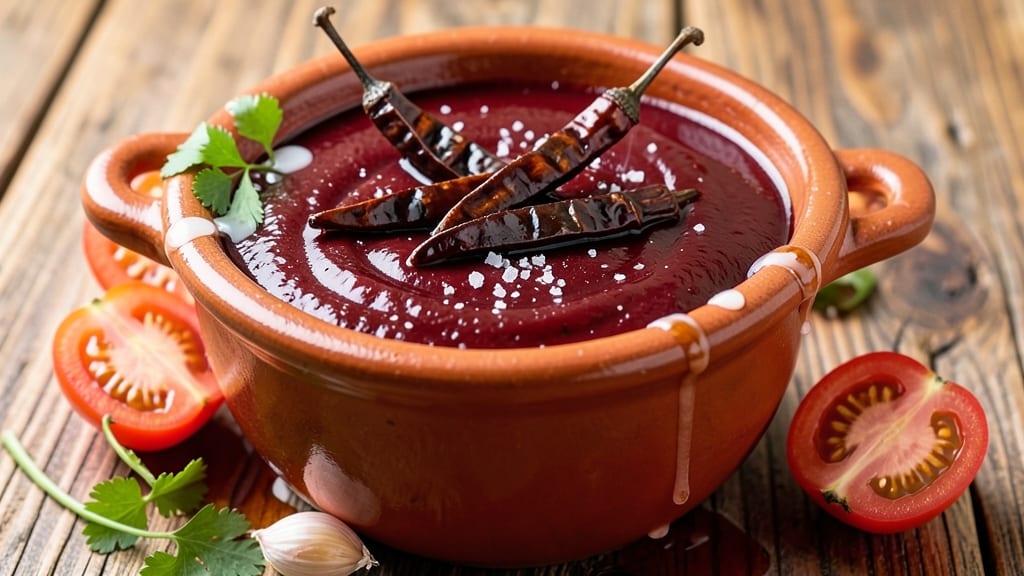
Baca's red chile sauce delivers that perfect balance of smoky depth and sweet heat that makes it a pantry staple. This sauce transforms simple dishes into something extraordinary with its rich, complex flavor profile that lingers on your palate.
The secret lies in slow-cooked chiles and tomatoes, simmered with vinegar and spices until the flavors meld into a velvety, slightly thickened sauce.
What sets this recipe apart is the careful balance of heat and sweetness, achieved through precise ingredient ratios and a slow cooking process. No shortcuts here—just authentic flavor built over time.
The sauce thickens naturally as it reduces, creating a consistency perfect for drizzling over tacos, slathering on grilled meats, or using as a marinade.
Once complete, you'll have a sauce that's versatile enough for any meal but special enough to feel like a restaurant-quality secret. The smoky aroma alone will draw everyone to the table, while the balanced heat ensures every bite is satisfying.
This is the kind of sauce that improves with age, developing even deeper flavor as it sits.
The best part? It keeps beautifully in the refrigerator for up to two weeks, making it ideal for meal prep. Whether you're cooking for a crowd or just want to elevate a weeknight dinner, this red chile sauce will become your new go-to.
Let's get started on creating this flavor-packed essential.
Ingredients for baca's red chile sauce
Nine ingredients, endless flavor—this sauce is your new kitchen MVP.
| Ingredient | Amount | Notes |
|---|---|---|
| Dried Ancho Chile Peppers 🌶️ | 4 whole | Stems and seeds removed |
| Dried New Mexico Chile Peppers 🌶️ | 4 whole | Stems and seeds removed |
| Roma Tomatoes 🍅 | 2 lb | Ripe, quartered (about 6-8 cups) |
| White Vinegar 💧 | ½ cup | White or apple cider vinegar |
| Granulated Sugar 🍚 | ¼ cup | Adjust for sweetness preference |
| Garlic Cloves 🧄 | 6 cloves | Peeled, roughly chopped |
| Medium Onion 🧅 | 1 whole | Yellow or white, chopped |
| Ground Cumin 🌿 | 1 tbsp | Toasted for deeper flavor |
| Dried Oregano 🍃 | 1 tbsp | Mexican oregano preferred |
| Salt 🧂 | 1 ½ tsp | Kosher or sea salt |
The chiles are the heart of this sauce. Ancho and New Mexico peppers give that signature smoky depth, but if you can't find them, pasilla or guajillo work too. Look for dried chiles in the Latin section of Whole Foods or Trader Joe's—they're usually sold in small bags. Soak them in hot water for 15 minutes to soften before using. The Roma tomatoes should be ripe but firm; H-E-B or local farmers markets often have the best quality. Skip the canned tomatoes—they just don’t compare for this sauce. And trust me, don’t skip the garlic. It’s the secret to that restaurant-quality flavor.
No ancho peppers? Pasilla or guajillo are perfect substitutes—they’re just a little fruitier. Short on sugar? Honey or maple syrup works, but sugar dissolves better in this sauce. Vinegar is non-negotiable though—it balances the sweetness and keeps the sauce from getting too heavy. The cumin and oregano are your flavor boosters. Penzeys or bulk bins have the best quality spices, but the regular grocery store stuff is fine if it’s fresh. And if you’re feeling fancy, toast the cumin in a dry pan for 30 seconds before adding it—game-changer. The onions can be swapped for shallots if you’ve got them, but yellow onions are the classic choice.
This sauce tastes even better the next day as the flavors meld. Store it in an airtight jar in the fridge for up to 2 weeks. If you make a big batch, freeze portions in ice cube trays—perfect for single servings later. The sauce thickens as it cools, so you can thin it with a splash of water or vinegar if needed. And pro tip: drizzle it over everything. Tacos, grilled meats, eggs—this sauce makes everything better. Leftovers? They’re basically a free flavor upgrade for your next meal.
Why You'll Love This Recipe
- Here’s what sold me: the sugar and vinegar tame the chiles into something luscious, not just fiery. The ancho’s earthy notes marry with the New Mexico’s mild heat, while the Roma tomatoes add brightness. Drizzle it over grilled chicken, and you’ve got a sauce that’s ridiculously good without trying too hard.
- No-Soaking Needed: I’ll be real—most red chile sauces demand hours of soaking dried peppers. Not this one. Just toast the ancho and New Mexico chiles until fragrant, then blend them with the tomatoes and vinegar. The heat and depth develop while you chop onions or boil pasta. That’s what I call efficient magic.
- Smoky-Sweet Balance: Here’s what sold me: the sugar and vinegar tame the chiles into something luscious, not just fiery. The ancho’s earthy notes marry with the New Mexico’s mild heat, while the Roma tomatoes add brightness. Drizzle it over grilled chicken, and you’ve got a sauce that’s ridiculously good without trying too hard.
- Pantry Staple Power: Between us, this recipe uses ingredients you’re already buying. Dried chiles? Check. Canned tomatoes? Probably in your cupboard. Vinegar and sugar? Always on hand. No last-minute grocery runs—just pull what you’ve got, blend, and go. My go-to for when I forget to meal prep.
Step-by-step instructions for baca's red chile sauce
Here's how to craft this legendary sauce with smoky depth and perfect sweet heat balance.
Toast the Dried Chile Peppers
Preheat your oven to 375°F. Place the 4 whole dried ancho chile peppers and 4 whole dried New Mexico chile peppers on a baking sheet, stems facing up. Toast them for 3-4 minutes until fragrant and slightly darkened—you'll smell that incredible smoky aroma developing.
This step is crucial for deepening the chile's natural flavors. Watch them carefully—they'll darken quickly. Once they're toasted, remove them from the oven and transfer to a bowl. Cover tightly with plastic wrap and let them steam for 15 minutes. This rehydration makes them easier to peel and removes any bitterness.
Remove Seeds and Peel the Chile Peppers
After steaming, carefully peel off the skins using your fingers or a knife. You'll see the skins come off easily now. Remove all stems and seeds from the chiles—this prevents any bitterness from creeping into your sauce. Chop the peeled chiles into ¼-inch pieces and set them aside in a separate bowl.
Here's the thing—don't skip peeling. The skins can make your sauce bitter if left in. I like to work quickly here as the chiles cool down. If you encounter any tough spots, just trim them away—they'll be minimal after proper toasting and steaming.
Sauté Aromatics Until Fragrant
In a large Dutch oven or heavy pot, combine the chopped medium onion and 6 cloves roughly chopped garlic. Cook over medium heat with 1 tablespoon toasted ground cumin and 1 tablespoon dried oregano for 5-6 minutes until the onion softens and turns golden brown. You want to see those aromatics sizzle and release their oils.
This is where the sauce's foundation builds. The cumin should be toasted to deepen its flavor—you'll smell that warm, earthy aroma. Don't rush this step. If the onions start to brown too quickly, reduce the heat slightly. You're aiming for caramelization, not burning.
Simmer the Tomato Base
Add the quartered 2 lb Roma tomatoes, 0.5 cup white vinegar, and 0.25 cup granulated sugar to the pot. Stir well to combine all ingredients. Bring the mixture to a boil, then reduce heat to medium-low and let it simmer uncovered for 20-25 minutes until the tomatoes break down completely.
Real talk: This is where patience pays off. You want the tomatoes to collapse into a thick, rich purée. Stir occasionally to prevent sticking. After about 15 minutes, you'll notice the sauce thickening noticeably. That's your cue to keep stirring more frequently to prevent scorching.
Blend and Finish the Sauce
Use an immersion blender to purée the sauce directly in the pot until completely smooth. If you prefer using a regular blender, let the sauce cool slightly first, then blend in batches. Return the blended sauce to the pot and add the 1.5 teaspoons salt. Simmer for another 10 minutes to let all the flavors meld together.
The sauce should now have a velvety texture with a perfect balance of sweetness and smoky heat. Taste it and adjust the sugar or salt if needed—I usually find this recipe hits the mark perfectly, but everyone's taste differs. For serving, you can use it immediately or store it in the refrigerator for up to 1 week or freeze for 3 months.
Pro Tips For Making Baca'S Red Chile Sauce
- Toast Your Chilies: Dry-roast the ancho and New Mexico peppers in a skillet over medium heat until they darken and smell smoky—about 2 minutes per side. I learned this the hard way: skipping the toasting leaves a raw, bitter edge that vinegar can’t fully cut through. (Yes, even if you’re impatient like me.)
- Seed and Devein Carefully: Remove stems and seeds from the peppers, then scrape out the white pith inside—it’s bitter and ruins the sauce. Use a spoon to dig it out; I used to just rinse them, and the sauce always had an off note. (Your future self will thank you.)
- Simmer Low and Slow: Reduce the sauce to a thick, glossy consistency over low heat—about 45 minutes to an hour. After burning three batches, I finally figured out that rushing it turns the tomatoes into mush instead of a smooth, velvety base. (Patience here is non-negotiable.)
- Balance Vinegar and Sugar: Add the white vinegar and sugar gradually, tasting as you go—start with half the recipe’s amount, then adjust. My grandmother swore by this, and she was right: too much vinegar makes it sharp, too little leaves it flat. (Sounds weird, but it works.)
Dietary considerations for this recipe
Gluten-Free Friendly
This sauce is naturally gluten-free since it contains no wheat-based ingredients. The base ingredients—chiles, tomatoes, vinegar, and spices—are all gluten-free by default. However, always double-check your spices (like oregano and cumin) for potential cross-contamination if you have severe gluten sensitivities.
I buy my spices from Penzeys because they clearly label gluten-free options. 🌱
Vegan Adaptation
The original recipe is already vegan-friendly—no animal products are used. For extra richness, I sometimes add 1 tablespoon of nutritional yeast when blending, which adds a cheesy depth without dairy.
The sauce thickens beautifully on its own, so no substitutions are needed for the base ingredients. Perfect for plant-based tacos or grilled veggies!
Low-Sugar Option
If you're watching sugar intake, reduce the granulated sugar to 2 tablespoons or swap it for 1 tablespoon of honey or maple syrup. The vinegar will still balance any sweetness, but the sauce will be slightly tangier.
I find this adjustment works well for those with mild sweetness preferences. 🍯
Spice Level Control
For milder heat, remove the seeds and membranes from the chiles before toasting. If you love spice, keep them in or add 1-2 extra New Mexico chiles. The sauce’s heat builds during simmering, so taste-test early—you can always thin with vinegar if it’s too intense.
I’ve made batches with 3 extra chiles for a fiery kick!
Allergen Awareness
This sauce contains no common allergens like dairy, eggs, or nuts, making it safe for most dietary restrictions. However, if you’re allergic to sulfites (common in dried chiles), opt for organic or fresh chiles.
Always check labels on spices and vinegar for hidden additives. The recipe’s simplicity makes it a go-to for allergy-conscious cooks. ✨
Nutrition facts
Frequently asked questions
Can I substitute fresh chiles for the dried ones?
Fresh chiles won't work the same way—this recipe relies on the concentrated smoky flavor of dried chiles. If you must use fresh, try 3-4 jalapeños or 2-3 serranos, but roast them first to develop smoky notes. The texture and depth will differ, but it can still be delicious for a quicker version.
How do I fix my sauce if it's too thin or too thick?
For a thinner sauce, simmer 5 extra minutes uncovered to reduce more, then blend. If it's too thick, whisk in 1-2 tablespoons of water or vinegar while warm. The sauce should coat the back of a spoon but still drizzle easily.
Can I make this sauce in a slow cooker?
Yes! After toasting and peeling the chiles, sauté the aromatics in a skillet first. Then transfer everything to a 3-4 quart slow cooker on low for 4-5 hours or high for 2-3 hours. Stir occasionally and blend at the end. The slow cooker method develops even deeper flavor!
What's the best way to store leftovers?
Store in an airtight glass jar in the fridge for up to 2 weeks. For longer storage, freeze in ice cube trays or small jars for single-serving portions. Thaw overnight in the fridge—never microwave directly from frozen. The flavor actually improves over time!
Why does my sauce taste bitter?
Bitter flavor usually comes from leaving chile skins or membranes in. Always peel and seed properly after toasting. Another cause is overcooking—simmer uncovered to prevent scorching. If it's still bitter, add 1 extra tablespoon of sugar or 1 teaspoon of honey to balance.