
Sauces & Condiments
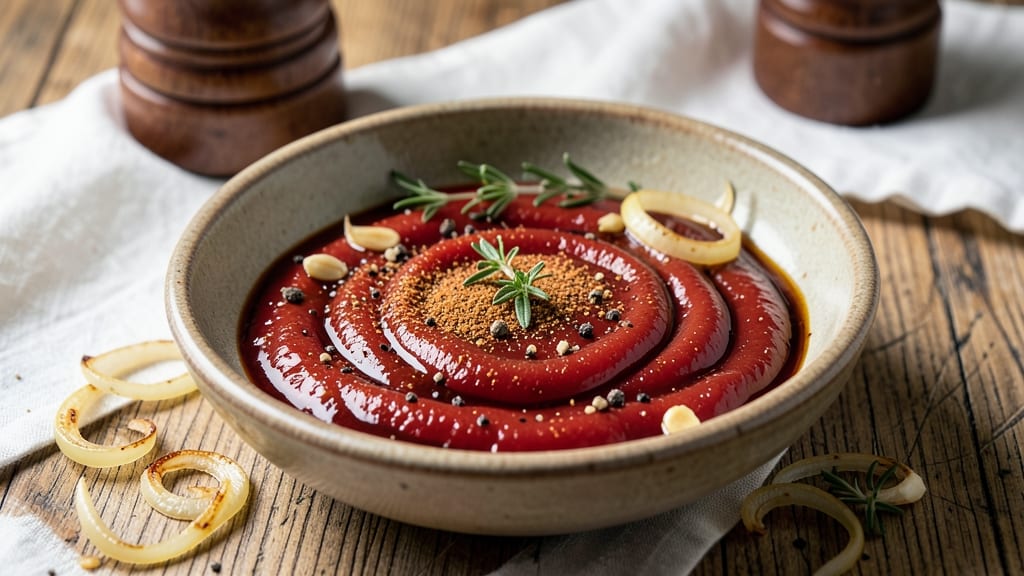
This balsamic barbecue sauce recipe transforms your grill game with a sweet-tangy glaze that needs no added sugar—just rich, complex flavors from balsamic vinegar and slow-cooked tomatoes. 🔥 As a pitmaster trained in French technique, I’ve perfected a balance of depth and brightness that elevates everything from ribs to roasted vegetables.
The secret lies in simmering vinegar and spices until they meld into a velvety, caramelized sauce that’s impossible to resist.
The beauty of this recipe is its versatility—it’s bold enough for smoky meats but subtle enough to drizzle over fresh mozzarella or toss with roasted Brussels sprouts. With just 7 simple ingredients and 30 minutes of active time, you’ll have a sauce that rivals store-bought versions but tastes infinitely better.
No refined sugar means the natural sweetness of the tomatoes and balsamic shines through, while black pepper and smoked paprika add layers of warmth.
By the time you’re done, you’ll have a glossy, tangy-sweet sauce that clings perfectly to grilled chicken, ribs, or even as a dipping sauce for fries. The slow reduction concentrates the flavors, creating a glaze that’s rich but not heavy—ideal for those who love bold tastes without the guilt.
This is the kind of sauce that turns a simple meal into something memorable.
Store it in the fridge for up to 2 weeks or freeze for longer shelf life, making it perfect for meal prep. Whether you’re hosting a backyard BBQ or just craving a flavor boost, this sauce delivers restaurant-quality results with minimal effort. Let’s get cooking!
Ingredients for balsamic barbecue sauce
Seven ingredients, one sauce that transforms grilled meats and veggies into restaurant-worthy dishes.
| Ingredient | Amount | Notes |
|---|---|---|
| Balsamic Vinegar 🍷 | 1 cup | High-quality aged balsamic preferred |
| San Marzano Tomato Paste 🍅 | ½ cup | Smooth, no-sugar-added preferred |
| Yellow Onion 🧅 | 1 whole | Medium, finely diced |
| Garlic Cloves 🧄 | 4 cloves | Fresh, minced for depth |
| Smoked Paprika 🌶️ | 1 tbsp | For smoky complexity |
| Ground Black Pepper 🌶️ | ½ tsp | Freshly cracked for heat |
| Extra-Virgin Olive Oil 🫒 | 2 tbsp | Light fruity variety |
The balsamic vinegar is the star—look for aged varieties like San Pellegrino or Di Martino for deeper caramel notes. The tomato paste? San Marzano is non-negotiable here—its natural sweetness and smooth texture make all the difference. Fresh garlic and onion build the aromatic base, so don't skimp on quality. I always grab organic yellow onions from Whole Foods for their sweetness, but regular grocery store onions work fine. The smoked paprika? Penzeys or McCormick are solid choices, but any good-quality smoked paprika will do.
No aged balsamic? Red wine vinegar with 1 tsp brown sugar gets you close. Short on tomato paste? Fresh crushed tomatoes work in a pinch, but you'll need to simmer them down longer. Fresh garlic and onion can be swapped for 1 tbsp garlic powder and 1 tbsp onion powder, though the flavor won't be as complex. The olive oil can be swapped for avocado oil if you prefer a neutral base. For extra depth, add 1 tsp Dijon mustard—it balances the sweetness beautifully. If you're feeling adventurous, a pinch of cinnamon adds warmth that pairs perfectly with grilled meats.
This sauce keeps beautifully—2 weeks in the fridge or 6 months frozen. For freezing, use ice cube trays for single-serving portions perfect for quick meals. The flavors actually improve after a few days as the balsamic and spices meld together. I like to portion mine into small jars so I always have a ready-to-use glaze for last-minute grilling. If it thickens too much, just add a splash of water or vinegar to loosen it up.
Why You'll Love This Recipe
- Pantry Magic: I swear by this one—no fancy shopping trips, just what’s already lurking in your cupboard. That deep balsamic tang and San Marzano richness turn basic ingredients into something that tastes like you slaved over it.
- Sweet-Smoky Umami Bomb: Between us, the smoked paprika and caramelized onions hit different. It’s got that tangy-sweet balance that makes grilled chicken or roasted veggies taste like they belong on a restaurant menu.
- Weeknight to BBQ Hero: Slather it on burgers, drizzle it over meatballs, or toss it with roasted potatoes—it’s my go-to for lazy nights when I still want flavor. Honestly, it’s the reason I stopped buying store-bought sauce.
- Makes a Batch, Keeps Forever: I double the recipe every time because it lasts for weeks in the fridge. Plus, the cost? A fraction of what you’d pay for fancy sauces. My wallet and taste buds thank me.
Step-by-step instructions for balsamic barbecue sauce
Here's how to craft this restaurant-quality glaze with bold flavor and no refined sugar.
🍳 Step 1: Sauté Onion and Garlic Until Translucent
Heat the 2 tablespoons extra-virgin olive oil in a medium saucepan over medium heat. Add the finely diced whole yellow onion and cook for 5-6 minutes, stirring occasionally, until soft and translucent. You'll know it's ready when the onion edges begin to turn slightly golden.
Reduce heat to medium-low and add the 4 minced garlic cloves. Cook for another 30-60 seconds until fragrant but not browned—garlic burns quickly, so watch closely. This aromatic base forms the flavor foundation for your sauce.
🍳 Step 2: Add Spices and Tomato Paste
Stir in the 1 tablespoon smoked paprika and ½ teaspoon ground black pepper, letting the spices toast in the onion mixture for 30 seconds until their aroma fills the kitchen. This step deepens their flavor profile before adding liquids.
Next, add the ½ cup San Marzano tomato paste and stir vigorously to combine with the onion mixture. Cook for 2-3 minutes until the paste darkens slightly and the mixture becomes thick and glossy. The tomato paste will dissolve completely, creating a rich base for your sauce.
🥘 Step 3: Deglaze and Simmer the Balsamic
Pour in the 1 cup balsamic vinegar all at once, scraping up any browned bits from the bottom of the pan with a wooden spoon. These flavorful bits, called fond, add incredible depth to your sauce. Bring the mixture to a gentle boil over medium-high heat.
Once boiling, immediately reduce heat to low and let it simmer uncovered for 15-20 minutes. Stir occasionally to prevent sticking. You're looking for a sauce that thickens noticeably and develops a glossy sheen. The balsamic will mellow and caramelize, creating that signature sweet-tangy balance.
⏰ Step 4: Reduce Until Thick and Glossy
Continue simmering until the sauce reduces by about half—it should coat the back of a spoon and have a syrupy consistency. This typically takes another 10-15 minutes, depending on your stove. The sauce should be thick enough to coat the back of a spoon but still pour smoothly.
Taste and adjust seasoning if needed. If it's too acidic, add a pinch more smoked paprika. If it needs more depth, stir in a splash of water or a pinch of salt. The sauce should be rich, tangy, and slightly sweet with no added sugar—just natural caramelization from the balsamic.
Pro Tips For Making Balsamic Barbecue Sauce
- Sear the Onion First: I used to just chop and toss the onion into the pot, but now I sear it in 1 tablespoon of olive oil over medium-high heat until it’s deep golden and slightly caramelized—about 8-10 minutes. This builds flavor that cuts through the acidity of the balsamic, so don’t skip it, even if you’re in a hurry.
- Simmer Low and Slow: After adding the tomato paste and balsamic vinegar, resist the urge to crank the heat. A gentle simmer (barely bubbling) for 20-25 minutes lets the flavors meld without burning. I learned this the hard way—rushed batches taste sharp and unfinished.
- Balance the Vinegar: Balsamic vinegar is strong, so taste as you go. If it’s too acidic, add a pinch of sugar (1 tsp at a time) or a splash of broth to round it out. I keep a small bowl of sugar nearby—better to adjust now than regret it later.
- Toast the Smoked Paprika: Dry-toast the smoked paprika in a small pan over low heat for 30 seconds until fragrant—it deepens the smoky flavor without bitterness. Skip this, and you’ll miss that rich, complex note that makes the sauce stand out. (Yes, even if you’re impatient like me.)
Best sauces and condiments for this balsamic barbecue sauce
Classic Uses
This balsamic barbecue sauce shines as a grilling glaze for ribs, chicken, and pork chops. Brush it on during the last 5-7 minutes of grilling for a caramelized crust. I love using it on bone-in pork chops—the sauce clings beautifully while the bone stays juicy.
For extra drama, finish with a sprinkle of fresh parsley and a crack of black pepper. 🔥
It’s also fantastic as a dipping sauce for fried chicken, mozzarella sticks, or even crispy Brussels sprouts. The tangy-sweet balance cuts through fried foods perfectly. Serve it warm in a small bowl with toothpicks for easy dipping—guests will go back for seconds, I guarantee it.
Unexpected Pairings
Don’t limit this sauce to meats! Drizzle it over roasted vegetables like eggplant or zucchini for a sweet-tangy contrast. I toss it with warm polenta and top with shaved Parmesan—it’s a game-changer for weeknight dinners.
The balsamic’s depth pairs surprisingly well with creamy textures, so try it on mac and cheese or mashed potatoes for a restaurant-worthy twist.
For a breakfast upgrade, spread it on toasted sourdough with a fried egg and crumbled feta cheese. The smoky-sweet flavors wake up your taste buds, and it’s way more exciting than ketchup.
I also love using it as a marinade for shrimp skewers—just toss them in the sauce for 30 minutes before grilling for a bold, caramelized finish.
Sweet and Spicy Twist
Want to kick up the heat? Stir in 1 tsp cayenne pepper or ½ tsp red pepper flakes while simmering. For a sweeter version, add 1 tbsp honey or 1 tsp maple syrup in the final 5 minutes of cooking.
I’ve also experimented with 1 tsp chipotle powder for a smoky-spicy depth that’s perfect for pulled pork or grilled steak.
For a fruit-forward variation, simmer in ½ cup diced peaches or pineapple during the last 10 minutes of cooking. The natural sweetness enhances the balsamic’s caramel notes, creating a sauce that’s almost dessert-like. This works amazingly with grilled pineapple slices or as a glaze for ham steaks. 🍍
Storage Secrets
Store your sauce in an airtight glass jar in the fridge for up to 2 weeks. The flavors actually deepen over time, so making a big batch is worth it. For longer storage, freeze in ice cube trays—thaw individual cubes as needed for quick meals.
I like to keep a jar in my fridge at all times for last-minute grilling or dipping needs.
If your sauce thickens too much after refrigeration, thin it with 1-2 tsp water or balsamic vinegar before reheating. For a smoother texture, warm it gently on the stovetop over low heat, stirring occasionally.
Never microwave it—this sauce deserves the slow, loving attention that brings out its best flavors. 💫
Nutrition facts
Frequently asked questions
Can I use this sauce on non-meat dishes?
This versatile sauce works beautifully on roasted vegetables, polenta, or even as a drizzle for flatbreads. The tangy-sweet balance pairs especially well with creamy textures like mashed potatoes or mac and cheese. Try it on grilled eggplant or zucchini for a restaurant-worthy twist.
How do I adjust the thickness for different uses?
For a glaze, reduce it until it coats the back of a spoon. For a dipping sauce, thin with 1-2 tablespoons water or balsamic vinegar. If too thick after refrigeration, warm gently on low heat while stirring. Never microwave—this sauce develops best with slow, even heat.
What's the best way to store leftovers?
Keep in an airtight glass jar in the fridge for up to 2 weeks. For longer storage, freeze in ice cube trays—thaw cubes as needed. The flavors actually improve over time! Reheat gently on the stove to preserve texture.
Can I make this sauce without balsamic vinegar?
Yes! Substitute with red wine vinegar plus 1 teaspoon brown sugar for similar depth. For extra richness, add 1 tablespoon apple cider vinegar. The sauce will still develop that signature sweet-tangy profile, just with slightly different complexity.
How spicy should this sauce be?
The recipe includes just ½ teaspoon black pepper for subtle warmth. For heat, add ½ teaspoon red pepper flakes or 1 teaspoon cayenne while simmering. Start with less—you can always add more later! The balsamic's natural sweetness balances any spice beautifully.