
Sauces & Condiments
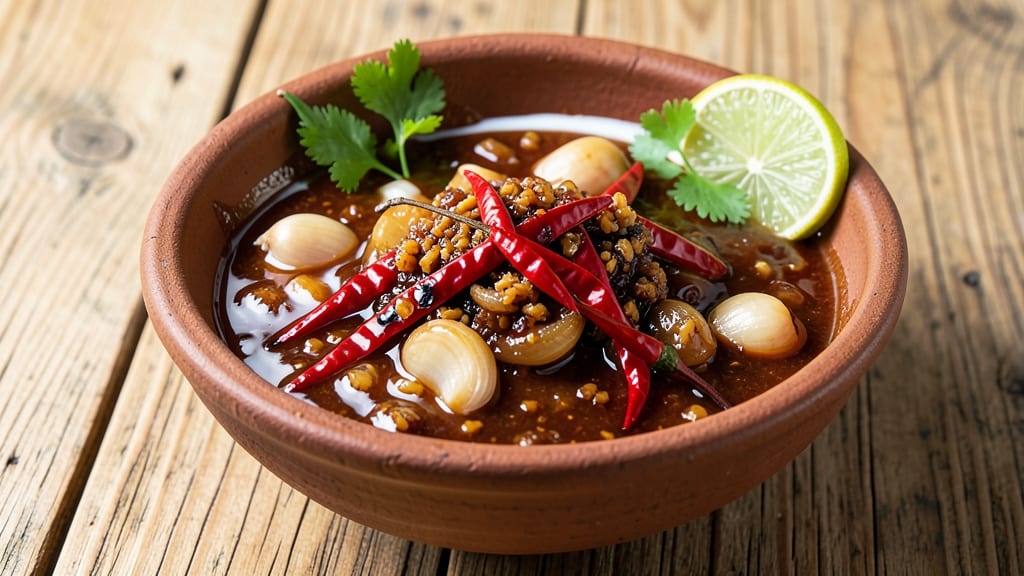
This Balinese sauce recipe transforms simple ingredients into a sweet-spicy coconut magic that elevates every dish it touches.
The secret lies in the perfect balance of fermented shrimp paste (terasi), fresh chilies, and creamy coconut milk—a combination that delivers deep umami, bright heat, and natural sweetness in every spoonful.
I developed this version after years of experimenting with traditional sambal recipes, refining it to be approachable yet packed with authentic flavor.
The sauce begins with a fragrant paste of shrimp, garlic, and shallots, toasted until aromatic before blending with fresh chilies and coconut milk. A touch of palm sugar caramelizes during cooking, creating a complex sweetness that cuts through the heat.
What makes this recipe special is its versatility—it works as a marinade, dipping sauce, or finishing glaze, adapting effortlessly to grilled meats, tofu, or even noodles.
What you’ll end up with is a rich, velvety sauce with layers of flavor: smoky from the shrimp paste, fruity from the coconut, and a lingering warmth from the chilies. The texture is silky yet slightly sticky, clinging perfectly to whatever it coats.
Best of all, it keeps well in the refrigerator for up to a week, so you can make a batch and use it throughout the week.
Pair this sauce with grilled chicken skewers, steamed fish, or stir-fried vegetables for an instant taste of Bali. The instructions are straightforward, but the results are anything but ordinary—this is the kind of sauce that turns simple meals into memorable experiences. Let’s get started!
Ingredients for balinese sauce
Nine essential ingredients transform into a velvety, aromatic sauce that bridges sweet and spicy flavors authentically.
| Ingredient | Amount | Notes |
|---|---|---|
| Fermented Shrimp Paste (Terasi) 🦐 | 2 tbsp | High-quality, aromatic variety |
| Fresh Red Chilies 🌶️ | 4 whole | Bird's eye or Thai chilies preferred |
| Garlic Cloves 🧄 | 6 cloves | Peeled, minced for aromatic depth |
| Shallots 🧅 | 4 whole | Peeled, finely chopped |
| Coconut Milk 🥥 | 1 ½ cups | Full-fat, canned for creaminess |
| Palm Sugar 🍯 | 2 tbsp | Or substitute brown sugar |
| Lime Juice 🍋 | 1 tbsp | Freshly squeezed for brightness |
| Fish Sauce 🍶 | 1 tbsp | Red Boat preferred for quality |
| Extra-Virgin Olive Oil 🫒 | 1 tbsp | For balancing heat |
| Salt 🧂 | ½ tsp | Diamond Crystal preferred |
The fermented shrimp paste (terasi) is the heart of this sauce—its umami depth cannot be replicated. Red Boat or Thai Kitchen brands deliver consistent quality, but if you're adventurous, look for it in Asian markets where it's often sold in small jars. Fresh red chilies should be vibrant and firm; avoid any with soft spots. The garlic and shallots need to be toasted until fragrant before blending—this step develops their natural sweetness and prevents bitterness. For the coconut milk, full-fat canned brands like Thai Kitchen provide the richest texture, though lighter versions work in a pinch if you're balancing heat with creaminess.
No terasi? A combination of fish sauce plus a pinch of shrimp powder (available at specialty stores) can approximate the flavor, though it won't capture the full complexity. Swap palm sugar for brown sugar or coconut sugar if unavailable—just reduce by 10% to account for moisture differences. For those avoiding fish sauce, soy sauce or tamari adds umami, though the sauce will taste subtly different. The lime juice is non-negotiable for brightness, but if you're out, a splash of rice vinegar or apple cider vinegar works in a bind. The olive oil serves as a heat balancer—use a high-quality extra-virgin to avoid overpowering the delicate coconut notes.
This sauce develops flavor as it sits, so plan to make it a day ahead if possible. Store in an airtight container in the refrigerator for up to 7 days, though the texture may separate slightly—simply stir before using. For longer storage, freeze in ice cube trays; thaw overnight in the fridge. The sauce pairs beautifully with grilled proteins or tofu, and its sweet-spicy profile makes it ideal for drizzling over noodles or rice dishes. If the sauce thickens too much after refrigeration, thin with a splash of water or coconut milk before reheating.
Why You'll Love This Recipe
- Pantry Magic: I swear by this sauce—I’ve made it with just what I had on hand, no fancy shopping. The terasi and shallots alone give it that deep, funky umami punch, so even if you’re skipping a few ingredients, it still delivers.
- Umami Bomb: That first crack of the terasi into the hot oil? My mouth waters every time. The garlic and chilies sizzle into something rich and smoky, then the coconut milk smooths it out—like a flavor hug in a bowl. (Yes, even on a Tuesday night.)
- Sauce for Everything: Drizzle it over grilled fish, toss it with noodles, or spoon it onto rice—it’s my secret weapon for turning simple meals into something special. Honestly, I’ve used it for breakfast burritos too. Don’t judge.
- Budget Stretch: A little goes a long way, and the ingredients? Cheap as chips. A block of terasi lasts me weeks, and coconut milk is one of those pantry staples that never disappoints. Leftovers? Even better the next day—if they last that long.
Step-by-step instructions for Balinese sauce
Master this aromatic sauce with precise technique and bold flavors.
Bloom the Fermented Shrimp Paste
Heat the 1 tablespoon extra-virgin olive oil in a medium saucepan over medium-low heat. Add the 2 tablespoons fermented shrimp paste (terasi) and stir continuously for 2-3 minutes until it develops a rich, nutty aroma and deepens in color to a dark amber. This step is crucial—it releases the umami depth without burning the paste.
Watch carefully as the paste begins to sizzle and smell intensely—this is when its complex flavors awaken. If it darkens too quickly, reduce the heat immediately to prevent bitterness. The paste should coat the bottom of the pan evenly, forming a glossy, aromatic base for your sauce.
Sauté Aromatics Until Fragrant
Add the 4 whole fresh red chilies and 6 cloves minced garlic to the pan, stirring for 1 minute until the chilies begin to soften and the garlic turns golden. Immediately add the 4 whole finely chopped shallots and cook for another 2-3 minutes until the shallots become translucent and the mixture emits a sweet, pungent aroma.
This stage should feel like a dance—keep the heat at medium-low to prevent burning the garlic while allowing the chilies to release their capsaicin heat. The sauce should smell like a Balinese spice market: sharp, sweet, and slightly funky. If the chilies aren't soft enough after 3 minutes, continue cooking for another minute—they need to break down completely for a smooth sauce.
Build the Sauce Base
Pour in the 1.5 cups coconut milk and bring to a gentle simmer over medium heat. Stir in the 2 tablespoons palm sugar and 1 tablespoon fish sauce, allowing the mixture to cook for 5-7 minutes until it reduces slightly and thickens into a velvety consistency. The sauce should coat the back of a spoon but still flow freely when stirred.
Taste the sauce at this stage—it should balance sweet, salty, and umami notes with a subtle heat from the chilies. If it tastes too sweet, add another ½ teaspoon fish sauce. If it lacks depth, let it reduce for another minute to concentrate the flavors. The coconut milk should be fully incorporated, leaving no trace of graininess.
Finish with Acid and Season
Remove the pan from heat and stir in the 1 tablespoon lime juice and 0.5 teaspoon salt. Let the sauce rest for 2 minutes to allow the acidity to brighten the flavors. Return the pan to low heat and simmer gently for 1 additional minute, stirring constantly to prevent scorching.
The final sauce should be glossy with a silky texture, where the heat from the chilies lingers on the tongue but doesn't overwhelm. The lime juice should cut through the richness of the coconut milk, creating a perfect balance. If the sauce is too thin, simmer uncovered for another minute to reduce further. For extra depth, you can blend it briefly with an immersion blender to achieve a completely smooth texture.
Pro Tips For Making Balinese Sauce
- Bloom the Aromatics Slowly: I learned this the hard way—throwing in chopped shallots and garlic at full blast will burn them before they release flavor. Start with a dry pan over medium heat, add the aromatics, and let them sizzle gently for 3-4 minutes until soft and fragrant. Only then add the terasi and chilies, or you’ll end up with bitter, charred bits.
- Toast the Terasi First: That shrimp paste isn’t just for flavor—it’s the backbone of the sauce. Before adding anything else, fry the terasi in a hot pan for 30 seconds until it sizzles and releases its aroma. This step deepens its umami punch and prevents the sauce from tasting raw or fishy later.
- Strain the Coconut Milk: Skip the can’s thick residue, or your sauce will turn greasy and uneven. After simmering, pour the coconut milk through a fine-mesh sieve lined with cheesecloth to remove the fibrous bits. It’s extra work, but the result is silky, not clumpy.
- Simmer, Don’t Boil: After adding coconut milk, keep the heat at a gentle simmer—never a rolling boil—or the sauce will curdle like a science experiment gone wrong. A low, steady heat lets the flavors meld without breaking the coconut’s delicate fat. (Yes, even if you’re impatient like me.)
Storing and reheating your leftovers
Refrigerator Storage
Store your Balinese sauce in an airtight glass container—I prefer Pyrex with a snap-on lid—and refrigerate for up to 7 days. The sauce will thicken slightly after chilling, so stir vigorously before using.
The flavors actually deepen overnight as the ingredients meld together, making it even more complex. Place a piece of parchment paper directly on the sauce's surface to prevent a skin from forming. 🥥
Freezing for Longer Use
For extended storage, freeze the sauce in ice cube trays or small silicone molds—this makes it easy to thaw just what you need. Once frozen, transfer the cubes to a freezer bag and store for up to 3 months.
Thaw overnight in the refrigerator, then stir to restore its silky texture. Avoid refreezing thawed portions, as this can degrade the sauce's quality.
Reheating Methods
For stovetop reheating, transfer the sauce to a small saucepan and warm over low heat for 3-5 minutes, stirring constantly. Add 1-2 tablespoons water or coconut milk if it thickens too much.
Never boil the sauce—this can break down the delicate coconut milk and intensify the heat. For microwave reheating, use 50% power for 30-second intervals, stirring between each interval until just warmed through.
Texture Recovery Tips
If your refrigerated sauce separates, simply whisk in 1 tablespoon warm coconut milk or water to restore its velvety consistency. For extra smoothness, blend briefly with an immersion blender—this works wonders for reincorporating any separated coconut fat.
Avoid over-blending, as this can emulsify the sauce too aggressively and alter its natural texture. The goal is to revive, not transform. 💫
Sauce Thinning Adjustments
If your reheated sauce is too thick, thin with coconut milk, water, or even a splash of lime juice to balance the flavors. For a richer consistency, reduce the sauce by simmering uncovered for 1-2 minutes on the stovetop.
Remember, the sauce should coat the back of a spoon but still flow freely—this is the ideal texture for drizzling or dipping. Taste as you adjust to maintain that perfect sweet-spicy balance.
Using Leftovers Creatively
Don't let leftover sauce go to waste! Use it as a marinade for grilled chicken or tofu, a dipping sauce for spring rolls, or a finishing glaze for roasted vegetables.
The sauce also makes an incredible base for quick stir-fries—just toss in your favorite veggies and protein. For a unique twist, mix a spoonful into smoothies or cocktails (yes, really!) for an exotic flavor boost. The possibilities are endless once you've got this versatile sauce on hand. 🌶️
Nutrition facts
Frequently asked questions
Can I make this Balinese sauce without shrimp paste?
Yes, but the flavor will be different. Replace the 2 tbsp shrimp paste with 1 tbsp fish sauce plus ½ tsp shrimp powder (found in Asian markets). For a vegetarian option, use 1 tbsp soy sauce plus ½ tsp nutritional yeast—though the umami depth won't be identical. The sauce will still taste delicious but will lack the signature funky, savory complexity.
How spicy will this sauce be?
The heat depends on the chilies you use. With 4 fresh red chilies, this recipe yields a medium heat (4-5/10)—bright and noticeable but not overwhelming. For milder heat, reduce to 2 chilies or remove seeds before chopping. For extra kick, add 1 tsp chili flakes or an extra chili. Always taste before serving!
What's the best way to use this sauce?
This versatile sauce works as a dipping sauce for spring rolls, marinade for grilled meats or tofu, or finishing glaze for roasted veggies. Try drizzling it over noodle dishes like mie goreng or mixing into curries for instant depth. The sweet-spicy balance makes it perfect for balancing rich flavors like coconut or fatty proteins.
Why did my sauce separate after refrigerating?
This is normal! The coconut milk naturally separates when chilled. Simply whisk in 1 tbsp warm coconut milk or water and stir vigorously. For extra smoothness, blend briefly with an immersion blender. The texture will return to velvety in seconds—no need to remake it. Just avoid shaking the container, as this can emulsify the sauce permanently.
Can I adjust the sweetness level?
The 2 tbsp palm sugar creates a perfect balance, but you can adjust to taste. For less sweetness, reduce to 1 tbsp or omit entirely. For more, increase to 3 tbsp and add ½ tsp lemon juice to balance. If using brown sugar, reduce by 10% since it's more moist. Taste after simmering to achieve your ideal ratio.