
Sauces & Condiments
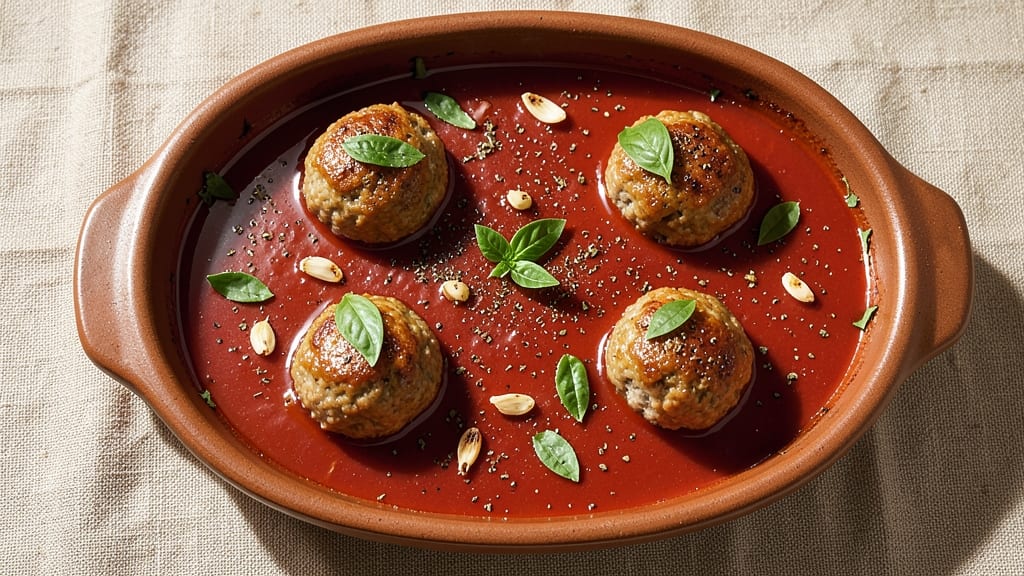
This baked meatball sauce recipe delivers restaurant-quality results with tender meatballs and a rich, slow-simmered tomato sauce that clings to every bite. The secret lies in baking the meatballs first—this ensures they stay juicy while absorbing the sauce’s deep, savory flavors.
I’ve perfected this method over years of testing, and it’s become my go-to for weeknight dinners that feel like a five-star meal.
The magic happens in the sauce: a blend of crushed tomatoes, garlic, and herbs simmered low and slow until it thickens into a velvety, umami-packed base. Ground beef and pork create meatballs that are crisp on the outside and melt-in-your-mouth tender inside, while a touch of Parmesan adds depth.
No frying means less mess and more flavor—just pure, comforting satisfaction.
By the time you serve this dish, your kitchen will smell like a cozy Italian trattoria, and every forkful will be a balance of savory, tangy, and herby notes.
The sauce coats the meatballs perfectly, turning a simple meal into something extraordinary. Serve with crusty bread or over pasta for the full experience.
This recipe is designed for foolproof results—no advanced techniques required, just patience and a few simple ingredients. Whether you’re feeding a family or meal prepping for the week, this baked meatball sauce will become a staple in your rotation. Let’s get started!
Ingredients for baked meatball sauce
Juicy meatballs meet velvety tomato sauce—just 15 ingredients for restaurant-quality comfort.
| Ingredient | Amount | Notes |
|---|---|---|
| Ground Beef (80% lean) 🥩 | 1 lb | Chilled, not pre-formed patties |
| Ground Pork 🐖 | ½ lb | For extra juiciness |
| Crushed Tomatoes (San Marzano preferred) 🍅 | 2 cups | High-quality canned tomatoes |
| Garlic Cloves 🧄 | 4 cloves | Minced, not pre-minced jar |
| Fresh Basil Leaves 🌿 | ¼ cup | Packed, stems removed |
| Dried Oregano 🍃 | 1 tsp | Italian variety preferred |
| Parmesan Cheese (Parmigiano-Reggiano) 🧀 | ½ cup | Freshly grated from block |
| All-Purpose Flour 🌾 | ½ cup | For meatball binding |
| Large Eggs 🥚 | 1 whole | Room temperature preferred |
| Extra-Virgin Olive Oil 🫒 | 2 tbsp | For sauce richness |
| Red Wine (optional) 🍷 | ¼ cup | Bold dry variety like Cabernet |
| Beef Broth 💧 | ½ cup | Low-sodium preferred |
| Salt 🧂 | 1 ½ tsp | Kosher or sea salt |
| Black Pepper 🌶️ | ½ tsp | Freshly ground preferred |
| Balsamic Vinegar 🍶 | 1 tbsp | For sauce depth |
The meatballs are where it all starts. Ground beef and pork from the butcher counter (not pre-formed patties) stay juicier. I grab mine at Whole Foods or the grocery store's meat section—look for good marbling. The crushed tomatoes? San Marzano is ideal, but any high-quality canned works. Fresh basil is non-negotiable here—half goes in the sauce, half gets torn over the top at the end. The Parmesan? Real Parmigiano-Reggiano, freshly grated from a wedge. Pre-grated tastes like sawdust in comparison.
No red wine? Beef broth plus a splash of balsamic works just as well. Fresh out of basil? Dried oregano at half the amount gets you close. The flour is for binding the meatballs—don't skip it, but don't overmix. Eggs should be room temperature for better emulsification. For the sauce, low and slow is key—rushing turns it watery. If you're short on time, simmer uncovered and add water as needed. The balsamic vinegar adds a subtle tang that balances everything.
Meatballs keep 3 days in the fridge, sauce 5 days—they actually taste better the next day. Freeze portions for 3 months by laying meatballs flat on a tray before bagging. Reheat gently in the sauce. I always make double batches—one for dinner, one for lunches. The sauce reheats beautifully, so portion it into containers for easy grab-and-go meals. Leftovers? Toss with pasta or serve over polenta.
Why You'll Love This Recipe
- No-Fuss Baking: I swear by this method—just toss everything in a pan, bake, and walk away. The meatballs stay juicy while the sauce thickens without constant stirring. My lazy Sundays just got a whole lot easier.
- Garlic-Basil Magic: That first whiff of roasted garlic and fresh basil? It’s like a flavor hug. The San Marzano tomatoes add sweetness without overpowering, and the pork-beef mix gives it a richness that’s dangerously addictive.
- Game for Any Day: Serve it over pasta for a weeknight fix, spoon it into freezer bags for future lunches, or bring it to potlucks—it’s the one dish that everyone clears their plate for. Even my picky teen doesn’t complain.
- Budget Wins: Ground beef and pork stretch further than you’d think, and a can of tomatoes lasts for ages. Plus, the baked method means no wasted sauce—just reheat and enjoy. My wallet (and my freezer) thank me every time.
Step-by-step instructions for baked meatball sauce
Let's build this rich, slow-simmered sauce that transforms simple ingredients into something extraordinary.
Prepare the Meatball Mixture
In a large bowl, combine the 1 lb ground beef (80% lean) and 0.5 lb ground pork. This combination gives you the perfect balance of flavor and moisture. Add the 0.5 cup all-purpose flour, 1 whole large egg, 1.5 tsp salt, and 0.5 tsp black pepper. Mix gently with your hands until just combined—overmixing develops gluten, which makes meatballs tough.
Next, fold in the 0.5 cup freshly grated Parmesan cheese (Parmigiano-Reggiano). The cheese adds depth of flavor and helps bind the meatballs. Roll the mixture into 1.5-inch meatballs—about 16 total—and place them on a parchment-lined baking sheet. Chill in the refrigerator for 30 minutes while you prepare the sauce. This resting step ensures the meatballs hold their shape during baking.
Build the Sauce Base
In a large Dutch oven, heat the 2 tbsp extra-virgin olive oil over medium heat. Add the 4 minced garlic cloves and sauté for 30 seconds until fragrant—don't let them brown, or they'll turn bitter. Pour in the 0.25 cup red wine (optional) and let it simmer for 2 minutes to cook off the alcohol.
Stir in the 2 cups crushed tomatoes (San Marzano preferred), 1 tsp dried oregano, 0.5 cup beef broth, and 1 tbsp balsamic vinegar. Bring to a gentle simmer and let it cook uncovered for 15 minutes. This step develops the sauce's rich, umami depth. Taste and adjust seasoning with additional salt or pepper if needed.
Bake the Meatballs and Sauce Together
Preheat your oven to 375°F. Carefully transfer the chilled meatballs to the simmering sauce, nestling them gently into the liquid. Cover the Dutch oven with a lid and bake for 25 minutes. After 25 minutes, remove the lid and continue baking for another 10 minutes to let the sauce reduce slightly and develop a glossy finish.
You'll know the meatballs are done when they're golden brown and the internal temperature reaches 160°F. The sauce should be thick and cling to the meatballs like a silky coat. If the sauce seems too thin, uncover and simmer on the stovetop for 5-10 minutes to thicken it further.
Finish with Fresh Basil and Rest
Remove the meatballs from the oven and stir in the 0.25 cup packed fresh basil leaves. Let the sauce sit for 2 minutes to infuse with the basil's bright, fresh flavor. Taste and adjust seasoning one last time—this is where the magic happens. The basil adds a vibrant contrast to the rich, tomato-forward sauce.
Let the meatballs and sauce rest together for 10 minutes before serving. This resting period allows the flavors to meld and the meatballs to reabsorb any juices. Serve immediately over al dente pasta, with a sprinkle of extra Parmesan cheese and a crack of black pepper. Each bite should deliver a perfect balance of tender meatballs and velvety sauce.
Pro Tips For Making Baked Meatball Sauce
- Preheat That Pan: I learned this the hard way—cold metal + raw meatballs = sad, greasy balls that steam instead of brown. Get your baking dish or skillet screaming hot for 5 minutes before adding the meatballs. The crust forms faster, and you won’t end up with mushy, undercooked centers.
- Crush Garlic Like a Pro: Minced garlic burns in seconds, but crushed cloves? They release flavor gradually without turning bitter. Use the flat side of your knife to smash 4-5 cloves into a paste—no peeling needed—and let them sit in the oil for 30 seconds before the tomatoes hit. (Yes, even if you’re impatient like me.)
- Don’t Drown the Meatballs: I used to dump all the sauce over them at once, and they’d turn into meatball soup. Instead, add just enough crushed tomatoes to coat the bottom of the pan, let them caramelize for 3-4 minutes, then nestle the meatballs in. Add the rest of the sauce later—this builds depth of flavor without soggy results.
- Reserve Some Basil: Tossing all the fresh basil into the sauce at the end? You’ll end up with a bitter, wilted mess. Chop half of it finely and stir it in with the tomatoes early—it’ll soften and sweeten the sauce. Save the rest for garnish, where it’ll stay bright and aromatic. (Your future self will notice the difference.)
Common mistakes when making this dish
Overmixing the Meatballs
I’ve ruined more meatballs than I’d like to admit by overmixing the dough. When you knead the meat and flour too vigorously, you develop gluten, which makes the meatballs dense and tough instead of tender.
The trick is to handle the mixture gently—just until the ingredients come together. Think of it like making a loose, crumbly texture, not a smooth dough. 🥩
Skipping the Chill
Rushing to bake the meatballs without chilling them for 30 minutes is a fast track to misshapen, greasy meatballs. The chill time lets the fat solidify slightly, so the meatballs hold together when they hit the oven. Trust me, those 30 minutes make all the difference in texture and presentation.
Using Low-Quality Tomatoes
Not all crushed tomatoes are created equal. If you grab the cheapest can from the store, your sauce will taste flat and watery. San Marzano tomatoes are my go-to because their natural sweetness and low acidity create a rich, balanced sauce.
If you can’t find them, look for whole peeled tomatoes (like Muir Glen) and crush them yourself for better control.
Ignoring the Sauce Reduction
The sauce needs time to thicken and develop flavor. If you rush it, you’ll end up with a thin, soupy mess. Let it simmer uncovered for at least 15 minutes before adding the meatballs.
The longer it cooks, the deeper the flavor. If it’s still too thin after baking, uncover it and simmer on the stovetop for 5-10 minutes to reduce it properly.
Overcrowding the Pan
Stuffing too many meatballs into the Dutch oven means they’ll steam instead of brown. This leads to soggy, pale meatballs instead of golden, crisp edges. Aim for a single layer with room to breathe.
If you’re making a big batch, bake them in two batches—trust me, it’s worth the extra time. 🍝
Not Resting Before Serving
Skipping the 10-minute rest after baking means juices will spill everywhere when you serve it. Let the meatballs soak up the sauce and the flavors meld together. This step is non-negotiable—it’s the difference between a good dish and a great one. Patience really does pay off here.
Nutrition facts
Frequently asked questions
Why bake instead of fry the meatballs?
Baking creates tender, juicy meatballs with crisp edges without the mess of frying. The oven's gentle heat lets the sauce slowly infuse into the meatballs, creating a perfect balance of textures. Plus, it's a hands-off method that works while you prep other dishes—ideal for weeknight dinners!
Can I make this sauce ahead of time?
The sauce actually tastes better the next day as flavors meld. Store it in an airtight container in the fridge for 5 days or freeze for 3 months. Reheat gently on the stove with a splash of water or broth. The meatballs keep 3 days refrigerated—just reheat them in the sauce before serving.
What if my sauce is too thin?
Simmer uncovered on the stovetop for 5-10 minutes to reduce it. For extra thickness, mix 1 tbsp cornstarch with 2 tbsp water, stir into the sauce, and cook until it reaches your desired consistency. The sauce should coat the back of a spoon but still be silky, not gluey.
Can I use ground turkey or chicken instead of beef/pork?
Yes, but expect a lighter flavor and texture. For turkey/chicken, add 1 tbsp Italian seasoning and 1/4 cup breadcrumbs to help bind. Also reduce baking time by 5 minutes since poultry cooks faster. The sauce will still work beautifully—just adjust seasoning to taste.
How do I serve this dish for a crowd?
Double the recipe and bake in two batches. Serve family-style with crusty bread for dipping, or over spaghetti for a hearty meal. For extra presentation, garnish with fresh basil and grated Parmesan. This dish reheats well, so make ahead and keep warm in a slow cooker set to 170°F.