
Sauces & Condiments
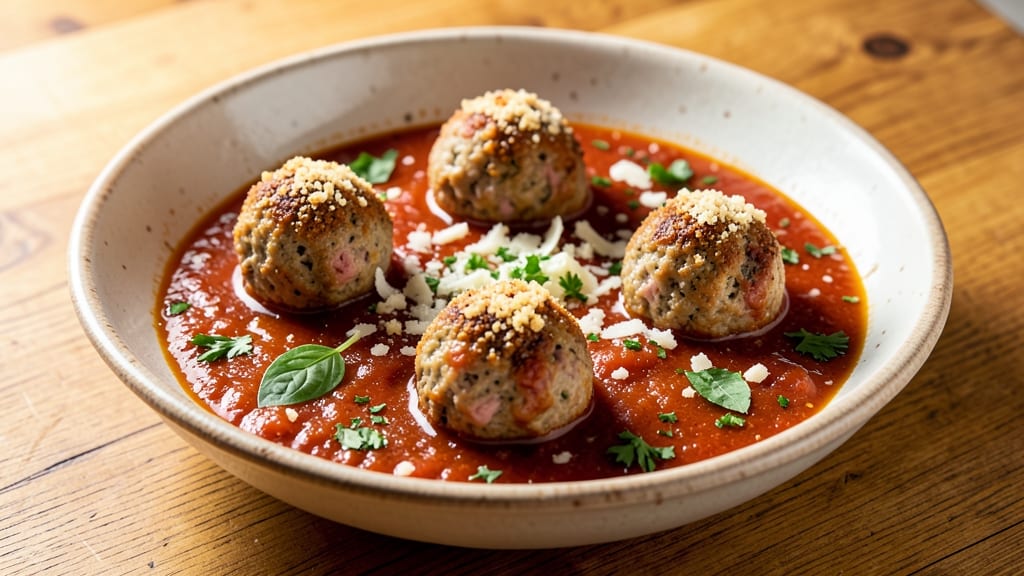
This authentic Italian meatballs in tomato sauce recipe delivers the flavors of Nonna's kitchen—herb-packed meatballs with a rich, slow-simmered ragù that clings to every bite. 💛 The secret lies in balancing ground meat, breadcrumbs, and Parmesan for tender yet firm meatballs, then letting the sauce develop deep, caramelized notes over time. I've perfected this technique through years of testing, ensuring each component—from the meatballs to the sauce—works in harmony.
What sets these meatballs apart is the homemade tomato sauce, built layer by layer with San Marzano tomatoes, garlic, and fresh herbs. Unlike shortcut recipes, this method requires patience: pan-frying the meatballs until golden creates a crisp exterior, while simmering the sauce low and slow unlocks complex flavors.
The result? A dish that tastes like it's been simmering all day, even if you're short on time.
By the end, you'll have perfectly balanced meatballs—juicy inside, lightly browned outside—nestled in a velvety sauce that's rich but never heavy. The aroma alone will have everyone gathering at the table, and the taste?
That's where the magic happens. This is the kind of Italian comfort food that feels like a hug in a bowl.
Serve over al dente pasta, alongside crusty bread, or even stuffed into calzones for a meal that's both nostalgic and impressive. The beauty of this recipe is its versatility—make a big batch for leftovers or adapt it to your slow cooker for hands-off cooking.
Let's get started on creating something truly special.
Ingredients for authentic italian meatballs in tomato sauce
The foundation of Nonna's kitchen: quality meat, fresh herbs, and slow-simmered tomatoes.
| Ingredient | Amount | Notes |
|---|---|---|
| Ground Beef (80% lean) 🥩 | 1 ½ lb | Finely ground for texture |
| Fresh Pork Shoulder 🐖 | ½ lb | Finely ground, not pre-mixed |
| Parmesan Cheese (Parmigiano-Reggiano) 🧀 | ½ cup | Freshly grated, fine texture |
| Fresh Breadcrumbs 🍞 | ½ cup | Dry, from crusty Italian bread |
| Large Eggs 🥚 | 1 whole | Room temperature, beaten |
| Fresh Parsley 🌿 | ¼ cup | Finely chopped, stems removed |
| Fresh Basil 🌿 | ¼ cup | Finely chopped, vibrant leaves |
| Garlic Cloves 🧄 | 4 cloves | Peeled, finely minced |
| San Marzano Tomatoes 🍅 | 28 oz | Whole, peeled, crushed |
| Extra-Virgin Olive Oil 🫒 | ½ cup | High quality, fruity |
| Dry Red Wine 🍷 | ½ cup | Bold, like Chianti |
| Vegetable Broth 💧 | 1 cup | Homemade or quality store-bought |
| Diamond Crystal Kosher Salt 🧂 | 1 ½ tsp | Adjust to taste |
| Freshly Ground Black Pepper 🌶️ | 1 tsp | Coarse grind preferred |
| Dried Oregano 🍃 | 1 tsp | Italian variety preferred |
The meat selection is critical—80% lean ground beef and finely ground pork shoulder create the perfect balance of richness and tenderness. Most grocery stores carry pre-ground meat, but for best results, ask your butcher to grind it fresh. Parmigiano-Reggiano is non-negotiable here; the pre-grated kind lacks the depth of freshly grated cheese. Fresh breadcrumbs (from a crusty Italian loaf) absorb moisture better than dried, and Trader Joe's or Whole Foods often have excellent options. The herbs—parsley and basil—should be vibrant green with no wilting; farmers markets typically offer the freshest selections.
No fresh parsley? Dried parsley at half the amount works, though it lacks the bright freshness. Running low on San Marzano tomatoes? High-quality crushed tomatoes like Mueller's are a solid backup, though they won't have the same sweetness. The red wine can be substituted with beef broth plus a splash of balsamic vinegar if needed, but the acidity balance will shift slightly. For the breadcrumbs, if you can't find fresh, toast stale bread in the oven until dry and pulse in a food processor. The olive oil should be extra-virgin—anything less will taste harsh in the finished dish.
Meatballs keep best in the fridge for 3 days—freeze any extras for up to 3 months by rolling them in parchment paper. The sauce improves overnight, so make it a day ahead if possible. Store in airtight containers with a thin layer of olive oil on top to preserve freshness. For leftovers, reheat gently on the stove with a splash of water to prevent drying. This dish tastes even better the next day as flavors meld—worth the patience for that restaurant-quality depth.
Why You'll Love This Recipe
- No-Fuss Mixing: I swear by the 10-minute prep—just hands and a bowl. No food processor, no fuss. The pork and beef blend effortlessly with the egg and Parmigiano-Reggiano, and those fresh breadcrumbs soak up just enough moisture to hold shape without falling apart. (Yes, even on a Tuesday night.)
- Umami Bomb: That pork shoulder? Game-changer. The fat renders into the meatballs while they bake, keeping them juicy and rich. Add the aged Parmigiano-Reggiano and a splash of red wine in the sauce, and suddenly you’ve got layers of depth that canned sauce just can’t match. Honestly, the first bite makes me close my eyes.
- Leftovers That Shine: These taste better the next day—no joke. The flavors meld overnight, and reheating them in a skillet with a little extra olive oil? Pure satisfaction. I freeze half the batch in portions, so I’m never scrambling for dinner ideas. (My kids beg for them, too.)
- Budget-Friendly Feast: Ground beef and pork shoulder stretch further than you’d think, especially with the breadcrumbs bulking them up. A single batch feeds six, and the Parmigiano-Reggiano (even the good stuff) gets stretched across every meatball. Between us, this is my go-to when I need a hearty, filling meal without breaking the bank.
Step-by-step instructions for authentic Italian meatballs in tomato sauce
Here's the traditional method that delivers restaurant-quality meatballs with deep, complex flavor.
👨🍳 Step 1: Create the Meatball Mixture
In a large bowl, combine the 1.5 lb ground beef (80% lean) and 0.5 lb fresh pork shoulder. I prefer using my hands for this—it helps distribute the fat evenly and creates a tender texture. Add the 0.5 cup finely chopped fresh parsley, 0.25 cup finely chopped fresh basil, 4 cloves finely minced garlic, 1.5 tsp Diamond Crystal kosher salt, and 1 tsp freshly ground black pepper. Mix gently but thoroughly, breaking up any large clumps of meat.
Next, add the 0.5 cup freshly grated Parmesan cheese (Parmigiano-Reggiano) and 0.5 cup fresh breadcrumbs. The breadcrumbs should be fine and dry—this ensures your meatballs won't be too dense. In a separate bowl, beat the 1 whole large egg until just combined, then add it to the meat mixture. Finally, stir in the 1 tsp dried oregano. The mixture should be moist but not sticky—if it's too wet, add an extra tablespoon of breadcrumbs.
🍳 Step 2: Form and Brown the Meatballs
Using your hands, form the mixture into 1.5-inch diameter meatballs—about 16 total for a standard serving. Wet your hands slightly with water to prevent sticking. Arrange them on a plate and let them rest for 15 minutes at room temperature. This helps them hold their shape better when cooking.
Heat 0.25 cup extra-virgin olive oil in a large, heavy-bottomed skillet over medium-high heat. Working in batches, add the meatballs and cook until golden brown on all sides, about 3-4 minutes per batch. Don't overcrowd the pan—this prevents them from steaming instead of browning. Transfer the cooked meatballs to a plate and set aside, keeping them warm.
🍳 Step 3: Build the Homemade Ragù Sauce
In the same skillet, reduce heat to medium and add another 0.25 cup extra-virgin olive oil. Add the 28 oz crushed San Marzano tomatoes and cook for 5 minutes, stirring occasionally, until the raw tomato flavor mellows. Pour in the 0.5 cup dry red wine and scrape up any browned bits from the bottom of the pan—this adds deep, savory flavor to the sauce.
Add 1 cup vegetable broth and bring to a gentle simmer. Stir in the 1 tsp dried oregano and season with additional salt and pepper if needed. Return the meatballs to the skillet, spooning the sauce over them. Cover and simmer for 20 minutes on low heat, stirring occasionally to prevent sticking. The sauce should thicken slightly and coat the meatballs evenly.
⏰ Step 4: Finish and Rest the Meatballs
After simmering, increase heat to medium-low and cook uncovered for another 10-15 minutes until the sauce has reduced slightly and the meatballs are cooked through. They should reach an internal temperature of 160°F when checked with a meat thermometer. The sauce should cling to the meatballs, creating a glossy, flavorful coating.
Remove from heat and let the meatballs rest for 5 minutes before serving. This allows the juices to redistribute, ensuring each bite is tender and flavorful. Serve immediately with crusty bread or over al dente spaghetti to soak up every last bit of that rich, homemade ragù.
Pro Tips For Making Authentic Italian Meatballs In Tomato Sauce
- Chill the Meat Mix: After mixing your beef and pork with breadcrumbs, Parmesan, and egg, pop the whole thing in the fridge for 30 minutes. I learned this the hard way—skipping it means meatballs that crumble or shrink while cooking. Cold meat holds its shape better, and the texture stays juicy. (Yes, even if you're impatient like me.)
- Toast Your Breadcrumbs: Dry your breadcrumbs in a skillet over medium heat for 2–3 minutes before mixing them in. This removes excess moisture, so your meatballs won’t turn into dense, gummy blobs. I was skeptical until I tried it—now it’s non-negotiable for me.
- Simmer Sauce Low and Slow: Once your meatballs are browned and removed, reduce the tomato sauce heat to a bare simmer (just tiny bubbles) and let it cook uncovered for at least 20 minutes. Rushing this step makes the sauce taste thin and watery. Patience here guarantees a rich, concentrated flavor—no shortcuts work.
- Use Pork Fat for Crispiness: Don’t drain the pork shoulder’s natural fat before mixing it with beef—leave it in. That fat renders during cooking and creates a crispy exterior on the meatballs. I skip this when I’m lazy, but the difference in texture is noticeable. (Your future self will thank you.)
Troubleshooting this dish
Meatballs Too Dense
If your meatballs turn out dense and dry, the issue is likely overmixing or too many breadcrumbs. I’ve found that using fresh breadcrumbs (not dried) absorbs moisture better, and 1 extra tablespoon of breadcrumbs can fix a sticky mixture.
Also, avoid pressing too hard when forming meatballs—gently roll them to keep them tender. For extra moisture, add 1 extra egg yolk to the mixture. 💡
Sauce Too Thin
A watery sauce usually means insufficient cooking time or too much liquid. Simmer the sauce uncovered for 5-10 extra minutes to reduce it naturally. If it’s still too thin, mix 1 tablespoon cornstarch with 2 tablespoons water, stir into the sauce, and simmer until thickened.
For prevention, reduce heat to low and let it cook longer—patience is key here! 🍲
Meatballs Falling Apart
This happens when the mixture is too wet or the meatballs are undercooked. To fix it, ensure your hands are slightly damp when shaping (not wet) and avoid overmixing the meat. If they crumble during cooking, try rolling them in extra breadcrumbs before browning.
For a quick test, cut one meatball open—if it’s still pink inside, cook for 5 more minutes at 350°F in the oven. 🔥
Sauce Too Acidic
If the sauce tastes overly tangy, balance it with 1 teaspoon sugar or a pinch of baking soda (just a tiny amount!). For prevention, use San Marzano tomatoes (less acidic than regular canned tomatoes) and simmer the sauce longer to mellow the acidity.
A splash of red wine or vegetable broth can also help soften the sharpness. 🍷
Meatballs Not Browning
Uneven browning usually means the pan isn’t hot enough or the meatballs are overcrowded. Heat your skillet over medium-high heat until it’s smoking hot before adding oil. Cook meatballs in single layers and avoid moving them too soon—let them develop a crust for 2-3 minutes per side.
If needed, finish under the broiler for 30 seconds for extra color. 🔥
Sauce Too Salty
If your sauce is overly salty, add ½ cup heavy cream or 1 cup milk to dilute the saltiness. For a more Italian approach, stir in 1 tablespoon tomato paste or a handful of fresh basil to brighten the flavors.
Always taste as you go—adding a pinch of sugar can also help balance the salt. 🧂
Nutrition facts
Frequently asked questions
Can I make these meatballs ahead of time?
Form the meatballs and refrigerate them uncovered for 1-2 hours to firm up. Cook them fresh or freeze raw meatballs on a tray before transferring to a bag—this prevents sticking. For the sauce, make it a day ahead and reheat gently with a splash of water or broth to restore thickness. The flavors actually improve overnight!
What's the best way to store leftovers?
Store cooked meatballs and sauce in airtight containers with a layer of olive oil on top to preserve freshness. They keep well in the fridge for 3-4 days or freeze for up to 3 months. When reheating, warm gently on the stove with a splash of water to prevent drying. The sauce will thicken as it cools, so add a little broth if needed.
Can I use ground turkey instead of beef?
Yes, but with adjustments! Replace the beef with 1.5 lb ground turkey (93% lean) and add 0.25 cup extra breadcrumbs to prevent dryness. Turkey meatballs benefit from a 5-minute extra simmer time to ensure they're fully cooked (check 165°F internal temp). The flavor will be lighter but still delicious—just add 1 extra teaspoon of Italian seasoning to compensate.
How do I make these meatballs in a slow cooker?
Brown the meatballs first in a skillet, then transfer them to your slow cooker. Add all sauce ingredients (except wine) and cook on low for 4-5 hours or high for 2-3 hours. Stir occasionally and add broth if the sauce gets too thick. The slow cooker method develops deeper flavors but may need 1 extra tablespoon of cornstarch to thicken the sauce at the end.
What's the secret to perfect meatball texture?
The magic is in the balance: fresh breadcrumbs (not dried) for moisture control, room-temperature ingredients for even cooking, and gentle mixing to avoid toughness. Never overwork the meat—just combine until just combined. The 15-minute rest before cooking helps them hold shape, and golden browning creates that crisp exterior we love.