
Sauces & Condiments
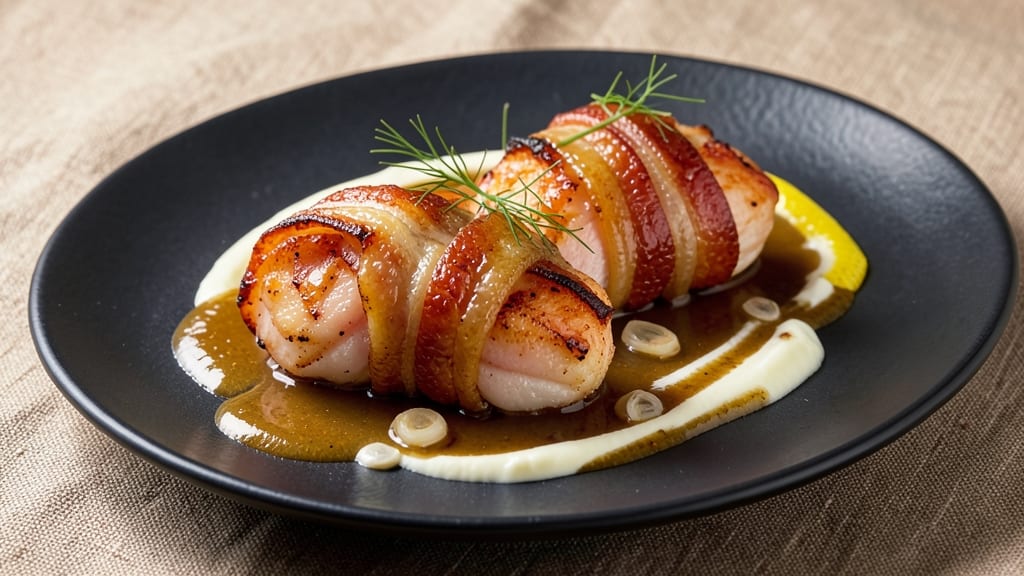
This bacon-wrapped scallops sauce recipe transforms ordinary bacon-wrapped scallops into a restaurant-worthy masterpiece—where crispy edges meet rich, caramelized sweetness in every bite. The secret lies in balancing tangy Dijon, smoky bacon fat, and real maple syrup for a sauce that's complex yet effortless to make.
What sets this apart is how it clings to the scallops without overpowering their delicate texture, creating a perfect harmony of flavors.
The sauce starts with a simple reduction of maple syrup and Dijon mustard, then gets elevated by whisking in reduced bacon fat—this is where the magic happens. The smoky depth from the bacon complements the scallops' natural sweetness while the mustard adds just enough tang to cut through the richness.
What you'll end up with is a glossy, velvety glaze that's equally at home drizzled over the scallops or spooned alongside for dipping.
This recipe delivers crispy edges on the scallops while the sauce remains silky-smooth, thanks to a slow reduction process that concentrates the flavors without burning. The best part? It comes together in just 15 minutes while you're cooking the scallops, so there's no extra time commitment.
The sauce keeps well in the fridge for up to 5 days, making it perfect for meal prep or hosting dinner guests.
Pair this glaze with roasted vegetables or a simple arugula salad to round out the meal—its versatility makes it a go-to for weeknight dinners or special occasions.
The combination of smoky, sweet, and tangy notes ensures every bite feels indulgent without being heavy. Let's create this sauce that'll have everyone asking for seconds.
Ingredients for bacon wrapped scallops sauce
Eight ingredients, three bold flavors—maple's sweetness, Dijon's tang, and bacon's smoky depth come together for a sauce that'll make your scallops unforgettable.
| Ingredient | Amount | Notes |
|---|---|---|
| Real Maple Syrup 🍯 | ½ cup | Grade B for deeper flavor |
| Dijon Mustard 🍯 | 2 tbsp | High-quality, smooth variety |
| Bacon Fat 🥓 | ½ cup | From cooked bacon, rendered |
| Unsalted Butter 🧈 | 2 tbsp | Cold, cubed for glossy finish |
| Fresh Lemon Juice 🍋 | 1 tbsp | Bright, freshly squeezed |
| Shallots 🧅 | 2 whole | Minced, for subtle sweetness |
| Sea Salt 🧂 | ½ tsp | Diamond Crystal preferred |
| Freshly Ground Black Pepper 🌶️ | ¼ tsp | For finishing touches |
The bacon fat is where the magic happens—save it from cooking bacon in a jar or container. Costco sells bacon in bulk, so you'll always have extra fat on hand. For the maple syrup, Grade B has that deeper, caramel-like flavor that pairs perfectly with the scallops' natural sweetness. I always grab a small bottle of Worcestershire Grade B at the grocery store—it's worth the splurge. The shallots add a subtle sweetness that rounds out the sauce beautifully, so don't skip them. Freshly ground black pepper makes all the difference at the end—trust me on this one.
No bacon fat? Render your own from thick-cut bacon—it's easier than you think. Short on maple syrup? Agave nectar or honey works in a pinch, but the flavor won't be quite the same. The Dijon mustard is non-negotiable here—it gives that perfect tang. If you can't find Grade B maple, Grade A will work, but it won't have that same rich depth. The butter adds richness and helps create that silky texture, so don't substitute with margarine. For extra tang, add a splash of lemon juice—it brightens everything up.
This sauce keeps beautifully in the fridge for up to 5 days, so make extra for leftovers. It reheats perfectly—just warm it gently on the stove or microwave for 20 seconds. Store it in a small jar or airtight container to keep the flavors concentrated. The sauce thickens as it cools, so you can thin it with a splash of water or lemon juice if needed. Perfect for drizzling over scallops, spooning alongside, or even using as a glaze for roasted vegetables.
Why You'll Love This Recipe
- Foolproof Timing: I swear by this recipe when I’m starving but need dinner now—just sear the scallops, wrap the bacon, and let the maple-Dijon glaze do its magic while you toss a salad. The sauce reduces in minutes, so no babysitting the stove.
- Sweet-Savory Magic: That first bite? Crispy bacon meets tender scallops drenched in a glossy sauce where real maple syrup and Dijon mustard play off the bacon fat’s smokiness. Honestly, the lemon juice ties it all together—bright enough to cut through the richness without overpowering.
- Weeknight to Date Night: Between us, this is my go-to for lazy nights and fancier dinners. Serve it over pasta for a crowd, or pair it with crusty bread for a cozy brunch. The sauce even reheats beautifully, so it’s perfect when you’re feeding guests or just feeding yourself after a long day.
- Budget-Friendly Luxury: I use bacon fat and butter to stretch the sauce further, and a little goes a long way—leftovers taste just as good reheated the next day. Plus, scallops feel special without breaking the bank, and the maple syrup adds depth for way less than store-bought gourmet sauces.
Step-by-step instructions for smoky maple mustard glaze
Here's how to create that irresistible glaze—rich, smoky, and perfectly balanced.
Render the Shallots in Bacon Fat
Heat the 0.5 cup bacon fat in a small saucepan over medium-low heat. Add the 2 whole shallots, minced finely, and cook them gently for 5-6 minutes. You want them to soften completely and turn translucent without browning—this builds the sweet, aromatic base of your sauce.
The key here is patience. I like to stir occasionally with a wooden spoon, letting the shallots melt into the fat rather than crisp. If they start to take on any color, reduce the heat immediately. Once fully softened, remove the pan from heat and let the shallots cool slightly—this prevents the sauce from breaking later.
Whisk in Maple Syrup and Mustard
Return the pan to medium heat and add the 0.5 cup real maple syrup and 2 tbsp Dijon mustard. Stir constantly for 3-4 minutes until the mixture begins to bubble gently and thicken slightly. You're looking for a syrupy consistency that coats the back of a spoon.
Here's where the magic happens—the maple syrup caramelizes just enough to deepen its flavor while the mustard adds that signature tang. If the mixture seems too thick, add 1 teaspoon water at a time until it reaches a smooth, pourable consistency. The sauce should glisten slightly, indicating it's ready for the next step.
Finish with Butter and Lemon
Reduce the heat to low and whisk in the 2 tbsp cold unsalted butter, cubed, and the 1 tbsp fresh lemon juice. The butter will melt almost instantly, creating a glossy sheen and adding richness. Continue whisking for 1-2 minutes until the sauce is completely smooth and emulsified.
The lemon juice brightens the flavors and cuts through the richness of the butter and bacon fat. Taste as you go—this is your chance to adjust seasoning. If it needs more depth, add a pinch of the 0.5 tsp sea salt. For a final touch, stir in the 0.25 tsp freshly ground black pepper right before serving to keep it fresh.
Simmer to Perfection
Return the sauce to medium heat and let it simmer gently for 2-3 minutes, stirring occasionally. You want it to reduce just enough to coat the back of a spoon but still remain pourable—this ensures it clings beautifully to the bacon-wrapped scallops.
For the ultimate test, dip a clean spoon into the sauce and let it drip back into the pan. If it forms a slow, glossy ribbon that doesn't immediately break, your sauce is ready. If it's too thin, simmer for another minute or two. The perfect glaze should be thick enough to coat but still flow smoothly, creating that irresistible sheen on every bite.
Pro Tips For Making Bacon Wrapped Scallops Sauce
- Render Bacon Slow: Cook the bacon low and slow—225°F (107°C)—until it’s crisp but the fat renders like syrup. I learned this the hard way: rushing it leaves you with greasy, uneven fat that ruins the sauce’s balance of smoky depth and sweetness.
- Whisk Dijon First: Mix the Dijon mustard into the warm bacon fat before adding anything else. This emulsifies the fat with the mustard’s acidity, so the sauce won’t split when you toss in the maple syrup later. (Yes, even if you’re impatient like me.)
- Reduce Syrup Fast: Bring the maple syrup to a boil hard—no simmering—then reduce it by half over high heat. This concentrates the flavor and cuts the cloying sweetness that happens when you go slow. Think caramel, not pancake syrup.
- Acid Test Lemon: Taste the sauce before adding lemon juice, then adjust in ½-teaspoon increments. Too much brightens the bacon fat into oblivion. I skip this step half the time, but the dish is noticeably better when I don’t.
Common mistakes when making this dish
Overcooking the Sauce
Watch the heat closely—this sauce is delicate and can easily turn grainy or separate if boiled too vigorously. Once you add the butter, keep the temperature at low heat and whisk constantly.
I’ve seen sauces curdle when they hit 180°F, so use a candy thermometer if you’re unsure. A gentle simmer is your friend here—think "barely bubbling" rather than "rolling boil." 🌡️
Skipping the Shallot Step
The shallots are the flavor foundation—don’t skip them! Their sweetness balances the smokiness and tang perfectly. If you’re short on time, you can use 1 tbsp minced onion, but it won’t have the same depth.
I once made this sauce without shallots, and it tasted flat—like missing a key ingredient. Trust me, those 5-6 minutes of cooking make all the difference.
Using Low-Quality Maple Syrup
Grade B maple syrup is non-negotiable for that rich, caramel-like depth. I’ve tried Grade A, and while it works, it lacks the complexity. If you must substitute, agave nectar or honey can work in a pinch, but the flavor won’t be the same.
The syrup should be 100% pure maple—no pancake syrup shortcuts here.
Adding Salt Too Early
Salt the sauce at the very end—after everything’s combined and reduced. Adding it earlier can make the sauce taste flat or overly salty as it reduces.
I learned this the hard way when I salted too soon and ended up with a sauce that needed more lemon juice to balance it. Taste as you go, but hold off on the 0.5 tsp sea salt until the final step.
Not Using Fresh Ingredients
Fresh lemon juice and freshly ground black pepper make all the difference. Bottled lemon juice lacks brightness, and pre-ground pepper loses its punch. I always squeeze my own lemons and grind the pepper right before using it.
The effort is minimal, but the flavor impact is huge—your sauce will taste restaurant-quality, not homemade.
Ignoring the Ribbon Test
That final ribbon test is critical—don’t skip it! Dip a spoon in the sauce and let it drip back into the pan. If it forms a slow, glossy ribbon, it’s perfect. If it breaks immediately, simmer for another 1-2 minutes.
I’ve seen sauces that looked great but were too thin to cling to the scallops. This test ensures your glaze has the right consistency for that irresistible sheen. ✨
Nutrition facts
Frequently asked questions about smoky maple mustard glaze
Can I make this sauce ahead of time?
This sauce keeps beautifully in the fridge for up to 5 days in an airtight container. It actually tastes better the next day as the flavors meld together. For serving, simply reheat gently on the stove or microwave for 20-30 seconds until warmed through. The texture will thicken slightly when chilled, so you may need to thin it with a splash of water or lemon juice when reheating.
What if I don't have bacon fat?
No problem! You can render your own bacon fat by cooking thick-cut bacon on the stovetop, then straining out the fat once crispy. For a quick alternative, use 2 tbsp olive oil or avocado oil—just reduce the shallots in that instead. The flavor won't be identical, but it will still create a delicious glaze. If you're using oil, reduce the butter to 1 tbsp to maintain balance.
How do I know when the sauce is ready?
The perfect test is the ribbon test: dip a clean spoon into the sauce and let it drip back into the pan. If it forms a slow, glossy ribbon that doesn't immediately break, your sauce is ready. It should coat the back of the spoon but still flow smoothly. If it's too thin, simmer for another 1-2 minutes. The sauce should be thick enough to cling beautifully to the scallops without being glue-like.
Can I use this sauce for other proteins?
This versatile glaze works wonderfully with chicken, shrimp, or even grilled vegetables! The smoky-sweet flavor profile pairs especially well with seared chicken breasts or grilled asparagus. For seafood, it's perfect with shrimp skewers or salmon fillets. Just adjust cooking times—seafood cooks faster than chicken, so keep an eye on it. The sauce's richness complements proteins beautifully while its tangy notes cut through any greasiness.
What's the best way to store leftovers?
Store any remaining sauce in a small glass jar or airtight container in the fridge. It keeps for 5 days and reheats perfectly. For longer storage, you can freeze it for up to 3 months—just thaw in the fridge overnight and reheat gently. The sauce thickens when chilled, so if you're using it cold (like for dipping), you may want to thin it slightly with water or lemon juice before serving. Always label with the date to track freshness.