
Sauces & Condiments
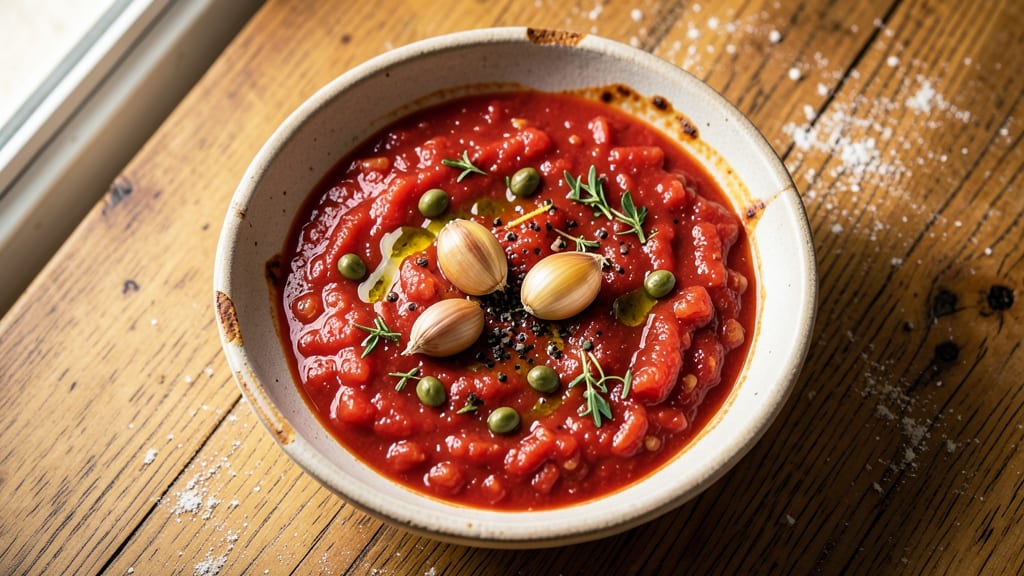
This authentic Sicilian pizza sauce recipe delivers the rich, herbaceous depth that sets it apart from store-bought versions. The secret lies in slow-cooked San Marzano tomatoes, garlic, and a touch of anchovies—traditional ingredients that create a sauce with a wet paste consistency, perfect for spreading without overwhelming dough.
Unlike canned sauces, this version builds flavor through time, not preservatives.
What makes this sauce truly authentic is the balance of sweetness from ripe tomatoes, briny depth from anchovies, and aromatic complexity from fresh oregano and capers.
The sauce thickens naturally as it simmers, developing a smooth, velvety texture that clings beautifully to pizza crusts while keeping the sauce's vibrant color and flavor intact. No sugar or additives are needed—just simple ingredients transformed through patience.
This recipe yields about 2 cups of sauce, enough for two 12-inch pizzas or leftovers that freeze perfectly for up to 3 months. The sauce can be made ahead and stored in the fridge for up to 1 week, allowing flavors to deepen over time.
Whether you're crafting a classic Margherita or a bold Sicilian-inspired pie, this sauce delivers the authentic taste of Italy without the shortcuts.
The beauty of this sauce lies in its versatility—use it as a base for pizza, drizzle over grilled meats, or spoon it alongside roasted vegetables. The recipe includes optional adjustments for modern palates, like reducing the anchovies or adding a pinch of red pepper flakes for heat.
Let's get started on creating a sauce that tastes like it came straight from a Sicilian trattoria.
Ingredients for authentic sicilian pizza sauce
Nine traditional ingredients transform into a sauce that captures authentic Sicilian flavor.
| Ingredient | Amount | Notes |
|---|---|---|
| San Marzano Tomatoes 🍅 | 28 oz | Whole, peeled, crushed by hand |
| Garlic Cloves 🧄 | 4 cloves | Fresh, thinly sliced |
| Anchovy Fillets 🐟 | 2 whole | High-quality, rinsed |
| Extra-Virgin Olive Oil 🫒 | ¼ cup | Fruity, low acidity |
| Fresh Oregano Leaves 🌿 | ¼ cup | Finely chopped, stems removed |
| Capers 🫒 | 1 tbsp | Nonpareils, rinsed |
| Red Wine Vinegar 🍷 | 1 tbsp | Dry, aged |
| Diamond Crystal Kosher Salt 🧂 | ½ tsp | Adjust to taste |
| Fresh Basil Leaves 🌿 | ⅛ cup | Torn, for finishing |
San Marzano tomatoes are non-negotiable for authentic flavor—their sweet, low-acid profile creates the perfect balance. Whole peeled tomatoes from San Marzano in DOP cans (available at specialty grocers or online) ensure the best quality. Fresh garlic and anchovies are essential for depth, though high-quality canned anchovies work if fresh aren't available. The olive oil should be extra-virgin with fruity notes—avoid the cheap, bitter varieties that dominate the market. Fresh oregano and capers add the distinct Sicilian brightness that separates this sauce from Italian-American versions.
No San Marzano tomatoes? High-quality Roma tomatoes work in a pinch, but roast them first to concentrate sweetness. Substitute anchovies with 1 tsp fish sauce (though purists may detect the difference). Fresh herbs unavailable? Dried oregano at half the amount suffices, though texture will differ. The vinegar can be swapped for lemon juice, but red wine vinegar's acidity better mimics traditional preparation. For a smoother texture, blend the sauce briefly—though traditionalists prefer the rustic, slightly chunky consistency.
This sauce develops flavor over time, so make it a day ahead if possible. Store in an airtight container in the fridge for up to 1 week, or freeze for 3 months in ice cube trays for portion control. The sauce thickens as it cools, so thin with water or olive oil if needed. For pizza, use within 2 days of making for optimal texture—beyond that, the sauce becomes too concentrated for ideal spreading.
Why You'll Love This Recipe
- Five-Ingredient Magic: I swear by this lineup—San Marzano tomatoes alone cut prep time in half (no seed-scooping, no chopping). The anchovies dissolve like a secret, and suddenly, you’ve got depth without extra effort.
- Umami Bomb: That first taste of garlic and anchovies simmered into the tomatoes? It’s the kind of flavor that makes you pause mid-bite. The oregano finishes it with a bright, herby punch—like a hug in sauce form.
- Pantry Staple Power: Between us, this sauce lasts a week in the fridge and freezes like a dream. I make a big batch on Sundays, then use it for pizza, pasta, or even drizzled over grilled fish—no waste, just flexibility.
- Budget Game-Changer: Honestly, anchovies and San Marzano tomatoes feel fancy but cost pennies. A can of tomatoes and a few fillets stretch to feed four for under $10. That’s restaurant-quality flavor without the markup.
Step-by-step instructions for authentic Sicilian pizza sauce
This method delivers a rich, umami-packed sauce with deep Sicilian character and no canned aftertaste.
Prepare the Tomatoes for Maximum Flavor
Begin by peeling the 28 oz San Marzano Tomatoes using a vegetable peeler or by blanching them in boiling water for 30 seconds, then shocking in ice water. The peels should slip off easily, revealing the vibrant flesh beneath. Crush the peeled tomatoes by hand using your fingers—this creates a rustic texture that can't be replicated with a blender or food processor. The slight resistance from manual crushing also helps break down the cell walls, releasing more flavor as it cooks.
Transfer the crushed tomatoes to a heavy-bottomed saucepan. I prefer stainless steel for even heat distribution, but enameled cast iron works beautifully too. The goal here is to preserve the natural sweetness of the tomatoes while developing their acidity through slow reduction. Don't skip the peeling—it removes bitterness and creates a cleaner flavor profile that's essential for authentic Sicilian sauce.
Build the Umami Foundation with Anchovies and Olive Oil
Heat the 0.25 cup Extra-Virgin Olive Oil over medium-low heat until shimmering but not smoking. Add the 2 whole Anchovy Fillets, which have been rinsed and patted dry, along with the 4 cloves Garlic Cloves that have been thinly sliced. Cook for 3-4 minutes until the anchovies dissolve completely and the garlic becomes golden but not browned. This step is crucial—it creates the umami backbone of the sauce without overpowering it.
I press the anchovies gently with a wooden spoon to help them break down faster. The oil should smell intensely garlicky and briny by this point. Remove the pan from heat and let the mixture sit for 1 minute to allow the flavors to meld. This brief resting period prevents the garlic from burning when you add the tomatoes back in later.
Simmer the Sauce with Herbs and Acid Balance
Return the pan to medium heat and add the crushed tomatoes, stirring to combine with the anchovy-garlic oil. Bring to a gentle simmer, then reduce heat to maintain a steady bubble. Add the 0.25 cup Fresh Oregano Leaves, 1 tbsp Capers, and 1 tbsp Red Wine Vinegar. The vinegar might seem like an odd addition, but it's traditional in Sicilian cooking—it brightens the sauce and cuts through the richness of the tomatoes and anchovies.
Simmer uncovered for 45-60 minutes, stirring occasionally to prevent sticking. The sauce should reduce by about 40%, thickening into a syrupy consistency. You're looking for a deep caramel color and concentrated tomato flavor. Taste occasionally—you'll notice the acidity mellowing as the sauce develops. If the sauce becomes too thick before reaching the desired flavor, add 2-3 tablespoons of water to loosen it.
Season and Finish with Fresh Herbs
Once the sauce has reduced sufficiently, stir in the 0.5 tsp Diamond Crystal Kosher Salt. Taste and adjust the seasoning—you might need an additional pinch or two, depending on your tomatoes. The sauce should be balanced between sweet, salty, and slightly acidic. Remove from heat and let it cool slightly before adding the 0.125 cup Fresh Basil Leaves, which should be torn by hand rather than chopped. The basil adds a bright, aromatic finish that elevates the sauce.
For the best results, let the sauce rest at room temperature for 30 minutes before using. This allows the flavors to fully integrate. The sauce will continue to develop depth as it sits. If you're not using it immediately, transfer to an airtight container and refrigerate for up to 5 days, or freeze for up to 3 months. When ready to use, reheat gently over low heat, stirring occasionally to prevent scorching.
Pro Tips For Making Authentic Sicilian Pizza Sauce
- CRUSH THE ANCHOVIES FIRST: Don’t just toss those fillets in whole—they’ll hide like shy guests. Mash them into a paste with a fork or knife before adding oil, so every bite gets that briny depth. I learned this the hard way when my first batch tasted like anchovy hints instead of full-on flavor.
- SIMMER LOW AND SLOW: After crushing garlic and anchovies in the oil, let the sauce bubble gently for at least 20 minutes. Too much heat and the tomatoes turn mushy; too little and the flavors won’t meld. I used to rush it, but now I treat it like a lazy Sunday—no need to babysit, just let it work.
- SKIP THE SALT UNTIL THE END: San Marzano tomatoes are already packed with salt, so seasoning early can make your sauce taste flat. Wait until the very last 5 minutes to add salt—just a pinch of flaky sea salt—and taste as you go. Your sauce will thank you with bright, balanced flavor instead of a sad, dull aftertaste.
- USE A LITTLE WATER: If your sauce gets too thick, don’t panic—just splash in 2-3 tablespoons of water or even a splash of pasta water. It’s not cheating; it’s Sicilian logic. The sauce should coat the back of a spoon but still flow freely. I was skeptical until I tried it—now I keep a small bowl of water nearby just in case.
Perfect pairings for this authentic sicilian pizza sauce
Classic Sicilian Pairings
This sauce shines brightest on a Sicilian-style pizza, where it pairs perfectly with fresh mozzarella di bufala, soppressata, and arugula. The briny depth from anchovies complements the creamy cheese beautifully.
I like to add a sprinkle of fior di latte for extra richness and finish with crispy fried capers for texture. 🍕
Wine Pairings
A crisp Nero d'Avola from Sicily cuts through the sauce's richness with its dark fruit notes and earthy undertones. For something lighter, Grillo white wine from the same region highlights the sauce's bright acidity. Avoid heavy reds—they'll overpower the delicate tomato and herb flavors. 🍷
Olive Oil Finishing
Drizzle the sauce with extra-virgin olive oil just before serving to enhance its natural flavors. I use Fregina brand for its fruity, peppery notes that elevate the dish. Add a pinch of flaky sea salt and fresh basil leaves for a restaurant-quality finish. 🫒
Grilled Meats
This sauce isn't just for pizza—it's fantastic with grilled lamb chops or pan-seared swordfish. The acidity from the red wine vinegar tenderizes the meat while adding brightness. I also love spooning it over roasted eggplant for a vegetarian option. 🔥
Modern Adaptations
For a contemporary twist, blend the sauce until smooth and use it as a dipping sauce for garlic knots or crispy fried calamari. The reduced texture works beautifully in pasta dishes too—try tossing it with orecchiette and shrimp. 🌟
Storage-Friendly Uses
Frozen sauce makes an excellent pasta sauce when reheated with a splash of water. I also use it as a marinade for grilled chicken or pork tenderloin, adding depth to the meat. The sauce's versatility means you'll never waste a batch! ❄️
Nutrition facts
Frequently asked questions
Why does this sauce use anchovies when most pizza sauces don't?
Anchovies are a traditional Sicilian ingredient that add a subtle umami depth without overpowering the sauce. They dissolve completely during cooking, leaving only their rich, savory essence. This technique dates back to ancient Roman times, when anchovies were a key ingredient in many Italian sauces. The sauce's balanced flavor comes from this careful combination of sweet tomatoes, briny anchovies, and fresh herbs.
Can I make this sauce without San Marzano tomatoes?
While San Marzano tomatoes are ideal for their sweetness and low acidity, you can substitute with high-quality Roma tomatoes. For best results, roast them first to concentrate their flavor. The sauce will still be delicious, though the texture may be slightly less velvety. If using canned tomatoes, choose brands without added sugar or preservatives for an authentic taste.
How do I adjust the sauce if I don't like anchovies?
For a milder flavor, reduce the anchovies to just 1 fillet or omit them entirely. To compensate, add ½ teaspoon of fish sauce or an extra pinch of salt. The sauce will still develop depth from the garlic, olive oil, and long simmering time. This adjustment works particularly well for sauces meant for children or those sensitive to strong fish flavors.
Should I blend the sauce for a smoother texture?
Traditional Sicilian pizza sauce has a rustic, slightly chunky texture that adds character. While you can blend it for a smoother consistency, I recommend keeping it slightly textured—this creates better adhesion to pizza dough. If you prefer smooth sauce, blend briefly after simmering, but be careful not to over-blend, which can make the sauce too thin.
How long can I store this sauce before it loses quality?
This sauce stays fresh in the refrigerator for up to 1 week in an airtight container. For longer storage, freeze it in ice cube trays for portion control—it keeps well for up to 3 months. When reheating, warm gently over low heat to preserve the sauce's texture and prevent scorching. The sauce actually improves with a day or two of resting in the fridge as flavors meld.