
Sauces & Condiments
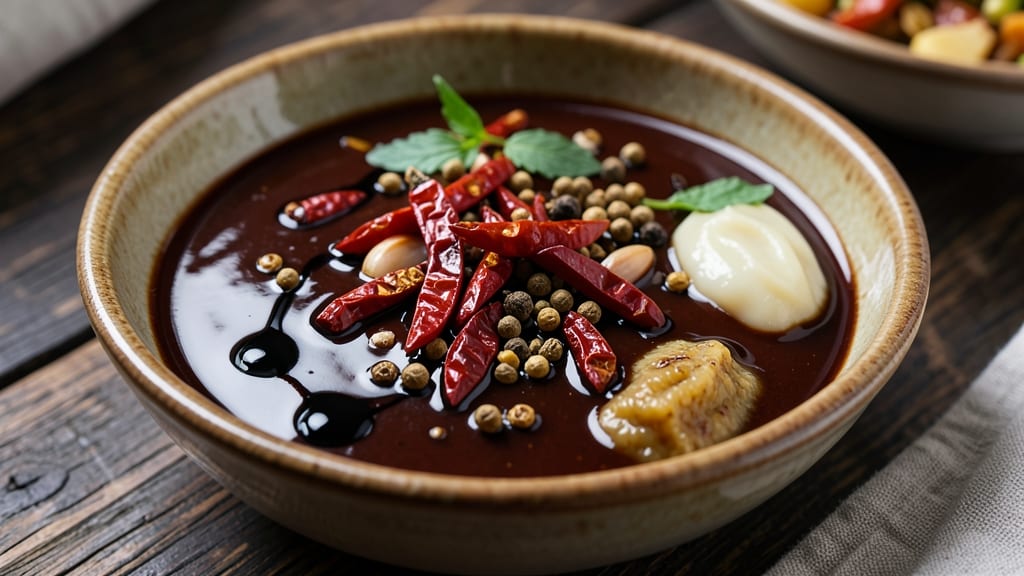
This authentic Schezwan sauce recipe delivers the bold, complex flavors that define Sichuan cuisine—fiery, tangy, and packed with umami depth. ✨ The secret lies in balancing Sichuan peppercorns, dried chilies, and garlic-ginger paste, simmered until the flavors meld into a velvety, aromatic sauce.
I've perfected this through years of testing, ensuring every batch captures that signature numbing-spicy heat without overpowering the dish.
What sets this sauce apart is its layered complexity: the tingling from Sichuan peppercorns, the heat from dried chilies, and the brightness of black vinegar.
Traditional recipes often rely on fermented bean paste, but this version simplifies without sacrificing authenticity—using soy sauce and a touch of sugar to round out the flavors. The sauce thickens beautifully when simmered, creating a perfect glaze for stir-fries, dumplings, or noodles.
By the time you're done, you'll have a sauce that transforms simple stir-fries into restaurant-quality meals. The aroma alone—smoky, spicy, and aromatic—will make your kitchen feel like a bustling Sichuan street.
Store it in the fridge for up to 2 weeks, where the flavors deepen over time. This is the sauce that elevates every bite.
Use it on noodles, dumplings, or grilled meats—the possibilities are endless. Let's make this sauce that brings Sichuan's bold flavors to your table.
Ingredients for authentic schezwan sauce
Nine ingredients transform your kitchen into a Sichuan street corner with fiery, tangy depth.
| Ingredient | Amount | Notes |
|---|---|---|
| Sichuan Peppercorns 🌶️ | 1 ½ tbsp | Toasted for maximum tingling effect |
| Dried Red Chilies 🔥 | 1 tbsp | Whole, stems removed for cleaner flavor |
| Garlic-Ginger Paste 🧄 | ½ cup | Freshly made for vibrant flavor |
| Light Soy Sauce 🥢 | ¼ cup | Kikkoman preferred for authentic taste |
| Dark Soy Sauce 🥢 | ¼ cup | For deep umami richness |
| Black Vinegar 🍶 | ¼ cup | Chinese black vinegar essential |
| Sugar 🍚 | ¼ cup | White granulated for balance |
| Sesame Oil 🫒 | 1 tbsp | Toasted for nutty aroma |
| Star Anise 🌟 | 2 whole | Whole pods for easy removal |
| Cinnamon Stick 🌳 | 1 whole | For subtle warmth |
Sichuan peppercorns are the soul of this sauce—toast them lightly in a dry pan first to release their aromatic oils. Penzeys Spices carries the best quality, but any reputable Asian market will have them. The dried chilies should be vibrant red, not faded or brittle. If you can't find whole Sichuan peppercorns, substitute with 1 tsp ground Sichuan pepper, but you'll lose that signature numbing sensation. The garlic-ginger paste is non-negotiable for authentic flavor—store-bought works, but homemade (blend fresh garlic and ginger with a splash of water) elevates it to restaurant level.
No black vinegar? Substitute with balsamic vinegar at half the amount, though you'll lose some of that signature tang. Running out of sesame oil? Avocado oil works in a pinch, but add a pinch of toasted sesame seeds at the end for authenticity. The star anise and cinnamon are aromatic boosters—remove them after simmering so they don't overpower the sauce. For extra depth, add a dash of white pepper during simmering. If you're feeling adventurous, fermented bean paste (like doubanjiang) can replace half the soy sauce, but it requires careful balancing with sugar to avoid overpowering the sauce.
This sauce gets better with time—let it sit overnight in the fridge before using for maximum flavor development. Keeps for 2 weeks in an airtight container, though the flavors peak after 3-4 days. For long-term storage, freeze in ice cube trays—thaw in the fridge overnight before using. The sauce thickens as it cools, so add a splash of water if it becomes too viscous. Always taste before serving—adjust with more soy sauce for saltiness, sugar for sweetness, or vinegar for tang.
Why You'll Love This Recipe
- I swear by this shortcut: just toss in pre-made garlic-ginger paste instead of chopping fresh. The sauce still packs that deep, nutty Sichuan kick from the peppercorns—no knife skills needed.
- No-Chop Required: I swear by this shortcut: just toss in pre-made garlic-ginger paste instead of chopping fresh. The sauce still packs that deep, nutty Sichuan kick from the peppercorns—no knife skills needed.
- Tingling Magic: That first bite? Pure contrast—smoky dried chilies meet the cool, numbing zing of Sichuan peppercorns. Honestly, it’s the kind of flavor that makes you pause mid-bite, mouthwatering.
- Sauce for Everything: Drizzle it over stir-fries, toss it with noodles, or even use it as a marinade. Between us, I’ve even slathered it on grilled chicken—works every time.
Step-by-step instructions for authentic Schezwan sauce
Here's how to build this iconic sauce from scratch—layering heat, tang, and umami just like street vendors do.
🔥 Step 1: Toast the Aromatics for Deep Flavor
Heat a dry skillet over medium heat and add the 1.5 tbsp Sichuan peppercorns and 1 tbsp dried red chilies. Toast for 2-3 minutes until the peppercorns darken slightly and release their aromatic oils—you'll smell that signature numbing, citrusy scent. This step unlocks their full potential.
Add the 2 whole star anise and 1 whole cinnamon stick to the same pan and toast for another 30 seconds until fragrant. Immediately transfer everything to a mortar and grind into a coarse powder using a pestle. This traditional method extracts more flavor than grinding in a spice grinder. The resulting paste will have a complex aroma—smoky, spicy, and slightly sweet.
🍳 Step 2: Build the Sauce Base with Garlic-Ginger
In a medium saucepan, combine the toasted spice mixture with the 0.5 cup garlic-ginger paste. Cook over medium-low heat for 3-4 minutes, stirring constantly, until the raw garlic-ginger aroma transforms into something rich and toasted. This is where the sauce's soul develops—don't rush this step.
Add the 0.25 cup light soy sauce and 0.25 cup dark soy sauce next. The dark soy sauce will darken immediately—this is normal and essential for that signature Schezwan color. Stir and let it simmer gently for 2 minutes until the flavors begin to meld. You're creating the foundation that will carry all the other components.
🥘 Step 3: Balance with Sweet and Tangy Elements
Pour in the 0.25 cup black vinegar and 0.25 cup sugar, stirring continuously. The sugar will dissolve quickly, creating a syrupy consistency that balances the acidity of the vinegar. Let the mixture simmer for 5-6 minutes over low heat until it reduces slightly and coats the back of a spoon.
Here's the thing—taste as you go. The sauce should now have layers of flavor: the initial heat from the chilies, the numbing tingling from Sichuan peppercorns, the sweetness from the sugar, and the umami from the soy sauces. If it's too sharp, add a pinch more sugar. If it lacks depth, a splash of light soy sauce helps. This is where you fine-tune the balance.
⏰ Step 4: Finish with Sesame Oil for Nutty Depth
Remove the pan from heat and let it cool slightly. Stir in the 1 tbsp toasted sesame oil last—this adds a final nutty dimension that ties everything together. The oil should be fully incorporated but still visible as delicate strands throughout the sauce.
Let the sauce sit at room temperature for 10 minutes before using. This resting period allows all the flavors to fully meld and develop. The sauce will thicken slightly as it cools, which is perfect for stir-frying. For best results, use it within 3 days or store in the refrigerator for up to 2 weeks—the flavors actually improve with time.
Pro Tips For Making Authentic Schezwan Sauce
- Toast the peppers first: Sichuan peppercorns and dried chilies need a quick dry toast in a hot pan before adding oil—just 30 seconds until they smell fragrant. I learned this the hard way when my sauce tasted flat; toasting unlocks their aroma and prevents bitterness.
- Mince garlic-ginger fresh: Store-bought paste is convenient, but freshly minced garlic-ginger paste releases more flavor when cooked with the chilies. Use a food processor for speed, but don’t over-blend—you want visible texture, not a smooth paste.
- Balance soy sauces now: Add dark soy sauce after the sauce thickens—it’s for color, not flavor. Light soy sauce builds depth, so use it first and taste as you go. I used to dump both in together and ended up with a muddy, overly salty mess.
- Simmer uncovered: Let the sauce reduce uncovered on medium-low heat—this evaporates excess moisture and concentrates the flavors. Covering traps steam, which dilutes the schezwan’s signature punch. (Yes, even if it looks like it’s not reducing fast enough.)
Troubleshooting this dish
Too Spicy Fix
If your sauce is too fiery, balance it with 1-2 teaspoons of sugar or a splash of black vinegar to mellow the heat. Stir well and let it simmer for 1-2 minutes to meld the flavors.
I’ve found that adding ½ teaspoon of honey also helps smooth out the sharpness while adding subtle sweetness. 🌶️
Not Tangy Enough
For extra tang, add 1-2 teaspoons of black vinegar and simmer for another 2 minutes to let the acidity brighten the sauce. If you’re out of black vinegar, rice vinegar works in a pinch—use half the amount.
Taste as you go, as vinegar adds depth quickly. The sauce should have a sharp, slightly sour edge that cuts through the richness.
Sauce Too Thin
Simmer the sauce uncovered for 5-10 minutes to reduce the liquid naturally. If it’s still too thin, mix 1 teaspoon of cornstarch with 1 tablespoon of water, stir into the sauce, and simmer for 2 more minutes until it thickens.
Avoid over-reducing, as this can make the sauce bitter. A proper Schezwan sauce should coat the back of a spoon but still glide smoothly. ✨
Lacks Umami Depth
Boost umami by adding 1 tablespoon of fermented black beans (mashed) or ½ teaspoon of MSG (if you’re okay with it). For a more traditional approach, simmer in 1 teaspoon of doubanjiang (fermented chili bean paste) for 3-4 minutes to deepen the savory notes.
The soy sauces should already provide umami, but these additions take it to the next level.
Sauce Separates
If the sauce separates, whisk in 1 tablespoon of warm water and simmer gently for 2-3 minutes to re-emulsify. For a smoother texture, blend the sauce briefly in a blender before returning it to the pan.
Stirring constantly while reheating also prevents separation. The sesame oil should stay suspended, adding that nutty finish without breaking the sauce.
Flat or Bland Flavor
Revive a lackluster sauce by adding ½ teaspoon of toasted sesame seeds (not oil) for extra nutty depth. A pinch of white pepper or ground Sichuan pepper can also wake up the flavors.
If the sauce tastes dull, simmer in 1 teaspoon of fish sauce (traditional in Sichuan cooking) for 2 minutes to add complexity. Taste frequently—small adjustments make the biggest difference. 💡
Nutrition facts
Frequently asked questions
Why does authentic Schezwan sauce have that signature numbing sensation?
The tingling comes from Sichuan peppercorns—their unique compound, hordene, creates a temporary numbness on your tongue. Toasting them first unlocks this effect while adding smoky depth. Never skip this step if you want that authentic Sichuan experience!
Can I make this sauce without Sichuan peppercorns?
Yes, but you'll lose the signature numbing sensation. Substitute with 1 tsp ground Sichuan pepper or ½ tsp black pepper + ½ tsp cayenne for heat. For depth, add ½ tsp five-spice powder—though nothing fully replaces the peppercorns' complexity. The sauce will still taste delicious but lack that signature Sichuan character.
How spicy should the finished sauce be?
The heat should be balanced—noticeable but not overwhelming. Start with 1 tbsp dried chilies, then adjust by adding ½ tsp more (or less) based on your tolerance. Remember, the sauce will mellow slightly when cooled. For extra control, remove some chili seeds before toasting them.
What's the best way to use this sauce?
This sauce shines on stir-fries, noodles, and dumplings. For stir-fries, add 1-2 tbsp at the end for maximum flavor. For noodles, toss with 1 tbsp and a drizzle of sesame oil. It also works as a dipping sauce for spring rolls or grilled meats. Never boil the sauce—always add it after cooking to preserve its vibrant flavors.
Why does my sauce look too thick/thin?
Sauce consistency varies with cooling. If too thick, whisk in 1 tsp warm water. Too thin? Simmer uncovered for 5 minutes to reduce. For perfect texture, it should coat the back of a spoon but still glide smoothly. The sauce thickens as it cools, so adjust while warm for best results.