
Sauces & Condiments
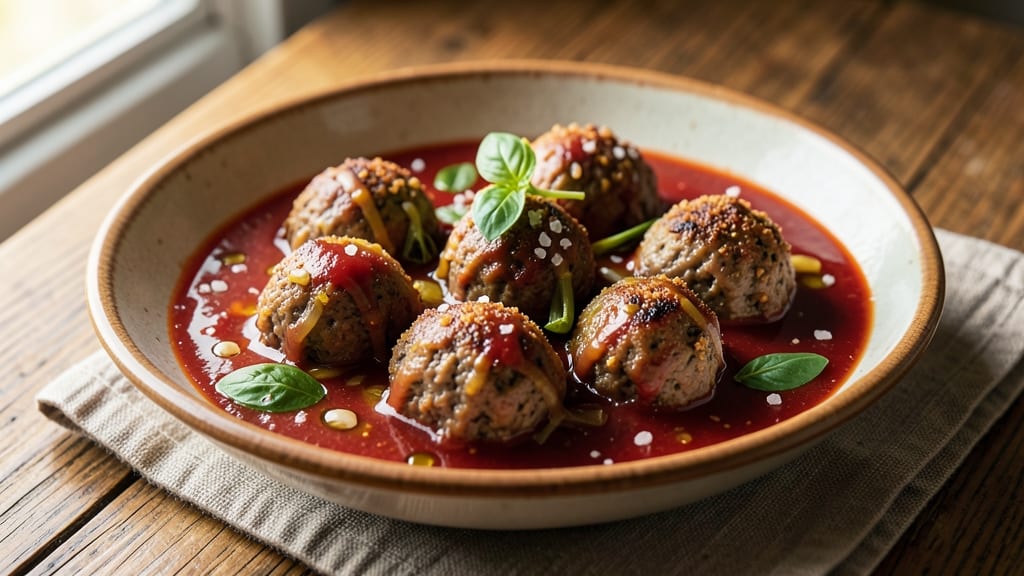
Authentic meatball sauce transforms ordinary meals into Italian trattoria experiences with its deep, slow-simmered umami richness. This recipe captures the essence of traditional Italian cooking—where tomatoes caramelize, garlic deepens, and fresh basil finishes with bright, aromatic notes. The secret lies in patience: letting the sauce develop its complex flavors over hours, not minutes.
What sets this sauce apart is the balance of acidity and sweetness—crushed tomatoes provide the base, while a touch of sugar and a splash of red wine elevate it to restaurant-quality depth.
Aromatics like garlic, onion, and celery (the holy trinity) build a flavor foundation, while fresh basil added at the end preserves its vibrant aroma. The sauce thickens naturally as it simmers, creating a velvety consistency perfect for coating meatballs or spooning over pasta.
This isn’t just a sauce—it’s a flavor journey. The slow simmer reduces the sauce to a concentrated, aromatic essence that clings to every bite, while the fresh basil at the end adds a bright contrast.
Whether you’re serving it with homemade meatballs, pasta, or crusty bread, this sauce delivers the kind of depth that makes ordinary meals feel like a celebration. Ready to make it?
One of the best parts? This sauce tastes even better the next day as the flavors meld further. Store it in the refrigerator for up to 5 days or freeze for months—ideal for meal prep or gifting.
The simplicity of the ingredients belies the complexity of the result, proving that authentic Italian flavor doesn’t require complicated techniques, just time and attention to detail.
Ingredients for authentic meatball sauce
Twelve simple ingredients crafting restaurant-quality umami depth through slow simmering.
| Ingredient | Amount | Notes |
|---|---|---|
| Crushed Tomatoes 🍅 | 2 cups | San Marzano preferred for sweetness |
| Extra-Virgin Olive Oil 🫒 | ¼ cup | High quality, fruity variety |
| Yellow Onion 🧅 | 1 whole | Medium size, finely chopped |
| Celery Stalks 🥬 | 2 whole | Trimmed, finely chopped |
| Garlic Cloves 🧄 | 4 cloves | Fresh, minced for depth |
| Dry Red Wine 🍷 | ½ cup | Bold Cabernet or Chianti |
| Tomato Paste 🍅 | 2 tbsp | High quality, no sugar added |
| Granulated Sugar 🍚 | 1 tbsp | Balances acidity perfectly |
| Dried Oregano 🌿 | 1 tsp | Italian variety preferred |
| Fresh Basil Leaves 🌿 | ¼ cup | Chopped, added at the end |
| Salt 🧂 | 1 ½ tsp | Diamond Crystal preferred |
| Ground Black Pepper 🌶️ | ½ tsp | Freshly ground for warmth |
The tomatoes are the foundation—San Marzano brings natural sweetness without wateriness. Whole Foods or Italian markets carry the best cans, but any high-quality crushed tomatoes work. For the aromatics, the onion, celery, and garlic form the holy trinity—chop them finely so they dissolve into the sauce rather than remain distinct. The red wine adds depth that can't be replicated with broth, so grab a bold Cabernet or Chianti—whatever's open in your cabinet. Fresh basil is non-negotiable at the end; dried won't give that bright aromatic finish.
No red wine? Dry white wine or beef broth works in a pinch, though the flavor will be subtly different. Prefer less sugar? Reduce to 0.5 tablespoon—just don't skip it entirely. The tomato paste can be swapped for additional crushed tomatoes, though it adds thickness. For a meatier flavor, add 1 teaspoon soy sauce or Worcestershire (ensure it's vegetarian if needed). The oregano should be Italian—it has a distinct flavor from regular oregano. If you can't find it, Mexican oregano works too.
This sauce tastes better with time—plan to simmer for at least 1.5 hours. Store in airtight containers in the fridge for 5 days or freeze for 3 months. For meal prep, make a double batch—freeze half immediately. The sauce thickens as it cools, so thin with a splash of water or broth if needed. Always add fresh basil just before serving to preserve its aroma.
Why You'll Love This Recipe
- Five-Ingredient Magic: I swear by this combo—crushed tomatoes, olive oil, and that classic sofrito of onion, celery, and garlic. It’s the backbone of every great sauce, and honestly? You can’t mess it up.
- Simmered Depth: The slow cook lets those flavors meld into something rich and complex. That first bite of meatball with the sauce clinging—perfection. No shortcuts needed.
- Weeknight Workhorse: Double the batch and freeze half. Toss it with pasta for Tuesday, use it in subs on Friday, or even dump it over polenta. It’s my go-to for lazy nights.
- Budget-Friendly Staple: A jar of tomatoes, a bulb of garlic, and a handful of celery? This sauce costs pennies but tastes like a restaurant. My wallet and taste buds both win.
Step-by-step instructions for authentic meatball sauce
This slow-simmered sauce builds rich umami flavor through precise technique and quality ingredients.
Sauté the Aromatic Base
Heat the 0.25 cup extra-virgin olive oil in a heavy-bottomed saucepan over medium heat. Add the finely chopped 1 whole yellow onion and 2 whole celery stalks, cooking for 8-10 minutes until softened and translucent. You'll notice the vegetables release moisture and begin to caramelize slightly at the edges.
Add the 4 cloves minced garlic and cook for 30 seconds until fragrant—don't let it brown, or it will turn bitter. This aromatic base forms the flavor foundation for the entire sauce. Keep the heat steady at medium to prevent burning while developing the vegetables' natural sweetness.
Deglaze with Wine and Build the Sauce
Pour in the 0.5 cup dry red wine and scrape up any browned bits from the bottom of the pan with a wooden spoon. This technique, called deglazing, captures all the concentrated flavor that would otherwise stick to the pan. Let the wine simmer for 3-4 minutes until reduced by half and nearly evaporated.
Add the 2 cups crushed tomatoes, 2 tablespoons tomato paste, 1 tablespoon granulated sugar, 1 teaspoon dried oregano, 1.5 teaspoons salt, and 0.5 teaspoon ground black pepper. Stir well to combine all ingredients thoroughly. The sugar helps balance the acidity of the tomatoes while the oregano adds that classic Italian depth.
Simmer for Deep Flavor Development
Bring the sauce to a gentle simmer over low heat, then reduce to the lowest setting possible while maintaining a steady bubble. Cover partially with a lid and let it cook uncovered for 30-40 minutes. This slow simmer allows the flavors to meld together while the sauce reduces slightly in volume.
Stir occasionally to prevent sticking, especially around the edges of the pan. You'll notice the sauce darken slightly and develop a thicker consistency as it reduces. The key is patience—rushing this step will result in a thin, watery sauce instead of the rich, velvety texture we're aiming for.
Finish with Fresh Basil
Once the sauce has simmered for the full 30-40 minutes, remove it from heat. Stir in the 0.25 cup chopped fresh basil leaves. The basil should be added at the very end to preserve its bright, fresh flavor rather than letting it cook down in the sauce. This final step adds that authentic Italian touch that distinguishes this sauce from others.
Taste and adjust seasoning if needed—you may need to add a pinch more salt or sugar to achieve perfect balance. The sauce should be rich, slightly sweet, and deeply aromatic with notes of tomato, garlic, and basil. Let it sit for 5-10 minutes before serving to allow the flavors to fully meld together.
Pro Tips For Making Authentic Meatball Sauce
- Sweat the Onion First: Crushed tomatoes and celery can’t hide a raw onion’s bite. Cook the sliced onion in olive oil over medium heat until it’s translucent and just starting to caramelize—about 8-10 minutes—before adding anything else. I used to rush this, and the sauce always tasted sharp and unfinished.
- Crush Tomatoes by Hand: Skip the canned shortcut. Drain the tomatoes, then crush them with your fingers or a wooden spoon to break up the pulp but keep some texture. This releases more flavor and avoids the watery consistency of over-blending. (Yes, it’s a little messy, but worth it.)
- Low and Slow After Browning: Once the garlic hits the pot, turn the heat down to a simmer. Authentic meatball sauce needs time to develop depth—at least 30 minutes, ideally longer. I learned this the hard way after serving a rushed batch that tasted flat and one-note.
- Toast the Celery: Finely chop the celery stalks, then sauté them in olive oil for 5 minutes before adding the onion. This step removes bitterness and adds a subtle nuttiness that elevates the whole sauce. (I know it sounds like overkill, but it makes a real difference.)
Regional styles of these flavors
Roman Ragù Style
In Rome, meatball sauce—called ragù—is all about slow-cooked richness. The Romans use ground beef and pork (50/50 ratio) for meatballs, simmered in a tomato-cream sauce with a splash of white wine instead of red.
I love adding a pinch of nutmeg to the sauce for warmth. The key difference? Roman ragù is often served with tonnarelli pasta (thick spaghetti) to hold the sauce. 🍝
Neapolitan Marinara
Southern Italy’s marinara is simpler but equally flavorful. Neapolitan versions skip wine and cream, focusing on San Marzano tomatoes, garlic, and fresh basil. For authenticity, I use a splash of balsamic vinegar (1 tbsp) to brighten the sauce.
This version pairs perfectly with meatballs and crusty bread—no pasta needed! The sauce is lighter but packed with bright acidity. 🌿
Venetian Crema Style
Venetian cuisine adds heavy cream (¼ cup) to meatball sauce for a silky, velvety texture. The secret? A touch of mascarpone (2 tbsp) stirred in at the end for extra richness.
Venetians also use dried porcini mushrooms (1 tbsp) rehydrated in the sauce for umami depth. This version is decadent but balances the richness with a squeeze of lemon at the table. 🍷
Sicilian Pasta alla Norma
Sicily’s take on meatball sauce is pasta alla Norma, where the sauce incorporates roasted eggplant (1 cup, diced) and ricotta salata (½ cup, crumbled). The eggplant adds a sweet, smoky note that pairs beautifully with the tomato base.
I finish with crispy fried breadcrumbs for texture. This version is hearty enough to stand alone as a pasta dish. 🥬
Emilian Bolognese
Emilia-Romagna’s ragù alla Bolognese is the most complex regional style, using ground beef, pork, and pancetta for meatballs. The sauce includes milk (½ cup) to tenderize the meat and a touch of Marsala wine.
Emilian cooks simmer the sauce for hours, often with a bay leaf for depth. Serve it with tagliatelle for the ultimate comfort dish. 🍷
Modern Twist: Umami Bomb
For a contemporary take, I blend ½ cup roasted red peppers into the sauce and add 1 tsp fish sauce for umami depth. The roasted peppers add smoky sweetness, while the fish sauce enhances the meaty flavor without overpowering.
This version works perfectly with vegetarian meatballs or as a dipping sauce for grilled proteins. 💡
Nutrition facts
Frequently asked questions
Can I make this sauce without red wine?
For a non-alcoholic version, substitute the 0.5 cup dry red wine with 0.5 cup beef broth or dry white wine. The flavor will be slightly different but still delicious. If you prefer no wine at all, use 0.5 cup tomato juice plus 1 teaspoon balsamic vinegar for acidity. The key is maintaining the same liquid volume to balance the sauce's richness.
How do I know when the sauce is done?
The sauce is ready when it has reduced to a thick, velvety consistency with deep color and concentrated flavor—typically after 1.5-2 hours of simmering. Look for these signs: the sauce should coat the back of a spoon, the aroma should be intense and complex, and the vegetables should have softened completely. Taste occasionally after 1 hour to check for seasoning balance.
Can I make this sauce in a slow cooker?
Yes! Follow the same steps for sautéing aromatics, then transfer everything to your slow cooker. Cook on low for 6-8 hours or high for 3-4 hours, stirring occasionally. The slow cooker's gentle heat enhances the flavors beautifully. Just add fresh basil at the very end before serving, as it won't survive the long cooking time.
Why does my sauce taste too acidic?
Acidity comes from tomatoes and wine, but you can balance it by adding 1-2 teaspoons sugar or a pinch of salt. For a more complex fix, stir in 1 tablespoon tomato paste or 1 teaspoon balsamic vinegar to round out the flavors. Always taste as you go—simmering longer will also mellow the acidity as the sauce reduces further.
How can I make this sauce vegetarian?
Replace the meatballs with mushrooms or lentils (1 cup), and boost umami with 1 teaspoon soy sauce or 1 tablespoon nutritional yeast. For depth, add ½ cup roasted red peppers or sun-dried tomatoes to the sauce. The same technique applies—just ensure you're using quality vegetable broth instead of meat-based liquids for the best flavor.