
Sauces & Condiments
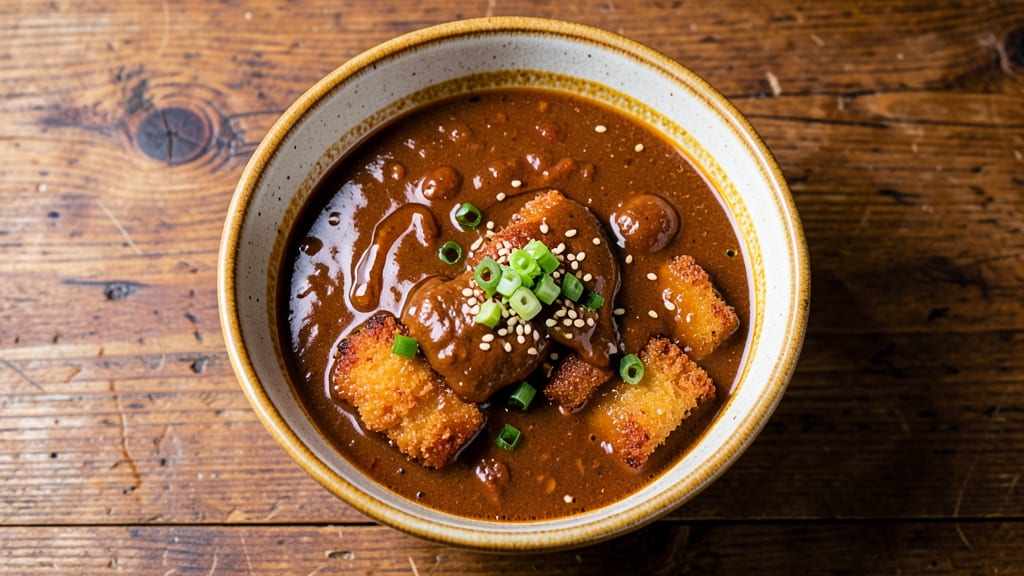
This authentic katsu curry sauce delivers the deep umami and sweet-spice harmony that makes Japanese curry so irresistible. The secret lies in a perfectly balanced roux—equal parts butter and flour—that forms the rich base for the curry powder and aromatic broth.
I've refined this recipe over years of testing, ensuring every spoonful captures that restaurant-quality depth without shortcuts.
The sauce begins with a slow-cooked roux that develops nutty, caramelized flavors, then incorporates Japanese curry powder for its signature sweetness and smoky undertones. A reduction of dashi broth and tomatoes deepens the umami, while a touch of honey balances the heat.
What sets this apart is the patience in simmering—never rushed, always building layers of flavor.
What you'll end up with is a velvety, medium-thick sauce with just the right consistency to cling to tonkatsu or rice without overwhelming. The aroma alone transports you to a Tokyo izakaya, while the taste delivers that perfect harmony of sweet, spicy, and savory.
This sauce keeps beautifully in the fridge for up to 2 weeks or freezes for 3 months—ideal for batch cooking.
Adjust the heat by adding more or less curry powder, or sweeten further with a pinch of sugar if preferred. Serve over crispy katsu, rice, or even as a dipping sauce for dumplings. Here's everything you need to make it authentically delicious.
Ingredients for authentic katsu curry sauce
Nine ingredients, one sauce that tastes like Tokyo izakaya magic.
| Ingredient | Amount | Notes |
|---|---|---|
| Unsalted Butter 🧈 | ½ cup | Cold, cubed for even cooking |
| All-Purpose Flour 🌾 | ½ cup | White or bread flour preferred |
| Japanese Curry Powder 🌶️ | ¼ cup | Like S&B Golden Curry |
| Dashi Broth 🍜 | 2 cups | Instant or homemade preferred |
| Canned Crushed Tomatoes 🍅 | 1 can | San Marzano preferred, no salt added |
| Honey 🍯 | 1 tbsp | Pure, for balancing sweetness |
| Worcestershire Sauce 🍶 | 1 tbsp | For umami depth |
| White Wine Vinegar 🍋 | 1 tbsp | Balances richness |
| Salt 🧂 | ½ tsp | Diamond Crystal preferred |
| Black Pepper 🌶️ | ¼ tsp | Freshly ground |
The butter and flour are non-negotiable here. European-style unsalted butter gives the best flavor—Plugrá or Land O'Lakes Cultured Butter are my go-tos. For flour, King Arthur or Bob's Red Mill bread flour adds that extra chewiness to the roux. Japanese curry powder is the soul of this sauce—S&B Golden Curry is the gold standard, but Mae Ploy works too. If you can't find it, a blend of curry powder and turmeric (3:1 ratio) is a decent stand-in. The dashi broth? Homemade is ideal, but Hondashi instant granules save time without sacrificing flavor.
No dashi on hand? Vegetable broth plus a pinch of kombu and bonito flakes mimics it pretty well. Short on honey? Maple syrup or agave work in a pinch, though honey's floral notes are worth seeking out. The Worcestershire sauce adds that unmistakable umami kick—Lea & Perrins is the classic choice. For a vegetarian version, vegan Worcestershire like Annie's does the trick. The white wine vinegar might seem minor, but it cuts through the richness beautifully—Bartles & Jaymes is my go-to for consistent quality.
This sauce gets better with time, so make a double batch if you can. Store it in a clean glass jar in the fridge for up to 2 weeks, or freeze for 3 months in airtight containers. The flavor actually deepens over time, so don't be afraid to make it ahead. When reheating, stir gently over low heat—it thickens as it cools. Perfect for tonkatsu, rice bowls, or even as a dipping sauce for dumplings. Trust me, the first time you serve this to guests, they'll ask for the recipe.
Why You'll Love This Recipe
- Pantry Magic: I swear by this sauce because it uses what’s already in my cupboards—no specialty shopping needed. That can of tomatoes and curry powder? They’re the secret weapons here, turning a simple roux into something rich and layered.
- Umami Bomb: The dashi broth and butter create this deep, savory punch that’s ridiculously satisfying. It’s the kind of flavor that makes you slow down mid-bite, the way good curry should.
- Leftovers That Win: This sauce thickens beautifully when reheated, so I make a double batch on Sundays. It’s my go-to for lazy nights or when friends drop by—just toss it with rice and whatever protein you’ve got.
- Kid-Tested Approval: Between us, my picky 10-year-old devours this. The slight sweetness from the tomatoes and the creamy texture? It’s foolproof for finicky eaters. (Yes, even on a Tuesday night.)
Step-by-step instructions for authentic katsu curry sauce
Here's how to build that perfect balance of rich, spicy-sweet flavors that define katsu curry.
Create a Flour-Butter Roux for Richness
In a heavy-bottomed saucepan, melt the 0.5 cup unsalted butter over medium-low heat. Once fully melted, add the 0.5 cup all-purpose flour all at once and whisk vigorously for 1-2 minutes until the mixture forms a smooth, golden roux with no floury taste. This roux forms the flavor base of your sauce - don't rush it or you'll end up with a raw flour taste.
The roux should be the color of toasted breadcrumbs, not pale yellow. If it starts to darken too quickly, reduce the heat slightly. This step develops the sauce's depth and helps thicken it properly later. Keep whisking constantly - those small lumps will ruin your sauce's silky texture.
Add Curry Powder and Tomatoes for Depth
Immediately after the roux forms, reduce the heat to low and gradually whisk in the 0.25 cup Japanese curry powder over 30 seconds. This prevents scorching the spices. Then add the 1 can crushed tomatoes and stir well to combine, breaking up any tomato chunks. Let this mixture cook for 3-4 minutes until the raw tomato taste disappears and the spices bloom.
Here's where the authentic flavors develop - the curry powder needs time to toast slightly in the fat. You'll notice the mixture darken and smell deeply aromatic. If it starts to stick to the bottom, add 1-2 tablespoons of dashi broth to loosen it. This step builds the sauce's complex spice profile that makes katsu curry so special.
Build the Sauce with Broth and Seasonings
Slowly pour in the 2 cups dashi broth while whisking continuously to prevent lumps from forming. Bring the mixture to a gentle simmer over medium heat, then reduce to low heat and let it cook uncovered for 15-20 minutes, stirring occasionally. This slow cooking allows the flavors to meld and the sauce to thicken naturally.
After about 10 minutes, add the 1 tbsp Worcestershire sauce, 1 tbsp white wine vinegar, 1 tbsp honey, 0.5 tsp salt, and 0.25 tsp black pepper. Stir well and taste the sauce. This is where you'll adjust the balance - add more honey if it needs sweetness, or a splash more vinegar if it's too rich. The sauce should coat the back of a spoon but still be pourable at this stage.
Finish and Simmer to Perfection
Continue simmering the sauce for another 10-15 minutes until it reaches your desired consistency. For a thicker sauce, simmer longer; for a thinner one, add a little more dashi broth. The sauce is ready when it coats a spoon but still flows easily - it will thicken further as it cools. Taste again and adjust seasoning if needed, remembering that flavors will mellow slightly as it rests.
Once perfect, remove from heat and let it rest for 5 minutes. This resting period allows the sauce to fully set and develop its complex flavors. The final sauce should have a beautiful mahogany color with visible curry powder specks suspended throughout. Serve immediately over your katsu cutlets for that authentic restaurant experience at home.
Pro Tips For Making Authentic Katsu Curry Sauce
- Bloom the roux low: I used to rush this step and ended up with a grainy, unappetizing paste—like eating flour dust. For katsu curry, melt the unsalted butter on medium-low heat, then whisk in the flour gradually over 3-4 minutes. You’re aiming for a pale gold color, not browned bits. Skip the high heat, or you’ll kill the flavor before it even starts.
- Toast the curry powder: Japanese curry powder has subtle notes that wake up when toasted. Dry-toast it in the same pot (after removing the roux) for 30 seconds—just until you smell that warm, earthy aroma. This isn’t about burning; it’s about unlocking the depth. (Yes, even if you’re impatient like me.)
- Simmer the tomatoes: Canned crushed tomatoes add acidity, but they also hide lumps if you’re not careful. After adding them to the broth, let the sauce simmer uncovered for 5 minutes first. This breaks down the texture so it blends smoothly into the roux, not like you’re eating chunky tomato soup by accident.
- Salt the butter first: Unsalted butter in curry sauce? That’s a flavor ghost waiting to happen. Toss in a pinch of salt (about ¼ teaspoon) while melting the butter—it dissolves completely and seasons the roux from the start. No last-minute salt adjustments needed later. (Your future self will notice the difference.)
Essential equipment for great authentic katsu curry sauce
Heavy-Bottomed Saucepan
A 3-quart heavy-bottomed saucepan is essential for this recipe—it prevents scorching and distributes heat evenly. I recommend a stainless steel pan like All-Clad or Calphalon for professional results. These pans handle prolonged simmering without hot spots. For budget-friendly options, Cuisinart MultiClad or Farberware Classic Stainless Steel work beautifully too. 🔥
Whisk for Smooth Roux
Use a balloon whisk or French whisk to create that perfect smooth roux. I prefer a stainless steel whisk with a long handle for better control. The whisk helps incorporate air into the sauce, giving it a lighter texture.
Avoid plastic whisks—they can melt under high heat. A wire whisk works in a pinch, but it requires more elbow grease. 💫
Fine-Mesh Strainer
A fine-mesh strainer is crucial if you're using homemade dashi broth with kombu or bonito flakes. I like the OXO Good Grips strainer for its durability and ease of cleaning.
If you're using instant dashi, skip this step—just whisk it directly into the sauce. A strainer ensures your sauce stays smooth and free of any unwanted bits. ✨
Measuring Spoons & Scale
Precision matters with this sauce, so invest in stainless steel measuring spoons (I use OXO Good Grips) and a kitchen scale for accurate measurements. The curry powder and spices need exact ratios to balance properly.
For the butter and flour, a digital scale ensures consistency—OXO Good Grips or Escali Primo are reliable choices. 💡
Wooden Spoon for Stirring
A wooden spoon is ideal for stirring the sauce—it won’t scratch your pan like metal utensils. I prefer a long-handled spoon for better reach and control. Avoid plastic spoons, as they can melt or warp with prolonged use.
A wooden spoon also helps scrape up any stuck bits from the bottom of the pan, ensuring even cooking. 🌟
Glass Jars for Storage
Store your finished sauce in glass jars with airtight lids, like Ball Mason jars or Le Parfait containers. Glass preserves flavor better than plastic and is microwave-safe for reheating.
Label your jars with the date—this sauce keeps for 2 weeks in the fridge or 3 months in the freezer. Mason jars also make great gifts! 💛
Nutrition facts
Frequently asked questions about authentic katsu curry sauce
Can I substitute Japanese curry powder with regular curry powder?
While you can use regular curry powder, the flavor won't be authentic. Japanese curry powder contains less turmeric and more sweet spices like cinnamon and ginger. For a closer substitute, mix 3 parts curry powder with 1 part ground cumin and a pinch of cinnamon. The sauce will still be delicious but won't have that signature sweet-spicy balance.
Why does my katsu curry sauce taste too bitter?
Bitter flavor usually comes from overcooking the roux or using too much dashi broth. To fix it, add 1-2 teaspoons of honey or sugar while simmering to balance the bitterness. For prevention, cook the roux over low heat until golden (not brown) and reduce the broth slowly. A splash of white wine vinegar can also help brighten the flavor.
How do I adjust the spice level in this sauce?
For a milder sauce, reduce the Japanese curry powder by 1-2 tablespoons and add 1 extra teaspoon of honey. For extra heat, increase the curry powder by 1 tablespoon and add a pinch of cayenne pepper. Remember, flavors mellow as the sauce cools, so taste before serving. The sauce can always be adjusted with more honey or vinegar afterward.
Can I make this sauce without dashi broth?
Yes! Use a combination of chicken or vegetable broth plus 1 teaspoon of soy sauce and ½ teaspoon of sugar to mimic dashi's umami. For a vegetarian version, use mushroom broth with the same additions. The sauce will still be flavorful, though the depth of authentic dashi will be missing.
How can I thicken or thin my sauce if needed?
For a thicker sauce, simmer uncovered for 5-10 more minutes to reduce the liquid. If it's too thick, whisk in 1-2 tablespoons of warm broth or water to reach your desired consistency. Avoid adding cold liquid directly—it can cause the sauce to separate. Always stir gently over low heat to maintain smoothness.