
Sauces & Condiments
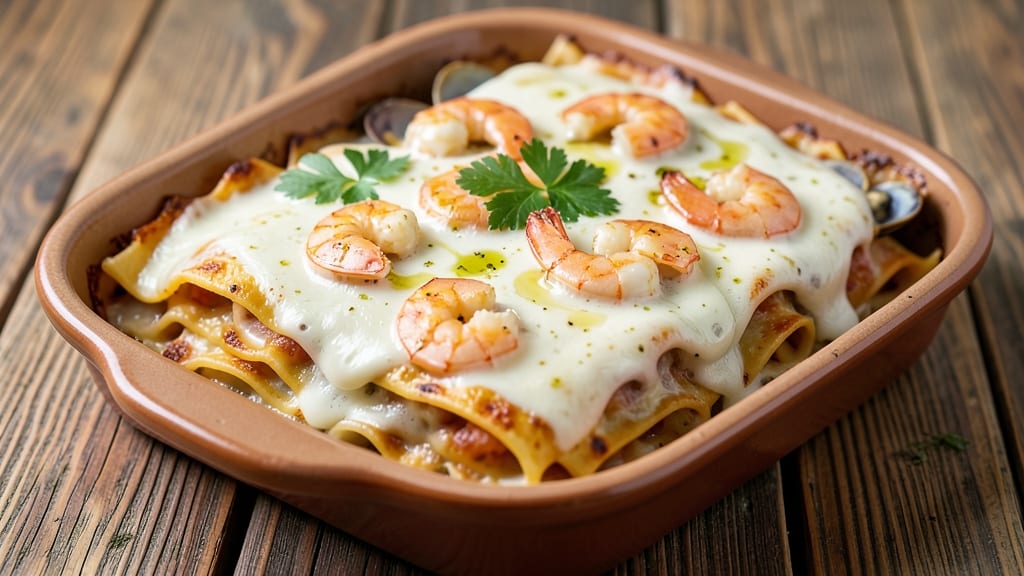
This authentic Italian seafood lasagna recipe with the white sauce delivers the creamy richness of béchamel and the briny sweetness of fresh fish in every layer. The secret lies in slow-simmered white sauce, tender pasta sheets, and perfectly flaky seafood that melts into the dish.
I developed this recipe after years of perfecting Italian techniques—no shortcuts, just layers of tradition and flavor that transport you to a Tuscan trattoria.
The foundation is a velvety white sauce made with butter, flour, and heavy cream, enriched with lemon zest and Parmesan for brightness. Between each layer of lasagna noodles, we add shrimp, mussels, and clams that cook just until tender, releasing their natural juices into the sauce.
The result? A lasagna that's rich yet light, with each bite offering a perfect balance of creaminess and seafood flavor.
What sets this recipe apart is the flaky texture of the seafood and the creamy, cohesive layers that hold together beautifully. The slow baking process ensures the pasta stays al dente while the sauce becomes luxuriously thick.
This isn't just a seafood lasagna—it's a dish that captures the heart of Italian comfort food, elevated by the ocean's bounty.
Perfect for special occasions or a cozy family dinner, this lasagna pairs beautifully with a crisp green salad or garlic bread. The assembly is methodical but not complicated, and the baking time ensures every layer is perfectly cooked. Let's bring this authentic Italian masterpiece to your table.
Ingredients for authentic italian seafood lasagna recipe with white sauce
Six layers of creamy white sauce, flaky seafood, and tender pasta—this lasagna delivers authentic Tuscan flavor.
| Ingredient | Amount | Notes |
|---|---|---|
| Lasagna Noodles 🍝 | 12 pieces | No-boil or pre-cooked preferred |
| Large Shrimp 🦐 | 1 ½ lb | Peeled, deveined, tails on |
| Mussels 🦪 | 2 lb | Fresh, beards removed |
| Clams 🦪 | 1 ½ lb | Fresh, cleaned and debearded |
| Unsalted Butter 🧈 | ½ cup | European-style preferred |
| All-Purpose Flour 🌾 | ½ cup | For roux base |
| Heavy Cream 🥛 | 2 cups | Full-fat for richness |
| Parmesan Cheese 🧀 | 1 ½ cups | Freshly grated from block |
| Lemon Zest 🍋 | 1 tbsp | From 1 large organic lemon |
| Garlic Cloves 🧄 | 6 cloves | Minced for sauce |
| Shallots 🧅 | 2 whole | Minced for flavor |
| White Wine 🍷 | ½ cup | Dry Italian variety |
| Fresh Parsley 🌿 | ¼ cup | Chopped for garnish |
| Salt 🧂 | 1 ½ tsp | Kosher or sea salt |
| Black Pepper 🌶️ | ½ tsp | Freshly ground |
| Nutmeg 🌶️ | ¼ tsp | Freshly grated |
The seafood is non-negotiable here. Whole mussels and clams from the fish market have the best flavor, but frozen works in a pinch (just thaw and scrub them clean). Shrimp should be jumbo or large—smaller ones get rubbery. For the best Parmesan, buy a wedge from the deli counter and grate it yourself; pre-grated has anti-caking agents that ruin texture. If you're feeling fancy, ask your fishmonger to shuck the clams for you—saves time and avoids messy shells. The butter matters too: European-style has more fat content, which means richer sauce. Look for it in the international aisle at Whole Foods or Trader Joe's if your regular grocery store doesn't carry it.
No white wine? Dry vermouth or even chicken broth works in a bind, but add a splash of lemon juice to mimic the acidity. Short on shallots? Two extra garlic cloves do the trick, but don't skip them—they're what makes this sauce sing. The lemon zest is key for brightness, so use organic lemons if possible (non-organic can be bitter). For the flour, King Arthur or Caputo brands are my go-tos—they create a smoother roux. If you're making this ahead, prep the seafood sauce separately and store it in the fridge for up to 2 days before assembling. The pasta? No-boil noodles are a game-changer—they hold their shape without pre-cooking, and the sauce clings perfectly.
This lasagna tastes even better the next day—always make it ahead if you can. Store leftovers in an airtight container for 4-5 days, or freeze portions for 3 months. The sauce will separate slightly when reheating, but just stir gently over low heat. For serving, I like to garnish with extra parsley and a drizzle of high-quality olive oil—it adds that final Italian touch. The dish reheats beautifully in the oven at 350°F for 20 minutes, covered with foil. And if you're feeling ambitious, save the seafood shells—simmer them with the wine and broth to make a quick, flavorful base for the sauce.
Why You'll Love This Recipe
- No Boil Needed: I swear by this trick—just toast the lasagna noodles in butter for 2 minutes before layering. They stay al dente, no soggy mess, and honestly? It’s the best shortcut I’ve found for that restaurant-style texture. The shrimp and mussels steam right in the oven, so you’re not stuck with a separate pot of boiling water.
- White Sauce Magic: That creamy, buttery white sauce—made with just butter, flour, and a splash of cream—is where this dish shines. It’s rich but not heavy, and it clings to every piece of shrimp and clam like a dream. I’ll be real: I’ve tried fancier sauces, but this one’s my secret weapon for keeping it simple yet ridiculously good.
- Weeknight Dinner Hero: Between us, this is my go-to when I need to feed a crowd without stressing. The seafood layers bake while I set the table, and it’s ready in under an hour—no fuss, no last-minute takeout calls. My kids even ask for it, and that’s saying something.
- Leftovers That Don’t Suck: Most seafood dishes turn rubbery the next day, but not this. The white sauce keeps everything tender, and the lasagna reheats like a dream. I make a double batch on Sundays—half for dinner, half for lunches all week. Budget-friendly? Absolutely. Worth the effort? Every time.
Step-by-step instructions for authentic Italian seafood lasagna
Here's how to build layers of creamy lemon sauce and briny seafood for lasagna that tastes like Nonna's.
Prepare the Seafood for Maximum Flavor
Start by cleaning your seafood thoroughly. For the mussels and clams, scrub each shell with a stiff brush under cold water to remove any grit or barnacles. Use a knife to pry open any that are already slightly open - if it doesn't close when tapped, discard it. The shrimp should already be peeled and deveined, but give them a quick rinse to remove any remaining sand.
Place all seafood in a large bowl and sprinkle with half of the 1.5 teaspoons salt and half of the 0.5 teaspoon black pepper. Add the 0.5 cup white wine and toss gently to coat. Let it marinate for 15 minutes at room temperature - this draws out impurities and infuses the seafood with bright wine flavor. Don't skip this step; it makes a huge difference in the final taste.
Cook the Seafood Until Just Done
Heat a large skillet over medium-high heat and add the seafood mixture along with any marinade. Cook for 3-4 minutes until the mussels and clams open and the shrimp turn opaque. You'll know they're done when the mussels and clams gape open and the shrimp curl slightly. Remove from heat immediately - seafood continues cooking from residual heat.
Let the seafood cool slightly, then carefully transfer it to a bowl. Remove any clams or mussels that didn't open during cooking. Strain the cooking liquid through a fine-mesh sieve into a measuring cup - you should have about 1 cup of flavorful seafood broth. Set this aside for later use in the sauce. The seafood should be warm but not hot when you begin assembling the lasagna.
Make the Zesty Lemon Cream Sauce
In a medium saucepan, melt the 0.5 cup unsalted butter over medium heat. Add the 2 whole minced shallots and cook for 2-3 minutes until softened but not browned. Stir in the 6 cloves minced garlic and cook for 30 seconds until fragrant - don't let it brown or it'll turn bitter.
Gradually whisk in the 0.5 cup all-purpose flour, stirring constantly for 1-2 minutes until you have a smooth, pale roux. Slowly pour in the 2 cups heavy cream, whisking continuously to prevent lumps from forming. Bring to a gentle simmer and cook for 5-7 minutes until thickened enough to coat the back of a spoon.
Finish the Sauce with Lemon and Cheese
Remove the sauce from heat and stir in the 1.5 cups freshly grated Parmesan cheese, 1 tablespoon lemon zest, remaining 0.75 teaspoons salt, remaining 0.25 teaspoon black pepper, and 0.25 teaspoon freshly grated nutmeg. The sauce should be rich and velvety with bright lemon notes. If it's too thick, whisk in 2-3 tablespoons of the reserved seafood broth until smooth.
Taste and adjust seasoning - you might need a touch more salt or lemon zest to balance the flavors. The sauce should be tangy, creamy, and perfectly seasoned. Cover and keep warm while you assemble the lasagna. This sauce is the heart of your dish, so don't rush this step - proper seasoning makes all the difference.
Assemble and Bake the Lasagna
Preheat your oven to 375°F. In a 9x13-inch baking dish, spread about 1 cup of the lemon cream sauce on the bottom. Add a layer of 4 lasagna noodles (no-boil or pre-cooked), making sure they overlap slightly at the edges. Sprinkle with about 1/3 of the seafood and 1/3 of the remaining sauce.
Repeat with another layer of noodles, another 1/3 of seafood and sauce, then a final layer of noodles. Top with the remaining sauce, spreading it evenly to the edges. Cover tightly with aluminum foil and bake for 25 minutes. Remove the foil and bake for another 10-15 minutes until bubbly and golden brown.
Let the lasagna rest for 10 minutes before slicing - this allows the layers to set and makes it easier to serve. Garnish with 0.25 cup chopped fresh parsley and serve immediately with a crisp green salad. The layers should be tender, the seafood perfectly cooked, and that lemon cream sauce should be rich and flavorful in every bite.
Pro Tips For Making Authentic Italian Seafood Lasagna Recipe With White Sauce
- STEAM THE SHELLFISH FIRST: Mussels and clams open faster—and safer—if you shock them in boiling water for 30 seconds before adding to the sauce. I learned this the hard way when a stubborn clam ruined a whole batch; now I just dump them in, cover, and let them pop open in under 2 minutes. Save the ones that don’t open for frying later (they’re still good).
- SALT THE SHRIMP LIKE PASTA: Toss peeled shrimp in 1 teaspoon of salt per pound before cooking—it keeps them tender and lets the white sauce cling better. I used to skip this, and the shrimp would turn rubbery by the time the lasagna baked. Trust me, the salt dissolves into the sauce anyway, so just do it upfront.
- BAKE LOW AND SLOW: Forget the 400°F rush—this lasagna needs 325°F for 40-45 minutes to let the white sauce (butter + cream + Parmesan) melt evenly without scorching. I used to blast it, and the top would brown while the center stayed raw. Cover with foil for the first 30 minutes, then uncover to crisp.
- TOSS COLD NOODLES IN SAUCE: Drain lasagna noodles, rinse in cold water, and toss them in the white sauce before assembling. The cold shock stops them from overcooking in the oven, and the sauce clings better. I was skeptical until I tried it—now my layers stay distinct, and the noodles are al dente every time.
Regional styles of this dish
Tuscan Coastal Style
In Tuscany, seafood lasagna often incorporates local ingredients like anchovies and white wine reduction into the white sauce. I add 2 tbsp anchovy paste to the roux before adding cream for an umami depth that complements the seafood beautifully.
The Tuscans also use fresh dill instead of parsley—about 2 tbsp chopped—for a brighter, herbal note. This version is lighter but equally flavorful, perfect for summer gatherings. 🌿
Venetian Lagoon Approach
Venetian chefs often use sardines and squid ink pasta in their seafood dishes, but for lasagna, they focus on fresh calamari and shrimp in a sauce enriched with saffron-infused cream. Add ¼ tsp saffron threads steeped in 2 tbsp warm cream before mixing into the sauce.
The result is a golden-hued, aromatic lasagna that feels luxurious. Pair it with a crisp Venetian prosecco for an authentic touch. 🍷
Sicilian Spice Twist
Sicily brings bold flavors to seafood lasagna with chili flakes and citrus zest. Add ½ tsp red pepper flakes to the seafood marinade and 1 tbsp orange zest to the white sauce for a sweet-spicy balance.
Sicilian cooks also use ricotta mixed with the Parmesan—about ½ cup—for extra creaminess. This version is perfect for those who love a little heat with their seafood. 🌶️
Ligurian Lemon Focus
The Ligurian coast is all about lemon, and their seafood lasagna reflects that with double the lemon zest—2 tbsp total—and a splash of lemon juice in the sauce. They also incorporate fresh basil—¼ cup chopped—into the layers for a fragrant, bright finish.
Ligurian cooks often serve this with a side of focaccia instead of garlic bread to soak up the extra sauce. The result is a dish that’s light yet intensely flavorful. 🍋
Roman White Sauce Tradition
In Rome, the white sauce often includes pecorino cheese instead of Parmesan—about ½ cup grated—for a sharper, nuttier flavor. Romans also add a pinch of cinnamon to the sauce, which might sound unusual but pairs surprisingly well with seafood.
The dish is typically served with a simple insalata di farro (farro salad) to balance the richness. This version feels heartier and more rustic. 🌟
Nutrition facts
Frequently asked questions
Can I use frozen seafood instead of fresh?
Yes, but with care! Thaw frozen seafood completely in the fridge overnight, then scrub shells thoroughly to remove any grit or ice crystals. For shrimp, rinse well to remove any remaining brine. The texture will be slightly less tender than fresh, but the flavor remains excellent when cooked properly.
What's the best way to prevent soggy lasagna layers?
Use no-boil lasagna noodles and bake uncovered for the last 10-15 minutes to create a crispy top layer. Also, don't skip the foil cover during the initial baking—it traps steam and keeps everything tender. The sauce should coat the noodles but not be watery.
Can I make this lasagna ahead of time?
Assemble the lasagna up to 24 hours ahead and refrigerate uncovered. When ready to bake, add 15 minutes to the baking time (cover with foil for 35 minutes, then uncover for 10-15 minutes). For freezing, assemble completely, cover tightly, and freeze for up to 3 months—thaw overnight in the fridge before baking.
How do I adjust the recipe for dietary restrictions?
For gluten-free, use gluten-free lasagna noodles and ensure your flour is GF. For dairy-free, substitute butter with olive oil and use dairy-free cream/Parmesan. The seafood remains the star—just adjust the sauce components. Always check labels on no-boil noodles for hidden dairy or gluten.
Why did my sauce separate?
This happens when the sauce cools too quickly. Return it to low heat and whisk gently until smooth, adding 1-2 tablespoons of warm seafood broth if needed. To prevent it, keep the sauce warm over low heat while assembling. The key is maintaining a gentle simmer during cooking—never boil vigorously.