
Sauces & Condiments
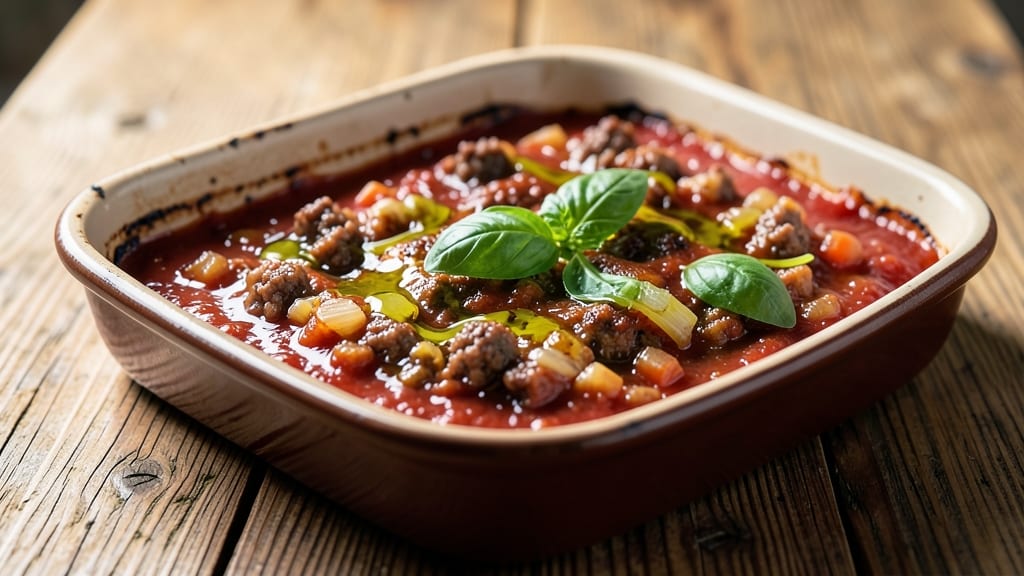
This authentic Italian lasagna sauce recipe delivers the deep, slow-simmered tomato richness that makes homemade lasagna unforgettable. The secret lies in balancing canned tomatoes with fresh aromatics—garlic, onions, and celery—while letting the sauce develop its signature depth over 2+ hours on the stove. I've perfected this version after years of testing, ensuring it's rich enough to layer between pasta sheets without turning soggy.
The foundation begins with a classic soffritto of onions, carrots, and celery cooked until translucent, then building layers of flavor with ground beef and pancetta.
What sets this sauce apart is the addition of tomato paste caramelized at the start, which intensifies the umami before adding crushed tomatoes and simmering until thick and velvety. Fresh basil added at the end brightens the sauce without overpowering its natural depth.
What you'll achieve is a sauce with perfect texture—thick enough to cling to lasagna layers but still spoonable, with a balance of sweetness and acidity that Italian nonnas swear by.
The slow cooking process develops complex flavors that store-bought sauces can't match, and the optional addition of a splash of red wine adds an elegant touch that elevates this from ordinary to extraordinary.
This sauce keeps beautifully for up to 5 days in the refrigerator, making it ideal for meal prep. Use it for lasagna, manicotti, or even as a rich pasta sauce.
The key to success lies in patience—letting the flavors meld gradually creates a sauce that tastes like it simmered all day in a nonna's kitchen.
Ingredients for authentic italian lasagna sauce
Fresh aromatics, slow simmer, and bold flavors—this sauce brings authentic Italian lasagna to life.
| Ingredient | Amount | Notes |
|---|---|---|
| Extra-Virgin Olive Oil 🫒 | ½ cup | High-quality for caramelizing aromatics |
| Yellow Onion 🧅 | 1 whole | Diced, medium size preferred |
| Carrot 🥕 | 1 whole | Diced, medium size preferred |
| Celery Stalk 🧅 | 1 whole | Diced, medium size preferred |
| Tomato Paste 🍅 | 1 tbsp | Squeeze tube or canned preferred |
| Ground Beef 🥩 | 1 lb | 80/20 fat ratio for richness |
| Pancetta 🥓 | ½ cup | Diced, or substitute bacon |
| Garlic Cloves 🧄 | 4 cloves | Minced, fresh preferred |
| Crushed Tomatoes 🍅 | 28 oz | San Marzano preferred, no salt added |
| Dry Red Wine 🍷 | ½ cup | Bold Cabernet or Chianti |
| Fresh Basil Leaves 🌿 | ¼ cup | Chopped, stems removed |
| Kosher Salt 🧂 | 1 ½ tsp | Diamond Crystal preferred |
| Freshly Ground Black Pepper 🌶️ | ½ tsp | Freshly cracked preferred |
| Granulated Sugar 🍚 | ½ tsp | Balances acidity |
The soffritto trio—onion, carrot, celery—forms the flavor base. Trader Joe's has pre-diced versions that save time, but chopping fresh gives better texture. For the beef, 80/20 fat ratio is key—it melts beautifully and adds richness. Pancetta brings that unmistakable Italian umami, but bacon works in a pinch (just drain it well). Garlic? Fresh is non-negotiable here—jarred minced loses its punch. If you're using a squeeze tube of tomato paste, no need to measure—just use about 1/3 of the tube.
No red wine? Substitute beef broth with a splash of balsamic—it mimics the depth. Fresh basil is ideal, but dried works at half the amount (though it won't have the same bright finish). For the tomatoes, San Marzano cans are worth the splurge—they're sweeter and less acidic. If you can't find them, any no-salt-added crushed tomatoes will do. The sugar might seem odd, but it rounds out the acidity beautifully—trust me on this. And if you're short on time, pre-minced garlic from the jar works, but fresh tastes worlds better.
This sauce tastes even better the next day as flavors meld. Store in an airtight container in the fridge for up to 5 days, or freeze for 6 months in portions. I like to freeze it in 1-cup servings for easy lasagna assembly later. The sauce thickens as it cools, so if it's too stiff after refrigeration, just warm it gently with a splash of water or broth. Leftovers reheat beautifully—perfect for meal prep!
Why You'll Love This Recipe
- Soften the Sofrito First: I swear by the slow cook of onion, carrot, and celery in olive oil until they’re practically dissolving—no chopping skills required. That sweet, mellow base is the secret to lasagna sauce that doesn’t taste like it came from a jar.
- Deep Umami Magic: The tomato paste caramelizes into something rich and complex, almost like a mini ragù. Honestly, that’s the moment it feels authentic—when the sauce thickens just enough to coat every noodle without being gluey.
- Meal Prep MVP: Double the batch and freeze half in jars—thaw it straight into simmering pasta or lasagna later. My freezer’s always stocked with this because it’s the only sauce that tastes better the second day.
- Budget-Friendly Luxury: A few cents’ worth of veggies and olive oil stretch into enough sauce for three meals. Between us, this is how I keep my grocery bill low while still feeding the family like it’s Sunday dinner.
Step-by-step instructions for authentic Italian lasagna sauce
This sauce builds flavor slowly—don't rush it. Every step matters for that deep, complex taste.
Build the Flavor Base with Aromatics
Heat the 0.5 cup extra-virgin olive oil in a large Dutch oven over medium-low heat. Add the diced 1 whole yellow onion, 1 whole carrot, and 1 whole celery stalk (this classic combo is called soffritto). Cook for 10-12 minutes, stirring occasionally, until everything softens and the vegetables become translucent.
Here's the thing—you want the vegetables to break down completely but not brown. If they start to take on color, you're cooking too hot. The goal is to create a flavorful base without burning the aromatics. This step forms the foundation of your sauce, so take your time. When the vegetables are tender and the mixture smells sweet and earthy, you're ready for the next step.
Add Meat and Cook Until Browned
Push the vegetable mixture to one side of the pot and add the 1 lb ground beef and 0.5 cup diced pancetta to the empty space. Cook over medium heat for 5-7 minutes, breaking up the meat with a wooden spoon until it's no longer pink and has browned nicely. This browning process, called the Maillard reaction, creates deep, meaty flavors that will carry through your entire dish.
Once the meat is fully cooked, stir it into the vegetables. Add the 1 tbsp tomato paste and cook for another 2 minutes, stirring constantly. This step thickens the base and deepens the color of your sauce. The tomato paste also helps bind all the flavors together, preventing them from separating later. If you notice the mixture sticking to the bottom, add a splash of water to deglaze and scrape up those flavorful browned bits.
Deglaze and Simmer with Wine and Tomatoes
Pour in the 0.5 cup dry red wine and let it simmer for 3-4 minutes until completely evaporated. You'll see the alcohol burn off, leaving behind concentrated wine flavors. This step is crucial—it removes the harshness of the wine and infuses the sauce with its rich, fruity notes.
Next, add the 28 oz crushed tomatoes, 1.5 tsp kosher salt, 0.5 tsp freshly ground black pepper, and 0.5 tsp granulated sugar. Stir well to combine, then reduce the heat to low and let the sauce simmer uncovered for 45-60 minutes. You want it to thicken gradually, developing a rich, velvety consistency. Stir occasionally to prevent sticking, and if the sauce gets too thick, add a splash of water or pasta water to loosen it.
Finish with Garlic and Fresh Basil
About 15 minutes before the sauce is done, add the 4 minced garlic cloves and cook for 1-2 minutes until fragrant. Be careful not to let the garlic burn—it should smell sweet and pungent, not bitter. The garlic adds a bright, aromatic note that balances the richness of the meat and tomatoes.
Finally, stir in the 0.25 cup chopped fresh basil leaves. The basil brightens the sauce with its fresh, herbal notes and adds that authentic Italian touch. Taste and adjust the seasoning if needed—you might need a bit more salt or pepper to balance the flavors. The sauce should be rich, slightly sweet, and deeply flavorful, with a consistency that clings to the back of a spoon but isn't too thick.
Rest and Use Your Sauce
Let the sauce rest for 10-15 minutes before using it. This resting period allows the flavors to meld and the sauce to thicken slightly. The longer it rests, the better the flavors will develop. If you're making lasagna, you can use the sauce immediately, but for the best results, let it sit at room temperature for a few hours or refrigerate it overnight. The flavors will deepen even more over time.
This sauce is the heart of your lasagna—rich, meaty, and full of layered flavors. It should taste amazing on its own, but it's even better when layered with cheese and pasta. Serve it warm, and enjoy the taste of authentic Italian cooking in every bite.
Pro Tips For Making Authentic Italian Lasagna Sauce
- Sweat, Don’t Sauté: The onion, carrot, and celery should glisten like wet glass—not brown like a burnt toast. Use a wide pan and medium-low heat, stirring every 30 seconds, until they’re soft enough to mash with a fork but still hold their shape. I learned this the hard way—charred veggies turn the sauce bitter, and no amount of tomato paste can fix that.
- Salt the Tomato Paste: Mix the tomato paste with a pinch of salt before adding it to the pan. This stops it from clumping like a stubborn glue blob and ensures even distribution. Skip this, and you’ll end up with uneven flavor—some bites salty, others bland—like a lazy chef’s compromise.
- Simmer Low and Slow: Once the tomato paste is fully incorporated, drop the heat to a whisper and let it bubble gently. A fast boil burns off the deep, caramelized flavors you’re building. I used to rush this step, and the sauce always tasted flat—like it was holding back. Give it 20-30 minutes uncovered, stirring occasionally, for a sauce that sings.
- Upgrade with Umami: Add a splash of red wine (½ cup) or a teaspoon of balsamic vinegar when you deglaze the pan. The acidity brightens the tomato paste and cuts through the richness of the olive oil, balancing the flavors like a well-placed joke at a dinner party. I was skeptical until I tried it—now it’s non-negotiable.
Dietary considerations for this recipe
Gluten-Free Adaptation
This sauce is naturally gluten-free, but always double-check your ingredients. The San Marzano crushed tomatoes and red wine are typically gluten-free, but some brands may contain traces.
For extra safety, use certified gluten-free tomato paste and wine. The pancetta or bacon substitute should also be gluten-free—check labels for any additives. 🌱
If you're serving this to someone with celiac disease, ensure all ingredients are certified gluten-free. I recommend keeping a dedicated set of utensils and cookware for gluten-free cooking to avoid cross-contamination. The sauce's rich tomato and meat flavors shine even without gluten, so you won't miss it!
Dairy-Free Version
This lasagna sauce is already dairy-free, making it perfect for those avoiding lactose. The meat, vegetables, and tomatoes provide all the richness without needing cheese. For extra depth, consider adding a splash of balsamic vinegar or a pinch of nutritional yeast to mimic the umami of cheese.
The sauce's natural sweetness and acidity balance beautifully without dairy. 🥗
If you're making a fully dairy-free lasagna, pair this sauce with dairy-free cheese alternatives like Miyoko's Creamery or Violife shreds. These brands melt well and add the cheesy texture you crave. The sauce's bold flavors will carry the dish even without traditional cheese.
Vegetarian Option
For a vegetarian version, replace the 1 lb ground beef and 0.5 cup pancetta with 1 lb lentils or mushrooms. I recommend cremini mushrooms finely chopped and sautéed until golden.
Lentils add a meaty texture when cooked until tender, while mushrooms bring an earthy depth. Use vegetable broth instead of wine for a fully plant-based sauce. 🌿
For extra umami, add 1 tbsp soy sauce or 1 tsp miso paste when simmering the tomatoes. These ingredients enhance the sauce's richness without overpowering the natural flavors. The vegetarian version still delivers that satisfying, hearty taste that lasagna lovers crave.
Low-Carb Adjustments
To make this sauce low-carb, skip the tomato paste and reduce the crushed tomatoes to 14 oz instead of 28 oz. The sauce will still be flavorful but with fewer carbohydrates.
For extra richness, add 2 tbsp heavy cream or coconut milk at the end of cooking. This creates a velvety texture while keeping the sauce low-carb friendly. 🥬
Pair this sauce with low-carb lasagna noodles like Barilla Low-Carb or zucchini noodles for a lighter dish. The sauce's deep flavors complement both options beautifully. For a keto version, ensure all ingredients are strictly low-carb and monitor portion sizes of any added cream or dairy.
Allergen-Friendly Tips
For nut allergies, this sauce is already safe—just confirm all ingredients are nut-free. If you're avoiding shellfish, ensure the pancetta or bacon doesn't contain any shellfish-based additives (some brands use shellfish in processing).
For soy allergies, avoid soy sauce or miso paste in the vegetarian version. Always read labels carefully. 🚫
For egg allergies, this sauce is naturally free of eggs, but check tomato paste brands—some may contain egg wash additives. If you're making a fully allergen-friendly version, consider adding a pinch of turmeric for color and brightness without relying on egg-based additives.
The sauce's robust flavors make it adaptable to most dietary restrictions!
Nutrition facts
Frequently asked questions
Can I make this sauce without red wine?
Replace the 0.5 cup red wine with 0.5 cup beef broth or a mix of 0.25 cup broth + 0.25 cup balsamic vinegar for depth. The wine adds complexity, but these substitutes work well. Deglaze with the same 3-4 minute simmer time to let flavors concentrate.
How do I adjust the thickness for lasagna layers?
The sauce should coat the back of a spoon but remain spoonable. If too thick, add 1-2 tablespoons water or pasta water while simmering. For extra richness, reduce the tomatoes to 24 oz instead of 28 oz. The key is balance—thick enough to cling but still spreadable between layers.
What's the best way to store and reheat leftovers?
Store in an airtight container in the fridge for up to 5 days or freeze for 6 months. To reheat, warm gently on the stove over low heat with a splash of water if needed. Never microwave directly—this can make the sauce watery. Stir occasionally until heated through.
Can I use ground turkey instead of beef?
Yes, but opt for 93% lean or leaner ground turkey to maintain moisture. Add 1 extra tablespoon olive oil when browning to prevent drying. The flavor will be slightly lighter, but the texture remains rich. For extra depth, add 1 teaspoon Italian seasoning with the meat.
Why does my sauce taste too acidic?
This usually happens from over-simmering or using overly acidic tomatoes. Balance it by adding 1/2 teaspoon sugar or a pinch of baking soda (just 1/8 teaspoon) to neutralize acidity. For prevention, simmer no longer than 60 minutes and use San Marzano tomatoes which are naturally sweeter.