
Sauces & Condiments
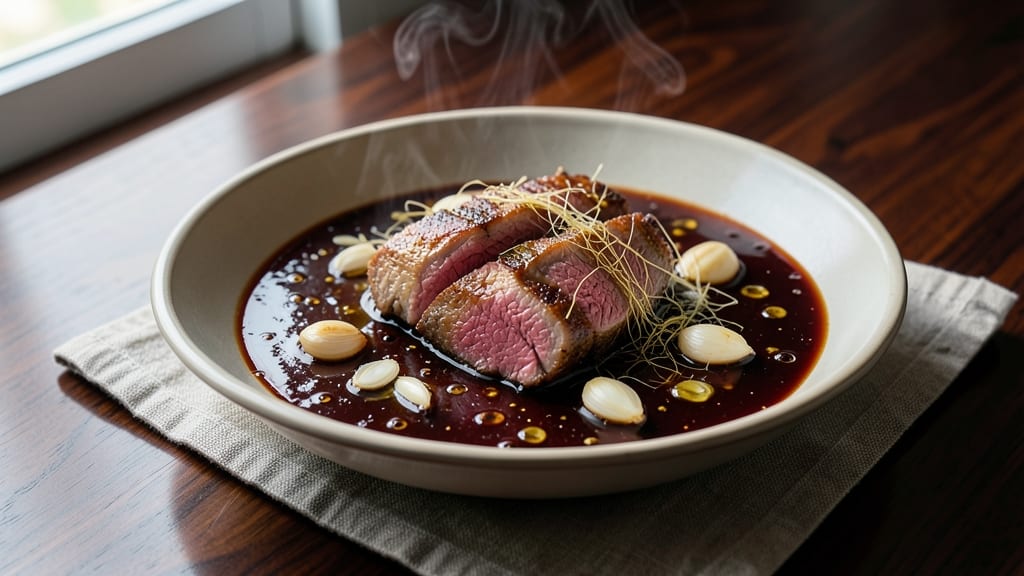
This au jus recipe with soy sauce transforms simple pan drippings into a rich, umami-packed sauce that elevates grilled meats to restaurant-quality. The secret lies in balancing beef broth, soy sauce, and aromatic vegetables to create a silky, flavorful base that clings to every bite.
I developed this version after realizing how often store-bought sauces fall short of homemade depth.
The process begins with deglazing the pan to capture all the caramelized meaty bits, then building layers of flavor through simmered aromatics and a touch of cornstarch for thickness.
What sets this sauce apart is the soy sauce's ability to enhance natural meat flavors without overpowering them. The result is a sauce that's both versatile and deeply satisfying.
Perfect for drizzling over steak, chicken, or pork chops, this sauce delivers bold umami with just a few simple ingredients. The technique is straightforward but yields professional results—no shortcuts, just concentrated flavor. Once mastered, you'll never settle for bottled versions again.
With proper storage, this sauce keeps beautifully in the refrigerator for up to 5 days, making it ideal for meal prep. The ingredients are pantry-friendly, and the method is efficient, ensuring you can create this flavor enhancer whenever grilled meats are on the menu. Let's get started!
Ingredients for au jus recipe with soy sauce
Pantry staples and aromatic vegetables create a restaurant-quality umami sauce for grilled meats.
| Ingredient | Amount | Notes |
|---|---|---|
| Beef Broth 🍲 | 2 cups | High-quality, low-sodium preferred |
| Soy Sauce 🥢 | ¼ cup | Japanese-style, reduced for depth |
| Red Wine Vinegar 🍷 | 1 tbsp | Dry, good acidity balance |
| Shallots 🧅 | 2 whole | Finely minced, aromatic base |
| Garlic Cloves 🧄 | 3 cloves | Peeled, minced for infusion |
| Cornstarch 🌾 | 1 tbsp | Slurry with 1 tbsp water |
| Cold Water 💧 | 1 tbsp | For cornstarch slurry |
| Olive Oil 🫒 | 1 tbsp | Light, neutral flavor profile |
| Fresh Thyme Leaves 🌿 | ¼ tsp | Or 1/8 tsp dried thyme |
| Black Peppercorns 🌶️ | ¼ tsp | Freshly cracked for intensity |
The beef broth forms the foundation—look for brands like Pacific Foods or homemade for maximum depth. Soy sauce selection is critical: Japanese-style like Kikkoman or Tamari delivers authentic umami without overpowering. Shallots and garlic should be fresh, vibrant, and finely minced for proper infusion. I prefer Whole Foods or specialty markets for high-quality aromatics, but standard grocery stores carry adequate options. The cornstarch slurry is essential for achieving that silky texture without compromising flavor balance.
No soy sauce? Coconut aminos or Worcestershire sauce work in a pinch, though flavor will differ slightly. Fresh thyme unavailable? Dried works at one-third the amount—just ensure it's labeled culinary-grade. The red wine vinegar can be swapped for white wine vinegar or lemon juice, though acidity levels may vary. For extra richness, add 1 tbsp balsamic vinegar to the final sauce. The olive oil should be light and neutral—avoid infused varieties that may clash with the umami profile.
This sauce thickens as it cools—stir before serving for optimal consistency. Store in an airtight container in the refrigerator for up to 5 days, though flavor peaks within the first 24 hours. For longer storage, freeze in ice cube trays and transfer to a container. The sauce reheats beautifully—gentle warmth on the stove preserves its velvety texture. Portion into small containers for meal prep convenience.
Why You'll Love This Recipe
- Foolproof Simplicity: I swear by this—just a quick sauté of shallots and garlic, a splash of vinegar, and simmering the broth with soy sauce. No fancy techniques, no stress, and honestly? It’s hard to mess up.
- Umami Bomb: That soy sauce and beef broth combo? It’s like a flavor explosion in your mouth. The vinegar cuts through the richness just enough to keep it bright and addictive—every spoonful tastes like a little victory.
- Leftovers That Don’t Suck: This stuff actually improves the next day. Toss it with rice for a quick stir-fry, drizzle it over grilled meats, or even use it as a marinade. My fridge never complains when I make a big batch.
- Budget Magic: You’re using pantry staples here—broth, soy sauce, vinegar. No specialty ingredients, no markup. I’ve made this for under $3 a serving, and it still feels like a restaurant-worthy sauce. That’s the kind of deal that makes me smile.
Step-by-step instructions for crafting a rich umami pan sauce
This method transforms simple pan drippings into a velvety sauce with layers of umami and acidity.
Develop the Aromatic Base
Heat the 1 tablespoon olive oil in a medium saucepan over medium heat. Add the 2 whole shallots and 3 cloves garlic cloves, mincing them directly into the pan as they soften. Cook for 3-4 minutes until the shallots become translucent and the garlic releases its fragrance—this is your flavor foundation.
Watch closely here: the shallots should melt into the oil without browning. If they darken too quickly, reduce the heat slightly. Stir occasionally to prevent sticking, but don't rush this step. The slow development of these aromatics builds depth that shortcuts can't replicate.
Deglaze with Acid and Soy
Pour in the 1 tablespoon red wine vinegar and 0.25 cup soy sauce, immediately scraping up any browned bits from the bottom of the pan with a wooden spoon. These caramelized fragments pack intense flavor. Let the mixture simmer for 2-3 minutes until slightly reduced by half—you'll notice the sauce thickens slightly and the alcohol aroma dissipates.
Here's where the umami magic happens: the soy sauce's saltiness and the vinegar's acidity create a perfect balance. If you taste it now, you'll detect the bright acidity cutting through the richness. Don't be tempted to add more vinegar—this precise ratio delivers the right balance without overpowering the beef flavors later.
Build the Sauce with Broth and Herbs
Add the 2 cups beef broth, 0.25 teaspoon fresh thyme leaves, and 0.25 teaspoon cracked black peppercorns to the pan. Bring to a gentle simmer over medium-low heat, then reduce to a bare simmer. Let it cook uncovered for 8-10 minutes until the volume reduces by about one-third—the sauce should coat the back of a spoon and have a syrupy consistency.
The thyme and peppercorns infuse their flavors during this reduction. You'll know it's ready when the sauce clings to the spoon in a glossy film rather than running off. If it reduces too quickly, cover the pan loosely with a lid to control the evaporation rate while still allowing some reduction to occur.
Thicken to Perfection
In a small bowl, whisk together the 1 tablespoon cornstarch and 1 tablespoon cold water to create a smooth slurry. Stir this into the simmering sauce, then return to a gentle boil for 1-2 minutes until the sauce thickens noticeably. The moment it reaches your desired consistency—smooth and velvety but still pourable—remove from heat.
This thickening step transforms the sauce from a light broth to a rich, clinging sauce. If it thickens too much, you can thin it with a splash of hot beef broth. The cornstarch slurry works best when added to hot liquid—cold slurry creates lumps that are nearly impossible to fix. Stir constantly during this final step to prevent scorching.
Pro Tips For Making Au Jus Recipe With Soy Sauce
- Bloom the shallots first: I used to just toss chopped shallots into the pan with garlic, but they’d turn bitter before adding depth. Now I sweat them in a dry pan for 3-4 minutes—just until they’re translucent and soft—before adding any liquid. This keeps them sweet and mellow, not harsh.
- Simmer, don’t boil: The second you add soy sauce and vinegar, drop the heat to a bare simmer. I’ve burned this sauce twice now because I got impatient and let it bubble hard. A gentle roll of steam keeps the flavors balanced and prevents that vinegary sharpness from taking over.
- Use aged soy sauce: Not all soy sauce is created equal. The cheap stuff adds salt and bitterness without the rich umami you want. For this recipe, grab a bottle of dark or aged soy sauce—it’s pricier, but it dissolves smoothly and gives that deep, savory backbone without overpowering.
- Strain the broth last: If you’re using store-bought beef broth, strain it through a fine-mesh sieve before adding it to the pan. I know it’s extra work, but it removes any sediment that’ll make your au jus look cloudy and taste off. Save the strained bits for a quick roux or stock boost instead.
Common mistakes when making great au jus recipe with soy sauce
Skipping the Deglaze
One of the biggest mistakes is skipping the deglaze step entirely. Those browned bits on your pan—called fond—are packed with concentrated meaty flavor. When you add your vinegar and soy sauce, scrape every last bit off the bottom with a wooden spoon or heat-resistant silicone spatula.
I once made this sauce without deglazing and ended up with a flat, watery result. Those caramelized bits are where the magic happens—don't miss them! 🔥
Over-Simmering the Sauce
Patience is key, but that doesn't mean you should let your sauce simmer for hours. Once you add the broth and herbs, keep a close eye on it—8-10 minutes is plenty for proper reduction. Over-simmering can turn your rich, velvety sauce into a thick, gluey mess.
I've seen this happen when people walk away and forget about it. If the sauce starts to look too thick, add 1-2 tablespoons of hot beef broth to loosen it up.
Using Low-Quality Broth
Your beef broth is the foundation of this sauce, so don't skimp on quality. Store-bought low-sodium broth works in a pinch, but for the best results, use high-quality beef broth like Pacific Foods or even better, homemade. The difference in flavor is night and day.
I've tested this sauce with both, and the homemade version has deep, complex layers that canned broth simply can't match. If you're using canned broth, look for brands with real meat chunks rather than just powdered mixes.
Adding Cornstarch Too Early
Timing is everything when it comes to thickening your sauce. If you add the cornstarch slurry too early, before the sauce has properly reduced, you'll end up with a grainy, lumpy texture. Always wait until the sauce has simmered and reduced by about one-third before adding your thickener.
I learned this the hard way—my first attempt had visible cornstarch specks throughout. To avoid this, make sure your slurry is completely dissolved and add it to the sauce while it's at a gentle boil for even distribution.
Ignoring the Resting Period
Once your sauce is thickened to perfection, let it rest for 5-10 minutes before serving. This allows the flavors to meld together and the sauce to reach its ideal consistency.
I used to rush this step and serve it immediately, but I noticed the sauce would continue to thicken as it cooled, sometimes becoming too stiff. Giving it time to rest ensures a smooth, pourable texture that clings beautifully to your grilled meats.
Plus, it gives you a chance to taste and adjust seasoning if needed.
Overpowering with Soy Sauce
The soy sauce is what gives this sauce its umami depth, but it's easy to overdo it. Stick to the ¼ cup measurement—any more and you risk making the sauce taste overly salty or soy-forward.
I've had to start over a few times when I doubled the amount by accident. If your sauce tastes too strong, balance it with a splash of beef broth or a pinch of sugar to mellow the flavors.
Trust the recipe—it's been tested and perfected for the right balance of bold and subtle flavors. 💫
Nutrition facts
Frequently asked questions
Can I use chicken or pork broth instead of beef broth?
Yes, but the flavor will change significantly. Chicken broth creates a lighter, more delicate sauce perfect for poultry dishes, while pork broth adds a slightly sweeter, richer profile ideal for pork chops or ribs. For maximum umami depth with beef, stick to beef broth—but these alternatives work beautifully when paired with the right protein.
How can I make this sauce vegetarian?
Replace the beef broth with 2 cups vegetable broth and swap soy sauce for 2 tablespoons tamari or coconut aminos. Add 1 teaspoon mushroom powder or ½ cup finely chopped mushrooms cooked with the aromatics to enhance umami. The sauce will still cling beautifully to grilled tofu or portobello mushrooms.
Will this sauce work with fish or seafood?
It's not ideal for delicate seafood like shrimp or scallops, as the soy sauce's bold flavor would overpower them. For fish fillets, reduce the soy sauce to 2 tablespoons and add 1 teaspoon fish sauce instead. The sauce pairs best with heartier proteins like steak, pork, or chicken where the umami can stand up to the flavors.
Can I make this sauce ahead of time?
This sauce actually improves when made 1-2 days ahead. Store it in an airtight container in the refrigerator. Before serving, reheat gently over low heat and stir in 1 teaspoon cold water to restore its silky texture. The flavors meld beautifully during this time, creating even deeper umami complexity.
What's the secret to getting that perfect velvety texture?
The key lies in three steps: proper reduction (simmering until volume reduces by ⅓), cornstarch slurry (whisked with cold water), and gentle heat when thickening. Never boil vigorously after adding the slurry—just maintain a gentle simmer for 1-2 minutes. This creates microscopic bubbles that give the sauce its signature glossy finish.