
Sauces & Condiments
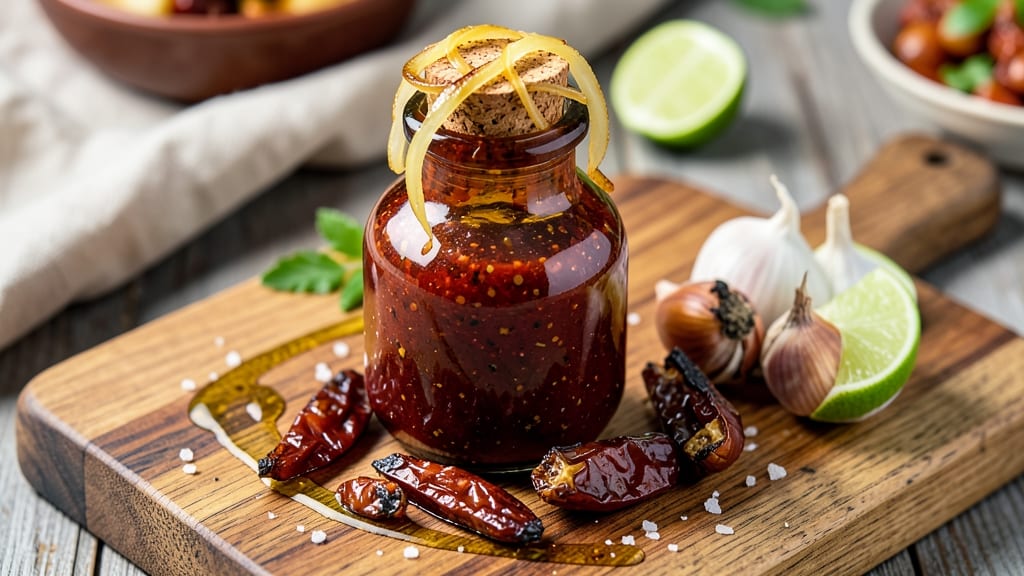
This arbol pepper hot sauce recipe delivers the perfect balance of smoky heat and bright citrus that elevates every dish from tacos to grilled meats.
The key lies in slow-cooking arbol peppers with garlic and onions until their natural oils infuse into a vinegar base, creating a sauce that's both fiery and complex. Unlike store-bought versions, this recipe builds flavor through careful reduction and a touch of lime that cuts through the heat.
The process begins with charring the peppers to deepen their smoky character, then simmering them with aromatics until the mixture reduces to a thick, glossy consistency.
A splash of apple cider vinegar adds tang while preserving the sauce, and fresh lime juice at the end ensures that bright, zesty finish that makes this sauce unforgettable.
What sets this apart is the ability to control the heat level—adjust by adding more peppers for intensity or leaving some out for a milder kick.
What you'll end up with is a shelf-stable hot sauce that's rich in smoky, peppery depth with a refreshing citrus punch. The texture is smooth yet vibrant, clinging to food without overpowering it. This isn't just a condiment—it's a flavor multiplier that transforms simple meals into something extraordinary.
Perfect for gifting, meal prep, or keeping on hand for spontaneous flavor boosts, this sauce keeps for months when stored properly. Whether you're a hot sauce enthusiast or a home cook looking to elevate dishes, this recipe delivers professional-quality results with minimal effort.
Let's get started on creating your own batch.
Ingredients for arbol pepper hot sauce
Nine simple ingredients transform into a smoky, citrusy hot sauce that rivals store-bought favorites.
| Ingredient | Amount | Notes |
|---|---|---|
| Arbol Peppers 🌶️ | 1 cup | Dried, whole, seeds removed |
| Yellow Onion 🧅 | 1 whole | Medium size, roughly chopped |
| Garlic Cloves 🧄 | 6 cloves | Fresh, peeled, sliced |
| Apple Cider Vinegar 🍏 | 1 ½ cups | Raw, unfiltered preferred |
| Extra-Virgin Olive Oil 🫒 | ½ cup | High quality, fruity |
| Fresh Lime Juice 🍋 | ¼ cup | Strained, freshly squeezed |
| Granulated Sugar 🍚 | 1 tbsp | Light brown preferred |
| Salt 🧂 | 1 tsp | Kosher or sea salt |
| Black Peppercorns 🌶️ | ½ tsp | Freshly cracked |
| Water 💧 | ¼ cup | Filtered preferred |
Arbol peppers are the heart of this sauce—look for them at Latin markets or specialty grocers like Whole Foods or Gourmet Garage. The dried peppers should be deep red with no signs of mold or dampness. If you can't find arbols, chipotle peppers in adobo sauce work in a pinch, but they'll give a slightly different smoky profile. Toasting the peppers over an open flame or under a broiler until charred deepens their smoky character, which is key for that restaurant-quality depth. For the onions, yellow or white work best—they're milder and won't overpower the peppers.
No apple cider vinegar? White vinegar or red wine vinegar both work, though the flavor will be slightly different. The sugar isn't just for sweetness—it helps balance the acidity and caramelizes slightly during reduction, adding another layer of complexity. For the lime juice, fresh is non-negotiable—bottled lime juice lacks the bright zing you're going for. If you're sensitive to heat, reduce the number of peppers by half or remove seeds before charring. The black peppercorns add subtle warmth, but you can omit them if you prefer a cleaner pepper flavor. For a smoother sauce, strain through a fine-mesh sieve after blending.
This sauce keeps beautifully—up to 6 months in a clean glass jar in your pantry. The vinegar acts as a natural preservative, so no refrigeration is needed. For gifting, use small bottles with tight-sealing lids. The sauce thickens slightly as it ages, so you can thin it with a splash of water or vinegar if needed. Freezing isn't recommended as it can alter the texture. Label your jar with the date and heat level (mild/medium/hot) so you remember what you've created. A little goes a long way—start with 1/4 teaspoon and adjust to taste.
Why You'll Love This Recipe
- Five-Ingredient Magic: I swear, this sauce comes together with just a knife, a cutting board, and 10 minutes of my time. No blender, no fancy tools—just chop, simmer, and strain. Honestly, the hardest part is resisting the urge to eat the raw peppers first.
- Heat with Soul: That first bite? Pure fire meets bright acidity, but it’s the slow-cooked garlic and onion that make it sing. The arbol peppers bring the heat, but the vinegar and olive oil soften it into something complex—like a hug for your taste buds.
- Every Meal’s Best Friend: Drizzle it on eggs, toss it in tacos, or let it sit in your fridge as the ultimate takeout sauce upgrade. I keep a jar in my fridge for when I’m too lazy to cook, and it turns even the simplest meal into something special. (Yes, even on a Tuesday night.)
- Lasts for Weeks: One batch stretches across three meals for me—sometimes more. The vinegar keeps it fresh, and the olive oil seals in flavor, so it doesn’t go bad. Plus, it’s cheap to make; I spend less than $5 for enough to last a month. Budget win.
Step-by-step instructions for arbol pepper hot sauce
This method delivers a perfectly balanced hot sauce with smoky depth and bright acidity.
Toast the Arbol Peppers and Aromatics
Heat a dry skillet over medium heat and add the 1 cup Arbol Peppers. Toast them for 2-3 minutes, stirring constantly, until they begin to darken slightly and release their aromatic oils. This step enhances their natural smokiness without burning them.
Remove the peppers from the heat and immediately transfer them to a heatproof bowl. Add the 1 whole Yellow Onion and 6 cloves Garlic Cloves to the same skillet. Cook for 3-4 minutes until the onion becomes translucent and the garlic just begins to turn golden. This develops their sweetness and mellows their sharpness.
Blend the Base Ingredients
Transfer the toasted peppers, onion, and garlic to a blender. Add the 1.5 cups Apple Cider Vinegar, 0.25 cup Fresh Lime Juice, 1 tbsp Granulated Sugar, and 0.25 cup Water. Blend until completely smooth, scraping down the sides as needed. The mixture should be silky and free of any chunks.
Taste the blend and adjust the seasoning if needed. Add more sugar if it needs sweetness, or more lime juice if the acidity feels too mild. This is your flavor foundation, so balance is critical at this stage. The sauce should be tangy, slightly sweet, and developing its peppery character.
Simmer and Reduce the Sauce
Pour the blended mixture into a saucepan and bring it to a gentle simmer over medium-low heat. Stir occasionally to prevent sticking. Let it reduce for 20-25 minutes, until it thickens slightly and coats the back of a spoon. You'll notice the aroma intensify as the flavors meld together.
During this time, add the 1 tsp Salt and 0.5 tsp Black Peppercorns. The peppercorns will infuse their subtle heat and complexity. If the sauce starts to darken too much, reduce the heat slightly. You're aiming for a rich, deep color—not burnt or overly dark.
Incorporate the Olive Oil
Remove the sauce from heat and let it cool for 5 minutes. While it cools, heat the 0.5 cup Extra-Virgin Olive Oil in a small saucepan over low heat until it just begins to shimmer. Don't let it smoke—just warm it enough to blend smoothly with the sauce.
Slowly pour the warm olive oil into the sauce while whisking continuously. The oil should emulsify with the sauce, creating a velvety texture. If the sauce separates slightly, whisk vigorously to recombine. This step adds richness and helps balance the heat with smoothness.
Strain and Bottle for Storage
Strain the sauce through a fine-mesh sieve into a clean bowl or jar, pressing gently on the solids to extract all the liquid. Discard the strained solids. The sauce should now be completely smooth with no visible particles. This ensures a clean, professional finish.
Let the sauce cool to room temperature, then transfer it to sterilized bottles or jars. Store in the refrigerator for up to 3 months, or process in a water bath for shelf-stable storage. The flavors will continue to develop over time, becoming more complex with each passing week.
Pro Tips For Making Arbol Pepper Hot Sauce
- Char the Peppers: Toss whole arbol peppers in a dry skillet over medium-high heat for 30 seconds per side until they blister and blacken slightly—this deepens their smoky flavor without burning them. I learned this the hard way: skipping this step leaves your sauce tasting flat and one-dimensional, no matter how much vinegar you add.
- Mince Onion and Garlic Fine: Use a sharp knife and chop the onion and garlic into a paste so fine it’s almost invisible—this ensures even distribution and prevents any texture issues in the finished sauce. I was skeptical until I tried it; the sauce blends smoothly and doesn’t separate when bottled.
- Simmer Low and Slow: Reduce the heat to the lowest setting possible and let the sauce bubble gently for at least 20 minutes—this breaks down the peppers’ heat and melds the flavors without making the vinegar taste harsh. After burning three batches at high heat, I finally realized patience here makes all the difference.
- Strain Twice for Smoothness: First pass through a fine-mesh strainer catches the obvious bits, but run it through a cheesecloth or coffee filter afterward to remove any lingering grit—this guarantees a silky texture. Sounds tedious, but your future self will thank you when the sauce pours like liquid heat instead of chunky sludge.
Dietary considerations for this recipe
Gluten-Free Friendly
This arbol pepper hot sauce is naturally gluten-free since it relies on vinegar, peppers, and olive oil as its base ingredients. All the components—apple cider vinegar, extra-virgin olive oil, and fresh lime juice—are inherently gluten-free.
Just ensure your arbol peppers haven’t been processed in a facility that handles gluten-containing products if you're highly sensitive. 🌱
Spice Sensitivity Adjustments
If you're sensitive to heat, reduce the number of arbol peppers by half or omit the seeds before charring them. The seeds contain most of the capsaicin, which is what creates the heat.
For a milder sauce, you can also blend in 1 extra tablespoon of sugar or 1 tablespoon of honey to balance the spice level. Always taste as you go!
Vegan and Vegetarian
This recipe is 100% plant-based, making it perfect for vegan and vegetarian diets. It contains no animal products—just peppers, vinegar, lime, and olive oil. The sauce is also free from dairy, eggs, and meat, so it fits seamlessly into plant-forward meals.
It’s a fantastic way to add heat and depth to veggie-based dishes like tacos, stir-fries, or grain bowls. 🌿
Low-Sugar Option
If you're watching your sugar intake, you can reduce the 1 tablespoon of granulated sugar to just ½ teaspoon or even omit it entirely. The sauce will still taste balanced because the apple cider vinegar and lime juice provide natural acidity.
Just be prepared for a slightly sharper, less rounded flavor profile. For extra sweetness, consider adding a splash of agave syrup instead. 🍯
Allergen Awareness
This recipe contains sulfites (from dried peppers) and alliums (garlic and onion), which can be problematic for some individuals. If you have a known allergy to garlic or onions, you can substitute them with shallots or asafetida powder (a common onion substitute in Indian cuisine).
Always double-check ingredient labels, especially for pre-packaged vinegars or oils, which may contain hidden allergens. 🚨
Heat Level Customization
Want to control the heat level? Adjust the number of arbol peppers based on your tolerance. For a mild sauce, use ½ cup peppers and remove all seeds. For medium heat, stick with the full 1 cup but remove seeds.
For extra hot, keep the seeds and add 1-2 extra peppers. Taste and adjust as you blend—this sauce is all about personal preference! 🔥
Nutrition facts
Frequently asked questions
What makes arbol pepper hot sauce different from other pepper sauces?
Arbol peppers bring a unique smoky, slightly fruity heat that's more complex than habaneros or jalapeños. Their medium-high heat (5,000-10,000 SHU) builds gradually with a lingering finish, unlike the immediate burn of ghost peppers. The charring step in this recipe enhances their natural smokiness, creating depth that's hard to replicate with fresher peppers.
Can I substitute arbol peppers if I can't find them?
Yes! For a similar heat profile, use ½ cup chipotle peppers in adobo sauce (remove seeds for milder heat) or ½ cup dried guajillo peppers combined with ¼ cup dried ancho peppers. If using fresh peppers, try 2-3 habaneros or 4-5 serranos, but reduce the cooking time to prevent bitterness. Toast them first to develop smoky notes.
How do I know when the sauce is done reducing?
The sauce is ready when it coats the back of a spoon and has reduced by about 25-30%. Look for a glossy sheen and slightly thicker consistency—it should no longer be watery. If it darkens too much, reduce the heat immediately. The total reduction time varies based on your stove's heat level, so check frequently after 20 minutes.
Why did my hot sauce separate after adding olive oil?
This happens when the sauce cools too quickly or the oil isn't warm enough. To fix it, whisk vigorously while gently reheating the sauce over low heat for 1-2 minutes. The oil should re-emulsify. For prevention, always add warm oil to warm sauce and whisk continuously. If it persists, blend the separated sauce briefly to recombine.
How should I use this hot sauce in cooking?
Start with ½ teaspoon and adjust to taste—this sauce packs concentrated flavor! Drizzle over tacos, grilled meats, or seafood, or mix 1 teaspoon per cup into marinades for chicken or pork. For soups, add 1 tablespoon per bowl at the end of cooking. The citrus notes make it perfect for ceviche or shrimp cocktails too!