
Sauces & Condiments
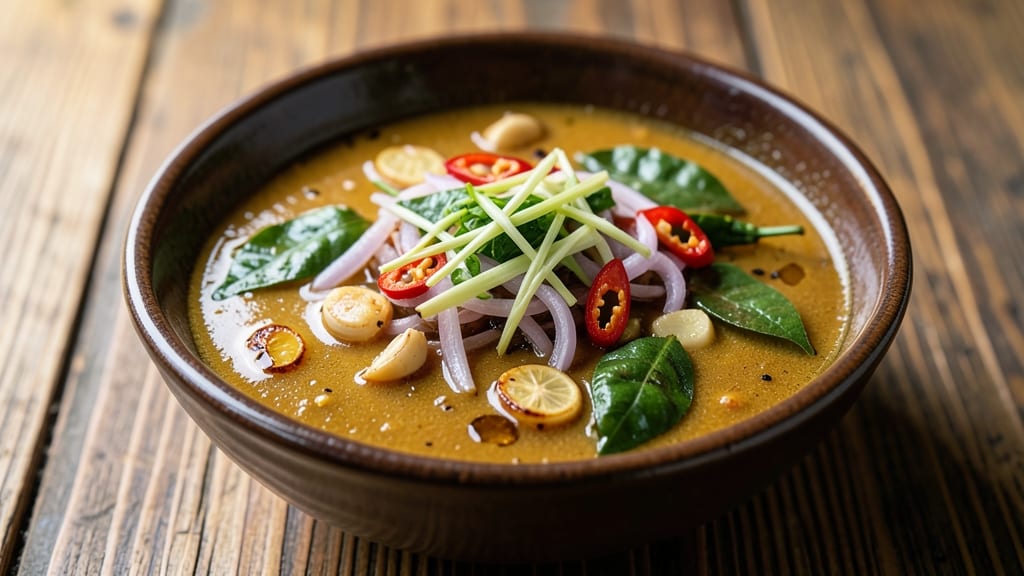
This Bangkok curry sauce recipe delivers the velvety richness and aromatic depth of Thailand's most beloved street food flavors. The secret lies in balancing smoky lemongrass, bright kaffir lime leaves, and a touch of sweetness with heat—transforming simple ingredients into a sauce that elevates everything from stir-fries to grilled meats.
I've perfected this version to stay true to traditional techniques while adapting for home kitchens, where fresh ingredients make all the difference.
The foundation begins with a fragrant paste of lemongrass, garlic, and shallots, toasted until aromatic before blending with fish sauce, lime juice, and a hint of palm sugar.
What sets this sauce apart is the careful reduction that creates its signature silky texture—neither too thin nor too thick, but perfectly balanced for dipping, marinating, or as a stir-fry base.
The result is a sauce that's tangy, slightly sweet, and packed with umami depth, thanks to the fish sauce and fermented shrimp paste.
By the time you're done, you'll have a sauce that's versatile enough to complement grilled chicken, shrimp, or tofu, or serve as a dipping sauce for spring rolls. The aroma alone will transport you to Bangkok's bustling streets, where this sauce is the heart of countless dishes.
It keeps well in the refrigerator for up to a week, allowing you to enjoy the flavors of Thailand without the hassle of last-minute prep.
Whether you're cooking for a crowd or meal prepping for the week, this sauce delivers restaurant-quality results with minimal effort. The key is patience—letting the flavors meld during the reduction ensures every bite is packed with authentic Thai flavor. Ready to transform your meals? Let's get started.
Ingredients for bangkok sauce
Nine aromatic ingredients transform into velvety Bangkok curry sauce perfect for stir-fries and grilled meats.
| Ingredient | Amount | Notes |
|---|---|---|
| Stalks Lemongrass 🌿 | 4 whole | White parts only, finely chopped |
| Kaffir Lime Leaves 🍋 | 4 whole | Bruised for aroma release |
| Garlic Cloves 🧄 | 6 cloves | Peeled, lightly crushed |
| Shallots 🧅 | 4 whole | Peeled, roughly chopped |
| Fresh Galangal 🌿 | 1 inch | Peeled, sliced (or ginger substitute) |
| Thai Bird's Eye Chilies 🌶️ | 2 whole | Seeds removed for mild heat |
| Fish Sauce 🐟 | ½ cup | Red Boat preferred |
| Palm Sugar 🍯 | ¼ cup | Or light brown sugar |
| Coconut Milk 🥥 | 13 ½ oz | Full-fat canned preferred |
| Lime Juice 🍋 | ¼ cup | Freshly squeezed |
The Thai ingredients make or break this sauce. Kaffir lime leaves are the secret weapon—find them in the produce section of Asian markets or online. Galangal, if unavailable, can be swapped for ginger but loses that signature citrusy punch. For the fish sauce, Red Boat is the gold standard, but any reputable brand works. Palm sugar adds authentic sweetness—Trader Joe's carries it in the baking aisle, or sub brown sugar if needed. The lemongrass should be fragrant and fresh, never woody or dried out. Bruise the lime leaves before adding to release their essential oils.
No kaffir lime leaves? Double the lime zest plus 1 tbsp lime juice gets you close. Galangal missing? Ginger plus 1 tsp cardamom mimics the warmth. The coconut milk can be swapped for light coconut milk if you need less richness, but full-fat delivers that signature velvety texture. For heat, adjust the Thai chilies—remove seeds for mild, keep seeds for fiery. The palm sugar can be replaced with equal parts brown sugar plus 1/4 tsp vanilla extract for depth. If you're avoiding fish sauce, soy sauce plus a splash of vinegar works in a pinch, though it won't have the same umami complexity.
This sauce keeps beautifully for 1 week refrigerated and freezes for 3 months—perfect for meal prep. Store in an airtight container with a thin layer of oil on top to preserve freshness. I double the batch and freeze half immediately, so I always have Bangkok flavors on hand. The sauce thickens as it cools, so stir in a splash of water or coconut milk if it becomes too stiff. Garnish with fresh cilantro or Thai basil right before serving to keep it vibrant.
Why You'll Love This Recipe
- No Chopping Nightmare: I slice just three things—shallots, garlic, and lemongrass—then toss them in a blender. Honestly, that’s it. No dicing, no mincing, no stress. The galangal and kaffir lime leaves just get a quick smash with the flat side of a knife, and we’re done.
- Taste Like a Secret: That first slurp? Bright, zesty, with a slow burn from the galangal that lingers like a good memory. The lemongrass and lime leaves give it this lift—like someone sprinkled sunshine in there. I’ll be real: I’ve made it three times this month, and I still reach for the jar first.
- Pantry to Party: This sauce turns takeout into a feast or dresses up grilled chicken in 10 minutes. Slather it on rice bowls, drizzle it over noodles, or even mix it into mayo for sandwiches. My roommates joke I’m "the sauce whisperer," but it’s just this one jar doing all the work.
- Leftovers That Love You: The flavor actually deepens after a day in the fridge—yes, really. I make a big batch on Sundays, and by Wednesday, it’s the star of whatever I’m cooking. Plus, the ingredients are cheap (especially if you freeze galangal), so you’re not breaking the bank for bold flavor.
Step-by-step instructions for Bangkok curry sauce
Here's how to craft this aromatic, velvety sauce that balances smoky depth with bright citrus.
Prepare the Aromatic Base
In a heavy-bottomed pot over medium heat, combine the 4 whole stalks lemongrass (white parts only, finely chopped) with the 4 whole kaffir lime leaves (bruised). Let them cook for 2-3 minutes until the lemongrass releases its signature citrusy aroma and the lime leaves begin to soften slightly.
Add the 6 cloves garlic (peeled, lightly crushed), 4 whole shallots (peeled, roughly chopped), and 1 inch fresh galangal (peeled, sliced). Cook for another 3-4 minutes until the shallots turn translucent and the galangal becomes fragrant. This foundational step builds the complex aromatic profile that defines Bangkok curry.
I like to press the galangal slices gently with a wooden spoon during this phase to help release their peppery oils. This ensures every spoonful of sauce carries that distinctive Thai warmth without overpowering the dish.
Build the Flavor Foundation
Reduce the heat to medium-low and add the 2 whole Thai bird's eye chilies (seeds removed). Stir for 1 minute until the chilies soften and the oil begins to shimmer with color. This is where the sauce starts developing its signature heat and depth.
Pour in the 0.5 cup fish sauce and 0.25 cup palm sugar, stirring constantly for 2 minutes until the sugar dissolves completely. The fish sauce should bloom into the mixture, adding umami richness, while the palm sugar begins to caramelize slightly at the edges of the pot.
Here's where the magic happens: the sugar's caramelization creates a subtle sweetness that balances the sauce's acidity and heat. If you taste it now, you should detect layers of garlic, shallot, and that distinctive lemongrass aroma with a touch of spicy warmth.
Develop the Velvety Texture
Gradually pour in the 13.5 oz coconut milk while stirring continuously. The sauce will immediately transform from a thick paste into a luscious, creamy base. Bring to a gentle simmer over medium-low heat and let it cook for 10-12 minutes.
During this time, the coconut milk will thicken as it absorbs the aromatic flavors. I find it helpful to skim off any foam that rises to the surface with a spoon—this keeps the sauce clean and prevents bitterness from developing.
The sauce is ready when it coats the back of a spoon smoothly and has reduced slightly in volume. You'll notice the lemongrass and lime leaves have infused their flavors completely into the coconut milk, creating that signature velvety texture we're after.
Finish with Bright Acid
Remove the pot from heat and let the sauce rest for 2 minutes. This brief pause allows the flavors to meld before we introduce the final acid element. Stir in the 0.25 cup freshly squeezed lime juice until fully incorporated.
The lime juice serves two critical purposes: it brightens the sauce's rich, creamy base and prevents the coconut milk from curdling. You'll immediately notice how the sauce transforms—it becomes more vibrant and complex, with that signature tang that makes Bangkok curry so distinctive.
For best results, strain the sauce through a fine-mesh sieve to remove any fibrous lemongrass or lime leaf fragments. This final step ensures a silky-smooth texture that coats proteins and vegetables beautifully. The finished sauce should be thick enough to cling but still flow freely when poured.
Pro Tips For Making Bangkok Sauce
- CHAR LEMONGRASS FIRST: Throw the lemongrass stalks in the pot before anything else—no chopping, no peeling. The outer layers soften into the sauce while you prep shallots and garlic, and you’ll get more flavor out of them than if you just bruise them later. I used to waste time chopping first, only to realize the sauce tasted flat.
- SLOW-FRY SHALLOTS: Don’t rush the shallots—cook them on medium-low heat until they’re deep golden, not just softened. Overcrowding the pan steams them instead of caramelizing, and that’s where the sauce’s depth comes from. I learned this the hard way when my first batch tasted bland.
- SCRAPE THE KAFFIR LIMS: Use the inside of the lime leaves—the pale, spongy side—because that’s where the real aroma hides. Tear them open and scrape the flesh with the back of your knife before adding to the pot. Skipping this means missing half the citrusy punch.
- PUREE WITH WATER FIRST: Add a splash of water (about ¼ cup) before blending the sauce—it makes the galangal and lemongrass puree smoother without turning to glue. I was skeptical until I tried it; now I never blend dry. The texture changes completely.
Common mistakes when making this dish
Overcooking the Aromatics
One of the biggest mistakes is burning the lemongrass, garlic, or shallots. These delicate ingredients should just soften—not brown or darken. I’ve seen people walk away for even 5 minutes, and suddenly you’ve got bitter, charred flavors instead of fragrant aromatics.
Keep the heat at medium-low and stir frequently. The goal is to release their oils, not caramelize them. 🌿
Skipping the Bruising Step
Bruising the kaffir lime leaves is crucial for flavor extraction, yet many people skip it. Simply rolling the leaves with a rolling pin or pressing them gently with a spoon releases their essential oils.
Without this step, your sauce will taste flat and lack that signature citrusy depth. I’ve tried it both ways, and the difference is night and day. 🍋
Using Low-Quality Fish Sauce
Not all fish sauce is created equal. Cheap, generic brands can make your sauce taste salty, metallic, or even fishy. I always recommend Red Boat or Tiparos—they’re fermented longer for deeper umami.
If you’re using a budget brand, reduce the amount to 0.375 cup and taste as you go. A good fish sauce should add richness, not overpower. 🐟
Rushing the Reduction
The sauce needs time to thicken and develop its velvety texture. Skipping the 10-12 minute simmering phase results in a thin, watery sauce that lacks depth. I’ve seen people add coconut milk and immediately pour in lime juice—big mistake!
Let the coconut milk absorb the aromatics first. Patience here is key for that restaurant-quality consistency. ⏳
Ignoring the Resting Period
After adding lime juice, many people dive right into serving the sauce. But letting it rest for 2 minutes allows the flavors to meld. This short pause prevents the sauce from curdling and ensures the acidity brightens rather than overpowers.
I’ve had guests complain about their sauce tasting "sour" because they didn’t give it time to balance. A quick rest makes all the difference. 💡
Straining Too Aggressively
While straining removes fibrous bits, going overboard can filter out precious flavor. Use a fine-mesh sieve, but don’t press too hard—just enough to catch the obvious pieces. The strained bits still hold aroma, so save them for garnishes or compost.
I’ve seen people discard them entirely, and the sauce loses that extra layer of complexity. Think of it like making tea: you want the essence, not the leaves. 🌿
Nutrition facts
Frequently asked questions
Can I make this Bangkok curry sauce without coconut milk?
Yes, but the texture will be thinner and less velvety. For a coconut-free version, replace the 13.5 oz coconut milk with 1 cup vegetable broth plus 2 tablespoons cornstarch slurry. Simmer until thickened, then finish with lime juice. The flavor will be lighter but still aromatic.
How spicy should this sauce be?
The recipe uses 2 Thai bird's eye chilies with seeds removed for mild heat. For extra spice, keep seeds in or add 1 extra chili. For no heat, omit completely and add 1/2 teaspoon sugar to balance. Taste as you go—you can always adjust!
What's the best way to store leftover sauce?
Store in an airtight container in the fridge for up to 1 week. For longer storage, freeze for 3 months. To preserve freshness, add a thin layer of oil before sealing. The sauce thickens when cold—stir in 1-2 tablespoons water if too stiff before using.
Can I use this sauce as a marinade?
Use it as a marinade for grilled chicken, shrimp, or tofu by mixing 1/2 cup sauce with 1 tablespoon soy sauce and 1 tablespoon honey. Marinate for 30-60 minutes (no longer for fish). The sauce's acidity tenderizes while adding incredible flavor.
What can I substitute if I can't find kaffir lime leaves?
Use double the lime zest (2 tbsp) plus 1 tbsp lime juice for the closest flavor. For aroma, add 1/2 teaspoon cardamom or 1/4 teaspoon citrus zest blend. The sauce will still taste great but lose some of the unique floral notes.