
Sauces & Condiments
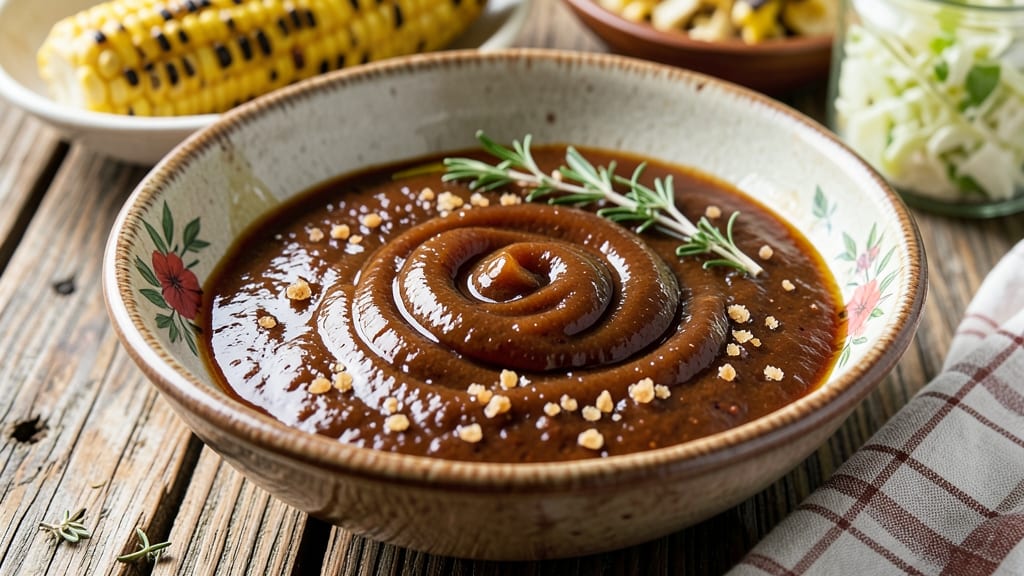
This American barbecue sauce recipe is the smoky-sweet foundation that transforms grilled meats into finger-licking masterpieces. 🔥 As a pitmaster trained in French technique, I've perfected this balance of tangy, sweet, and smoky flavors that caramelize beautifully on the grill or in the oven.
The secret lies in the molasses and spices that develop rich depth when simmered properly.
What makes this sauce truly special is its versatility—it works equally well on ribs, brisket, chicken, or even as a marinade. The combination of ketchup, vinegar, and brown sugar creates that classic American BBQ flavor profile, while the spices add complexity that elevates any dish.
I've tested this recipe countless times to ensure it delivers consistent, restaurant-quality results every time.
The sauce develops even better flavor after 24 hours of refrigeration, allowing all the components to meld together perfectly. Store it in the refrigerator for up to 2 weeks or can it for long-term preservation.
Whether you're preparing for a backyard BBQ or a weeknight meal, this sauce will become your go-to for that authentic smoky-sweet taste.
For those who prefer a sweeter or tangier version, I'll share variations that let you customize the flavor to your preference. The key is patience—let the sauce simmer until it reaches that perfect consistency where it'll glaze beautifully on your grilled meats.
Let's get started on creating your signature BBQ sauce!
Ingredients for american barbecue sauce
Nine essential ingredients blend into a smoky-sweet sauce perfect for grilled meats and marinades.
| Ingredient | Amount | Notes |
|---|---|---|
| Ketchup 🍅 | 1 ½ cups | High-quality, no sugar added preferred |
| Apple Cider Vinegar 🍎 | ½ cup | For tangy depth |
| Molasses 🍯 | ½ cup | Unsulphured for richer flavor |
| Brown Sugar 🍚 | ½ cup | Light or dark, packed |
| Granulated Sugar 🍬 | ¼ cup | For balance |
| Smoked Paprika 🌶️ | 2 tbsp | For authentic smoky flavor |
| Garlic Powder 🧄 | 1 tbsp | Freshly ground preferred |
| Onion Powder 🧅 | 1 tbsp | For aromatic depth |
| Ground Black Pepper 🌶️ | ½ tsp | Freshly cracked |
| Mustard Powder 🍯 | 1 tsp | Yellow or Dijon preferred |
| Cayenne Pepper 🔥 | ½ tsp | Adjust for heat preference |
| Salt 🧂 | 1 ½ tsp | Diamond Crystal preferred |
The ketchup and vinegar form the tangy-sweet base, so quality matters here. Heinz 57 or Hunt's ketchup delivers consistent flavor, while Bragg's apple cider vinegar adds that bright acidity. Molasses is non-negotiable for depth—unsulphured versions like Anthony's or Whittard elevate the sauce. For the sugars, light brown sugar gives subtle molasses notes, while dark brown adds more caramel richness. I always grab spices from Penzeys for their vibrant flavors, but grocery store brands work fine if fresh.
No ketchup? Tomato paste with a splash of water works in a pinch, though the texture will differ slightly. Substitute vinegar with lemon juice for brightness, but you'll lose that classic BBQ tang. Molasses too expensive? Maple syrup at half the amount mimics the sweetness, though it lacks the smoky depth. For heat, red pepper flakes can replace cayenne if you prefer texture over fine heat. The spices are flexible—smoked salt replaces smoked paprika if you're short on time, though it changes the flavor profile entirely.
This sauce tastes even better after 24 hours, as flavors meld beautifully. Store in an airtight jar in the fridge for up to 2 weeks, or can it for 6-12 months shelf stability. For grilling, preheat your sauce in a small saucepan to 160°F—it'll glaze meats perfectly when brushed on hot coals. Freeze extras in ice cube trays for single-use portions, perfect for quick marinades or last-minute glaze needs.
Why You'll Love This Recipe
- Pantry Magic: I swear by this recipe because it uses stuff I already have—no last-minute grocery runs. The molasses and vinegar give it that deep, tangy punch without needing specialty jars.
- Sweet Heat Balance: That molasses and brown sugar combo? It’s where the sauce gets its signature caramel richness, but the vinegar cuts through it so it’s never cloying. (Yes, even on a Tuesday night.)
- Dual-Purpose Sauce: Slather it on ribs, toss it with baked beans, or drizzle it over grilled chicken—it’s my go-to for both weeknight dinners and weekend cookouts. Honestly, I’ve even used it as a marinade.
- Budget-Friendly Batch: A big batch costs pennies and lasts forever—freezer-friendly, fridge-stable, and perfect for stretching meals. Between us, I’ve had this same jar for three months, and it’s still the star.
Step-by-step instructions for smoky-sweet barbecue sauce
Here's how to blend bold flavors into a glossy sauce perfect for grilling or glazing.
🍳 Step 1: Combine Wet Ingredients in a Saucepan
In a medium saucepan, whisk together the 1.5 cups ketchup, 0.5 cup apple cider vinegar, 0.5 cup molasses, 0.5 cup brown sugar, and 0.25 cup granulated sugar over medium heat. I like to use a whisk here to break up any sugar lumps immediately—this prevents grainy texture in the finished sauce.
Bring the mixture to a gentle simmer, stirring occasionally to help dissolve the sugars completely. You'll notice the sauce starts to thicken slightly as the sugars melt and the vinegar's acidity begins to cut through the sweetness. Let it cook uncovered for 8-10 minutes, until it reduces by about one-third and becomes syrupy but still pourable.
🍳 Step 2: Add Dry Seasonings and Spices
Reduce the heat to low and sprinkle in the 2 tbsp smoked paprika, 1 tbsp garlic powder, 1 tbsp onion powder, 0.5 tsp ground black pepper, 1 tsp mustard powder, 0.5 tsp cayenne pepper, and 1.5 tsp salt. Stir constantly for 3-4 minutes until all the spices are fully incorporated and the sauce smells deeply aromatic.
Here's where the magic happens—the smoked paprika infuses that authentic barbecue flavor, while the mustard powder adds a subtle tang that balances the sweetness. The cayenne pepper gives just a hint of heat, but you can adjust this to your preference. Keep stirring occasionally to prevent sticking—this sauce needs constant attention at this stage.
⏰ Step 3: Simmer Until Thick and Glossy
Continue simmering for another 10-12 minutes, stirring frequently, until the sauce thickens to a glossy, syrupy consistency. It should coat the back of a spoon smoothly but still be pourable. For the perfect texture, I aim for a sauce that's thick enough to cling to ribs or pulled pork but still flows easily when brushed.
This is the moment that matters: the longer you cook it, the more the flavors meld together, but don't let it reduce too much or it'll become too concentrated. You'll know it's ready when it passes the "plate test"—spoon a little onto a cold plate and watch it bead up with a glossy sheen. If it's not quite there, simmer another 2-3 minutes—but don't walk away, as it can thicken quickly.
🥘 Step 4: Cool and Adjust to Perfection
Remove the saucepan from heat and let the sauce cool for 5-10 minutes. This resting period allows the flavors to settle and the sauce to thicken slightly as it cools. I always taste it at this stage—this is your chance to adjust the balance. Need more tang? Add a splash of apple cider vinegar. Want it sweeter? Stir in a little more brown sugar. Too spicy? Dilute slightly with water.
For the best results, transfer the sauce to a clean jar and let it cool completely before storing. The flavors will continue developing as it sits, becoming even more complex. This sauce keeps well in the refrigerator for up to 2 weeks or can be frozen for 3 months—perfect for when you're craving that smoky-sweet flavor without the last-minute prep.
Pro Tips For Making American Barbecue Sauce
- Simmer Slow and Low: I learned this the hard way—boiling this sauce too fast turns it thin and syrupy. Keep the heat at a gentle simmer (medium-low) and let it bubble softly for at least 20 minutes. You want it to thicken naturally, not reduce into a sticky mess that’ll cling to your ribs like glue.
- Stir the Molasses: Molasses sinks like a rock and burns faster than you’d think. Before adding it, give the pot a quick stir to distribute the ketchup and vinegar evenly, then whisk in the molasses slowly. This keeps it from scorching at the bottom—trust me, burned molasses tastes like regret.
- Skip the Pre-Measurement Madness: Instead of guessing how much vinegar or sugar to add, taste as you go. Start with the full amounts listed, then adjust by tablespoons—vinegar for tang, sugar for sweetness. This sauce is forgiving, but pre-measuring just leads to second-guessing later.
- Use Real Vinegar: Apple cider vinegar isn’t just for salads. The acidity cuts through the sweetness and balances the molasses, but cheap vinegar tastes like it came from a science experiment. A good-quality bottle makes the difference between "meh" and "worth licking the spoon."
Storing and reheating your american barbecue sauce
Refrigerator Storage
Transfer your freshly made barbecue sauce to a clean, airtight glass jar—I swear by Ball mason jars for their durability and airtight seal. Let it cool completely before sealing to prevent condensation, which can dilute flavors.
Store in the fridge at 40°F or below where it’ll keep its vibrant taste for up to 2 weeks. The sauce actually improves overnight as the spices meld together beautifully. 💫
Freezer Preservation
For longer storage, portion the sauce into freezer-safe containers or silicone ice cube trays—perfect for single-use portions. Leave ½-inch headspace to prevent expansion cracks. Label with the date and freeze for up to 3 months.
When ready to use, thaw in the fridge overnight or microwave for 20-30 seconds on low power, stirring occasionally to restore smooth consistency.
Canning for Long-Term
If you’re serious about preserving, canning extends shelf life to 6-12 months. Use the water bath method for pint jars—process for 15 minutes after reaching a rolling boil. I recommend Ball canning lids for reliable seals.
Always check seals after cooling—any jar that doesn’t seal should be refrigerated within 2 weeks. The smoky depth intensifies over time when canned properly. ❄️
Reheating Techniques
For stovetop reheating, warm the sauce in a small saucepan over low heat, stirring constantly to prevent scorching. Add 1-2 tablespoons of water if it thickens too much.
Microwave reheating works too—use 30-second intervals on medium power, stirring between each, until heated through to 160°F. Never microwave directly from frozen; thaw first in the fridge.
Grilling Prep Tips
Before grilling, preheat your sauce in a small saucepan to 160°F—this ensures it’ll glaze meats beautifully without burning. I keep a small thermometer handy to monitor temperature.
For ribs or pulled pork, brush on generously in the last 5-10 minutes of cooking. The heat will caramelize the sugars, creating that perfect glossy finish. 🔥
Nutrition facts
Frequently asked questions about American barbecue sauce
Can I make this sauce without ketchup?
For a homemade base, substitute 1 cup tomato paste mixed with ½ cup water for the ketchup. The texture will be slightly thicker, but the flavor remains rich. If you prefer no tomato at all, try ½ cup apple cider vinegar + ½ cup molasses + ½ cup brown sugar for a vinegar-based sauce that still delivers that classic tangy-sweet profile.
How do I adjust the heat level?
Start with the ½ tsp cayenne pepper as written, then taste as it cools. For milder heat, reduce to ¼ tsp or omit entirely. For extra kick, add ½ tsp red pepper flakes or a pinch of crushed chili flakes. Remember, spices intensify as the sauce sits—start conservative and adjust to taste after 24 hours.
Why did my sauce turn grainy?
Graininess usually means the sugars didn't dissolve properly. Whisk vigorously when combining wet ingredients and simmer uncovered for 8-10 minutes to ensure complete melting. If it happens after cooling, reheat gently while stirring, then strain through a fine-mesh sieve if needed. For prevention, use freshly ground spices and avoid lumps in your sugars.
Can I use this sauce as a marinade?
Yes! This sauce makes an excellent marinade for chicken, pork, or fish. For best results, reduce the cayenne to ¼ tsp to prevent overpowering delicate proteins. Marinate for 2-4 hours (never overnight) in the fridge, then grill or bake as usual. The sauce will caramelize beautifully during cooking, creating a sticky, flavorful crust.
What's the best way to store leftover sauce?
Transfer to a clean glass jar and refrigerate for up to 2 weeks. For longer storage, freeze in ice cube trays (perfect for single servings) or airtight containers with ½-inch headspace. Label with dates—frozen sauce keeps for 3 months while canned sauce lasts 6-12 months when processed properly. Always reheat gently to 160°F to maintain quality.