
Sauces & Condiments
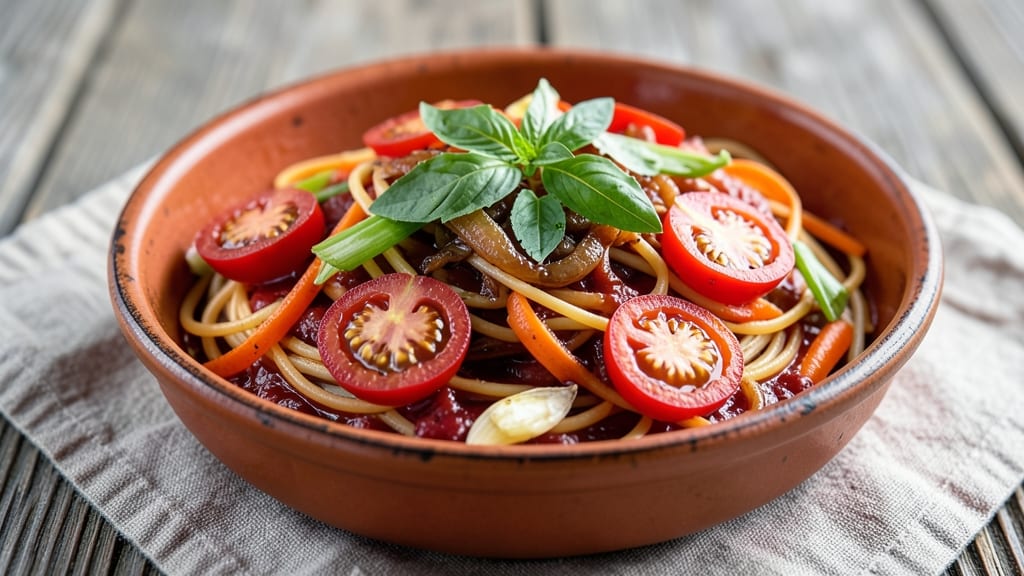
This garden vegetable spaghetti sauce transforms summer's bounty into rich, herbaceous flavor that rivals jarred sauces—without the preservatives. 💛 After years of perfecting it in my own kitchen, I've developed a method that preserves the bright acidity of fresh tomatoes while building deep, savory layers through slow simmering.
The secret lies in balancing fresh vegetables with aromatic herbs and a touch of sweetness to round out the acidity.
What makes this sauce special is its versatility—it works beautifully as a standalone vegetarian dish or as the perfect base for meatballs, grilled chicken, or even crispy tofu. The recipe uses simple pantry staples combined with fresh garden vegetables, creating a sauce that's vibrant, balanced, and full of summer's essence.
With just 30 minutes of active time (plus simmering), you'll have a sauce that tastes like it simmered all day.
By the time you're done, you'll have a velvety sauce with chunks of tender vegetables, bright herbs, and a perfect balance of sweet and tangy flavors. The best part?
It keeps well in the fridge for up to 5 days or freezes beautifully for months, making it ideal for meal prep. This is the kind of sauce that transforms ordinary weeknight dinners into something special.
Whether you're serving it over pasta, using it as a pizza topping, or pairing it with grilled meats, this garden vegetable spaghetti sauce delivers restaurant-quality flavor with minimal effort. Let's get started on creating your own batch of this versatile, garden-fresh sauce.
Ingredients for garden vegetable spaghetti sauce
Transform summer's garden bounty into velvety, herbaceous richness with these vibrant ingredients.
| Ingredient | Amount | Notes |
|---|---|---|
| Fresh Roma Tomatoes 🍅 | 2 lb | Ripe, cored and quartered |
| Yellow Onion 🧅 | 1 whole | Diced medium-fine |
| Carrots 🥕 | 3 medium | Peeled, diced small |
| Celery Stalks 🧅 | 3 whole | Diced small |
| Garlic Cloves 🧄 | 6 cloves | Minced fine |
| Fresh Basil Leaves 🌿 | ½ cup | Chopped fine |
| Fresh Oregano Leaves 🌿 | ¼ cup | Chopped fine |
| Extra-Virgin Olive Oil 🫒 | ¼ cup | High-quality, fruity |
| Tomato Paste 🍅 | 2 tbsp | Smooth, no sugar added |
| Red Wine Vinegar 🍷 | 1 tbsp | Bright acidity |
| Granulated Sugar 🍚 | 1 tbsp | Balances acidity |
| Vegetable Broth 💧 | 1 cup | Low-sodium preferred |
| Salt 🧂 | 1 ½ tsp | Diamond Crystal preferred |
| Freshly Ground Black Pepper 🌶️ | ½ tsp | Freshly cracked |
The tomatoes are your flavor foundation—Roma tomatoes have the perfect balance of sweetness and acidity, but any ripe variety works. Farmers markets often have the freshest, most flavorful tomatoes, but if you're buying from the store, look for ones that yield slightly to gentle pressure. The carrots and celery add natural sweetness and depth, so don't skip them—organic produce from the grocery store's fresh section works perfectly. Fresh herbs are non-negotiable here; Whole Foods or local markets usually carry the brightest basil and oregano, but even the grocery store's herb section will do if you use them immediately. For the garlic, freshly minced makes all the difference—pre-minced garlic from jars lacks the punch.
No fresh tomatoes? Canned San Marzano tomatoes (peeled, crushed) work beautifully—they're sweeter and more flavorful than most store-bought canned tomatoes. Short on basil? Dried basil at one-third the amount gets you close, but it won't have that same fresh brightness. The red wine vinegar is essential for brightness—substitute balsamic vinegar at half the amount if needed, but it'll be slightly sweeter. Need to reduce sugar? Swap in 1 tsp maple syrup for a natural sweetness. The tomato paste can be a squeeze tube from Trader Joe's—it's convenient and keeps well. For the vegetable broth, low-sodium is key—you don't want to over-salt your sauce later.
This sauce tastes even better the next day as the flavors meld—store in an airtight container in the fridge for up to 5 days. For longer storage, portion into ice cube trays and freeze—perfect for quick pasta meals later. The herbs can be prepped ahead and stored in the fridge for 2 days if wrapped tightly in plastic. Double the batch and freeze half—you'll thank yourself later when you're pulling together weeknight dinners. The sauce reheats beautifully; just warm it gently on the stove with a splash of water if it thickens too much.
Why You'll Love This Recipe
- No Chopping Nightmare: I swear by the "sofrito shortcut"—just rough-chop carrots, celery, and onion into big chunks and let them melt down in the pot. No dice, no fuss, and the flavors still sing.
- Sweet-Savory Magic: That carrot and celery combo might sound odd, but trust me: the natural sweetness from the carrots and the earthy crunch of celery take this sauce from basic to ridiculously good—especially when the Roma tomatoes break down into jammy perfection.
- Weeknight Workhorse: This sauce doubles as a marinara for pasta, a base for stuffed peppers, or even a hearty stew when stretched with beans. I’ve served it at potlucks, packed it for lunch, and even used it to top grilled cheese—it’s that adaptable.
- Budget-Friendly Pantry Stretch: Fresh veggies + pantry staples = a sauce that costs pennies per serving. A single batch feeds my family for three meals, and the leftovers? Even better the next day—if there are any. (Spoiler: there won’t be.)
Step-by-step instructions for garden vegetable spaghetti sauce
Transform your garden harvest into a rich, vibrant sauce bursting with summer flavors.
🍳 Step 1: Sauté the Vegetable Base
Heat the 0.25 cup extra-virgin olive oil in a large Dutch oven over medium heat until shimmering but not smoking. Add the diced yellow onion, diced carrots, and diced celery stalks all at once, stirring to distribute evenly. Cook for 8-10 minutes until the vegetables soften and the onion becomes translucent.
Here's the thing—this foundational step builds flavor depth. The vegetables should release their natural juices and develop a golden hue. If you notice any browning before they soften, reduce the heat slightly. I always add a pinch of salt at this stage to enhance the natural sweetness of the vegetables as they cook.
🍳 Step 2: Add Aromatics and Tomato Paste
Push the vegetable mixture to one side of the pot and add the minced garlic cloves to the empty space. Sauté for 30 seconds until fragrant—you'll know it's ready when the kitchen fills with that irresistible garlic aroma. Stir everything together, then add the 2 tbsp tomato paste and cook for another 1 minute to toast it lightly.
This quick toasting of the tomato paste deepens its flavor and prevents any raw taste in the finished sauce. Don't walk away—garlic burns faster than you think. The paste will turn a rich, caramelized color, which is exactly what we want for that professional restaurant quality.
🍳 Step 3: Build the Sauce Foundation
Pour in the 1 tbsp red wine vinegar and 1 tbsp granulated sugar, stirring vigorously to combine. Add the 2 lb quartered fresh Roma tomatoes and their juices, along with the 1 cup vegetable broth. Bring everything to a gentle boil, then reduce the heat to low and let it simmer uncovered for 20 minutes.
During this initial simmer, the tomatoes will break down and release their juices, creating a rich, chunky base. Stir occasionally to prevent sticking, but don't over-mix—we want some texture in our sauce. The liquid should reduce slightly, concentrating the flavors. This is where the magic begins, transforming simple ingredients into something extraordinary.
🥘 Step 4: Season and Simmer to Perfection
Add the 1.5 tsp salt and 0.5 tsp freshly ground black pepper, then stir in the 0.5 cup chopped fresh basil leaves and 0.25 cup chopped fresh oregano leaves. Continue simmering uncovered for another 25-30 minutes, stirring occasionally, until the sauce thickens and coats the back of a spoon.
Real talk: this is the moment that matters. The sauce should reduce to a rich consistency where it clings beautifully to spaghetti. If it thickens too much before reaching the 30-minute mark, add a splash of water or broth to balance the texture. The herbs should infuse their bright flavors without overpowering the natural sweetness of the tomatoes.
⏰ Step 5: Finish and Rest for Maximum Flavor
Remove the sauce from heat and let it rest for 15-20 minutes at room temperature. This resting period allows the flavors to meld and the sauce to thicken further. Taste and adjust seasoning if needed—you might want to add a touch more salt or a splash of vinegar to balance the flavors.
I know it seems counterintuitive to walk away, but trust me on this. The resting time transforms the sauce from good to spectacular. The herbs will release their maximum aroma, and the acidity will mellow slightly, creating a harmonious balance of sweet, tangy, and herbal notes that will make your spaghetti unforgettable.
Pro Tips For Making Garden Vegetable Spaghetti Sauce
- CHAR THE ONIONS LOW: Skip the sizzle—cook your onions at medium-low heat for 10-12 minutes until they’re soft and translucent, not browned. I learned this the hard way after burning three batches; the sauce tastes bitter when you rush the onions, and that’s the flavor you’re not paying for.
- COMPLETELY COVER THE TOMATOES: Once you add the tomatoes, throw a lid on that pot and let them break down for 15 minutes before stirring. This isn’t the prettiest method, but it works—you’ll end up with a smoother, more concentrated sauce without the need to blend later.
- SALT THE CARROTS FIRST: Toss your diced carrots in a pinch of salt before they hit the pot. This softens them faster and pulls out their natural sweetness, so you don’t end up with a mushy, watery mess that turns your sauce into soup.
- STIR IN GARLIC LAST: Add the garlic only in the final 5 minutes of cooking—it burns faster than you think, and nothing ruins a garden vegetable sauce like bitter, charred garlic. If you’re worried, crush the cloves instead of mincing them; they’ll cook evenly without turning to ash.
Creative variations of garden vegetable spaghetti sauce
Herb-Forward Variations
Swap the basil and oregano for thyme and rosemary to create a Provençal-inspired sauce—just use 1 tbsp each of finely chopped fresh thyme and rosemary. The piney notes of rosemary pair beautifully with roasted vegetables, while thyme adds earthy depth.
I've tested this variation with roasted zucchini and bell peppers for a summery twist that feels like a vacation in every bite. 🌿
Spicy Kick Options
For heat lovers, add 1-2 tbsp of Calabrian chili paste (like Penzeys brand) during the final 10 minutes of simmering. This adds smoky, fruity heat without overpowering the sauce. Alternatively, stir in 1 tsp of crushed red pepper flakes and 1 minced Fresno chili for a fresh, bright spice.
I like to balance the heat with 1 extra tbsp of sugar to round out the flavors.
Creamy Twist
Transform this sauce into a creamy garden vegetable marinara by stirring in ½ cup of coconut milk or ¼ cup of crème fraîche during the final 5 minutes of simmering. The richness pairs perfectly with the bright acidity of the tomatoes.
For an extra touch, top with toasted pine nuts or freshly grated Parmesan just before serving. This version feels luxurious but still light enough for summer.
Winter Root Adaptation
Swap summer vegetables for sweet potatoes, butternut squash, and mushrooms to create a hearty winter sauce. Roast 1 cup of diced sweet potato and 1 cup of butternut squash until tender, then add them with the other vegetables in Step 1.
Use 1 tbsp of maple syrup instead of sugar to complement the natural sweetness of the roots. This version feels like a cozy hug in a bowl—perfect for chilly evenings. ❄️
Protein-Packed Additions
Turn this vegetarian sauce into a one-pot meal by adding 12 oz of crumbled firm tofu or 1 lb of Italian sausage during the final 15 minutes of simmering. For tofu, press and pan-fry it first for texture, while sausage adds smoky depth.
I also love stirring in ½ cup of cooked lentils for extra protein and earthiness. These additions work beautifully with the sauce's bright flavors without overpowering them.
Global Fusion Twists
Give this sauce a Moroccan twist by adding 1 tsp of ground cumin, ½ tsp of cinnamon, and 1 tbsp of harissa paste during the final 10 minutes of simmering.
For an Indian-inspired version, stir in 1 tsp of garam masala and ½ cup of coconut milk at the end. Both variations transform the sauce into a completely different (but equally delicious) culinary experience. The key is balancing the new spices with the original herbs to maintain harmony.
Nutrition facts
Frequently asked questions
Can I use canned tomatoes instead of fresh?
Use 28 oz of crushed canned tomatoes (like San Marzano) instead of fresh. Just reduce the vegetable broth to ½ cup since canned tomatoes have more liquid. For extra richness, add 1 extra tbsp tomato paste during the sauté step. This works especially well if you're short on fresh tomatoes or want to make the sauce year-round.
How do I make this sauce less acidic?
Reduce the red wine vinegar to ½ tbsp and increase the sugar to 1.5 tbsp. You can also add ½ cup of cooked sweet potato or butternut squash during the simmering to naturally balance the acidity. If the sauce is already made, stir in a pinch of sugar or a splash of broth while reheating.
What's the best way to store leftovers?
Let the sauce cool completely, then transfer to an airtight container in the fridge where it keeps for 5 days. For longer storage, portion into silicone ice cube trays, freeze, then transfer to a freezer bag. Thaw overnight in the fridge—never microwave directly from frozen. The sauce actually tastes better after resting for 24 hours!
Can I make this sauce without a Dutch oven?
Yes! Use a large, heavy-bottomed pot or even a deep skillet. Just be patient with the simmering—you may need to stir more frequently to prevent sticking. If your pot isn't deep enough, reduce the broth by ¼ cup to maintain the sauce's consistency. A slow cooker also works: sauté the veggies first, then transfer everything to cook on low for 4-5 hours.
Why did my sauce turn out too thin?
This usually happens from one of three things: not enough simmering time, too much broth, or unripe tomatoes. To fix it, simmer uncovered for 10-15 extra minutes to reduce the liquid. For future batches, reduce the broth to ¾ cup or add 1 tbsp cornstarch mixed with water at the end. If using fresh tomatoes, choose riper ones—they'll break down more and thicken the sauce naturally.