
Sauces & Condiments
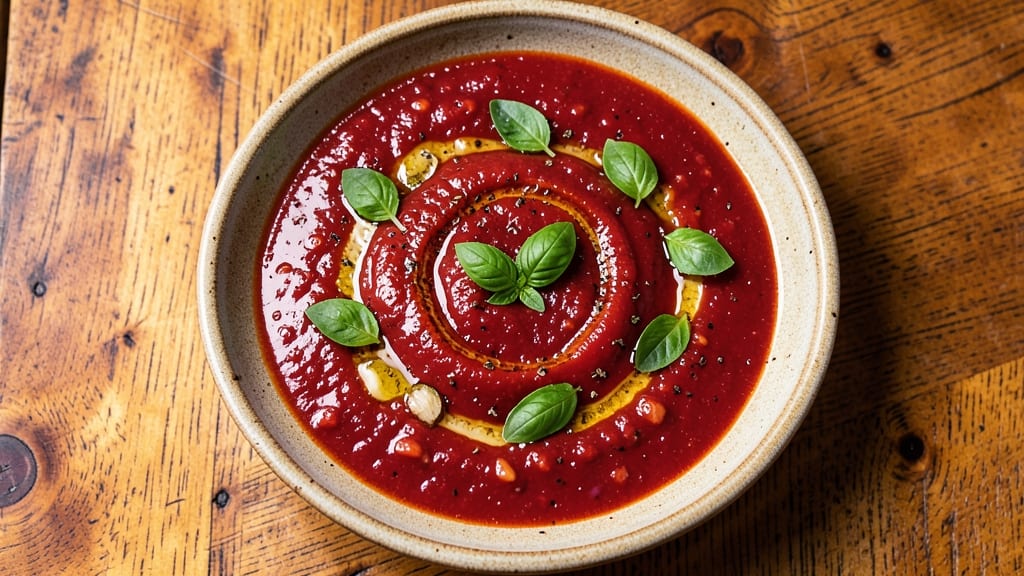
This Boston pizza sauce recipe delivers the signature sweet-tangy depth that makes classic New England-style pizza unforgettable. The secret lies in balancing crushed tomatoes, aromatic garlic, and a touch of sugar—simmered until rich and velvety, then blended to perfection.
Unlike heavier marinara, this sauce stays bright with just enough acidity to cut through crispy cheese.
The process is straightforward but precise: sauté garlic in olive oil until fragrant, then combine with crushed tomatoes, herbs, and a pinch of sugar to enhance natural sweetness. A 30-minute simmer reduces the sauce to ideal consistency, while blending creates that signature smooth texture.
The result is versatile enough for pizza but equally perfect for dipping, pasta, or meatballs.
What sets Boston sauce apart is its balance—sweet enough to complement pepperoni and mozzarella, yet tangy enough to stand alone. The herbs (oregano, basil) add freshness without overpowering, while the sugar caramelizes slightly during simmering for depth.
This isn’t just pizza sauce; it’s the foundation of a restaurant-quality dish at home.
Use it fresh on homemade pizza or store it in the fridge for up to a week. The sauce thickens slightly when chilled, so thin with a splash of water before using.
For extra richness, finish with a swirl of olive oil—just like the pros do. Here’s how to make it.
Ingredients for boston pizza sauce
Nine essential ingredients create Boston sauce's signature sweet-tangy balance perfect for pizza and beyond.
| Ingredient | Amount | Notes |
|---|---|---|
| Extra-Virgin Olive Oil 🫒 | ¼ cup | High-quality, fruity variety preferred |
| Garlic Cloves 🧄 | 4 cloves | Freshly peeled, minced finely |
| Crushed Tomatoes 🍅 | 2 cups | San Marzano preferred for sweetness |
| Dried Oregano 🌿 | 1 tbsp | Mediterranean oregano preferred |
| Fresh Basil Leaves 🌿 | ¼ cup | Packed, stems removed |
| Granulated Sugar 🍚 | 1 tbsp | For subtle sweetness balance |
| Salt 🧂 | 1 tsp | Diamond Crystal kosher salt |
| Black Pepper 🌶️ | ½ tsp | Freshly ground for aroma |
| Red Wine Vinegar 🍷 | 1 tbsp | For bright acidity balance |
| Ground Black Pepper 🌶️ | ¼ tsp | Freshly cracked for depth |
The foundation starts with San Marzano crushed tomatoes—their natural sweetness and low acidity are non-negotiable for authentic flavor. For garlic, four fresh cloves sautéed until fragrant form the aromatic base; Trader Joe's or Whole Foods carry high-quality bulbs. The extra-virgin olive oil should be fruity and peppery—California-grown brands like Corto or Otto deliver consistent quality. Dried oregano and fresh basil provide the herbal complexity, while the red wine vinegar adds the signature tang that prevents heaviness.
No San Marzano tomatoes? High-quality canned crushed tomatoes work—just look for brands labeled 'whole peeled' with no added salt. Fresh basil unavailable? Dried basil at one-third the amount suffices, though texture will differ. Substituting balsamic vinegar for red wine vinegar adds depth but alters the bright acidity profile. The sugar can be omitted entirely if using particularly sweet tomatoes, though it enhances the sauce's natural sweetness during simmering. For a smoother texture, blend the sauce longer; for rustic texture, leave it chunky.
This sauce develops best when simmered 30 minutes, then blended smooth. Store in an airtight container in the fridge for up to 7 days, though flavor peaks within 3 days. The sauce thickens when chilled—thin with water or tomato paste as needed. For restaurant-quality results, finish with a swirl of extra-virgin olive oil before serving, just as professional pizzerias do.
Why You'll Love This Recipe
- Here’s the best part: this sauce doubles as a freezer staple. I always make a big batch because it keeps for weeks in the fridge or freezes perfectly for when you’re too busy to cook. Plus, crushed tomatoes and dried herbs are cheap—you’ll save money and still end up with restaurant-quality flavor. Win-win.
- Five-Minute Sizzle: I swear by this sauce because it’s the kind of thing you can start while you’re waiting for pasta to boil or the oven to preheat. Just toss in olive oil, garlic, and crushed tomatoes—no peeling, no seeding, no fuss. The only prep is mincing garlic (or using pre-minced if you’re really lazy), and boom, you’re cooking.
- Garlic-Basil Magic: Between us, this sauce is where the real flavor lives. The slow-simmered garlic turns sweet and mellow, while the fresh basil at the end adds that bright, herby punch that makes it taste like you slaved over it for hours. Honestly, my kids fight over the last spoonful—no joke.
- Pizza Party Every Time: This isn’t just for pizza. Slather it on grilled chicken, toss it with roasted veggies, or drizzle it over polenta for a weeknight upgrade. I’ve even used it as a marinade for steak—yes, really. It’s my secret weapon for turning simple meals into something that feels special, even when you’re too tired to think.
Step-by-step instructions for Boston-style pizza sauce
This method delivers authentic Boston pizza sauce with rich tomato depth and balanced acidity.
Bloom the Garlic and Herbs in Olive Oil
Heat the 0.25 cup extra-virgin olive oil in a medium saucepan over medium-low heat. Add the 4 cloves minced garlic and cook for 1-2 minutes until fragrant but not browned—this prevents bitterness. Immediately stir in the 1 tbsp dried oregano and 0.25 cup fresh basil leaves, letting them sizzle for 20-30 seconds to release their essential oils.
Watch the garlic closely—it burns quickly. Remove from heat if it starts to darken, then return to medium-low once cooled slightly. This step builds the aromatic foundation that defines Boston sauce.
Simmer the Crushed Tomatoes
Add the 2 cups crushed tomatoes to the pan and stir to combine. Bring to a gentle simmer over medium heat, then reduce to low heat and let cook uncovered for 15-20 minutes. Stir occasionally to prevent sticking, and skim off any foam that rises to the surface—this ensures a smooth, velvety texture.
The sauce should reduce slightly, concentrating the tomato flavor. You're aiming for a consistency that coats the back of a spoon but isn't gluey. If it thickens too quickly, add 1-2 tablespoons water to maintain balance.
Balance Flavors with Sugar and Vinegar
Stir in the 1 tbsp granulated sugar and 1 tbsp red wine vinegar simultaneously. The sugar will gently caramelize while the vinegar brightens the acidity. Simmer for another 5 minutes to let these flavors meld—this is where the sauce develops its signature depth.
Taste and adjust seasoning with the 1 tsp salt and 0.5 tsp black pepper. Then add the 0.25 tsp ground black pepper for subtle heat. The sauce should taste rich but not overly sweet, with a balanced tang that cuts through the tomato's natural acidity.
Finish and Cool
Remove from heat and let the sauce cool to room temperature. This resting period allows the flavors to fully develop and the texture to set properly. Stir occasionally to prevent skin formation. The sauce should thicken slightly as it cools, reaching an ideal consistency for spreading.
For best results, refrigerate for up to 3 days or freeze for 3 months. The flavors continue to deepen over time, making this sauce perfect for homemade pizza or pasta. The subtle sweetness and bright acidity will elevate any dish with classic Boston character.
Pro Tips For Making Boston Pizza Sauce
- Sweat the Garlic: I used to burn this step every time—just a minute or two over medium-low heat with a splash of olive oil, stirring constantly. Once it’s golden but not brown, you’ve got that nutty depth Boston sauce needs. No need to rush; patience here makes all the difference.
- Crush Tomatoes Properly: Skip the blender—use your fingers to break up those crushed tomatoes into rough chunks. The texture stays chunky (like it should), and you avoid the slimy mess that happens when you over-process it. Also, drain the excess liquid if your tomatoes are watery; nobody wants a watery sauce.
- Simmer Low and Slow: After adding the garlic and tomatoes, drop the heat to a bare simmer. Let it cook uncovered for at least 20 minutes—this deepens the flavor and thickens the sauce naturally. Skipping this step leaves it tasting flat and underdeveloped.
- Add Basil Late: Toss in those fresh basil leaves right at the end, just before serving. They’ll wilt and release their aroma instantly, giving you that bright, fresh finish. If you add them too early, they’ll turn bitter and muddy the flavor—trust me, I’ve learned this the hard way.
Pro cooking tips for this recipe
Garlic Bloom Mastery
The key to authentic Boston sauce flavor starts with perfect garlic bloom. Use 4 cloves minced garlic sautéed in 0.25 cup extra-virgin olive oil over medium-low heat for just 1-2 minutes. Watch closely—garlic burns in seconds and turns bitter.
I like to remove the pan from heat if it starts to darken, then return it to medium-low once cooled slightly. This technique preserves the delicate sweetness that balances the sauce's acidity. 🧄
Tomato Reduction Control
Simmering the 2 cups crushed tomatoes uncovered for 15-20 minutes on low heat is crucial. This step reduces moisture while concentrating flavor. Stir occasionally to prevent sticking, and skim off any foam that forms.
If the sauce thickens too quickly, add 1-2 tbsp water to maintain ideal consistency—it should coat the back of a spoon but remain spreadable. I use a stainless steel saucepan because it heats evenly and prevents scorching.
Sugar-Vinegar Balance
The 1 tbsp granulated sugar and 1 tbsp red wine vinegar work together to create Boston sauce's signature sweet-tangy profile. Add them simultaneously and simmer for 5 minutes to let the sugar caramelize slightly while the vinegar brightens the acidity.
Taste frequently—this is where the sauce transforms from good to restaurant-quality. I often adjust with an extra pinch of salt at this stage to enhance all flavors.
Herb Infusion Tricks
Blooming the 1 tbsp dried oregano and 0.25 cup fresh basil in the olive oil for 20-30 seconds releases their essential oils, intensifying their flavor. For maximum freshness, I pulse the basil in a food processor briefly before adding it to the sauce.
If using dried basil, reduce to 1 tbsp and add it with the oregano. The herbs should infuse the oil completely before the tomatoes are added, creating a cohesive aromatic base. 🌿
Texture Adjustments
Boston sauce should thicken slightly as it cools, but if it's too thick for spreading, thin with 1-2 tbsp water or tomato paste. For a smoother texture, blend the sauce after cooling. If you prefer rustic texture, leave it chunky.
I often test consistency by spreading a small amount on a plate—it should be spreadable but not runny. The sauce will continue thickening in the fridge, so adjust before storing.
Flavor Development
Let the sauce cool completely to room temperature before tasting. This resting period allows all flavors to meld properly. The subtle sweetness from the sugar and the bright acidity from the vinegar should balance perfectly with the tomato's natural tang.
I always taste at room temperature because cold sauce can mask the true flavor profile. The sauce will deepen in flavor over 24 hours, making it even more delicious the next day. 💫
Nutrition facts
Frequently asked questions
Why does Boston pizza sauce use sugar?
The 1 tbsp sugar balances the natural acidity of tomatoes while enhancing their sweetness. This creates the signature sweet-tangy profile that makes Boston sauce stand out. The sugar also caramelizes slightly during simmering, adding depth without overpowering the herbs.
Can I make this sauce without fresh basil?
Yes! Use 1 tbsp dried basil instead, but reduce the amount by one-third. For extra flavor, add ½ tsp dried thyme as a substitute. The sauce will still taste delicious, though fresh basil provides superior aroma. Always bloom dried herbs in the oil for 20-30 seconds to release their oils fully.
How do I use this sauce for dishes other than pizza?
This versatile sauce works perfectly for pasta (like linguine or penne), meatball subs, or as a dipping sauce for breadsticks. For pasta, thin with 1-2 tbsp water to create a lighter sauce. For meatballs, simmer the sauce with the meatballs for 5-10 minutes to infuse flavor. The bright acidity also pairs well with grilled chicken or fish.
What if my sauce turns out too thick?
Thin with 1-2 tbsp water or tomato paste while warm. Stir well and taste—it should coat the back of a spoon but remain spreadable. If storing, the sauce will thicken further in the fridge, so adjust before using. For a smoother texture, blend after cooling. Always test consistency on a plate before serving.
Can I make this sauce in a slow cooker?
Yes! Combine all ingredients in the slow cooker and cook on low for 2-3 hours, stirring occasionally. The low-and-slow method enhances flavors but may require thinning with water. For best results, blend after cooking to achieve the signature smooth texture. This method is ideal for hands-off prep but may need more monitoring.