
Sauces & Condiments
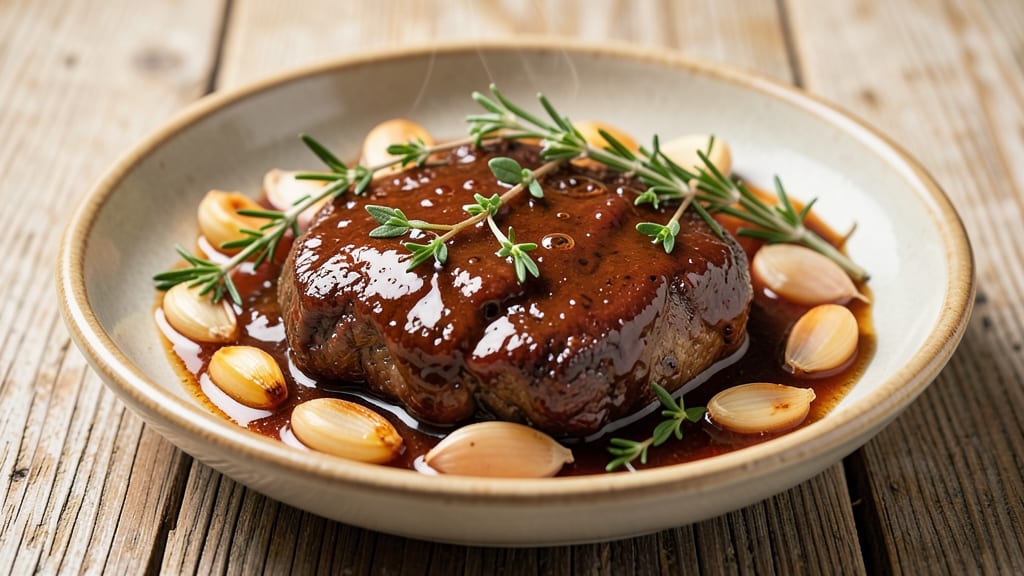
This beef basting sauce transforms ordinary grilling into a flavor explosion—deep, smoky, and rich with red wine complexity. The secret lies in a slow reduction of red wine, beef broth, and aromatic herbs that intensifies as it simmers, creating a velvety sauce perfect for basting roasts or steaks.
I developed this recipe after years of testing what makes restaurant-quality beef taste so exceptional at home.
The foundation starts with quality ingredients: a bold red wine like Cabernet Sauvignon, rich beef broth, and a blend of fresh thyme, rosemary, and garlic. As the sauce reduces, it develops a concentrated umami depth that clings to meat, enhancing natural flavors while adding a glossy sheen.
The final touch—cold butter swirled in at the end—creates a luxurious finish that balances acidity with richness.
What sets this sauce apart is its versatility—use it to baste while grilling for caramelized crusts, drizzle over finished beef for extra moisture, or even reduce it further for a pan sauce.
The technique is simple but critical: simmer until thickened, then baste generously at the end of cooking. This is the kind of sauce that turns a simple roast into a showstopping centerpiece.
Perfect for holiday roasts, weekend grilling, or special dinners, this beef basting sauce elevates every bite. The process takes just 30 minutes but delivers restaurant-quality results with minimal effort. Let's get started on creating your own signature basting masterpiece.
Ingredients for beef basting sauce
Nine ingredients transform grilling into a restaurant-worthy experience with this smoky, velvety sauce.
| Ingredient | Amount | Notes |
|---|---|---|
| Dry Red Wine 🍷 | 1 cup | Bold Cabernet Sauvignon preferred |
| Beef Broth 🥫 | 1 cup | Homemade or high-quality store-bought |
| Shallots 🧅 | 2 whole | Minced, for aromatic depth |
| Garlic Cloves 🧄 | 4 cloves | Minced, for rich flavor |
| Fresh Thyme Leaves 🌿 | ½ cup | Stems removed, for herby notes |
| Fresh Rosemary 🌿 | ¼ cup | Chopped, for smoky aroma |
| Unsalted Butter 🧈 | 4 tbsp | Cold, for finishing |
| Balsamic Vinegar 🍷 | 1 tbsp | For depth and balance |
| Granulated Sugar 🍚 | 1 tsp | To round out flavors |
| Salt 🧂 | ½ tsp | Kosher or sea salt |
The red wine is the heart of this sauce—Cabernet Sauvignon adds boldness, but any dry red works. Trader Joe's or Total Wine carry affordable options, and you only need a cup. Fresh thyme and rosemary elevate the sauce, so grab them from the grocery store's produce section where they're usually bright and fragrant. Shallots add sweetness without overpowering, and garlic is non-negotiable for that umami punch. The beef broth should be rich and well-seasoned—homemade is ideal, but Swanson or Pacific Foods brands work in a pinch.
No red wine? Dry white wine or beef broth with 1 tbsp balsamic vinegar mimics the acidity. Fresh herbs wilt fast, so dried thyme and rosemary at one-third the amount are fine if needed. Shallots can be swapped for onions, but they add a milder sweetness. The butter must be cold when added at the end to create that luxurious finish—don't melt it first. Sugar can be omitted if you prefer less sweetness, but it balances the acidity beautifully. Salt to taste at the end, as the broth may already be seasoned.
This sauce keeps well—stored in an airtight container in the fridge for up to 5 days. For longer storage, freeze in ice cube trays for 3 months. The sauce thickens as it cools, so reheat gently on low heat with a splash of water or broth. Leftovers make a fantastic pan sauce for steak or a drizzle for roasted vegetables. Double the batch and freeze half—you'll thank yourself later when you're basting a holiday roast.
Why You'll Love This Recipe
- Pantry-Friendly Magic: I swear by this sauce because it uses things I already have—no last-minute grocery runs. The red wine and broth base mean I’m never scrambling for fancy ingredients, and the shallots and garlic? Just a quick dice while I talk to the dog.
- Deep, Rich Umami: That slow simmer with thyme and wine? It turns ordinary beef into something luxurious. The sauce clings like a caramelized hug, balancing earthy shallots with bright acidity—every spoonful tastes like a restaurant-worthy bite.
- Weeknight to Dinner Party: Same sauce, endless uses. Drizzle it over grilled steaks for a fancy date night, or toss it with roasted potatoes for a lazy Sunday. Honestly, I’ve even used it to jazz up canned beans when I’m in a pinch—no one’s the wiser.
- Leftovers That Shine: This stuff only gets better after sitting. I make a double batch, let it reduce overnight, and use the extra to glaze meatloaf or stir into mashed potatoes. Between us, that’s how I stretch a budget without sacrificing flavor.
Step-by-step instructions for smoky red wine beef basting sauce
Master this rich, aromatic sauce that transforms grilled beef into a showstopper dish.
Sauté Aromatics Until Deeply Fragrant
Heat a medium saucepan over medium heat and add the 2 whole shallots and 4 cloves garlic cloves that you've minced. Cook for 3-4 minutes until the shallots soften and become translucent, stirring occasionally to prevent burning. You'll know they're ready when they release their sweet, pungent aroma.
Here's the thing—don't rush this step. The aromatics form the flavor foundation of your sauce. If they start to brown too quickly, reduce the heat slightly. Once they're fragrant and just beginning to turn golden, you're ready for the next ingredient. This is where the magic starts.
Deglaze with Wine and Reduce
Pour in the 1 cup dry red wine, scraping up any browned bits from the bottom of the pan with a wooden spoon. These bits, called fond, are packed with flavor. Let the wine simmer for 3-4 minutes until it reduces by about half and the alcohol aroma disappears. You'll notice the liquid darkening as it concentrates.
This reduction process is critical. It intensifies the wine's flavors and removes the harsh alcohol notes that would overpower your beef. Keep the heat at medium-low to prevent boiling, which would cause the wine to evaporate too quickly and leave you with a bitter residue.
Build the Herb and Broth Base
Add the 1 cup beef broth, 0.5 cup fresh thyme leaves, 0.25 cup chopped fresh rosemary, 1 tsp granulated sugar, and 0.5 tsp salt. Bring the mixture to a gentle simmer and let it cook uncovered for 8-10 minutes until it reduces by about one-third. You'll see the sauce thicken slightly and the herbs infuse their aromatic oils.
I like to stir occasionally during this time, but not constantly—this helps prevent the herbs from turning bitter. The sugar here plays a subtle role, rounding out the acidity of the wine and balancing the richness of the beef. Taste the sauce at this point and adjust the seasoning if needed.
Finish with Balsamic and Butter
Remove the pan from heat and stir in the 1 tablespoon balsamic vinegar. Let it sit for 1 minute to meld with the other flavors. Then, return the pan to low heat and add the 4 tablespoons cold unsalted butter, one tablespoon at a time, stirring constantly until fully incorporated.
The butter adds luxurious mouthfeel and helps emulsify the sauce, creating that silky texture perfect for basting. The balsamic vinegar adds depth and complexity, cutting through the richness. Once the butter is fully melted and the sauce is smooth, it's ready to use. The sauce should coat the back of a spoon with a glossy sheen.
Pro Tips For Making Beef Basting Sauce
- Sweat Shallots Slowly: I learned this the hard way—rushing shallots over high heat turns them bitter instead of sweet. Cook them on medium-low for 5-7 minutes until translucent, stirring occasionally, so they melt into the sauce without adding harshness.
- Deglaze with Wine Heat: The wine won’t release its flavor if it’s cold. Warm the pan slightly after searing (just until you can touch it briefly), then pour in the wine immediately—this guarantees the alcohol burns off cleanly and the aromatics dissolve properly.
- Strain the Broth: Homemade or store-bought broth always has bits. Strain it through a fine-mesh sieve before adding it to the sauce—trust me, you don’t want gummy bits in your finished reduction.
- Finish with Butter: Skip the butter, and the sauce will taste flat. Stir in 1 tablespoon cold butter at the very end—it coats the sauce, adds richness, and makes it silky smooth (just don’t let it brown).
Wine and beer pairings for this beef basting sauce
Red Wine Pairings
The bold, smoky depth of this beef basting sauce pairs beautifully with Cabernet Sauvignon or Syrah—both wines share similar dark fruit and earthy notes that complement the sauce's richness.
I always reach for a 2018 Red Willow Cabernet from Napa Valley when grilling, as its blackberry and vanilla flavors harmonize perfectly with the sauce's caramelized undertones. 🍷
For a lighter option, try a Pinot Noir from Oregon—its bright acidity cuts through the sauce's richness without overpowering it. The key is selecting a wine with 12-14% alcohol to match the sauce's intensity. Avoid heavy, oaked Chardonnays or bold Zinfandels, as they'll clash with the sauce's delicate herbaceousness.
Beer Pairings
A Belgian-style Dubbel like Westmalle Trappist adds a malty sweetness that balances the sauce's acidity beautifully. The caramel and spice notes in the beer mirror the sauce's depth, creating a harmonious pairing that elevates both.
I've found that 3-4 ounces poured over ice works best for sipping alongside grilled beef. 🍺
For a lighter beer option, try a German Helles Lager—its crisp, clean profile lets the sauce's flavors shine without competition. The subtle malt sweetness complements the balsamic and sugar notes in the sauce. Avoid heavy stouts or IPAs, as their bitterness can overpower the delicate herb and wine flavors.
Cocktail Pairings
For a festive touch, mix a Red Wine Spritzer with 1 cup chilled Cabernet Sauvignon, ½ cup sparkling water, and 1 slice of orange. The effervescence cleanses your palate between basting sessions, while the orange adds a bright contrast to the sauce's richness.
Serve in a coupe glass for an elegant presentation. 🍹
Another favorite is a Rosemary Gin Fizz—infuse fresh rosemary into 2 oz gin, then top with ½ oz lemon juice, ½ oz honey syrup, and 1 oz soda water.
The herbal notes echo the sauce's rosemary and thyme, while the citrus cuts through the fat. Garnish with a rosemary sprig for a cohesive look.
Non-Alcoholic Options
For a refreshing non-alcoholic pairing, try sparkling cranberry juice chilled over ice. The tartness mirrors the balsamic in the sauce, while the bubbles keep your palate fresh. Add a lime wedge for extra zing—this combo works especially well for summer grilling. 🍹
Alternatively, serve iced hibiscus tea (jamaica) with a splash of lemon-lime soda. The floral, slightly tart notes complement the sauce's herbal complexity without overpowering it. Brew the tea strong and chill it for 2-3 hours before serving.
Nutrition facts
Frequently asked questions
Can I make this beef basting sauce ahead of time?
This sauce actually tastes better when made a day ahead. Store it in an airtight container in the fridge for up to 5 days. The flavors meld and deepen over time, making it even more complex. Reheat gently on low heat with a splash of water or beef broth to restore its glossy texture before basting.
What's the best way to baste beef with this sauce?
Use a pastry brush or spoon to apply the sauce generously in the last 10-15 minutes of cooking. For grilling, baste every 3-5 minutes to prevent burning. The key is to work quickly—keep the sauce warm in a small saucepan nearby. For roasting, baste every 20-30 minutes to create a beautiful caramelized crust.
Can I substitute white wine for red in this recipe?
Yes, but you'll need to adjust for the different flavor profile. Use 1 cup dry white wine plus 1 tablespoon balsamic vinegar to mimic the acidity. The sauce will be lighter in color but still delicious. For extra depth, add ½ teaspoon smoked paprika to compensate for the missing red wine richness.
How do I fix a sauce that's too thin or too thick?
If your sauce is too thin, simmer uncovered for 5-10 more minutes to reduce further. For a thicker sauce, mix 1 tablespoon cornstarch with 2 tablespoons cold water, stir into the sauce, and cook for 1-2 minutes until thickened. Never add flour directly—it can make the sauce grainy.
What other meats can I use this basting sauce with?
This versatile sauce works beautifully with pork chops, lamb chops, and even chicken thighs. For poultry, reduce the cooking time to 5-8 minutes to prevent overcooking. The rich flavors also pair well with grilled vegetables like portobello mushrooms or eggplant. Just adjust the seasoning slightly—pork benefits from a pinch more salt, while lamb may need extra rosemary.