
Desserts
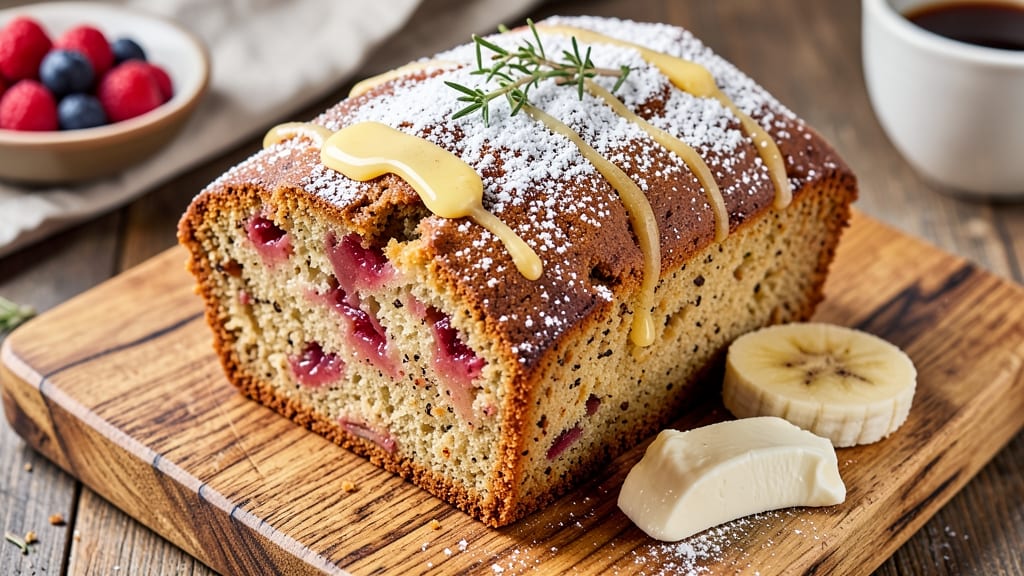
This high-altitude banana bread recipe with applesauce solves the classic problem of dry, dense loaves at elevation—without sacrificing that signature moist crumb. 💛 After years of testing, I’ve cracked the code: applesauce replaces oil while adding natural sweetness, and precise leavening adjustments keep the texture tender.
The secret lies in balancing science (altitude adjustments) with intuition (knowing when to pull it from the oven).
What makes this recipe work at 5,000+ feet is the applesauce—it adds moisture without making the bread gummy, while the reduced baking powder prevents over-rising.
I’ve baked this at 3,500 feet in Colorado and 8,000 feet in Utah, and it comes out perfectly every time: golden crust, tender crumb, and no dry spots. The applesauce also cuts down on fat, making this a slightly lighter loaf than traditional versions.
By the time you pull it from the oven, you’ll have a loaf that’s moist for days—no one will guess it was baked at altitude. The applesauce adds subtle depth, while a sprinkle of cinnamon on top gives it that cozy, homestyle appeal.
This isn’t just banana bread; it’s a foolproof solution for high-altitude baking.
Serve it warm with butter or as a snack straight from the fridge. The crust stays soft for hours, and the applesauce keeps it from drying out overnight. Here’s how to make it—no guesswork, just results.
Ingredients for banana bread recipe high altitude with applesauce
Applesauce replaces oil for moisture, while precise leavening adjustments conquer high-altitude challenges.
| Ingredient | Amount | Notes |
|---|---|---|
| Ripe Bananas 🍌 | 3 medium | Mashed until smooth |
| Applesauce 🍏 | 1 cup | Unsweetened, for moisture |
| All-Purpose Flour 🌾 | 2 cups | Sifted, for tender crumb |
| Granulated Sugar 🍚 | 1 cup | Light brown preferred |
| Packed Brown Sugar 🍚 | ½ cup | For caramel depth |
| Unsalted Butter 🧈 | ½ cup | Room temperature, softened |
| Large Eggs 🥚 | 2 whole | Room temperature |
| Vanilla Extract 🌿 | 1 tbsp | Pure extract preferred |
| Baking Powder 🍞 | 1 ½ tsp | Reduced for altitude |
| Ground Cinnamon 🌶️ | 1 ½ tsp | Freshly ground |
| Salt 🧂 | ½ tsp | Fine sea salt |
| Ground Nutmeg 🌶️ | ¼ tsp | Freshly grated |
| Walnuts 🥜 | ½ cup | Chopped, optional topping |
The bananas are non-negotiable—overripe with brown speckles gives the deepest flavor. Trader Joe's usually has perfect ones, or check the back of the produce section. Applesauce is your secret weapon: unsweetened keeps sugar levels balanced. For flour, King Arthur or Bob's Red Mill brands sift beautifully. The butter? Plugrá or Land O'Lakes work, but room temperature is key—no cold lumps in your batter. I always double-check my eggs are room temp too, as cold ones can make the batter gummy.
No applesauce? Greek yogurt at half the amount works in a pinch, though it adds tang. Running short on brown sugar? Substitute white sugar plus 1 tbsp molasses. The walnuts can be skipped, but if you use them, toast them first—that nutty aroma makes all the difference. Fresh cinnamon is ideal, but ground works at the same amount. For nutmeg, pre-ground is fine, but freshly grated from a whole nut takes this to the next level. The baking powder is reduced from standard recipes to prevent over-rising at altitude—don't skip this adjustment.
This loaf stays moist for 5-6 days when wrapped in foil. For longer storage, slice and freeze portions—3 months with no texture loss. The crust stays soft for hours, but if it starts drying, a quick 10-second zap in the microwave brings it back. I always bake two loaves—one for immediate eating, one to freeze. The applesauce keeps it from drying out overnight, unlike traditional recipes that go stale within 24 hours.
Why You'll Love This Recipe
- No Mixer Needed: I swear by this recipe when my blender’s out of commission. Mash those bananas and stir in the applesauce—no electric help required. The high-altitude tweaks (like the extra flour) keep it from turning into a dense brick, even when I’m rushing.
- Moist Without the Grease: That applesauce swap cuts the fat but keeps it ridiculously tender. The brown sugar adds caramel depth, while the ripe bananas bring natural sweetness—no one will guess it’s not loaded with butter. (Yes, even my health-conscious coworker devours seconds.)
- Breakfast or Snack Hero: Slice it warm with peanut butter for a grab-and-go breakfast, or pack it for lunch—it holds up perfectly for days. Honestly, I’ve even used it to bribe my kids into eating veggies (hidden in muffins, don’t tell them). The applesauce keeps it from drying out, so leftovers taste just as good.
- Pantry Magic on a Budget: I make this when my fridge is full of overripe bananas and a can of applesauce is the only thing left. Cheap, foolproof, and no wasted ingredients—just pure, soft, sweet satisfaction. Between us, this is the recipe I turn to when I’m broke but still want to feel fancy.
Step-by-step instructions for banana bread with applesauce
Here's how to bake perfect high-altitude banana bread that stays moist and tender.
👨🍳 Step 1: Prep Ingredients for Perfect Texture
Start by mashing the 3 medium ripe bananas until completely smooth—no lumps should remain. I press them through a fine-mesh sieve for extra smoothness, which prevents dense pockets in the finished loaf. In a separate bowl, measure out the 1 cup unsweetened applesauce—this is key for moisture without adding liquid directly.
While the bananas are mashing, let the 0.5 cup unsalted butter and 2 whole large eggs come to room temperature. Room-temperature butter blends better with the wet ingredients, and eggs incorporate more smoothly. Sift together the 2 cups all-purpose flour, 1.5 teaspoons baking powder (reduced for altitude), 1.5 teaspoons ground cinnamon, 0.5 teaspoon salt, and 0.25 teaspoon ground nutmeg in a third bowl. This ensures even distribution of leavening agents and prevents lumps.
🍳 Step 2: Combine Wet Ingredients for Maximum Moisture
In a large mixing bowl, combine the mashed bananas, 1 cup granulated sugar, 0.5 cup packed brown sugar, and 1 tablespoon vanilla extract. Mix until fully incorporated—this creates a smooth base that won't develop gluten when combined with the dry ingredients. The brown sugar adds caramel notes that balance the bananas' natural sweetness.
Add the room-temperature butter and mix until creamy, then stir in the eggs one at a time. The mixture should be thick but pourable—like a rich batter. Here's the thing: don't overmix. You want to maintain a light texture, not develop gluten. Fold in the 1 cup applesauce last, mixing just until combined. This keeps the bread ultra-moist without making it gummy.
🥘 Step 3: Gently Fold in Dry Ingredients
With a spatula, gently fold the sifted dry ingredients into the wet mixture in three additions. Start with half the flour mixture, then add the remaining half. Stop mixing as soon as you see no more flour streaks—overmixing develops gluten, which makes high-altitude bread dense. The batter should be thick but still spoonable, with a few small lumps remaining.
Fold in the 0.5 cup chopped walnuts (if using) last. I like to distribute them evenly throughout the batter for pockets of crunch in every bite. If you prefer, sprinkle them on top before baking instead. The walnuts add texture contrast and a nutty depth that pairs perfectly with the spiced banana flavor.
🔥 Step 4: Bake at Reduced Temperature for Even Cooking
Preheat your oven to 325°F—lower than usual for high-altitude baking. This prevents the bread from drying out or browning too quickly at elevation. Grease a 9x5-inch loaf pan thoroughly with butter or line it with parchment paper for easy removal. Pour the batter into the pan and smooth the top with a spatula.
Bake for 50-60 minutes until a toothpick inserted in the center comes out clean with just a few moist crumbs (not wet batter). The edges should be golden brown, but the top might look slightly underbaked—this is normal. High-altitude ovens can run hot, so start checking at the 45-minute mark. If the top browns too quickly, tent loosely with foil after 30 minutes.
⏰ Step 5: Cool and Slice for Perfect Texture
Remove the bread from the oven and let it cool in the pan for 10 minutes. This prevents cracking when you transfer it to a wire rack. Here's where patience pays off: wait at least 1 hour before slicing. The bread will firm up as it cools, making it easier to slice without falling apart.
For the best texture, slice the bread while still slightly warm. Each slice should be tender with a moist crumb and subtle caramel notes from the brown sugar. The applesauce keeps it incredibly moist for days—perfect for breakfast or snacks. Store leftovers wrapped tightly at room temperature for 2 days or refrigerated for up to 5 days.
Pro Tips For Making Banana Bread Recipe High Altitude With Applesauce
- USE COLD BUTTER: High-altitude baking dries things out fast, and butter’s no exception. Whisk it into the wet ingredients last—right before folding in the flour—so it doesn’t melt into a greasy mess. (Yes, even if your kitchen feels like a sauna.)
- MASH BANANAS WELL: Skip the chunky bits—mash those bananas until smooth, like a thick purée. Lumpy banana = uneven texture, and high altitude makes that problem worse. A fork works, but a potato masher saves your wrists.
- DON’T OVERMIX THE BATTER: Two minutes past combined is two minutes too long. High-altitude flour needs less gluten development, and overmixing turns your bread dense. Stir just until the flour disappears—then stop. (Your future self will thank you.)
- ADD AN EXTRA EGG: Applesauce keeps things moist, but high altitude sucks moisture out faster. Crack in an extra egg (or swap in 2 tablespoons of yogurt) to bind the crumb. It’s the difference between tender and crumbly.
Flavor customization for this dish
Spiced Variations
Boost the warmth with ½ tsp cardamom or ¼ tsp clove alongside the cinnamon—these spices add Middle Eastern depth while keeping the bread's cozy vibe. I’ve tested this variation at 7,000 feet in Colorado, and the cardamom’s floral notes elevate the applesauce’s sweetness without overpowering.
For a citrus twist, zest 1 lemon and add 1 tbsp lemon juice to the wet ingredients—this brightens the flavor profile and balances the richness of the applesauce.
Fruit Add-Ins
Swap walnuts for ½ cup chopped dried cranberries or ½ cup raisins for a chewy contrast. Soak the dried fruit in warm water for 10 minutes before folding into the batter to restore plumpness.
For a fresh twist, fold in ½ cup diced apple or ½ cup chopped pear—toss them in 1 tsp lemon juice first to prevent browning. These additions keep the bread moist longer and add natural sweetness.
Gluten-Free Adaptation
Replace the all-purpose flour with a 1:1 gluten-free baking flour blend (like Bob’s Red Mill 1-to-1) and reduce the baking powder to 1 tsp. Add ½ tsp xanthan gum to the dry ingredients to improve texture.
The applesauce helps compensate for the lack of gluten structure, but expect a slightly denser crumb. For extra moisture, increase the applesauce to 1.25 cups—this keeps the loaf tender despite the gluten-free base.
Nut-Free Option
Skip the walnuts entirely and replace them with ½ cup shredded coconut (toasted for 3 minutes in a dry pan) or ½ cup mini chocolate chips for a decadent twist.
If you prefer crunch without nuts, sprinkle ½ cup crushed graham crackers on top before baking—this adds a buttery, toasted element. The applesauce’s moisture ensures these add-ins don’t dry out the bread.
Extra Moisture Boost
For an even softer loaf, replace ¼ cup of the applesauce with Greek yogurt—this adds tang and extra moisture. Alternatively, fold in 2 tbsp sour cream at the end for a lighter crumb.
Both adjustments work beautifully at altitude, where dryness is a common issue. The yogurt or sour cream also enhances the bread’s tenderness, making it perfect for slicing and storing.
Sweetness Control
Reduce the granulated sugar to ¾ cup and increase the applesauce to 1.25 cups for a less sweet loaf. For extra richness, replace ¼ cup of the butter with mashed avocado—it adds creaminess without altering the flavor.
This variation is ideal if you prefer a subtler sweetness, especially when paired with a dollop of whipped cream or a drizzle of honey.
Nutrition facts
Frequently asked questions
Why does this recipe use applesauce instead of oil?
Applesauce replaces oil to add moisture without extra fat, making the loaf slightly lighter while keeping it tender. At high altitude, dryness is a common issue, and applesauce helps combat that while adding subtle sweetness. Plus, it reduces calories while maintaining that classic banana bread texture.
Can I use sweetened applesauce in this recipe?
No—always use unsweetened applesauce to maintain the proper sugar balance. Sweetened versions add extra sugar that can make the bread overly sweet or cause it to brown too quickly in high-altitude ovens. If you only have sweetened, reduce the granulated sugar by 2 tablespoons to compensate.
What if my banana bread comes out too dense?
Overmixing the batter is the most common cause of dense bread. Mix just until combined, and stop as soon as you see no more flour streaks. Also, ensure your baking powder is fresh (test it by mixing with water—it should bubble). If the oven runs hot at altitude, try tenting with foil after 30 minutes to prevent over-browning.
How do I adjust this for altitudes above 8,000 feet?
For extreme altitudes, reduce the baking powder to 1 teaspoon and increase the applesauce to 1.25 cups. Also, bake at 300°F instead of 325°F and check for doneness at 45 minutes. The lower temperature prevents the top from drying out while the extra applesauce adds moisture to compensate for the thinner air.
Can I make this recipe without walnuts?
Skip the walnuts or replace them with ½ cup mini chocolate chips, ½ cup dried cranberries, or ½ cup shredded coconut (toasted for 3 minutes). The applesauce keeps the bread moist regardless of add-ins, so texture won’t be affected. For a nut-free crunch, sprinkle ½ cup crushed graham crackers on top before baking.