
Sauces & Condiments
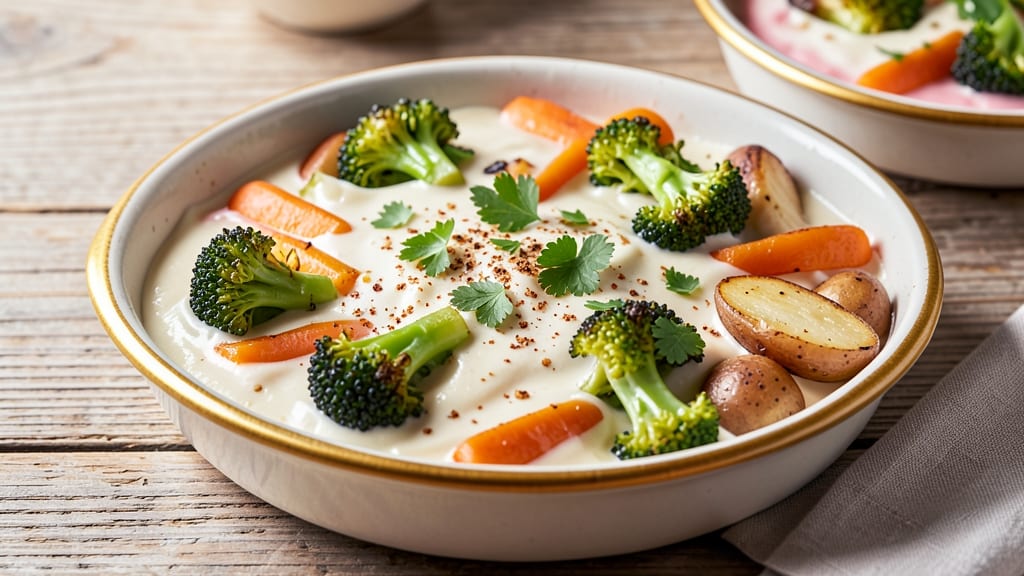
This baked veg in white sauce recipe transforms simple vegetables into a creamy, comforting dish with a crispy golden top—perfect for a satisfying vegetarian meal.
The secret lies in a velvety white sauce that blankets tender vegetables while baking, creating a restaurant-quality side or light main course in just one pan. I developed this recipe to deliver that cozy, saucy texture without the fuss of multiple dishes or complicated techniques.
The magic happens when you layer vegetables like broccoli, carrots, and potatoes in a baking dish, then blanket them with a rich white sauce made from butter, flour, and milk. A sprinkle of breadcrumbs on top creates that irresistible crispy crust while the sauce below stays luxuriously creamy.
This method ensures maximum flavor with minimal effort, making it ideal for weeknight dinners or meal prep.
What you’ll end up with is a dish that’s comforting enough for a family dinner but elegant enough for guests—vegetables perfectly tender, sauce rich and velvety, and a golden, crispy top that adds texture.
The best part? It’s completely adaptable—add cheese for extra richness, fresh herbs for brightness, or swap vegetables based on what’s seasonal. This recipe proves that simple ingredients can create something truly special.
Whether you’re serving it as a side to grilled chicken or as a hearty vegetarian main, this baked veg in white sauce delivers on every promise: creamy sauce, crispy top, and that unmistakable comfort of a home-cooked meal. Let’s get started with the full recipe—it’s easier than you think.
Ingredients for baked veg in white sauce
Simple vegetables meet velvety white sauce for a vegetarian dish that's creamy, crispy, and comforting in every bite.
| Ingredient | Amount | Notes |
|---|---|---|
| Broccoli Florets 🥦 | 1 ½ lb | Fresh, medium-sized florets |
| Baby Carrots 🥕 | 1 ½ lb | Whole, peeled carrots |
| Baby Potatoes 🥔 | 1 ½ lb | New potatoes, halved |
| Unsalted Butter 🧈 | ½ cup | Cold, cubed for roux |
| All-Purpose Flour 🌾 | ½ cup | Sifted for smooth sauce |
| Whole Milk 🥛 | 2 cups | Full-fat for creaminess |
| Vegetable Broth 💧 | ½ cup | Low-sodium preferred |
| Parmesan Cheese 🧀 | ½ cup | Freshly grated, aged |
| Panko Breadcrumbs 🍞 | ½ cup | For crispy topping |
| Garlic Cloves 🧄 | 3 cloves | Minced for flavor base |
| Fresh Thyme Leaves 🌿 | 1 tbsp | Chopped, or dried substitute |
| Diamond Crystal Kosher Salt 🧂 | 1 ½ tsp | Adjust to taste |
| Freshly Ground Black Pepper 🌶️ | ½ tsp | Coarsely ground |
| Olive Oil 🫒 | 1 tbsp | For greasing baking dish |
The vegetables form the heart of this dish, so prioritize freshness and even sizing. Whole Foods or your local market typically carry pre-washed baby carrots and potatoes for convenience, while broccoli should have vibrant green florets without yellowing stems. For the potatoes, new potatoes (smaller, waxier varieties) hold their shape better during baking. If using larger potatoes, cut them into even halves to ensure consistent cooking. The garlic and thyme should be freshly minced—pre-minced garlic loses flavor quickly, and dried thyme works at one-third the amount when substituted.
The white sauce relies on a classic roux technique for that velvety texture, so the butter and flour must be cold when combined to prevent cooking the flour prematurely. For the milk, whole milk delivers the richest creaminess, though 2% works in a pinch. Vegetable broth adds depth without overpowering the delicate flavors. The Parmesan cheese should be aged at least 12 months for optimal flavor—pre-grated cheese often contains anti-caking agents that prevent proper melting. If you prefer a dairy-free option, swap the Parmesan for nutritional yeast and use unsweetened almond milk instead of whole milk, though the texture will be slightly lighter.
Prep the vegetables first to ensure they're evenly sized and ready to bake. Store any unused fresh herbs in a sealed container with a damp paper towel to maintain freshness for up to 5 days. The sauce can be made ahead and reheated gently on the stove, though it's best used fresh for maximum creaminess. Leftovers keep well in the refrigerator for 4-5 days, though the breadcrumb topping loses its crispness when reheated. For a crispier top, broil the dish for 2-3 minutes at the end of baking, watching closely to prevent burning.
Why You'll Love This Recipe
- One-Pot Magic: I swear by this recipe when I’m too tired to wash three pots. Toss everything—potatoes, carrots, broccoli—onto one sheet pan, bake until golden, then just toss in the white sauce. The veggies soak it up like sponges, and cleanup? One spatula, one pan.
- Rich Without Effort: That butter-and-flour white sauce is ridiculously good—creamy, velvety, and just thick enough to cling to every bite. Honestly, it’s the kind of dish where you take a second helping without even thinking, and the crispy edges on the potatoes? Chef’s kiss.
- Meal Prep MVP: Between us, this is my go-to for lunches all week. The sauce clings to the veggies perfectly, so it reheats like a dream (microwave or oven, no difference). I’ll pack it in containers with a sprinkle of cheese or a side of bread, and my kids still beg for it by Thursday.
- Budget-Friendly Luxury: Baby potatoes and frozen broccoli florets keep this cheap, but the butter and flour sauce make it feel fancy. I’ll be real: it’s the kind of dish where you’d normally reach for takeout, but this costs a fraction and tastes just as satisfying—especially when you’re feeding a crowd.
Step-by-step instructions for baked vegetables in white sauce
This method delivers perfectly tender vegetables with a velvety sauce and golden, crispy topping every time.
Prep and Parboil the Vegetables
Preheat your oven to 425°F. While it heats, trim the 1.5 lb broccoli florets by snapping off any woody stems, leaving 1-inch florets. Peel and halve the 1.5 lb baby carrots lengthwise, then cut into 1-inch pieces. Halve the 1.5 lb baby potatoes lengthwise, leaving the skins intact for texture.
Bring a large pot of salted water to a boil. Add the vegetables in batches to avoid crowding, and parboil for 4-5 minutes until they're just tender but still hold their shape. Drain immediately and transfer to a large bowl. Toss with 1 tbsp olive oil, 1 tbsp fresh thyme leaves, 1.5 tsp kosher salt, and 0.5 tsp black pepper. This step ensures the vegetables cook evenly and absorb the flavors deeply.
Make the Creamy White Sauce
In a medium saucepan, melt the 0.5 cup unsalted butter over medium heat. Whisk in the 0.5 cup all-purpose flour and cook for 1-2 minutes until the mixture forms a smooth, pale roux—no golden color yet. Slowly pour in the 2 cups whole milk while whisking constantly to prevent lumps. Stir in the 0.5 cup vegetable broth and 0.5 cup grated Parmesan cheese, then simmer for 5-6 minutes until the sauce thickens to a creamy consistency.
Remove the sauce from heat and stir in the 3 minced garlic cloves. Taste and adjust seasoning with additional salt or pepper if needed. The sauce should coat the back of a spoon smoothly but still be pourable. If it thickens too much, whisk in 1-2 tablespoons of milk to reach the ideal consistency for coating the vegetables.
Assemble and Bake the Vegetables
Grease a 9x13-inch baking dish with 1 tbsp olive oil. Spread the parboiled vegetables evenly in the dish, creating a single layer. Pour the white sauce over the vegetables, ensuring every piece is coated. Sprinkle the 0.5 cup Panko breadcrumbs evenly over the top for a crispy finish.
Bake for 20-25 minutes until the sauce bubbles and the breadcrumbs turn golden brown. The vegetables should be tender with no resistance when pierced with a fork. If the top isn't brown enough after 20 minutes, broil for 1-2 minutes on high, keeping a close eye to prevent burning. The crispy topping is key to this dish—don't skip it!
Rest and Serve
Remove the baking dish from the oven and let it rest for 5 minutes before serving. This resting period allows the sauce to set slightly and the flavors to meld together. The vegetables will retain their moisture, and the crispy breadcrumb topping will stay intact.
Serve immediately while the sauce is still creamy and the breadcrumbs are crispy. Each bite should deliver tender vegetables enrobed in rich, velvety sauce with a satisfying crunch from the breadcrumbs. This one-pan dish is perfect for a comforting weeknight dinner or as a side for roasted meats.
Pro Tips For Making Baked Veg In White Sauce
- PARBOIL POTATOES FIRST: I learned this the hard way—skipping the 5-minute boil in salted water means your baby potatoes will turn to mush under the sauce. Even if they look perfect raw, they’ll collapse when baked. Trust me, 5 minutes is all you need.
- USE FLOUR SLURRY, NOT ROUX: After burning three batches trying to rush a roux, I switched to a flour slurry (equal parts flour and cold milk or broth, whisked into the butter). It thickens faster, doesn’t scorch, and keeps the sauce silky. Just whisk it in off the heat and let it simmer—no need to babysit it.
- DON’T OVERCROWD THE PAN: I know, you want everything to cook at once, but crammed veg won’t crisp or brown. Spread the broccoli and carrots in a single layer, cut-side down if they’re thick. If your pan is too small, bake in batches—your veg will thank you with better texture.
- SALT THE SAUCE LIKE IT’S SOUP: Unsalted butter means you have to salt the sauce aggressively. Taste it after thickening—if it’s bland, add another pinch. The veg will absorb some, but you want that buttery richness to pop. I aim for at least ½ teaspoon per 2 tablespoons of butter, then adjust.
Troubleshooting this dish
Sauce Too Thin?
If your white sauce ends up too thin after baking, it’s likely because the vegetables released too much moisture. Next time, reduce the vegetable broth by 2 tablespoons or simmer the sauce longer (7-8 minutes) before pouring it over the veggies.
For an immediate fix, sprinkle 1 tablespoon cornstarch mixed with 1 tablespoon cold water over the sauce and stir until thickened. 💫
Breadcrumbs Not Crispy?
Overcrowding or insufficient oil can prevent crispy breadcrumbs. Ensure your 9x13-inch baking dish is well-greased with olive oil before adding the veggies, and spread them in a single layer.
If the breadcrumbs still turn out soggy, broil the dish for 2-3 minutes at the end of baking, watching closely to avoid burning. For extra crunch, toast the breadcrumbs in a dry pan for 2 minutes before sprinkling them on top.
Vegetables Undercooked?
If your veggies aren’t tender enough, they likely weren’t parboiled long enough or the oven temperature dropped. Start by parboiling for 5-6 minutes (not just 4-5 minutes) to ensure they’re partially cooked before baking.
Also, check your oven’s accuracy—many run 25°F cooler than set. If needed, increase the oven temperature to 450°F for the final 10 minutes of baking to finish cooking the veggies while keeping the breadcrumbs crispy.
Sauce Separated?
Sauce separation usually happens if the milk was added too quickly or the heat was too high. To fix it, whisk in 1 tablespoon cold butter or 1 tablespoon heavy cream and gently reheat the sauce on low heat while stirring constantly.
For prevention, whisk the milk into the roux very slowly, drop by drop at first, to create a smooth emulsion. If you’re in a hurry, blend the separated sauce briefly with an immersion blender to restore creaminess.
Dish Too Dry?
A dry dish often means the sauce was over-thickened or the veggies absorbed too much moisture. Next time, reduce the flour by 1 tablespoon or add 2 tablespoons extra milk to the sauce before baking.
For an immediate rescue, drizzle 2 tablespoons warm milk or broth over the top and let it sit for 5 minutes before serving. If the breadcrumbs are still crispy, the dish will still taste delicious—just add extra sauce on the side for dipping.
Flavor Too Mild?
If your dish lacks depth, it might need more seasoning or flavor boosters. Try adding ½ teaspoon smoked paprika or ½ teaspoon Dijon mustard to the sauce for complexity. For umami, stir in 1 tablespoon nutritional yeast or an extra ¼ cup grated Parmesan cheese**.
A squeeze of lemon juice before serving brightens the flavors, too. For extra richness, top with a sprinkle of crumbled feta or goat cheese before baking.
Nutrition facts
Frequently asked questions
Can I use frozen vegetables instead of fresh?
Yes, but with a few adjustments! Use frozen vegetables that are still slightly firm (not thawed) and skip the parboiling step. Instead, toss them directly with olive oil and seasonings, then bake as directed. Frozen veggies release more moisture, so reduce the vegetable broth in the sauce by 3 tablespoons to prevent a watery dish. Also, increase baking time by 5-7 minutes to ensure they're fully tender.
How can I make this dish ahead of time?
Prep is your friend here! Assemble the dish (veggies + sauce) in the baking dish up to 24 hours ahead, cover tightly with foil, and refrigerate. When ready to bake, add the breadcrumbs and bake at 425°F for 25-30 minutes, covering with foil for the first 15 minutes to prevent over-browning. The texture won't be as crispy as fresh, but it's still delicious. For best results, reheat within 2 days.
What are good protein pairings for this vegetarian dish?
This creamy vegetable dish pairs beautifully with lighter proteins to balance the richness. Try grilled chicken breast, pan-seared tofu (marinated in soy sauce and garlic), or crispy baked tempeh. For a seafood option, serve with lemon-butter shrimp or flaked baked cod. The crispy breadcrumb topping also complements roasted nuts like almonds or walnuts for a crunchy contrast.
Can I substitute the white sauce for something lighter?
For a lighter version, swap the butter-based sauce for a Greek yogurt sauce: mix 1.5 cups plain Greek yogurt with 0.5 cup grated Parmesan, 2 tbsp lemon juice, 1 tbsp olive oil, and seasonings. Or try a cashew cream sauce by blending 1 cup soaked cashews with 1 cup vegetable broth and 1 tbsp nutritional yeast. Both options reduce calories while keeping the creamy texture. The baking time may need adjustment—check veggies at 15 minutes.
Why does my sauce sometimes get lumpy?
Lumpy sauce usually happens when milk is added too quickly to the roux or when whisking isn't thorough. To prevent lumps, melt the butter first, then whisk in the flour until smooth (no graininess). When adding milk, pour it in a slow, steady stream while whisking vigorously. For a quick fix, blend the sauce with an immersion blender for 10-15 seconds—this breaks up any lumps while keeping the sauce creamy. If you're in a hurry, strain the sauce through a fine-mesh sieve for instant smoothness.