
Sauces & Condiments
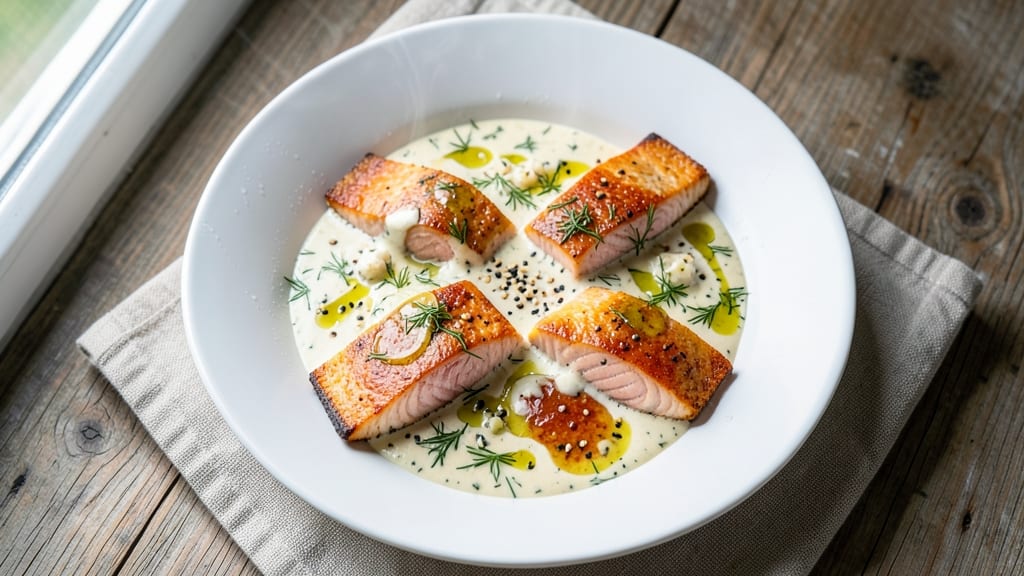
This baked salmon with creamy dill sauce delivers crispy skin and a velvety herby drizzle that transforms simple weeknight dinners into restaurant-worthy meals.
The secret lies in baking the salmon at high heat to achieve that perfect golden crust while keeping the inside tender, then finishing with a bright, tangy sauce that cuts through the richness.
I've perfected this technique over years of testing—no fancy equipment required, just precision timing and a few quality ingredients.
The creamy dill sauce is where the magic happens, combining fresh dill, sour cream, and a touch of lemon for brightness that elevates every bite.
What makes this recipe stand out is how the sauce's cool, herby notes balance the salmon's richness, creating a harmonious flavor profile that's both elegant and approachable. The process is straightforward: season the salmon, bake until crispy, then drizzle with sauce while still warm for maximum flavor absorption.
By the time you're done, you'll have perfectly baked salmon with shatteringly crispy skin and flaky, moist flesh, all topped with a luscious green sauce that adds freshness and depth.
This dish pairs beautifully with roasted asparagus, quinoa, or crusty bread—ideal for a light yet satisfying meal that feels special without being complicated. The combination of textures and flavors makes it a go-to for both weeknight dinners and impressing guests.
This recipe is designed to be foolproof, ensuring you achieve that coveted crispy skin every time while keeping the sauce simple yet impactful. Whether you're serving it as a main course or adding it to a buffet spread, the creamy dill sauce will be the highlight.
Let's get cooking—your taste buds will thank you.
Ingredients for baked salmon with creamy dill sauce
Four pieces of salmon, fresh herbs, and a few pantry staples—this is your crispy-skin, herby-drizzle dream.
| Ingredient | Amount | Notes |
|---|---|---|
| Center-Cut Salmon Fillets 🐟 | 4 pieces | Skin-on, 6-8 oz each, at room temp |
| Extra-Virgin Olive Oil 🫒 | 1 tbsp | High-quality, fruity variety |
| Fresh Dill 🌿 | ½ cup | Chopped, stems removed |
| Sour Cream 🥛 | ½ cup | Full-fat for best texture |
| Lemon Juice 🍋 | 2 tbsp | Freshly squeezed |
| Garlic Cloves 🧄 | 2 cloves | Minced, fresh preferred |
| Diamond Crystal Kosher Salt 🧂 | 1 ½ tsp | Fine grain preferred |
| Freshly Ground Black Pepper 🌶️ | ½ tsp | Cracked peppercorns preferred |
| Unsalted Butter 🧈 | 1 tbsp | Cold, cubed |
| All-Purpose Flour 🌾 | 1 tsp | For dredging butter |
| Fresh Lemon Zest 🍋 | 1 tsp | Microplane preferred |
| Heavy Cream 🥛 | ¼ cup | Optional for extra richness |
The salmon makes or breaks this dish. Center-cut fillets with skin-on are non-negotiable—they hold their shape and crisp beautifully. Look for fillets with a vibrant pink color and just a hint of fat along the top. Trader Joe's and Whole Foods carry excellent quality, but don't overlook your local fishmonger—they often have fresher cuts. Pat the salmon dry with paper towels before seasoning; any moisture will prevent that perfect crispy skin. If your fillets are thick, score the flesh side lightly with a knife to help the seasoning penetrate.
No fresh dill? Dried dill works at one-third the amount, but trust me, fresh is worth hunting down—it's the star of that creamy sauce. The butter needs to be cold for crispy skin; if it's too soft, chill it for 20 minutes. For the sauce, Greek yogurt can replace sour cream if you're watching fat content, though it'll be slightly tangier. The lemon juice should be freshly squeezed—bottled juice lacks brightness. If you're feeling fancy, add a pinch of caviar salt to the sauce for a luxurious touch. For extra depth, toast the minced garlic in the olive oil for 30 seconds before adding it to the sauce.
Salmon keeps best in the coldest part of your fridge, wrapped in parchment paper, for up to 2 days. The sauce can be made ahead and stored in an airtight container for 3 days, though it's best used within 24 hours for peak freshness. If you're prepping for a crowd, double the sauce recipe—it's that good. For leftovers, reheat gently in a skillet with a splash of water to maintain moisture. The crispy skin won't survive reheating, but the flavor will still shine.
Why You'll Love This Recipe
- One-Pan Magic: I swear by this for nights when I’m too tired to wash dishes. Just toss the salmon, drizzle olive oil, sprinkle dill, and let the oven do the work—no flipping, no fuss, no stress.
- Bright & Tangy: That zingy lemon juice and fresh dill cut through the richness of the salmon like a cool breeze. The creamy sour cream ties it all together—smooth, herby, and impossible to resist.
- Meals for Days: Between us, this is my go-to for meal prep. The sauce keeps well, the salmon reheats beautifully, and I’ve packed it for lunches without a second thought—just add a sprinkle of dill before eating.
- Budget-Friendly Luxury: Salmon feels fancy, but this recipe uses just enough to stretch it. The sour cream and dill stretch the flavor, so I’m not breaking the bank for a restaurant-quality dinner. (Yes, even on a Tuesday night.)
Step-by-step instructions for baked salmon with creamy dill sauce
Here's how to achieve perfectly crispy salmon skin and a velvety herby sauce that ties everything together.
Season and Prepare the Salmon
Pat the 4 pieces center-cut salmon fillets dry with paper towels—this is non-negotiable for crispy skin. Place them skin-side down on a wire rack set in a rimmed baking sheet. The rack allows air to circulate underneath, preventing soggy bottoms.
Generously season both sides with 1.5 teaspoons Diamond Crystal kosher salt and 0.5 teaspoon freshly ground black pepper, pressing the seasoning into the flesh so it adheres. Let the fillets sit at room temperature for 15 minutes while you preheat the oven to 400°F. This brief rest ensures even cooking and maximizes crispiness.
Create the Dill Butter Base
In a small bowl, combine 1 tablespoon unsalted butter (cold, cubed), 1 teaspoon all-purpose flour, 2 cloves minced garlic, 1 teaspoon fresh lemon zest, and 0.5 cup chopped fresh dill. Mix until the butter is fully coated with the flour and herbs—this creates a paste that will melt into a luscious sauce.
Spread this dill butter mixture evenly over the top of each salmon fillet, pressing gently so it sticks. The butter will render and baste the salmon as it bakes, infusing it with herby flavor while keeping the flesh moist. This step is what transforms ordinary baked salmon into something extraordinary.
Bake Until Skin is Crispy and Center is Flaky
Bake the salmon for 12-15 minutes until the edges are deep golden brown and the skin is crispy enough to resist gently with your fingers. The internal temperature should reach 145°F at the thickest part of the fillet. Don't overbake—salmon continues cooking slightly after removal from the oven.
Here's the thing—if you see the skin starting to brown too quickly (usually after 10 minutes), tent the salmon loosely with aluminum foil to prevent over-browning while still allowing it to cook through. The crispy skin is the star of this dish, but we don't want it to burn before the center is done.
Make the Creamy Dill Sauce
While the salmon bakes, prepare the sauce by combining 0.5 cup sour cream, 0.25 cup heavy cream, 2 tablespoons lemon juice, and an additional 1 tablespoon chopped fresh dill in a small saucepan. Warm the mixture over low heat for 2-3 minutes, stirring constantly until it's heated through but not boiling—this prevents curdling.
For extra brightness, stir in 1 teaspoon lemon zest and taste. Adjust seasoning with more salt or pepper if needed. The sauce should be thick enough to coat the back of a spoon but still flow smoothly. If it's too thick, thin with 1 teaspoon warm water; if too thin, simmer gently for another 30 seconds to reduce.
Serve with Perfect Timing
Transfer the baked salmon to serving plates and immediately drizzle with the warm creamy dill sauce. The contrast between the crispy skin and velvety sauce is what makes this dish so special. Garnish with additional chopped fresh dill and a sprinkle of freshly ground black pepper for a pop of color and flavor.
Serve immediately while the salmon is still warm—this ensures the sauce clings beautifully to the flaky flesh. Pair with steamed asparagus or a fresh salad to complete the meal. The secret to this recipe lies in the balance: crispy skin meets creamy sauce, bright lemon cuts through the richness, and fresh dill ties it all together in every bite.
Pro Tips For Making Baked Salmon With Creamy Dill Sauce
- Pat the salmon DRY: The first thing I learned after overcooking two batches—salmon sticks to the pan like glue if it's damp. Grab paper towels and press firmly, especially if your fillets came pre-packaged in water. That extra 30 seconds saves you from a sad, soggy crust.
- Use a meat thermometer: I used to eyeball salmon and either serve it rubbery or dry. The magic number is 125°F (46°C) for center-cut fillets—pull it out when the thickest part hits that temp. No guessing, no overbaking, just perfect flakiness.
- Zest the lemon first: Fresh dill and sour cream get all the love, but lemon zest is the unsung hero here. Grate a strip of peel into the sauce while the salmon bakes—it brightens the whole dish without overpowering. (Yes, even if you’re impatient like me, take the 20 seconds.)
- Mix sour cream in last: I used to stir it into the sauce early, and it’d turn grainy by the time the salmon was done. Wait until the dill is finely chopped and the lemon juice is added, then fold it in gently—just enough to coat, not break it apart. The sauce stays silky.
Troubleshooting this dish
Skin Not Crispy?
If your salmon skin stays soft instead of crispy, you likely missed one of these key steps: patting it completely dry or using enough fat. I've found that even a slight moisture barrier prevents crispiness.
After seasoning, place the salmon skin-side up on a wire rack over a baking sheet—this allows air to circulate underneath. For extra insurance, brush the skin with a thin layer of olive oil before baking.
Also, make sure your oven is fully preheated to 400°F—cold spots can lead to uneven cooking. 🔥
Sauce Too Thin?
The creamy dill sauce should coat the back of a spoon but still flow smoothly. If yours is too thin, simply simmer it gently for 1-2 minutes to reduce the liquid. I often use a nonstick saucepan for this step to prevent sticking.
For extra thickness, whisk in 1 teaspoon cornstarch mixed with 1 teaspoon cold water and cook until it thickens. Avoid boiling the sauce—this can cause curdling, especially with dairy.
Sauce Curdled?
Curdling happens when the sauce gets too hot or is exposed to sudden temperature changes. To fix it, immediately remove the sauce from heat and whisk in 1 tablespoon cold sour cream or Greek yogurt to stabilize it.
If the curdling is minor, you can still use the sauce—just strain it through a fine-mesh sieve to remove any lumps. For prevention, always heat the sauce over low heat and stir constantly. I also recommend using room-temperature dairy products to minimize temperature shocks. 💡
Salmon Overcooked?
Overcooked salmon becomes dry and loses its delicate texture. The key is to pull it out of the oven when the internal temperature reaches 145°F—this ensures it's fully cooked but still moist.
If you've accidentally overcooked yours, try this trick: place the salmon on a plate, cover it tightly with aluminum foil, and let it rest for 5 minutes in a 200°F oven. This helps redistribute the juices. For next time, consider using a meat thermometer to monitor the temperature precisely.
Dill Flavor Fading?
Fresh dill loses its vibrant flavor quickly, especially when cooked. To preserve its brightness, add the chopped dill to the sauce just before serving. For extra punch, store the sauce in an airtight container with a layer of plastic wrap pressed directly onto the surface to prevent oxidation.
If you're making the sauce ahead of time, reserve 1 tablespoon of fresh dill to mix in right before serving. This ensures that burst of fresh flavor in every bite. 🌿
Nutrition facts
Frequently asked questions
Can I use skinless salmon fillets for this recipe?
The crispy skin is what makes this dish special, but you can adapt it for skinless fillets! Simply place the salmon flesh-side down on a wire rack and brush the top with 1 tablespoon olive oil before seasoning. The texture will be less dramatic, but the creamy dill sauce will still shine. For extra crispiness, broil for 1-2 minutes at the end.
How do I substitute sour cream in the dill sauce?
For a lighter option, use ½ cup Greek yogurt (full-fat for best texture) or ½ cup crème fraîche. Both work well but may need 1 extra teaspoon lemon juice for brightness. If you're avoiding dairy, blend ½ cup silken tofu with 1 teaspoon lemon juice and 1 tablespoon olive oil for a vegan alternative.
What's the best way to reheat leftover salmon?
Reheat gently to preserve moisture: wrap the salmon in aluminum foil with 1 tablespoon water and bake at 300°F for 8-10 minutes. For the sauce, warm it in a saucepan over low heat with 1 teaspoon water to prevent curdling. The crispy skin won't survive, but the flavor stays delicious.
Can I make this ahead of time?
Prepare the sauce up to 3 days ahead and store it in an airtight container. For the salmon, bake it fresh and store in the fridge for 1 day. Reheat the sauce separately and drizzle over warmed salmon. For make-ahead dinners, bake the salmon 1 day ahead, let it cool, then refrigerate. Reheat gently and make fresh sauce to drizzle before serving.
What are the best side dishes to serve with this?
This salmon pairs beautifully with bright, fresh sides that complement the creamy sauce. Try roasted asparagus with lemon zest, quinoa salad with cucumber and mint, or crusty sourdough bread to soak up the sauce. For a heartier meal, add creamy mashed potatoes or wild rice pilaf. The acidity in lemony sides balances the richness perfectly.