
Sauces & Condiments
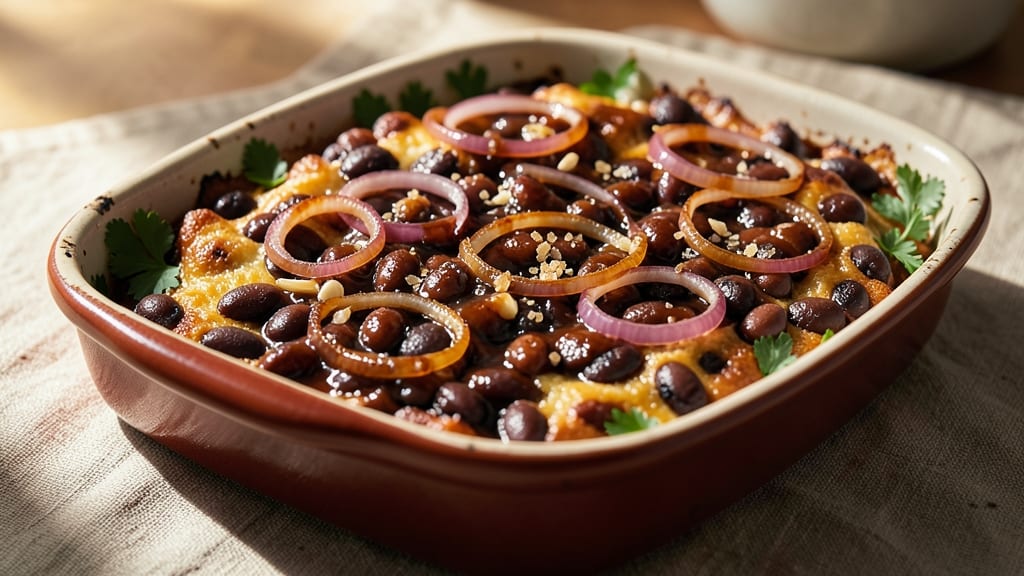
Baked beans recipe with brown sugar and barbecue sauce transforms humble ingredients into a deeply satisfying dish that caramelizes beautifully in the oven. I developed this version after years of perfecting slow-cooked bean dishes, balancing sweetness and smokiness for that perfect balance. The brown sugar creates a rich caramelization while the barbecue sauce adds depth and tang—every bite delivers that comforting, slightly sticky texture we all love.
What makes this recipe special is the slow-simmering process, which allows flavors to meld and develop over 30–45 minutes at 350°F. Unlike quick versions, this method ensures tender beans with a glossy, caramelized surface that practically melts in your mouth.
The combination of molasses and spices—like mustard and smoked paprika—adds layers of complexity that take it beyond basic baked beans.
By the end, you'll have a dish that's rich, slightly sweet, and packed with smoky flavor—perfect for serving alongside cornbread or coleslaw. The sauce thickens beautifully as it bakes, creating a glossy finish that makes it irresistible.
This is the kind of recipe that tastes even better the next day, making it ideal for meal prep or potlucks.
For those watching their sodium intake, I’ve included a lighter version using reduced-sodium barbecue sauce and less salt in the seasoning. The result is just as flavorful but with a touch more control. Let’s get cooking!
Ingredients for baked beans recipe with brown sugar and barbecue sauce
Six ingredients transform into rich, caramelized baked beans with smoky-sweet perfection.
| Ingredient | Amount | Notes |
|---|---|---|
| Navy Beans 🌾 | 2 ½ cups | Dried, soaked overnight |
| Light Brown Sugar 🍯 | ½ cup | Packed, not granulated |
| Barbecue Sauce 🍅 | 1 cup | Reduced-sodium preferred |
| Molasses 🍯 | ¼ cup | Unsulphured for best flavor |
| Yellow Onion 🧅 | 1 whole | Diced, medium size |
| Garlic Cloves 🧄 | 4 cloves | Minced, fresh preferred |
| Smoked Paprika 🌶️ | 1 tbsp | For that deep smoky flavor |
| Dijon Mustard 🥬 | 1 tbsp | For tangy depth |
| Kosher Salt 🧂 | 1 ½ tsp | Diamond Crystal preferred |
| Black Pepper 🌶️ | ½ tsp | Freshly cracked |
| Apple Cider Vinegar 🍎 | 1 tbsp | For brightness |
| Vegetable Broth 💧 | 1 cup | Low-sodium preferred |
| Maple Syrup 🍁 | 1 tbsp | Pure, for extra sweetness |
| Bay Leaf 🌿 | 1 whole | Removed before serving |
The beans are the foundation—navy beans hold up best to slow baking, but you can swap in pinto or kidney beans if that's what you've got. Soak them overnight for tender results, but in a pinch, quick-soak with boiling water works. For the brown sugar, light or dark both work, but light gives a cleaner caramelization. Trader Joe's has great unsulphured molasses if you want to avoid that sulphur bite. The barbecue sauce? Stubb's or Sweet Baby Ray's are solid choices, but any smoky, slightly sweet sauce will do—just taste as you go.
No molasses? Maple syrup at half the amount works in a pinch, though it's sweeter. Short on barbecue sauce? Ketchup plus a dash of liquid smoke gets you close. The smoked paprika is non-negotiable for that deep flavor—Penzeys or Goya brands are top-tier. For extra richness, stir in a spoonful of peanut butter at the end (trust me, it's amazing). The onion and garlic can be swapped for 1 tbsp onion powder and 1 tsp garlic powder if you're in a hurry, but fresh is always better. And if you're watching sodium, low-sodium broth and reduced-sodium sauce make a world of difference.
These beans taste even better the next day—3-4 days in the fridge, covered tightly. For meal prep, portion into containers with a sprinkle of green onions on top—they keep for up to 5 days. Freeze for 3 months by spreading them on a tray first to prevent clumping. The caramelized top? That's the magic—don't skip the baking time. If they look dry, add a splash of broth and bake another 10 minutes. Leftovers reheat beautifully with a splash of water or broth.
Why You'll Love This Recipe
- Sweet & Smoky Magic: The brown sugar and molasses caramelize into a glossy, sticky glaze while the barbecue sauce adds that deep, smoky backbone—like a hug in a bowl. Honestly, the first time I tasted this, I thought, "Why haven’t I been doing this all along?"
- One-Pot, Zero Stress: Dice one onion, dump in the soaked beans, and let the oven do the work. Between us, I’ve burned casseroles before, but this? It’s hard to mess up—just stir, cover, and walk away. (Yes, even on a Tuesday night.)
- Leftovers That Beg for More: These beans taste better the next day, when the flavors meld into something rich and cohesive. I’ll be real: I’ve reheated them three times in a row without getting sick of them. That’s a win for my wallet and my taste buds.
- Tailgate to Tuesday: Slather on hot dogs for a game-day spread, pile it on toast for breakfast, or serve it alongside grilled chicken for a weeknight dinner. The sweetness cuts through savory meats like a dream—no one will guess it’s basically beans until they’re halfway through their second helping.
Step-by-step instructions for baked beans with brown sugar and barbecue sauce
Here's how to create rich, caramelized baked beans that balance smoky depth and sweet complexity.
Prepare the Beans for Maximum Flavor
Start by draining and rinsing the soaked 2.5 cups Navy Beans thoroughly under cold water. This removes any residual starch that could make your beans gummy. Transfer them to a large Dutch oven or heavy pot—something that can handle hours on the stovetop and in the oven without burning.
Add 1 whole Yellow Onion (diced medium), 4 cloves Garlic Cloves (minced), 1 tbsp Smoked Paprika, 1 tbsp Dijon Mustard, 1.5 tsp Kosher Salt, and 0.5 tsp Black Pepper to the pot. The paprika and mustard will infuse the beans with smoky, tangy depth right from the start. Stir everything together until the beans are fully coated in the spices.
Build the Sweet-Savory Base
Pour in 1 cup Vegetable Broth, 1 tbsp Apple Cider Vinegar, and 1 whole Bay Leaf, then bring the mixture to a boil over medium-high heat. Once boiling, reduce the heat to low and let it simmer uncovered for 30 minutes, stirring occasionally. This initial simmer helps break down the beans' skins and develop their natural sweetness.
After 30 minutes, add 0.5 cup Light Brown Sugar (packed), 0.25 cup Molasses, and 1 tbsp Maple Syrup. Stir well to dissolve the sugars completely. The molasses adds that deep, almost bittersweet complexity while the brown sugar creates caramelization. Let the mixture simmer uncovered for another 20 minutes, stirring every 5 minutes to prevent sticking. You'll notice the liquid reducing and the sugars starting to caramelize slightly around the edges—that's exactly what you want.
Incorporate the Barbecue Sauce and Simmer
Stir in 1 cup Barbecue Sauce and give everything a thorough mix. The sauce will add that familiar smoky-sweet tang that complements the caramelized sugars. Return the heat to low and let the beans simmer uncovered for 45 minutes, stirring every 10-15 minutes. This slow simmer allows the flavors to meld and the beans to soften without falling apart.
Here's where the magic happens: the sugars will continue caramelizing, creating a glossy, slightly sticky sauce that clings to the beans. If the mixture looks too thick, add 2-3 tablespoons of water to keep it moist. You're aiming for a consistency where the beans are tender but still hold their shape, and the sauce coats them beautifully.
Bake for Deep Caramelization
Preheat your oven to 350°F. Transfer the Dutch oven to the oven and bake uncovered for 1 hour. The uncovered lid allows the moisture to evaporate, concentrating the flavors and promoting that coveted caramelized crust on top. Stir the beans once halfway through baking to ensure even caramelization.
After 1 hour, check for doneness. The beans should be fork-tender with minimal resistance, and the sauce should be thick and glossy with deep caramelized spots. If the sauce isn't quite thick enough, return the pot to the stovetop over low heat for 5-10 minutes to reduce further. Remove the bay leaf before serving—it's done its job and can be quite tough.
Rest and Serve with Perfect Texture
Let the baked beans rest off the heat for 10 minutes before serving. This resting period allows the flavors to settle and the sauce to thicken slightly, ensuring each bite delivers that perfect balance of sweet, smoky, and savory notes. Serve warm alongside grilled meats, cornbread, or over a bed of mashed potatoes for a hearty meal.
The beans should be tender yet still hold their shape, coated in a glossy, caramelized sauce with deep flavors from the molasses, barbecue sauce, and brown sugar. If you've followed these steps, you'll have baked beans that taste like they've been simmering all day—even if they only took a few hours.
Pro Tips For Making Baked Beans Recipe With Brown Sugar And Barbecue Sauce
- Sear the Onions First: Skip the soft, mushy onions—sauté them in a dry pan until deep golden brown before adding liquid. That caramelized flavor cuts through the sweetness and makes the whole dish taste richer. (Yes, even if you’re impatient like me, don’t rush this part.)
- Soak Beans Overnight: Navy beans cook faster and stay creamier when soaked for at least 8 hours. I learned this the hard way—skipping it leaves them gummy, no matter how long you bake. Drain and rinse before cooking to wash away excess starch.
- Balance the Sweetness: Brown sugar and molasses are potent—taste the sauce before baking. If it’s cloying, add a splash of apple cider vinegar or a pinch of smoked paprika to cut the sweetness and add depth. Trust me, your taste buds will thank you.
- Bake Low and Slow: Start at 350°F (175°C) for the first hour, then drop to 300°F (150°C). This prevents the top from burning while letting the beans tenderize evenly. Cover with foil halfway if the sauce is reducing too fast—you want a thick, glossy finish, not a crust.
Essential equipment for this dish
Dutch Oven
This is my go-to vessel for baked beans because it handles both stovetop simmering and oven baking like a champ. A 5-6 quart Dutch oven (like the Le Creuset Stoneware) distributes heat evenly, preventing hot spots that can burn your caramelized sauce. I’ve tried enamel-coated cast iron and ceramic—both work, but cast iron retains heat better for that slow cook. Just
Mixing Bowls
Start with a large stainless steel mixing bowl (I use OXO Good Grips) for soaking your beans—it’s wide enough to accommodate 2.5 cups dried navy beans without overcrowding. After draining, transfer them to a medium bowl for rinsing. Stainless steel won’t absorb odors like plastic, and the non-slip base keeps things steady when stirring in spices. Pro tip: Use a fine-mesh strainer (like OXO Collapsible) to rinse beans thoroughly—no one wants gummy beans!
Measuring Tools
Precision matters when balancing sweetness and smokiness. A stainless steel measuring cup set (I swear by Farberware) ensures accurate measurements for your 0.5 cup brown sugar and 0.25 cup molasses.
For smaller quantities like 1 tbsp smoked paprika, a spice scoop (like Penzeys Spice Scoops) keeps measurements consistent. Don’t skimp here—off measurements throw off the caramelization and flavor balance. 💡
Wooden Spoon
A heat-resistant wooden spoon (I love Ozeri Touch-Grip) is essential for stirring without scratching your Dutch oven. Wood distributes heat gently and won’t react with acidic ingredients like vinegar or molasses.
Use it to scrape the bottom of the pot every 5-10 minutes during simmering—this prevents sticking and ensures even caramelization. Just avoid soaking it in water after use; let it air-dry to prevent warping.
Oven Thermometer
Your oven’s temperature gauge can be off by 25°F or more, and that’s a disaster for caramelized baked beans. A bimetallic stem thermometer (like Thermoworks Oven Thermometer) gives you real-time accuracy.
Place it near your Dutch oven during baking to confirm 350°F—any hotter, and your sauce might burn; any cooler, and the caramelization won’t develop properly. Trust me, this small investment saves you from ruined batches. ✨
Optional: Slow Cooker
For hands-off cooking, a 6-quart slow cooker (I use Hamilton Beach Programmable) works wonders. Transfer your pre-simmered beans and sauce to the slow cooker, cover, and cook on LOW for 6-8 hours or HIGH for 3-4 hours.
The key? Stir in the barbecue sauce 30 minutes before the end to let it thicken. Just avoid skipping the oven’s caramelization step—slow cookers won’t give you that glossy crust. Perfect for meal prep! 🍴
Nutrition facts
Frequently asked questions
Can I make these baked beans without soaking the beans overnight?
Yes! For a quick version, use the quick-soak method: Cover dried beans with 3 cups water in a pot, bring to a boil for 2 minutes, then remove from heat and let sit for 1 hour before draining. The texture will be slightly firmer, but still delicious. Pro tip: Add 1/2 tsp baking soda to the soaking water to help soften them faster.
How do I adjust the sweetness level in this recipe?
Start by tasting after the 20-minute sugar simmer—reduce brown sugar by 2 tablespoons if you prefer less sweetness. For extra depth without sugar, add 1/2 tsp cinnamon or 1/4 tsp cayenne to balance flavors. The molasses already adds complexity, so adjust it last. Always taste as you go!
Why did my baked beans turn out too thick or dry?
This usually happens from overcooking or insufficient liquid. For future batches, stir in 2-3 tablespoons water or broth during baking if needed, and reduce oven time to 45 minutes instead of 1 hour. The key is a glossy, slightly sticky sauce—never dry. If your beans are mushy, you may have used too much liquid from the start.
Can I make these beans in an Instant Pot?
Sauté onions and garlic, then add all ingredients except barbecue sauce. Cook on High Pressure for 20 minutes, then quick-release. Stir in sauce and cook on Sauté mode for 10 minutes to thicken. The pressure method gives tender beans faster, but the caramelization won't be as pronounced as oven-baked. For best results, finish with 5 minutes in a 350°F oven to develop color.
What's the best way to reheat leftovers?
Gently reheat in a saucepan with 2 tablespoons water or broth over low heat until warmed through (5-7 minutes). Microwaving works too, but add a splash of liquid first to prevent drying. For crispy texture, broil for 2-3 minutes after reheating. Never reheat dry beans—they'll toughen up.