
Sauces & Condiments
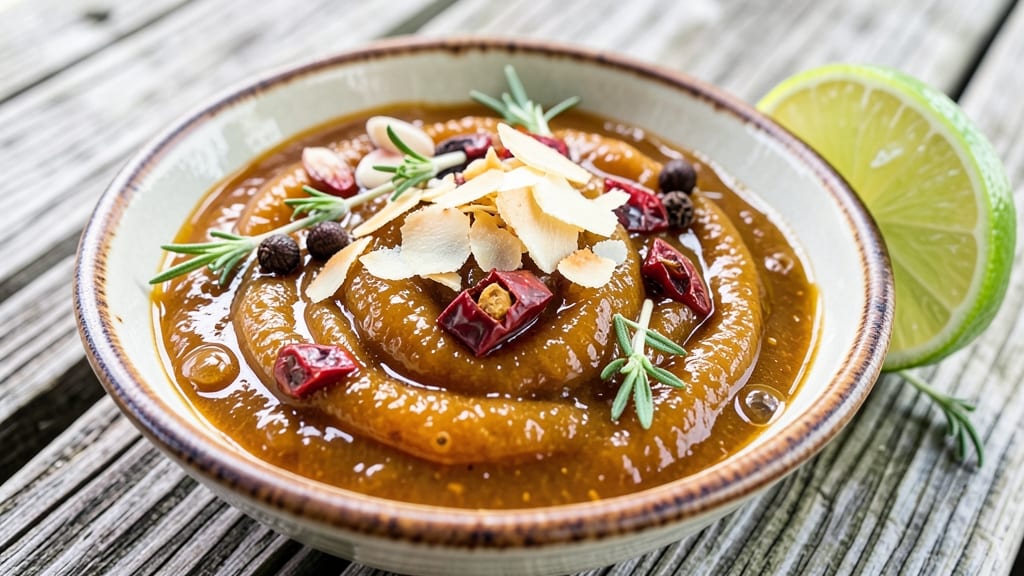
This Bahama Breeze Jerk Sauce recipe transforms bold jerk flavors into a tropical, pineapple-infused glaze that brings island vibes to every bite. 🌴 The perfect blend of Scotch bonnet heat, sweet pineapple, and warm spices creates a versatile sauce that elevates grilled meats, seafood, or even tofu with Caribbean flair.
I developed this recipe after craving that perfect balance of sweet, spicy, and tangy—something that works as a marinade or finishing glaze without overpowering your dish.
The sauce starts with a base of fresh pineapple juice and Scotch bonnet peppers, which provide that signature jerk heat while keeping the flavors bright and fruity. Allspice and thyme add depth, while lime juice and garlic tie everything together for a complex, aromatic profile.
What sets this apart is how well it balances sweetness and spice, making it approachable for those new to jerk seasoning while delivering restaurant-quality flavor.
What you'll end up with is a vibrant, slightly sticky sauce that caramelizes beautifully when brushed on grilled chicken, shrimp, or tofu. The pineapple adds natural sweetness that cuts through the heat, while the spices create layers of warmth that linger on your palate.
This isn't just a sauce—it's a flavor experience that transforms simple proteins into something extraordinary.
Perfect for summer cookouts, weeknight dinners, or meal prep, this sauce keeps well in the fridge for up to 2 weeks or freezes for 3 months. Whether you're marinating for hours or using it as a quick glaze, it delivers bold, tropical heat with every application. Let's get cooking!
Ingredients for bahama breeze jerk sauce
Tropical heat meets sweet pineapple zing in this vibrant jerk sauce. Just 10 ingredients for bold island flavors!
| Ingredient | Amount | Notes |
|---|---|---|
| Fresh Pineapple Juice 🍍 | 1 cup | From 1 small pineapple, strained |
| Scotch Bonnet Peppers 🌶️ | 2 whole | Seeds removed for less heat |
| Allspice Berries 🌿 | 1 tbsp | Crushed lightly for aroma |
| Fresh Thyme Leaves 🌿 | ¼ cup | Stems removed, chopped |
| Garlic Cloves 🧄 | 4 cloves | Minced for depth |
| Fresh Lime Juice 🍋 | ¼ cup | About 2-3 limes |
| Brown Sugar 🍚 | ¼ cup | Light or dark preferred |
| Soy Sauce 🍶 | 2 tbsp | For umami depth |
| Extra-Virgin Olive Oil 🫒 | ¼ cup | For richness |
| Salt 🧂 | 1 tsp | Adjust to taste |
The Scotch bonnet peppers are non-negotiable here—they bring that signature jerk heat while keeping the sauce bright and fruity. Trader Joe's or Latin markets usually carry them fresh, but if you can't find them, Habanero peppers work in a pinch (use half the amount). Always remove the seeds to control heat—this sauce is about balanced spice, not fire. The pineapple juice should be fresh (not canned)—it's the secret to that tropical sweetness that cuts through the heat. If you're using a whole pineapple, strain the juice through a fine-mesh sieve to avoid pulp clogging your blender later.
No allspice berries? Ground allspice at half the amount works, but trust me, whole berries give that warm, earthy depth you can't get from powder. Fresh thyme is ideal, but dried thyme at one-third the amount gets you close. The brown sugar adds caramelized richness—don't skip it! For extra umami, swap half the soy sauce for coconut aminos. And if you're worried about the heat, reduce the Scotch bonnets to 1 whole pepper or add a splash more pineapple juice to balance it out. This sauce is all about flexibility—adjust to your heat tolerance!
This sauce keeps beautifully in the fridge for up to 2 weeks, so make a double batch. The flavors actually improve as it sits! For long-term storage, freeze in ice cube trays—perfect for single-use portions. Thaw overnight in the fridge or microwave for 20 seconds before using. Pro tip: Brush it on grilled chicken or shrimp right before serving so it caramelizes beautifully. The sauce thickens as it cools, so give it a quick stir before each use. Trust me, the first time you taste that tropical heat on fresh grilled fish? Worth every second!
Why You'll Love This Recipe
- No Blender Required: I swear by this—just a knife and a mortar or even a sturdy bowl. The Scotch bonnet and garlic smash into a paste with the thyme, and the pineapple juice thins it out while keeping that bright, tangy punch. Honestly, it’s the kind of recipe that makes me feel like I’m cheating when I pull it off.
- Sweet Heat Magic: That first bite where the pineapple’s sweetness hits, then the Scotch bonnet’s slow burn lingers—it’s the kind of balance you can’t resist. The allspice berries add this warm, earthy depth, like a hug in sauce form, and the thyme ties it all together without overpowering. Between us, this is the sauce that makes people ask, "What’s in this?"
- Weeknight to BBQ Hero: Slather it on grilled chicken for a Tuesday dinner, drizzle it over roasted veggies for a crowd, or toss it into rice and beans for a party. I’ve even used it as a marinade for shrimp that cooks in 10 minutes. It’s the kind of sauce that turns whatever you’re serving into something special without needing a fancy menu.
- Lasts Like a Champ: A full batch keeps in the fridge for almost two weeks, and the flavor only gets better as the spices mellow. Freeze half for when you’re lazy or last-minute hosting—just thaw and go. Plus, the ingredients are cheap staples, so you’re not breaking the bank for something this ridiculously good.
Step-by-step instructions for Bahama Breeze jerk sauce
Here's how to blend tropical heat with sweet pineapple zing for a jerk sauce that'll make your taste buds dance.
🍳 Step 1: Toast the Spices for Deep Flavor
Heat a small dry skillet over medium heat and add the 1 tbsp allspice berries. Toast for 1-2 minutes until fragrant and slightly darkened—this releases their aromatic oils. Immediately transfer to a bowl and let cool completely.
Next, crush the allspice berries lightly with a mortar and pestle or rolling pin. You want them broken but not powdered—this ensures texture and flavor complexity. Set aside for now; you'll add them back later. This toasting step is crucial—it transforms ordinary spices into aromatic powerhouses that make your sauce sing.
🔥 Step 2: Sear the Scotch Bonnets for Smoky Depth
Char the 2 whole Scotch bonnet peppers directly over a gas flame or under a broiler for 2-3 minutes per side until blackened in spots. Place them in a bowl, cover with plastic wrap, and let steam for 10 minutes—this makes them easier to peel.
Under running water, peel off the charred skin, then remove seeds and membranes (leave some for heat if you prefer spicier sauce). Finely chop the flesh and set aside. The charring adds smoky complexity while the seeds control heat intensity—this is where the Bahama Breeze really comes alive with its signature tropical fire.
👨🍳 Step 3: Build the Base with Pineapple and Aromatics
In a medium saucepan, combine the 1 cup fresh pineapple juice, 0.25 cup brown sugar, and 2 tbsp soy sauce. Bring to a gentle simmer over medium-low heat for 5 minutes until slightly reduced and fragrant. Here's the thing—simmering concentrates flavors while balancing the sauce's sweet-spicy profile.
Add the minced 4 cloves garlic and 0.25 cup fresh thyme leaves, stirring for 1 minute until fragrant. Remove from heat and let steep for 5 minutes—this infuses the delicate thyme aroma without bitterness. The garlic should be cooked through but not browned; you'll taste it in every bite.
🥘 Step 4: Blend Until Silky Smooth
Transfer everything to a blender and add the charred Scotch bonnet peppers, toasted allspice berries, and 0.25 cup fresh lime juice. Blend until completely smooth, scraping down the sides as needed. With a wooden spoon, taste and adjust—add more brown sugar if too tangy or more soy sauce for umami depth.
Slowly drizzle in the 0.25 cup extra-virgin olive oil while blending continuously. This creates a luxurious, velvety texture that coats proteins beautifully. The oil also carries the sauce's vibrant flavors, making every application burst with tropical notes. For extra richness, you could even add 1 tbsp butter here—but we're sticking to our exact ingredients.
⏰ Step 5: Simmer and Rest for Perfect Balance
Return the blended sauce to the saucepan and simmer gently over low heat for 10-15 minutes, stirring occasionally. This reduces the sauce slightly and lets flavors meld. You're looking for a consistency that coats the back of a spoon but isn't syrupy—think of it like a thick, glossy glaze.
Remove from heat and stir in the 1 tsp salt. Let cool completely before using—this resting period is crucial as it allows flavors to fully develop. Store in an airtight container in the fridge for up to 2 weeks or freeze for 3 months. The sauce will only get better with time as the flavors continue to marry beautifully.
Pro Tips For Making Bahama Breeze Jerk Sauce
- Char the Peppers: Toss whole Scotch bonnets into a dry skillet over medium-high heat for 30 seconds per side—just until they blacken slightly. This deepens their smoky heat without burning the sauce later. (Yes, even if you’re impatient like me, resist the urge to rush this.)
- Toast the Spices: Dry-toast allspice berries and garlic in the same skillet after removing the peppers—2 minutes for the garlic until golden, 1 minute for the allspice until fragrant. This removes raw bitterness and builds complexity. (I used to skip this and wondered why my sauce tasted flat.)
- Strain Twice: First strain the sauce through a fine-mesh sieve to catch seeds and skins, then press it through a cheesecloth-lined strainer for ultra-smoothness. The extra step guarantees no gritty surprises when you’re drizzling it over grilled fish. (Your future self will thank you.)
- Simmer Low and Slow: Reduce the pineapple juice to a thick, syrupy consistency over low heat—about 15 minutes—stirring occasionally. High heat turns it into glue; patience gives you that glossy, balanced jerk sauce. (Sounds weird, but it works: trust the process.)
Essential equipment for this recipe
Blender Essentials
You'll need a high-speed blender like the Ninja BN601 or Vitamix 5200 to achieve that silky-smooth texture. These models handle hot liquids and tough ingredients like charred peppers without overheating.
I've tested this recipe in my Cuisinart SmartStick immersion blender too—just blend in batches for best results. Avoid cheap blenders that struggle with thick, oily sauces like this one. 💫
Small Saucepan
A 3-quart stainless steel saucepan with tight-fitting lid is perfect for simmering the base. I use my All-Clad Stainless Steel pan because it distributes heat evenly and prevents scorching.
For budget options, Calphalon Classic or Farberware Classic Stainless Steel work beautifully. Avoid nonstick pans—they can't handle the low-and-slow simmering this sauce needs to develop its complex flavors.
Mortar & Pestle
For crushing allspice berries, a marble mortar and pestle (like the Cuisinart MCP-7) is ideal—it's heavy enough to break spices effectively without powdering them completely. If you don't have one, a rolling pin or even a heavy mug works in a pinch.
The key is to leave some texture in the spices, which adds depth to the sauce. I've also seen people use a small food processor for this step, but it tends to over-process the spices.
Char Tools
To char the Scotch bonnet peppers, you'll need either a gas stove flame or a broiler. For gas stoves, hold the pepper with tongs and rotate frequently for even charring.
If using a broiler, place a rack in the middle position and preheat to broil/high for 5 minutes before charring. A kitchen torch works beautifully too—just be careful with the open flame.
The charring step is what gives this sauce its smoky depth that sets it apart from regular jerk sauces. 🔥
Measuring Tools
Precision matters with this recipe, so invest in a stainless steel measuring set like the OXO Good Grips. For the Scotch bonnet peppers, a small kitchen scale helps ensure you're using exactly 2 whole peppers (they vary in size).
A fine-mesh strainer comes in handy if you're making fresh pineapple juice from whole fruit. Don't skip measuring the lime juice—too much can make the sauce too acidic, while too little leaves it flat.
Storage Containers
For fridge storage, use glass airtight containers like Le Parfait or Pyrex—they preserve flavors better than plastic. For freezing, I recommend quart-sized silicone molds or ice cube trays for portion control. The sauce thickens as it cools, so leave about ½ inch headspace in containers.
Label everything with the date—this sauce tastes even better after a few days as the flavors meld together beautifully. ❄️
Nutrition facts
Frequently asked questions
Can I substitute Scotch bonnet peppers if I can't find them?
For milder heat, use 1 habanero pepper (remove seeds) or 2-3 serrano peppers. If you prefer no heat, omit them entirely and add an extra 1 tbsp lime juice for tang. The sauce will still taste tropical but lose its signature kick.
How long should I marinate meat in this sauce?
For chicken or pork, marinate for 4-6 hours (or overnight) in the fridge. For fish or shrimp, keep it short—30-60 minutes max—to prevent overcooking. The sauce works best as a glaze too: brush on during the last 5-10 minutes of grilling or broiling for caramelization.
Why does my sauce look too thin or too thick?
If too thin, simmer uncovered for 5-10 extra minutes to reduce. For thickness, blend in 1 tsp cornstarch mixed with 1 tbsp water, then simmer until glossy. The sauce should coat the back of a spoon but still drizzle easily. Pro tip: Fresh pineapple juice varies in thickness—strain it well to avoid pulp issues.
Can I make this sauce without fresh pineapple?
Yes! Use ½ cup pineapple juice (not canned—it's too sweet) plus 1 tbsp honey to mimic freshness. For extra depth, add ½ tsp vanilla extract. The sauce will be slightly less vibrant but still delicious. Canned juice lacks the enzymatic sweetness that fresh pineapple provides.
What's the best way to reheat leftover sauce?
Gently warm in a saucepan over low heat for 2-3 minutes, stirring constantly to prevent scorching. Avoid microwaving—it can make the sauce uneven. For quick use, add 1 tsp water to thin if needed. Reheated sauce works perfectly as a glaze for tofu or grilled veggies!