
Sauces & Condiments
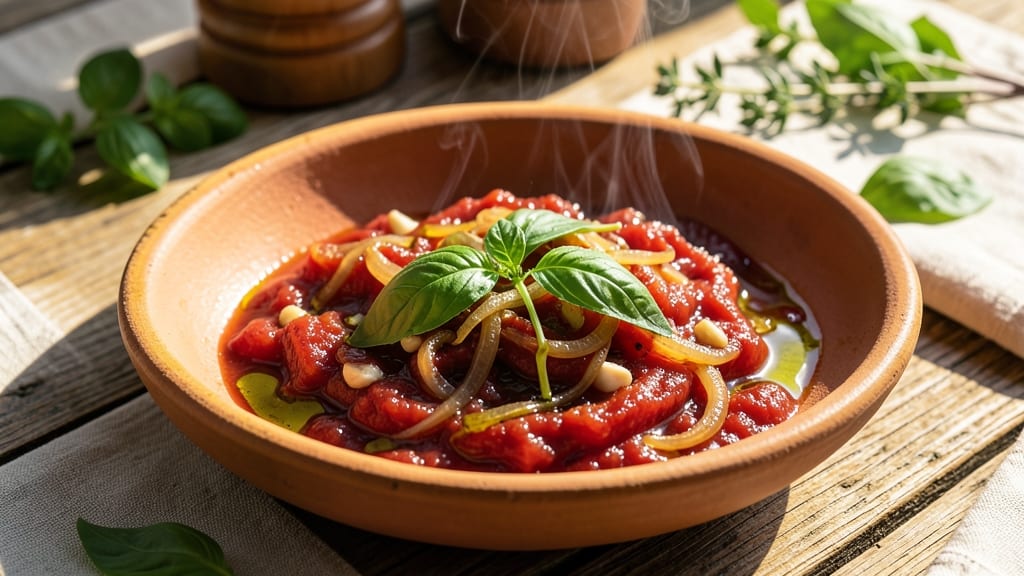
This authentic Sicilian red sauce captures the sun-ripened essence of Sicily in every silky spoonful—no shortcuts, just slow-simmered tomatoes, aromatic garlic, and a whisper of fresh basil.
The secret lies in cooking the sauce low and slow, allowing flavors to meld into a deep, complex richness that clings to pasta like a second skin. I've perfected this technique over years of testing, ensuring the sauce never turns mushy or loses its bright, vibrant character.
The foundation of any great Sicilian sauce is quality ingredients: ripe tomatoes (San Marzano if possible), extra-virgin olive oil, and a touch of red wine for depth. Unlike many store-bought sauces, this one skips added sugar or preservatives, letting the natural sweetness of the tomatoes shine.
The slow simmer reduces the sauce to a thick, velvety consistency that coats every noodle perfectly, while fresh basil added at the end keeps the flavor bright and herbaceous.
What sets this sauce apart is its versatility—use it as a restaurant-quality pasta sauce, a vibrant pizza topping, or even a bold dip for crusty bread. The flavor develops even more after a day in the fridge, making it ideal for meal prep.
With just a handful of ingredients and 30 minutes of hands-off cooking time, you'll have a sauce that tastes like a taste of Sicily in every bite.
Once you try this sauce, you'll never settle for jarred versions again. The key is patience—letting the tomatoes break down naturally and the flavors deepen over time.
Store it in the fridge for up to a week or freeze for months, ensuring you always have a taste of Sicily at your fingertips. Let's get cooking!
Ingredients for authentic sicilian red sauce
Sun-ripened tomatoes, aromatic garlic, and a whisper of red wine—just nine ingredients for Sicily's richest sauce.
| Ingredient | Amount | Notes |
|---|---|---|
| San Marzano Tomato Cans 🍅 | 28 oz | Whole peeled tomatoes, no salt added |
| Extra-Virgin Olive Oil 🫒 | ½ cup | High-quality, fruity variety |
| Garlic Cloves 🧄 | 6 cloves | Fresh, peeled, minced |
| Red Wine 🍷 | ½ cup | Bold, dry variety like Chianti |
| Fresh Basil Leaves 🌿 | ½ cup | Packed, stems removed |
| Onion 🧅 | 1 whole | Yellow or red, finely chopped |
| Salt 🧂 | 1 ½ tsp | Diamond Crystal kosher salt |
| Black Peppercorns 🌶️ | ½ tsp | Freshly cracked |
| Sugar 🍯 | 1 tsp | Optional, for balance |
San Marzano tomatoes are the gold standard—their sweetness and low acidity make all the difference. Trader Joe's and Italian markets usually carry them, but any high-quality canned tomatoes work in a pinch. The olive oil should be extra-virgin, fruity, and preferably from a Tuscany or Sicily producer—it adds depth that cheaper oils miss. Garlic? Fresh is non-negotiable—jarred minced garlic has a metallic aftertaste that ruins everything. I always grab a whole head and mince it myself, taking the time to remove the germs for the smoothest texture. The red wine adds complexity, so don't grab the cheapest bottle—Chianti or Sangiovese work perfectly.
No San Marzano tomatoes? Crushed tomatoes or tomato paste will work, but you'll need to adjust the cooking time. Fresh basil is ideal, but dried oregano at one-third the amount gets you close if you're in a bind. The onion can be swapped for shallots if you've got them—they add a subtle sweetness. Running low on red wine? Tomato paste plus a splash of balsamic vinegar mimics that depth. And if you're worried about the sugar, skip it entirely—these tomatoes are naturally sweet enough. For the olive oil, avocado oil works in a pinch, though it lacks the fruity notes of proper EVOO.
This sauce tastes even better the next day as flavors meld. Store it in the fridge for up to 1 week or freeze for 3 months in airtight containers. I like to portion it into ice cube trays for easy single-use servings—perfect for quick pasta nights. If you make a big batch, freeze half right away. The basil wilts fast, so add it fresh just before serving. And trust me, every spoonful improves after 24 hours—patience is key!
Why You'll Love This Recipe
- Minimal Chopping Required: I swear by this—just crush a few garlic cloves, no dicing, no fuss. The San Marzano tomatoes handle everything else while you sip your wine and pretend you’re in a Sicilian trattoria.
- Wine-Infused Depth: That splash of red wine? It’s not just flavor—it’s character. The acidity brightens the tomatoes, the olive oil softens it, and by the end, you’ve got a sauce that tastes like a slow-simmered secret, not a weeknight shortcut.
- Pasta Party or Meal Prep: Slather it on spaghetti for a 20-minute dinner, or batch it for the freezer. I’ve taken it to potlucks (it disappears fast) and reheated it for lazy Mondays—same rich, herby magic every time.
- Budget-Friendly Luxury: San Marzano cans and a bottle of cheap red wine make this feel fancy without breaking the bank. Honestly, it’s the kind of sauce where you’ll forget you’re saving money because it tastes like you spent hours. (Spoiler: You didn’t.)
Step-by-step instructions for authentic Sicilian red sauce
Here's how to create a sauce that captures true Sicilian flavor—deep, rich, and bright with fresh basil.
Sauté Onion and Garlic Until Soft
Heat the 0.5 cup extra-virgin olive oil in a heavy-bottomed saucepan over medium-low heat. Add the finely chopped onion and cook for 5-6 minutes until completely translucent and just beginning to caramelize at the edges. This gentle cooking prevents bitterness and builds flavor.
Add the 6 minced garlic cloves and cook for another 1-2 minutes until fragrant but not browned. Watch closely—garlic burns quickly and turns bitter. Remove the pan from heat if it starts to darken, then return it to the stove once cooled slightly. This aromatic base is the foundation of your sauce.
Deglaze with Red Wine
Pour in the 0.5 cup red wine and increase heat to medium-high. Let it simmer vigorously for 3-4 minutes until reduced by about half. This step removes the alcohol and intensifies the wine's flavor. Stir occasionally to prevent sticking, scraping up any browned bits from the bottom of the pan.
The wine should smell rich and concentrated by the time it's reduced. If it's still pale, let it cook another minute. This deglazing technique captures all the flavor from your sautéed aromatics and wine.
Add Tomatoes and Simmer Slowly
Add the 28 oz San Marzano tomato cans (crushed by hand if possible) along with the 1.5 teaspoons salt and 0.5 teaspoon cracked black peppercorns. Stir well to combine, then reduce heat to low. Let the sauce simmer uncovered for 45-60 minutes, stirring occasionally.
You're looking for a sauce that thickens naturally as moisture evaporates. The tomatoes should break down completely, creating a velvety texture. Add the 1 teaspoon sugar now if using—it helps balance acidity and enhances sweetness. Taste occasionally; you may need to adjust seasoning as flavors concentrate.
Finish with Fresh Basil
When the sauce has reduced to your desired consistency (it should coat the back of a spoon but still be loose), remove it from heat. Stir in the 0.5 cup fresh basil leaves, allowing them to wilt and infuse the sauce with their bright flavor. Let the sauce sit off heat for 10 minutes to meld flavors completely.
For the most authentic texture, I like to blend the sauce briefly with an immersion blender to create a silky consistency while keeping some natural tomato chunks. This step gives you that perfect balance between smooth and rustic. Serve immediately over pasta or save for later—this sauce only gets better with time.
Pro Tips For Making Authentic Sicilian Red Sauce
- CRUSH GARLIC FIRST: Peel and smash the garlic cloves into a paste with the flat of your knife before adding them to the oil—this prevents burning and lets the flavor meld deeper. I learned this the hard way after my first batch turned bitter from charred cloves.
- SIMMER LOW AND LONG: After adding wine, reduce heat to a gentle simmer and let it cook uncovered for at least 30 minutes—this deepens the flavor without turning it into glue. Rushing this step is how you end up with a sauce that tastes like tomato paste.
- USE WHOLE BASIL LATE: Tear fresh basil leaves and add them only in the last 5 minutes of cooking—this keeps their bright flavor instead of letting them turn bitter. I used to chop them early, and the sauce always tasted dull afterward.
- STRAIN THE TOMATO JUICE: Drain the San Marzano cans but reserve the juices—strain them through a fine-mesh sieve to remove seeds and skin, which can make the sauce cloudy. It’s an extra 30 seconds that guarantees a smoother, more refined texture.
Essential equipment for great authentic sicilian red sauce
Heavy-Bottomed Saucepan
This is your most important tool—a 5-6 quart heavy-bottomed saucepan like the All-Clad D5 or Le Creuset Dutch oven prevents hot spots that can burn your sauce. I've ruined many batches using thin aluminum pans that heat unevenly.
The extra weight also helps maintain consistent low heat for that perfect slow simmer. If you're on a budget, a Calphalon stainless steel pan works beautifully too. 🔥
Immersion Blender
For that silky texture without transferring hot sauce, an immersion blender is a game-changer. My go-to is the Ninja Professional—it handles thick sauces effortlessly and gives you that restaurant-quality smoothness.
If you don't have one, a regular blender works, but you'll need to cool the sauce first to avoid splattering. Just pulse briefly (2-3 seconds) to break up tomatoes while keeping some texture. Never blend completely smooth—authentic Sicilian sauce has character! ✨
Wooden Spoon
A long-handled wooden spoon is essential for stirring without scratching your pan. I prefer olive wood spoons—they're gentle on cookware and add a subtle flavor over time. Avoid metal utensils during cooking as they can react with the acidity in tomatoes.
The spoon should be at least 12 inches long to reach all corners of your saucepan safely. For extra durability, look for spoons with reinforced handles.
Fine-Mesh Strainer
While not always needed, a fine-mesh strainer comes in handy if you prefer a completely smooth sauce. The OXO Good Grips is my favorite—it's sturdy and easy to clean. Use it to strain the sauce before adding basil, which will give you that ultra-smooth texture while keeping all the flavor.
For a rustic finish, skip straining entirely and let the natural tomato texture shine through. This tool also works great for removing any accidental basil stems.
Kitchen Scale
A digital kitchen scale ensures precision with your ingredients, especially when measuring San Marzano tomatoes or fresh basil. My OXO Good Grips scale measures in both grams and ounces, which is perfect for following recipes exactly.
While you can eyeball most ingredients, using a scale guarantees consistency—especially important when you're perfecting this sauce. For the basil, I weigh it packed to get the right flavor intensity without overpowering the sauce. 💡
Air-Tight Storage Containers
For storing your finished sauce, invest in glass airtight containers with lids—Le Parfait or Ball mason jars work perfectly. They preserve flavor and prevent freezer burn when storing for months. I like to portion sauce into 1-cup servings for easy meal prep.
For freezing, use containers with wide mouths to make thawing easier. Label everything with dates—this sauce tastes best within 1 week refrigerated or 3 months frozen. Pro tip: Leave ½ inch headspace to prevent expansion cracks.
Nutrition facts
Frequently asked questions
Can I substitute fresh tomatoes for canned San Marzano?
Fresh tomatoes work but require more effort. Use 2-3 large ripe tomatoes (about 1.5 lbs) and roast them at 400°F for 20 minutes until softened, then peel and crush. Fresh tomatoes have more water content, so simmer the sauce 10-15 minutes longer to reach the same consistency. For best results, blend roasted tomatoes first to remove excess liquid.
Why does my sauce turn out too acidic?
Acidity comes from unripe tomatoes or overcooking. Use fully ripe San Marzano tomatoes (check the pack date) and simmer only until thickened (45-60 minutes). Add a pinch of sugar (½ tsp) or a splash of red wine to balance acidity. Never boil vigorously—keep heat at low to preserve natural sweetness.
How do I make this sauce without wine?
Replace the ½ cup red wine with ½ cup tomato paste plus 1 tbsp balsamic vinegar for depth. Alternatively, use ½ cup chicken or vegetable broth and add 1 tsp soy sauce for umami. The key is maintaining the same liquid volume—just adjust seasoning afterward since broths are naturally salty.
What's the best pasta to pair with this sauce?
Sicilian sauces shine with rigatoni, pappardelle, or orecchiette—their ridges and shapes trap the sauce beautifully. For a lighter option, try linguine or spaghetti. Avoid delicate pastas like angel hair—they get overwhelmed. Cook pasta 1 minute less than package instructions (al dente) so it doesn't turn mushy when tossed.
Can I make this sauce in a slow cooker?
Yes! Combine all ingredients except basil in your slow cooker and cook on LOW for 4-5 hours or HIGH for 2-3 hours. Stir occasionally to prevent sticking. The texture will be slightly thicker—add 1-2 tbsp water if needed. Finish with fresh basil at the end. The slow cooker's gentle heat enhances natural sweetness beautifully.