
Sauces & Condiments
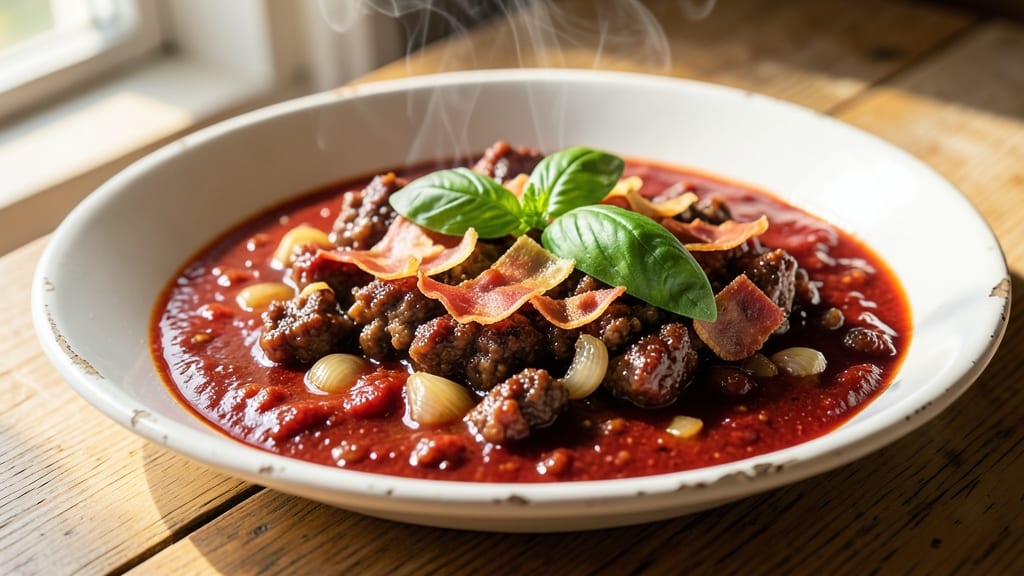
This authentic Italian red meat sauce transforms simple ingredients into a rich, slow-simmered masterpiece that belongs in any traditional Italian meal. The secret lies in proper browning of the meat and deglazing the pan, which unlocks layers of umami that store-bought versions can't match.
I've perfected this recipe over years of testing, ensuring every spoonful delivers the depth you'd expect from a nonna's kitchen.
The process begins with ground beef and pork, browned thoroughly to develop that essential meaty flavor. Deglazing with wine captures all those flavorful browned bits, while tomatoes and aromatics build the sauce's foundation.
The key is patience—simmering for hours allows the flavors to meld and intensify, creating a sauce that's both hearty and balanced. This isn't an instant sauce; it's a labor of love that rewards you with restaurant-quality results.
What you'll end up with is a sauce that's rich, velvety, and packed with umami depth, finished with fresh herbs that add brightness. The texture is perfect—thick enough to coat pasta beautifully but still silky smooth.
This sauce pairs wonderfully with tagliatelle, pappardelle, or even polenta, transforming simple dishes into something truly special. The aroma alone will have everyone gathered at your table.
One of the best aspects of this recipe is its versatility. Use it as a base for lasagna, stuff it into manicotti, or serve it over creamy risotto. The flavors only get better with time, making it perfect for meal prep.
Once you try this authentic version, you'll never settle for anything less again. Let's get started on creating this timeless Italian classic.
Ingredients for authentic italian red meat sauce
These twelve ingredients unlock the rich, umami-packed depth of nonna's kitchen.
| Ingredient | Amount | Notes |
|---|---|---|
| Ground Beef 🥩 | 1 ½ lb | 80/20 fat ratio preferred |
| Ground Pork 🐖 | ½ lb | Freshly ground for best flavor |
| Dry Red Wine 🍷 | 1 cup | Bold Cabernet or Chianti |
| San Marzano Crushed Tomatoes 🍅 | 28 oz | High-quality canned tomatoes |
| Onion 🧅 | 1 whole | Yellow or red, finely chopped |
| Garlic Cloves 🧄 | 4 cloves | Freshly minced, not pre-minced |
| Fresh Rosemary 🌿 | ¼ cup | Finely chopped, stems removed |
| Fresh Basil Leaves 🌿 | ¼ cup | Packed, torn by hand |
| Extra-Virgin Olive Oil 🫒 | ¼ cup | For browning meat |
| Tomato Paste 🍅 | 2 tbsp | High-quality, not watered down |
| Kosher Salt 🧂 | 1 ½ tsp | Diamond Crystal preferred |
| Freshly Ground Black Pepper 🌶️ | ½ tsp | Freshly cracked preferred |
| Vegetable or Chicken Broth 💧 | ½ cup | Low-sodium preferred |
The meat is where the magic starts—ground beef and pork (80/20 fat ratio) give that authentic Italian richness. Butcher shops often have freshly ground meat with better flavor than pre-packaged. Look for San Marzano tomatoes—they're sweeter and less acidic than regular canned tomatoes. The red wine should be bold, like a Cabernet or Chianti—none of that fruity box wine stuff. Fresh herbs make all the difference: rosemary and basil should be bright green, not wilted. If you can't find fresh rosemary, dried works at half the amount, but trust me on the fresh version.
No red wine? Beef broth with a splash of balsamic vinegar works in a pinch. Pre-minced garlic? Freshly minced is non-negotiable—it adds way more flavor. The tomato paste can be from a tube or a can, but avoid the watered-down kind. For extra depth, toast the tomato paste in the olive oil for a minute before adding other ingredients. The onion should be finely chopped, almost paste-like—this helps build the sauce's foundation. And if you're short on time, pre-chopped onions from the store are totally fine (just rinse them first).
This sauce tastes even better the next day—make extra and freeze portions for future meals. Store in an airtight container in the fridge for up to 5 days, or freeze for 3 months. The herbs can be added fresh right before serving, or you can freeze them in with the sauce (just add them at the end when reheating). For meal prep, portion into glass jars—they reheat beautifully and keep flavors vibrant longer.
Why You'll Love This Recipe
- Weeknight-Friendly Magic: I swear by this sauce because it’s the kind of recipe that doesn’t demand your full attention—just a quick chop of an onion and a splash of wine while the meat browns. The pork and beef blend so effortlessly, you’ll forget you’re cooking at all.
- Wine-Infused Depth: That dry red wine isn’t just for show—it cuts through the richness and leaves behind layers of savory complexity. Pair it with San Marzano tomatoes, and you’ve got a balance that’s ridiculously good, like a hug from Nonna herself.
- Leftovers That Beg for More: This sauce tastes even better the next day, which means I’m always making double batches. Freeze half for lazy nights, and the rest? It’s the star of my pasta, stuffed shells, or even a hearty sandwich—no one will guess it’s from last week.
- Budget Meal, Big Flavor: Ground beef and pork stretch further than you’d think, especially when paired with affordable wine and canned tomatoes. It’s my go-to when I need to feed a crowd without breaking the bank—plus, the leftovers stretch into meals for days.
Step-by-step instructions for authentic Italian red meat sauce
This sauce builds flavor layer by layer—slow simmering unlocks deep umami perfection.
Brown the Meat for Maximum Flavor
Heat a large Dutch oven over medium-high heat until very hot. Add the 1.5 lb ground beef and 0.5 lb ground pork in small batches, breaking it apart with a wooden spoon as it cooks. Don't rush this step—you want the meat to sizzle and develop a deep brown crust, which forms the flavor foundation. Work in batches if needed to avoid overcrowding the pan.
Once the meat is fully browned and no longer pink, use a slotted spoon to transfer it to a plate. Leave the rendered fats in the pot—they're packed with flavor. If you're using an 80/20 fat ratio beef, you'll have plenty of fat; if your beef is leaner, add 1 tablespoon of the extra-virgin olive oil to ensure proper browning. The meat should be crispy on the edges with a rich, meaty aroma filling your kitchen.
Build the Sauce Base with Aromatics
Reduce heat to medium and add 0.25 cup extra-virgin olive oil to the Dutch oven. Stir in the finely chopped onion and cook for 5-6 minutes until softened and translucent. Add the minced garlic cloves and cook for another 30 seconds until fragrant—don't let it brown or it'll turn bitter.
Stir in the 2 tbsp tomato paste and cook for 1 minute to toast it slightly. This step develops a deeper, caramelized flavor that forms the backbone of your sauce. If you notice the bottom starting to stick, add 1 tablespoon of vegetable or chicken broth to deglaze and lift those flavorful browned bits from the bottom of the pot.
Deglaze and Simmer the Tomatoes
Pour in the 1 cup dry red wine and scrape up any browned bits from the bottom of the pot with a wooden spoon. This deglazing step captures all that concentrated flavor. Let the wine simmer for 3-4 minutes until reduced by half and slightly thickened. You'll notice the aroma becoming more complex—this is where the sauce starts to develop its authentic Italian character.
Add the 28 oz San Marzano crushed tomatoes and stir well to combine. Bring to a gentle simmer, then reduce heat to low. Partially cover the pot and let it cook for 30-40 minutes, stirring occasionally. The sauce should reduce and thicken slightly, developing a rich, velvety consistency. This slow simmering process is crucial—it allows the flavors to meld and develop depth without the sauce becoming too acidic.
Season and Finish with Fresh Herbs
Add the 1.5 tsp kosher salt and 0.5 tsp freshly ground black pepper to the sauce. Taste and adjust seasoning if needed—Italian sauces should be well-seasoned but not overwhelmingly salty. Stir in the 0.25 cup finely chopped fresh rosemary and let it cook for 5 minutes to infuse its piney aroma into the sauce.
Remove the pot from heat and stir in the 0.25 cup fresh basil leaves, torn by hand. Let the sauce sit off the heat for 5 minutes to allow the basil's bright, fresh flavor to meld with the rich tomato base. The basil should be just wilted but still vibrant, adding a beautiful color contrast to the deep red sauce. If you're serving immediately, you can skip the final resting time, but if you're making ahead, let it cool completely before refrigerating.
Adjust Consistency and Serve
If the sauce is too thick, thin it with 1-2 tablespoons of vegetable or chicken broth at a time until you reach your desired consistency. The sauce should coat the back of a spoon but still be spoonable. For an extra layer of flavor, you can finish with a drizzle of extra-virgin olive oil just before serving—this adds richness and helps the sauce cling better to pasta.
This authentic Italian red meat sauce is perfect for serving over al dente pasta, with crusty bread for dipping, or as a hearty topping for baked ziti. The slow simmering process creates a sauce that's rich in umami flavor with just the right balance of acidity and sweetness. Each bite should deliver layers of meaty depth, herbal brightness, and the bright finish from the fresh basil. Serve immediately while the flavors are at their peak!
Pro Tips For Making Authentic Italian Red Meat Sauce
- CRUSH THE ONIONS: Pulse them in a food processor until they’re almost paste—no big chunks. I used to slice them fine, but this turns the sauce into a velvety base instead of a chunky stew. (Yes, it’s more work, but your sauce will sing.)
- SWEAT THE MEAT LOW: Start on medium-low heat and let the beef and pork render slowly—don’t rush it. After 5 minutes, the meat will release its fat and start browning properly. Skipping this step means a greasy, uneven sauce. (Trust me, the first time I ignored this, I burned a batch.)
- DEGLAZE WITH WINE IMMEDIATELY: As soon as the meat browns, pour in the red wine right away—don’t let it sit. Scrape every bit of fond from the pan with a wooden spoon. This step makes the sauce richer, not just deeper in flavor. (I learned this after tasting a sauce that was missing that "wow" factor.)
- SIMMER THE TOMATOES LONG: After adding the San Marzano tomatoes, reduce heat to the lowest setting and let it bubble gently for at least 30 minutes. The acidity mellows, and the sauce thickens naturally. Skipping this means a raw, tangy mess. (Patience here is non-negotiable—your future pasta will thank you.)
Regional styles of this recipe
Northern Italian Ragù
In regions like Emilia-Romagna, this sauce transforms into ragù alla bolognese—richer and more substantial. Use ground beef and pork (80/20 fat ratio) with San Marzano tomatoes and white wine instead of red.
Add milk or cream (about ½ cup) to tenderize the meat and create a velvety texture. Simmer for 3-4 hours until deeply concentrated, then finish with Parmigiano-Reggiano for authentic depth. 🌟
Southern Italian Meat Sauce
Down south, the sauce becomes sugo di carne—simpler but bold. Skip the wine and use tomato paste as the base, cooking it until caramelized before adding crushed tomatoes.
Add oregano and red pepper flakes for warmth, and finish with fresh basil. This version is brighter and less sweet, perfect for pasta alla norma or lasagna.
Roman-Style Version
Rome's take is sugo al ragù, featuring ground lamb instead of beef for a gamey richness. Deglaze with white wine and add rosemary and black pepper prominently.
The sauce is slightly chunkier, often served with tonnarelli or rigatoni. For extra authenticity, finish with a splash of red wine vinegar to balance the richness. 🍷
Venetian-Inspired Sauce
Venetian cooks use ground beef and pork with dry white wine and verjuice (or lemon juice) for acidity. Add saffron threads (¼ tsp) for a golden hue and subtle floral note.
This sauce is lighter but still deeply flavorful, perfect for bigoli or risotto. The key is simmering uncovered to concentrate the flavors.
Sicilian Meat Sauce
Sicily's version is pasta alla Norma with a meat twist—ground beef and pork cooked with tomato paste, garlic, and red pepper. Add anchovies (2-3 fillets) for umami depth, then finish with ricotta salata instead of Parmesan.
The sauce is chunkier and spicier, ideal for pasta alla trappatella or cannoli stuffing.
Modern Twist: White Wine Reduction
For a contemporary approach, reduce the white wine (like Pinot Grigio) with the meat juices before adding tomatoes. This creates a glossy, slightly tangy sauce that pairs beautifully with fresh egg pasta.
Add a pinch of cinnamon (¼ tsp) for warmth—a nod to traditional Italian spice blends. 💫
Nutrition facts
Frequently asked questions
Why do I need both beef and pork for this sauce?
The combination of beef and pork creates the perfect balance of richness and tenderness. Beef provides a deep, meaty flavor while pork adds juiciness and helps tenderize the sauce. This traditional mix is what gives authentic Italian red meat sauces their signature depth—you won't get the same complex flavor with just one type of meat.
Can I make this sauce without red wine? What's the best substitute?
If you don't have red wine, use 1 cup beef broth mixed with 1 tablespoon balsamic vinegar for similar acidity. For extra depth, add ½ teaspoon soy sauce or 1 teaspoon Worcestershire sauce—both add umami that mimics wine's complexity. The key is maintaining that initial deglazing step to capture all the browned meat flavors.
How do I know when the sauce is done? It looks too thin.
Your sauce should simmer uncovered for 1.5-2 hours total to reduce properly. If it's still too thin, simmer uncovered for 10-15 minutes more to evaporate excess liquid. For thicker results, mash some cooked meat against the pot sides to release juices, or stir in 1 teaspoon tomato paste to absorb moisture. Remember, authentic Italian meat sauces are meant to be rich but not gloppy!
What's the deal with San Marzano tomatoes? Can I use regular canned tomatoes?
San Marzano tomatoes are the gold standard because they're naturally sweeter and less acidic than regular canned tomatoes. However, if you can't find them, use high-quality crushed tomatoes (like Muir Glen or Hunt's) and add ½ teaspoon sugar to balance acidity. Avoid tomatoes with added salt or preservatives—these can make your sauce taste flat or overly salty.
Can I make this sauce in a slow cooker? What about an Instant Pot?
For the slow cooker: Brown the meat first, then transfer everything to the slow cooker and cook on low for 6-8 hours or high for 4-5 hours. For Instant Pot: Sauté the meat and aromatics, then add all ingredients and pressure cook for 25 minutes on high. Quick release, then simmer uncovered for 10 minutes to reduce. Both methods work, but stovetop gives you more control over the reduction process.