
Sauces & Condiments
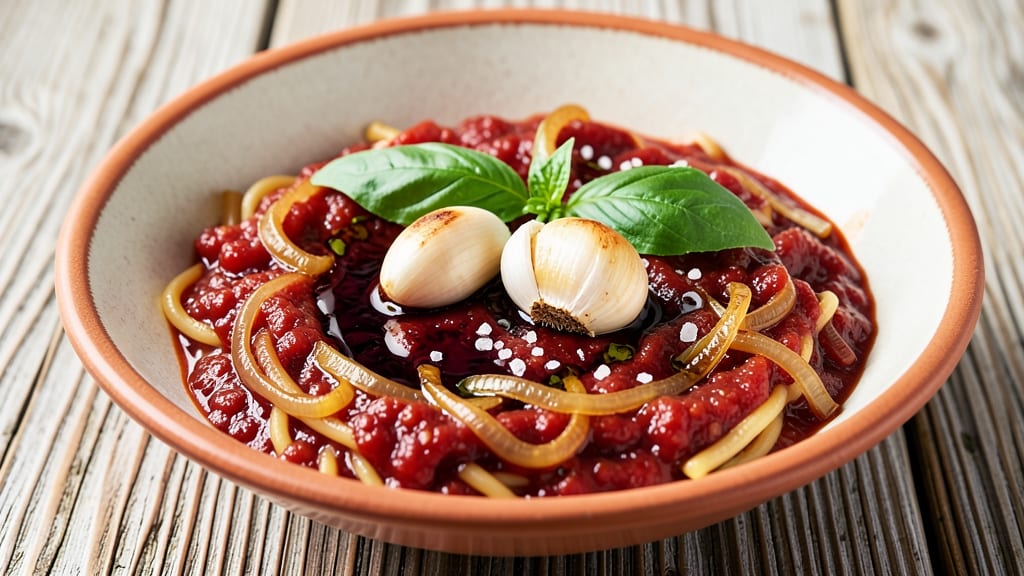
This all-natural spaghetti sauce delivers deep umami richness while keeping every ingredient pure and recognizable—no artificial additives or preservatives in sight. The secret lies in slow-simmering crushed tomatoes with fresh garlic, onions, and aromatic herbs until their flavors meld into a velvety, complex sauce.
What starts as simple pantry staples transforms into something restaurant-quality through patience and proper technique.
The sauce builds flavor through a two-stage process: first caramelizing onions and garlic until golden, then letting crushed tomatoes and herbs simmer for 2 to 3 hours to develop depth. A touch of red wine adds brightness, while fresh basil and oregano at the end keep the flavors vibrant.
The result is a sauce that coats pasta perfectly without being overly sweet or heavy—just pure, natural umami.
What makes this sauce exceptional is its versatility beyond spaghetti. Use it as a marinade for grilled meats, a topping for bruschetta, or even a pizza sauce base.
The slow cooking process concentrates flavors while maintaining a smooth, chunk-free texture that's impossible to achieve quickly. Every spoonful carries the essence of fresh ingredients, not processed shortcuts.
Perfect for meal preppers, this sauce freezes beautifully for up to 3 months, making it ideal for stocking your pantry with homemade goodness. The recipe yields about 8 cups, so you'll have plenty for multiple meals without leftovers going to waste.
Here's how to create it from scratch using only natural ingredients.
Ingredients for all natural spaghetti sauce
Ten simple ingredients transform into restaurant-quality umami richness through slow simmering.
| Ingredient | Amount | Notes |
|---|---|---|
| Crushed Tomatoes (San Marzano preferred) 🍅 | 28 oz | High-quality canned, no salt added |
| Yellow Onions 🧅 | 2 whole | Thinly sliced, about 2 cups |
| Garlic Cloves 🧄 | 6 cloves | Peeled, minced for deep flavor |
| Extra-Virgin Olive Oil 🫒 | ½ cup | For caramelizing onions |
| Dry Red Wine 🍷 | ½ cup | Bold variety like Cabernet Sauvignon |
| Fresh Basil Leaves 🌿 | ½ cup | Chopped, for vibrant finish |
| Fresh Oregano Leaves 🍃 | ¼ cup | Chopped, or 1 tbsp dried |
| Tomato Paste 🍅 | 2 tbsp | High-quality, no sugar added |
| Sea Salt 🧂 | 1 ½ tsp | Diamond Crystal preferred |
| Freshly Ground Black Pepper 🌶️ | ½ tsp | For subtle heat balance |
The tomatoes are the foundation—San Marzano cans deliver the sweetest, most flavorful base, but any high-quality canned tomatoes work. Whole Foods or Trader Joe's carry excellent options, but check labels for 'no salt added'—this sauce builds flavor naturally. Onions and garlic should be caramelized until deep golden**—this takes 20-30 minutes but creates the sauce's depth. Freshly minced garlic (not jarred) releases more flavor, so take the extra 30 seconds to chop it yourself. If you're short on time, pre-minced garlic works, but the texture will be less refined.
Red wine adds brightness and complexity—Cabernet Sauvignon or Merlot work best, but any dry red will do. No alcohol left behind**—it evaporates during simmering, leaving only flavor. Fresh herbs are non-negotiable here: basil and oregano should be added at the very end to preserve their bright, vibrant notes. For dried herbs, use one-third the amount, but fresh delivers that restaurant-quality finish. The tomato paste acts as a thickener and adds concentrated umami—no sugar added**—some brands sneak in sweetener that alters the sauce's natural balance.
This sauce develops better with time—2-3 hours of simmering—but it reheats beautifully. Store in airtight containers in the fridge for 5-7 days—flavor actually improves as it sits. For long-term storage, freeze in 2-cup portions—perfect for meal prep. When reheating, add a splash of water or broth to prevent thickening. The sauce yields about 8 cups, so plan for multiple meals or freeze extras immediately. Every spoonful carries that slow-simmered depth, making it worth the wait.
Why You'll Love This Recipe
- Foolproof Simplicity: I swear by this—just toss in crushed tomatoes, onions, and garlic, then let the wine deepen the flavor while I sip my coffee. No blenders, no peeling cans of tomatoes, just a pot and patience.
- Wine-Infused Depth: That splash of dry red wine? It’s not just fancy—it actually mellows the acidity and adds this rich, almost meaty complexity. (Yes, even my wine-loving partner nods when I serve it.)
- Weeknight to Weekend: Same sauce works for quick pasta dinners or slow-simmered potlucks. Freeze half for lazy Mondays, or serve it at a picnic with crusty bread—no one will guess how little effort it took.
- Budget That Pops: San Marzano tomatoes and olive oil might sound fancy, but they stretch farther than jarred sauce. A single batch feeds six, and the leftovers? Even better the next day. (Between us, I’ve eaten this cold on toast.)
Step-by-step instructions for slow-simmered umami spaghetti sauce
This method transforms simple ingredients into a deeply flavorful sauce through patience and technique.
Develop Rich Onion and Garlic Bases
Heat the 0.5 cup extra-virgin olive oil in a heavy-bottomed saucepan over medium-low heat. Add the 2 whole yellow onions, sliced thinly, and cook them slowly for 20-25 minutes until they're deep golden brown and caramelized. This slow process creates complex sweetness that forms the sauce's foundation.
When the onions are nearly done, add the 6 cloves minced garlic and cook for an additional 1-2 minutes until fragrant. The garlic should just begin to color but not burn—burnt garlic adds bitterness that ruins the sauce. Remove the pan from heat and set aside temporarily; you'll return to these aromatics shortly.
Build Depth with Tomato Paste and Wine
Return the saucepan to medium heat and stir in the 2 tbsp tomato paste, cooking for 2-3 minutes until it darkens slightly and releases its concentrated tomato flavor. This step develops the sauce's umami backbone and prevents a watery final texture.
Deglaze the pan with the 0.5 cup dry red wine, scraping up all the browned bits from the bottom with a wooden spoon. Let the wine simmer for 3-4 minutes until reduced by half. This reduction intensifies the wine's flavor and removes its alcohol content, leaving behind pure fruit notes that complement the tomatoes.
Incorporate Tomatoes and Seasonings
Pour in the 28 oz crushed tomatoes, stirring to combine with the onion-garlic mixture. Add the 1.5 tsp sea salt and 0.5 tsp freshly ground black pepper, then bring the sauce to a gentle simmer. The sauce should bubble softly but not vigorously—this ensures even cooking without scorching.
Simmer uncovered for 30-40 minutes until the sauce thickens noticeably and coats the back of a spoon. Stir occasionally to prevent sticking, and taste occasionally to monitor seasoning. If the sauce becomes too thick, add 2-3 tablespoons of water to maintain proper consistency.
Finish with Fresh Herbs
Remove the sauce from heat and stir in the 0.5 cup chopped fresh basil leaves and 0.25 cup chopped fresh oregano leaves. These herbs add vibrant brightness that contrasts beautifully with the sauce's deep umami flavors. Let the sauce sit off heat for 5-10 minutes to allow the herbs to infuse their essence.
The sauce should be rich, velvety, and balanced—sweet from the caramelized onions, tangy from the tomatoes, and aromatic from the herbs. The texture should be thick enough to cling to spaghetti but still flow smoothly. If you prefer a smoother sauce, strain out the herbs before serving, or leave them in for added texture and color.
Pro Tips For Making All Natural Spaghetti Sauce
- Sweat the Onions First: I used to rush this step, but 8-10 minutes of low heat until the onions are translucent—no browning yet—builds flavor without bitterness. Skip this, and your sauce will taste raw and one-dimensional, even with San Marzanos. (Yes, it’s boring, but trust the process.)
- Deglaze with Wine Immediately: As soon as you remove the onions, pour in that red wine before adding garlic—it dissolves the caramelized bits stuck to the pan. Let it simmer for 2 minutes first; this adds depth the crushed tomatoes alone can’t match. (No, you don’t need to strain it out.)
- Crush Garlic, Don’t Mince: Roughly smashing 3-4 cloves with the flat side of your knife (no chopping!) keeps the oil from turning bitter too fast. Finely minced garlic burns in seconds, and you’ll end up with a sauce that tastes like regret. (I learned this after one very sad batch.)
- Simmer Uncovered, Low and Slow: After adding tomatoes, let the sauce bubble gently uncovered for the first 20 minutes—this evaporates excess water and concentrates the flavors. Only cover after that, or you’ll end up with a watery mess. (No, your kitchen won’t smell like heaven yet, but it will.)
Essential equipment for this dish
Heavy-Bottomed Saucepan
A 5-6 quart heavy-bottomed saucepan is non-negotiable for this recipe. I swear by my All-Clad Stainless Steel 6-Quart Saucepan—it distributes heat evenly and prevents scorching during the long simmer.
If you're on a budget, a Lodge 5.5-Quart Enamel Dutch Oven works beautifully too. The key is avoiding thin, reactive metals that can impart off-flavors or create hot spots. 🔥
Wooden Spoon
Use a heat-resistant wooden spoon (like Oxo Good Grips) to stir the sauce. Wood prevents scratching your pan and won't conduct heat like metal, keeping your hands safe during the long simmer.
I keep one dedicated to sauces to avoid cross-contamination with other flavors. A long-handled spoon also makes stirring easier without burning your fingers.
Fine-Mesh Strainer
For a silky-smooth sauce, a fine-mesh strainer (like OXO Good Grips) removes herb stems and any unwanted bits. I use it only if I want a completely smooth texture—otherwise, the herbs add beautiful color and texture.
If you prefer chunkier sauce, skip this step entirely. The strainer also comes in handy for prepping fresh herbs efficiently.
Kitchen Timer
Set a kitchen timer (or your phone) for the 20-minute onion caramelization and 30-minute simmering stages. This sauce requires precision timing to avoid burning or undercooking. I use a TimerTack—it clips to my stove and vibrates loudly so I never miss a stage.
Timing is especially critical when balancing flavors during the long cook.
Immersion Blender (Optional)
If you prefer an ultra-smooth sauce, an immersion blender (like Ninja Foodi) lets you blend directly in the pot without transferring liquids. I only use this for special occasions when I want a velvety consistency.
For everyday use, I skip blending—chunky sauce adds texture that complements pasta perfectly. The immersion blender also makes quick work of adjusting thickness if needed.
Air-Tight Storage Containers
For meal prep, glass airtight containers (like Le Parfait) preserve flavor and prevent freezer burn. I store sauce in 2-cup portions for easy reheating. Mason jars work too, but their wide mouths make them less ideal for long-term storage.
The containers should have tight seals to maintain freshness for up to 3 months in the freezer or 1 week in the fridge. 💫
Nutrition facts
Frequently asked questions
Can I substitute canned tomatoes for crushed tomatoes?
Yes, but with a texture difference! Use 2 (28 oz) cans of whole peeled tomatoes instead, crushing them by hand with your fingers or a potato masher. This creates a slightly chunkier sauce with natural tomato pieces. For a smoother texture, blend half the crushed tomatoes before adding to the pot. The flavor remains identical—only the mouthfeel changes.
How do I adjust the sauce if I don't like red wine?
Skip the wine and replace it with 0.5 cup tomato juice or 0.5 cup vegetable broth to maintain moisture and depth. For extra brightness, add 1 tbsp balsamic vinegar—it mimics wine's acidity without alcohol. Taste after simmering and adjust salt accordingly, as broth can be salty. The sauce will still develop rich umami through the caramelized onions and tomato paste.
Why does my sauce taste bland after simmering?
Most likely, it needs more time! This sauce builds flavor through slow reduction—2-3 hours is ideal. If you simmered for less than 1 hour, the tomatoes haven't concentrated enough. For quick fixes, add 1 tsp fish sauce (for umami) or 1 tbsp soy sauce (for saltiness), then simmer another 15 minutes. Alternatively, stir in 1 tsp tomato paste and cook 5 more minutes. Patience pays off—rushing leads to flat flavor.
Can I make this sauce in a slow cooker?
Follow the same steps for caramelizing onions and garlic, then transfer everything to a 6-quart slow cooker. Cook on low for 6-8 hours or high for 4-5 hours, stirring occasionally. The slow cooker's gentle heat enhances the natural sweetness of the onions and tomatoes. Add fresh herbs at the very end (they won't survive the long cook). The texture will be slightly thicker—thin with water or broth if needed.
What's the best way to reheat leftover sauce?
Gently reheat on the stovetop over low heat—never microwave, as it can make the sauce watery. Add 1-2 tablespoons of water or pasta water** to restore proper consistency. For frozen sauce, thaw overnight in the fridge, then reheat slowly. If the sauce separates, stir vigorously or blend briefly with an immersion blender. The slow reheating process preserves the delicate herb flavors that disappear with sudden heat.