
Sauces & Condiments
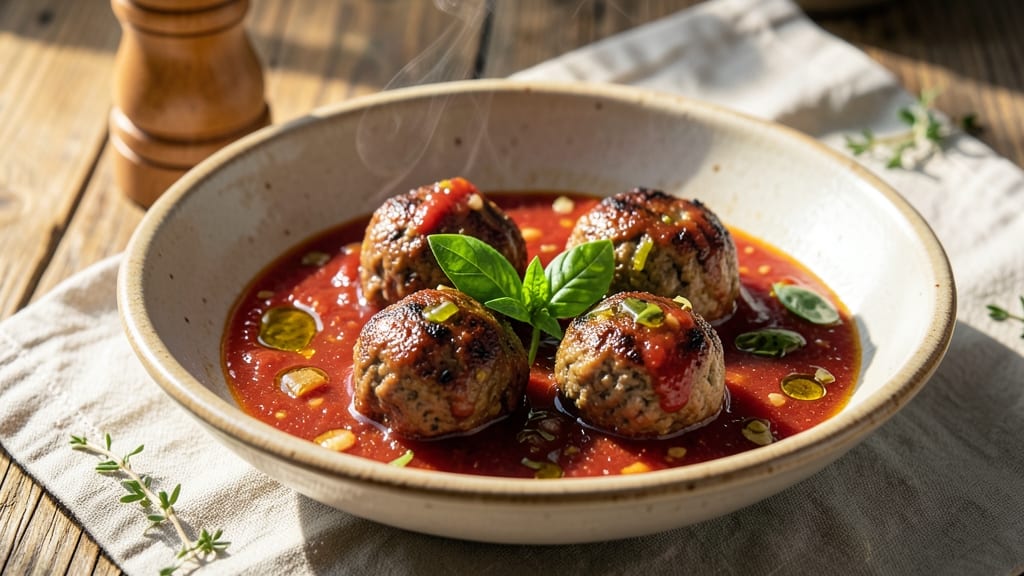
This authentic Italian meatball sauce recipe delivers the deep, slow-simmered richness that makes every bite unforgettable. 🌟 The secret lies in balancing sweet tomatoes, aromatic garlic, and fresh herbs—no shortcuts, just the flavors of Nonna’s kitchen.
What sets this sauce apart is the 30-minute simmer, where wine and broth meld into a velvety consistency that clings perfectly to meatballs or pasta.
What makes this sauce truly authentic is the layering of flavors: crushed tomatoes caramelize into a thick, glossy base, while garlic and onions build a fragrant foundation. A splash of red wine deglazes the pot, infusing depth, and fresh basil and oregano brighten the finish.
The result? A sauce that’s restaurant-quality but simple enough for weeknight dinners.
By the time you twirl that first forkful, you’ll taste the harmony of sweet, tangy, and herby notes—exactly what elevates homemade meatballs to Italian trattoria level. This sauce works as a dipping sauce, pasta topping, or even a braising liquid for hearty dishes like ragu.
The best part? It tastes even better the next day as flavors deepen.
Ready to transform your kitchen into an Italian home? Let’s start simmering—this sauce is your ticket to authentic Italian flavor without the fuss.
Ingredients for authentic italian meatball sauce
Nine simple ingredients transform into Nonna’s legendary Italian meatball sauce—rich, herby, and full of depth.
| Ingredient | Amount | Notes |
|---|---|---|
| Extra-Virgin Olive Oil 🫒 | ½ cup | High quality, fruity |
| Yellow Onion 🧅 | 1 whole | Finely chopped, medium size |
| Garlic Cloves 🧄 | 6 cloves | Peeled, minced |
| Crushed Tomatoes 🍅 | 2 cups | San Marzano preferred |
| Dry Red Wine 🍷 | ½ cup | Bold, like Cabernet Sauvignon |
| Beef Broth 💧 | 1 cup | Low-sodium preferred |
| Fresh Basil Leaves 🌿 | ½ cup | Packed, chopped |
| Dried Oregano 🍃 | 1 tsp | Italian preferred |
| Ground Black Pepper 🌶️ | ½ tsp | Freshly cracked |
| Sea Salt 🧂 | 1 tsp | Diamond Crystal preferred |
The tomatoes make or break this sauce. San Marzano is the gold standard—sweet, low-acid, and packed with flavor. If you can’t find it, Muir Glen is a solid backup. Look for cans with no added salt or preservatives. The red wine should be bold—Cabernet Sauvignon or Chianti work perfectly. I always grab a bottle I’d actually drink, not the cheap cooking wine. For the beef broth, low-sodium is key so you control the salt level—homemade or Pacific Foods brand are my go-tos.
No San Marzano tomatoes? High-quality crushed tomatoes work, but taste the can first—skip if it’s watery or overly acidic. Fresh basil is ideal, but dried oregano at half the amount gets you close in a pinch. The wine can be swapped for extra broth plus a splash of balsamic vinegar. For the onions, yellow or red both work—just chop them finely. The garlic? Fresh only here—jarred garlic has no punch. If you’re using dried herbs, crush them between your palms to release the oils before adding to the pot.
This sauce tastes even better the next day as flavors meld. Store in an airtight container in the fridge for up to 5 days, or freeze for 3 months in portions. I always make a double batch—one for dinner, one for lunches. The sauce thickens as it cools, so add a splash of broth or water when reheating. For extra richness, stir in a pat of olive oil before serving.
Why You'll Love This Recipe
- No Chopping Chaos: I swear by this sauce—just dice one onion and mince a few garlic cloves. The red wine and tomatoes do the heavy lifting while you stir, and honestly? That’s half the battle won.
- Wine-Infused Magic: Between us, the dry red wine isn’t just for flavor—it deepens the sauce into something rich and complex. Simmer it long enough, and you’ll taste layers of umami that make store-bought sauce look sad.
- Weeknight to Potluck: This is my go-to for busy nights and Sunday dinners. Double the batch, freeze half, and you’ve got a 10-minute meal later. (Yes, even on a Tuesday night.)
- Budget-Friendly Luxury: Crushed tomatoes and a bottle of wine sound fancy, but they stretch farther than you’d think. One jar of tomatoes and a cheap but decent wine make enough sauce to feed four—and still taste like you spent all day in the kitchen.
Step-by-step instructions for authentic Italian meatball sauce
This sauce delivers deep, authentic Italian flavor with simple techniques you'll want to master.
🍳 Step 1: Sauté Onions Until Translucent
Heat the 0.5 cup extra-virgin olive oil in a large, heavy-bottomed pot over medium heat. Add the finely chopped yellow onion and cook for 5-7 minutes until completely translucent and just starting to soften. Here's the thing—don't rush this step. The onions need to lose their raw bite to form the perfect base for your sauce.
If the onions begin to brown too quickly, reduce the heat slightly. You're aiming for golden transparency, not caramelization. Stir occasionally to ensure even cooking. This foundational step builds the sauce's sweetness that balances the acidity of the tomatoes later.
🍳 Step 2: Add Garlic and Cook Until Fragrant
Push the onions to one side of the pot and add the 6 minced garlic cloves. Stir for 30 seconds until the garlic becomes fragrant and just begins to turn golden. Watch carefully—garlic burns in seconds! You'll know it's ready when the kitchen fills with that irresistible aroma. This quick cooking preserves the garlic's sweetness rather than letting it turn bitter.
Once the garlic is fragrant, stir it into the onions to distribute evenly. This creates a flavor base that will infuse into every spoonful of your finished sauce. The combination of caramelized onions and fresh garlic forms the aromatic foundation that makes this sauce authentic.
🍳 Step 3: Deglaze with Red Wine
Pour in the 0.5 cup dry red wine and increase heat to medium-high. Stir constantly as the wine bubbles and reduces by about half, which should take 2-3 minutes. This deglazing step captures all those flavorful browned bits from the bottom of the pot—those bits are pure flavor gold.
Don't skip this reduction step. It intensifies the wine's flavor and removes some of the alcohol's sharpness. You'll see the sauce transform from a pale liquid to a rich, aromatic base. This is where the sauce starts developing its authentic Italian character.
🥘 Step 4: Build the Tomato Base
Add the 2 cups crushed tomatoes, 1 cup beef broth, 1 tsp dried oregano, 0.5 tsp ground black pepper, and 1 tsp sea salt. Stir well to combine all ingredients. Bring the mixture to a gentle boil, then immediately reduce heat to low and let it simmer uncovered for 20-25 minutes.
During this time, the sauce will thicken slightly as the liquid reduces. Stir occasionally to prevent sticking, but don't over-stir—you want to develop a gentle skin on top. This simmering process allows the flavors to meld together and develop depth. The sauce should reduce enough to coat the back of a spoon but still remain saucy.
🥘 Step 5: Finish with Fresh Basil
Remove the pot from heat and stir in the 0.5 cup chopped fresh basil leaves. Let the sauce sit for 5 minutes to allow the basil to infuse its bright, fresh flavor. Taste and adjust seasoning if needed—this is your chance to perfect the balance between sweet, acidic, and savory notes.
The basil adds that final touch of freshness that makes this sauce truly authentic. It's important to add it at the end rather than during cooking, as heat would destroy its delicate flavor. The sauce should now have a rich, velvety texture with layers of complex flavor that make it perfect for serving over meatballs or pasta.
Pro Tips For Making Authentic Italian Meatball Sauce
- Sweat the Onion Low: I used to blast the onion on high heat, and it’d turn bitter before it even softened. For this sauce, keep the heat low and let it cook for 8-10 minutes until it’s translucent and caramelized—no browning. That’s where the depth of flavor hides, and it’s the foundation of everything else.
- Deglaze with Wine Immediately: As soon as you remove the onions, toss in the garlic for 30 seconds, then pour in that red wine right away—don’t wait. Let it bubble for 2-3 minutes to cook off the alcohol before adding the tomatoes. Skipping this step means you’re just drowning the onions in liquid instead of building layers of flavor.
- Crush Tomatoes by Hand: No blender, no food processor—just your fingers. The slight texture and natural seediness from crushing the tomatoes with your hands (or a potato masher) adds body and prevents the sauce from turning into a smooth, one-note mush. Plus, it’s faster than you’d think.
- Simmer Uncovered for 45 Minutes: After adding the tomatoes, resist the urge to cover it. Let that sauce bubble away uncovered for the first 20 minutes to evaporate some of the liquid, then switch to a low simmer (covered) for the remaining 25-30. This concentrates the flavors and gives you a sauce thick enough to coat a spoon—not drown meatballs.
Dietary considerations for this authentic italian meatball sauce
Gluten-Free Adaptations
This sauce is naturally gluten-free since it contains no wheat-based ingredients. However, always check your San Marzano tomatoes and beef broth labels for hidden gluten—some brands add wheat-based thickeners.
I use Pacific Foods gluten-free beef broth to guarantee safety. The red wine also needs verification, as some brands use barley-based fining agents. 🌱
Dairy-Free Options
Traditional Italian meatball sauce doesn't contain dairy, making it perfect for lactose-intolerant diets. The richness comes from tomatoes, wine, and olive oil rather than cream or cheese. For extra depth, I sometimes add a splash of red wine vinegar (just 1 teaspoon) to enhance tanginess without dairy.
Always check your beef broth for dairy additives if you're highly sensitive.
Low-Sodium Adjustments
This recipe uses low-sodium beef broth and minimal salt, but you can make it even lighter by omitting the 1 teaspoon sea salt entirely. Instead, use Diamond Crystal kosher salt (which has less sodium per teaspoon) or a salt-free seasoning blend.
Taste frequently during simmering—you might need just ½ teaspoon or less. The tomatoes and wine already provide plenty of natural umami flavor.
Vegetarian Versions
To make this sauce vegetarian, simply replace the beef broth with vegetable broth (I use Imagine brand for flavor). The wine and tomato base remain identical. For extra depth, add 1 teaspoon soy sauce or ½ teaspoon mushroom powder to mimic the umami of meat.
The sauce will still pair beautifully with plant-based meatballs or pasta. 🌱
Allergen-Friendly Tips
For nut allergies, this recipe is already safe as it contains no nuts. If you're allergic to garlic or onions, substitute with asafetida powder (just ⅛ teaspoon) for onion flavor and garlic-infused olive oil (check for no added garlic powder).
For basil allergies, replace with fresh parsley or cilantro instead. Always verify all ingredients for cross-contamination warnings if allergies are severe.
Keto-Friendly Modifications
This sauce is naturally keto-friendly as it contains no added sugars or high-carb ingredients. To make it even lower-carb, reduce the tomatoes to 1½ cups and add ½ cup extra beef broth to maintain consistency. The wine and olive oil provide healthy fats that complement keto diets.
Serve with zucchini noodles or cauliflower rice for a complete low-carb meal. The sauce's richness comes from the tomatoes and wine, not carbohydrates. 💪
Nutrition facts
Frequently asked questions
Can I make this sauce without wine?
The red wine adds depth and removes alcohol during cooking, but you can substitute with ½ cup extra beef broth plus 1 teaspoon balsamic vinegar for tang. For extra richness, add 1 teaspoon tomato paste to deepen flavor. The sauce will still taste authentic—just slightly less complex.
How do I prevent the sauce from getting too thick?
Start with 1 cup extra beef broth instead of the full amount, then add more as needed while simmering. Keep the pot uncovered to allow moisture to evaporate gradually. For a thinner sauce, stir in 2-3 tablespoons water at the end. The goal is a glossy, spoonable consistency—not gluey.
What’s the best way to store leftover sauce?
Let the sauce cool completely, then transfer to an airtight container. It keeps in the fridge for 5-6 days—flavors actually improve! For freezing, portion into 1-cup servings in silicone molds. Thaw overnight in the fridge, then reheat gently on low heat, adding a splash of broth if too thick. Never microwave directly from frozen.
Can I use fresh tomatoes instead of crushed?
Yes, but you’ll need 4-5 large ripe tomatoes (peeled, seeded, and finely chopped). Simmer them uncovered for 15-20 minutes first to break down the texture, then proceed with the recipe. Fresh tomatoes add brightness but require more reduction time. For best results, blend them first into a rough purée before adding to the pot.
Why does my sauce taste too acidic?
This usually happens with overly acidic tomatoes or insufficient simmering. Balance it by adding ½ teaspoon sugar or 1 teaspoon tomato paste to mellow the acid. For extra depth, stir in 1 tablespoon red wine vinegar to enhance complexity. Always taste as you go—Italian sauces should be tangy but not sour.