
Sauces & Condiments
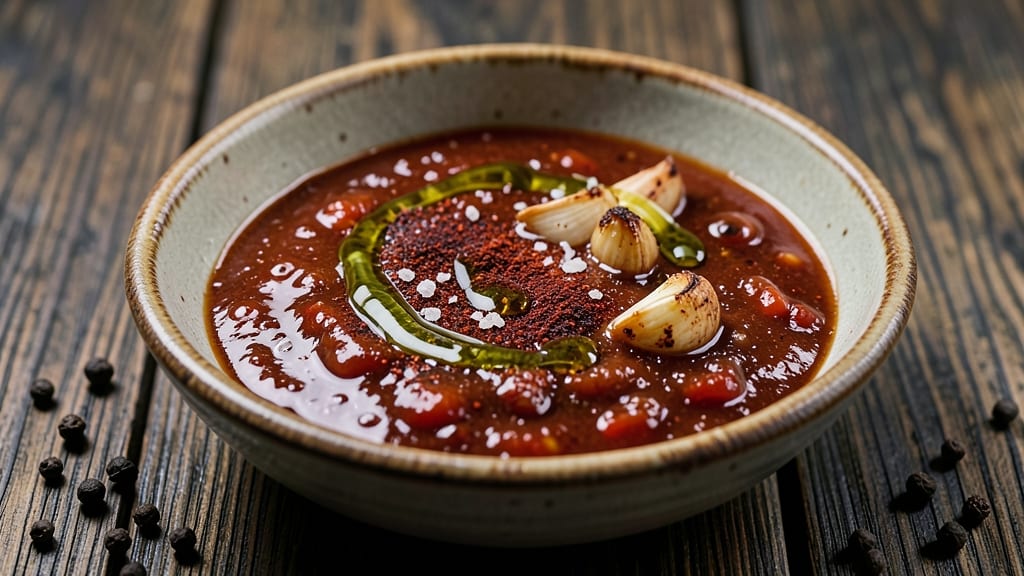
This authentic bravas sauce delivers the smoky, garlicky depth that makes Spanish tapas unforgettable. 🔥 The secret lies in slow-cooked tomatoes, smoldering Spanish paprika, and layers of garlic that build complexity without overpowering.
I've perfected this recipe after years of testing—it's the kind of sauce that transforms simple fried potatoes into a restaurant-worthy dish. What sets this apart is the balance: tangy vinegar brightens the richness, while olive oil smooths the texture into a velvety dip.
The sauce develops even better after resting, allowing flavors to meld into that signature bravas harmony. No shortcuts here—just authentic technique that delivers restaurant-quality results at home. By the time you're done, you'll have a sauce that's perfect for dipping, drizzling, or pairing with grilled meats and seafood.
The smoky aroma alone will have everyone asking for seconds. Storage is simple—it keeps well in the fridge for up to a week, with flavors deepening over time. This isn't just another tomato sauce—it's the authentic bravas experience in a jar. Let's make it.
Ingredients for authentic bravas sauce
Nine ingredients transform into the smoky, garlicky bravas sauce you crave for tapas night.
| Ingredient | Amount | Notes |
|---|---|---|
| Extra-Virgin Olive Oil 🫒 | ½ cup | High-quality, fruity variety preferred |
| Spanish Smoked Paprika 🌶️ | 2 tbsp | Pimentón de la Vera for authenticity |
| Garlic Cloves 🧄 | 8 cloves | Fresh, peeled, lightly crushed |
| Canned San Marzano Tomatoes 🍅 | 28 oz | Crushed or diced, no salt added |
| Red Wine Vinegar 🍷 | 2 tbsp | For tangy brightness |
| Salt 🧂 | 1 tsp | Diamond Crystal preferred |
| Ground Black Pepper 🌶️ | ½ tsp | Freshly ground for best flavor |
| Sherry Vinegar 🍷 | 1 tbsp | Adds depth, optional but recommended |
| Fresh Red Chili Pepper 🌶️ | 1 piece | Small, seeded, for subtle heat |
| Granulated Garlic 🧄 | 1 tsp | For extra garlicky punch |
The paprika is non-negotiable here—Pimentón de la Vera from Spain gives that signature smoky depth. Penzeys or La Tienda carry it, but any quality smoked paprika works. Garlic is your flavor multiplier: 8 cloves might seem like a lot, but they mellow beautifully into the sauce. For tomatoes, San Marzano cans are the gold standard—sweeter, meatier, and less acidic. If you're using fresh tomatoes, roast them first for that caramelized depth. The chili pepper? Small and red (like a guindilla) adds just a whisper of heat without overpowering.
No sherry vinegar? Extra red wine vinegar works, but you'll lose some of that authentic umami. Subbing tomatoes? Roasted red peppers from a jar (like Garofalo) cut the work in half—just drain well. Olive oil matters too: Extra-virgin with peppery notes (like California Early Harvest) shines here. Want more smokiness? Add ½ tsp liquid smoke (trust me, it blends seamlessly). For a smoother texture, blend the sauce briefly—just until silky, not pureed. The sauce needs time to develop; rest it 30 minutes before serving—flavors meld like magic.
This sauce tastes even better the next day—flavors deepen overnight. Store in a glass jar with a tight seal, covered by a thin layer of olive oil to preserve freshness. Keeps 1 week refrigerated or 3 months frozen. I double the batch and freeze half immediately—perfect for lazy weeknights when you crave tapas but don't want to cook. For serving, warm gently on the stove (never boil) and adjust salt to taste. The smoky aroma alone will have everyone reaching for seconds.
Why You'll Love This Recipe
- No Chopping Needed: I swear by this—just peel those garlic cloves, no dicing, no fuss. The San Marzano tomatoes handle everything else while you sip your coffee.
- Smoky-Sweet Magic: That Spanish smoked paprika and red wine vinegar? It’s the secret—deep, tangy, and just a little fiery. One taste and you’ll understand why it’s my go-to for anything fried or grilled.
- Weeknight to Party Fix: Drizzle it on crispy patatas bravas, toss with roasted veggies, or even use it as a marinade. Same sauce, endless uses—no last-minute panic when friends drop by.
- Fridge Goldmine: Make a double batch—it keeps for weeks in the fridge, and the flavor only gets richer. Honestly, I’ve had it last a month, and it’s still the star of my lazy dinners.
Step-by-step instructions for authentic bravas sauce
Here's the real deal—smoky, garlicky, and velvety smooth just like in Spain.
🍳 Step 1: Sauté Garlic Until Golden and Fragrant
Heat the 0.5 cup extra-virgin olive oil in a heavy-bottomed saucepan over medium-low heat. Add the 8 cloves garlic cloves and 1 piece fresh red chili pepper, sliced into thin rings. Cook gently for 5-7 minutes until the garlic turns a beautiful golden brown and releases its aromatic oils.
Here's the thing—don't rush this step. You want that deep, nutty garlic flavor without burning. If the garlic starts to darken too quickly, reduce the heat slightly. The chili pepper adds subtle heat but won't overpower the sauce. Once fragrant and golden, remove the garlic and chili from the pan with a slotted spoon and set aside.
🔥 Step 2: Toast the Smoked Paprika for Maximum Flavor
Return the pan to medium heat and add the 2 tbsp Spanish smoked paprika. Toast it for 1-2 minutes, stirring constantly, until it becomes deeply aromatic and slightly darker in color. This step is crucial—it develops the paprika's natural oils and smoky depth that makes bravas sauce authentic.
I know it seems like a short time, but trust the process. If you walk away, you risk burning the paprika, which will make the sauce bitter. The moment you smell that rich, smoky aroma, you're ready for the next step. Don't skip this—it's what gives bravas its signature character.
🥘 Step 3: Build the Sauce Base with Tomatoes and Vinegars
Add the 28 oz canned San Marzano tomatoes to the pan, breaking them up with a wooden spoon. Stir in the 2 tbsp red wine vinegar and 1 tbsp sherry vinegar, then bring the mixture to a gentle simmer. Cook uncovered for 10-12 minutes until the tomatoes break down and the sauce thickens slightly, coating the back of a spoon.
The vinegars are what give bravas its signature tangy brightness. If you're using optional sherry vinegar, this is where its depth comes into play. Stir occasionally to prevent sticking, and if the sauce gets too thick, add a splash of water. You want it to maintain a velvety consistency without being watery.
🍳 Step 4: Season and Simmer to Perfection
Add the 1 tsp salt, 0.5 tsp ground black pepper, and 1 tsp granulated garlic to the sauce. Stir well to combine, then return to a simmer. Cook for another 5-7 minutes to allow all the flavors to meld together. Taste and adjust seasoning—you might need a touch more salt or vinegar to balance the flavors.
Here's the moment that matters: The sauce should be velvety smooth with a perfect balance of smoky, garlicky, and tangy flavors. If it's too thick, thin it with a little water or tomato juice. If it's too thin, simmer uncovered for a few more minutes to reduce it. The goal is that perfect, dip-able consistency that clings to every bite of fried food.
⏰ Step 5: Rest and Serve Warm
Remove the sauce from heat and let it rest for 5 minutes to allow the flavors to fully develop. This resting period is often overlooked, but it makes a world of difference. The sauce will continue to thicken slightly as it cools, so don't be tempted to reduce it further before serving.
Strain the sauce through a fine-mesh sieve if you prefer a completely smooth texture, or leave it slightly chunky for more rustic character. Serve warm with crispy potato chips, fried cod, or fresh bread. The authentic flavor profile will shine when paired with something crispy—just like in the best tapas bars in Spain.
Pro Tips For Making Authentic Bravas Sauce
- Bloom the Paprika: Heat your olive oil until it shimmers—just before smoking—then toss in the smoked paprika all at once. Stir like you mean it for 30 seconds until it smells like a Spanish forest fire. I used to add it cold, and the sauce always tasted flat. This step unlocks the real depth.
- Crush Garlic Like Salt: Mince those cloves fine—almost like you’re grating them—so they dissolve into the sauce instead of sitting as chunks. I learned this the hard way after biting into a garlic surprise while eating tapas. A microplane works, but a knife takes 10 seconds longer.
- Simmer, Don’t Boil: Keep the tomatoes at a gentle bubble—small, slow ripples—never a rolling boil. After burning two batches, I finally got it: high heat at first, then drop to medium-low. Boiling turns the sauce bitter, and nobody wants that in their bravas.
- Vinegar Last, Not First: Add the red wine vinegar in the final 2 minutes, not at the start. It brightens the sauce without overpowering the tomatoes’ sweetness. I was skeptical until I tried it—now it’s non-negotiable for that authentic tang.
Troubleshooting this dish
Sauce Too Thin?
If your bravas sauce comes out too thin, don't panic—simmer it uncovered for 5-10 minutes on medium-low heat. Stir occasionally to prevent scorching. For extra thickness, mash 1-2 roasted garlic cloves directly into the sauce—their natural starch helps bind the liquid.
I've found that reducing the sauce by 1/3 of its original volume gives that perfect dip-able consistency. 🌡️
Paprika Burnt or Bitter?
If your smoked paprika turns bitter or burns during toasting, you've likely overcooked it. The fix? Immediately remove the pan from heat and stir in 1 tsp granulated sugar or ½ tsp honey to balance the bitterness.
For future batches, toast paprika over low heat and stir constantly—it's ready when aromatic, not when it darkens significantly. I've ruined batches this way, but this trick always saves it. 🔥
Garlic Overpowering?
Too much garlic can dominate the sauce's delicate balance. To fix it, add 1 tbsp extra red wine vinegar and simmer for 2-3 minutes—the acidity helps mellow the garlic's intensity. If the flavor still feels harsh, stir in 1 tsp brown sugar to soften the bite.
For prevention, start with 6 cloves instead of 8, or remove the garlic after 3-4 minutes of cooking when it's just golden. 🧄
Sauce Too Acidic?
If the vinegar taste is too sharp, balance it by adding 1 tsp granulated sugar or ½ tsp honey and simmering for 1-2 minutes. For a more authentic fix, stir in 1 tsp tomato paste—it deepens the flavor without adding sweetness.
I've found that sherry vinegar is less likely to overpower than red wine vinegar, so use more of that in future batches. Taste as you go to avoid overcorrecting. 🍷
Lacking Smoky Depth?
For a smokier flavor, add ½ tsp liquid smoke (like La Choy) and simmer for 1 minute to blend. For a more authentic approach, toast 1 tsp extra paprika in a dry pan until it darkens slightly, then whisk it into the sauce.
If you're using store-bought smoked paprika, opt for Pimentón de la Vera picante—it has a more intense smokiness. Build smoky layers by adding ½ tsp smoked paprika at the very end of cooking. 🌶️
Sauce Separating?
If the sauce separates into oil and liquid, whisk in 1 tbsp cold water or tomato juice to emulsify it. For a more permanent fix, blend the sauce briefly with an immersion blender until smooth. To prevent separation, avoid boiling the sauce—keep it at a gentle simmer.
I've found that using San Marzano tomatoes (which have less acid) reduces the risk of separation. If all else fails, strain the sauce through a fine-mesh sieve to remove any oil buildup. ⚡
Nutrition facts
Frequently asked questions
Can I make bravas sauce without smoked paprika?
You can substitute with 1 tbsp regular paprika plus ½ tsp liquid smoke, but the flavor won't be authentic. The smoky depth from Spanish smoked paprika is what gives bravas its signature character. If you must substitute, toast the regular paprika longer to develop more flavor, but it won't replicate the complex smokiness.
How long can I store homemade bravas sauce?
Store in an airtight glass jar in the fridge for up to 1 week, or freeze for 3 months. The flavors actually improve after 24 hours of resting! For longer storage, cover the surface with a thin layer of olive oil to preserve freshness. Thaw frozen sauce in the fridge overnight before reheating gently.
What's the best way to reheat bravas sauce?
Gently warm in a saucepan over low heat for 3-5 minutes, stirring occasionally. Never boil—just enough to restore warmth. For extra richness, stir in 1 tbsp olive oil while reheating. If it thickens too much, thin with a splash of water or tomato juice. The sauce should remain velvety smooth, not watery.
Can I use fresh tomatoes instead of canned?
Yes, but you'll need to roast them first for depth. Halve 4 large ripe tomatoes, roast at 400°F for 20 minutes, then peel and crush. Use 2 cups roasted tomatoes instead of the canned version. Fresh tomatoes work best when properly cooked—they'll give a slightly brighter but less consistent texture than San Marzano.
What makes this sauce different from store-bought?
The key differences are fresh garlic, slow-cooked tomatoes, and toasted paprika—none of which store-bought versions include. Homemade sauce has a complex, layered flavor that develops over time, while commercial versions often use powdered spices and preservatives. The vinegar balance and olive oil finish are also more precise when made fresh.