
Sauces & Condiments
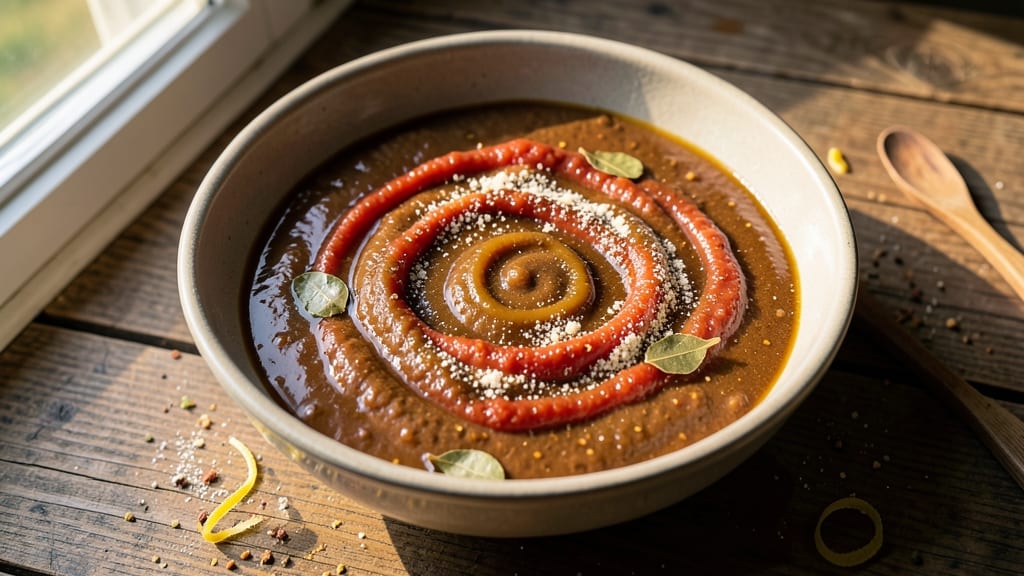
This army stew sauce recipe transforms simple ingredients into a rich, velvety base that elevates any hearty stew or braise. The secret lies in a slow-simmered roux and aromatic spices that build deep, savory layers—perfect for adding restaurant-quality depth to your cooking.
I developed this sauce after years of testing, ensuring it thickens properly without losing its bright, herby freshness.
The foundation starts with a classic roux—equal parts butter and flour cooked until golden—then deglazed with beef broth to create a smooth, flavorful base. Worcestershire sauce and a touch of tomato paste add umami complexity, while bay leaves, thyme, and black pepper infuse warmth.
The sauce thickens beautifully as it simmers, creating a glossy finish that clings to every bite.
What sets this sauce apart is its versatility: use it as a base for stews, drizzle it over roasted meats, or even toss it with pasta for an instant upgrade. The slow simmering process ensures it develops a rich, caramelized depth without overpowering the dish.
Once cooled, it stores effortlessly in the fridge for up to a week, ready to enhance your meals at a moment’s notice.
For an extra touch of brightness, finish with fresh parsley or a splash of lemon juice just before serving. This sauce is a game-changer for home cooks who want restaurant-quality flavor without the fuss. Let’s get started—your stews will never be the same.
Ingredients for army stew sauce
Pantry staples and a few fresh herbs create this velvety sauce that takes stews to restaurant level.
| Ingredient | Amount | Notes |
|---|---|---|
| Unsalted Butter 🧈 | ½ cup | Cold, cubed for even cooking |
| All-Purpose Flour 🌾 | ½ cup | White or whole wheat |
| Beef Broth 💧 | 2 cups | Homemade or quality store-bought |
| Worcestershire Sauce 🍶 | 1 tbsp | Lea & Perrins preferred |
| Tomato Paste 🍅 | 1 tbsp | Squeeze tube or canned |
| Bay Leaves 🌿 | 2 whole | Fresh or dried |
| Fresh Thyme 🌿 | 1 tbsp | Leaves only, chopped |
| Ground Black Pepper 🌶️ | ½ tsp | Freshly cracked |
| Fresh Parsley 🌿 | ¼ cup | Chopped, for finishing |
| Lemon Juice 🍋 | 1 tbsp | Freshly squeezed |
The butter and flour make that golden roux—the foundation of everything. Use cold butter for better control when cooking, and don't rush it—golden brown is key. For the beef broth, homemade is best but Kirkland Signature or Swanson work in a pinch. I always grab extra bay leaves at the store—they're cheap and last forever. Fresh thyme makes a world of difference, but dried works if you've got it (use half the amount). The tomato paste? Trader Joe's squeeze tubes are perfect—they're convenient and don't waste like cans.
No Worcestershire? Soy sauce or a splash of balsamic gets you close. Short on fresh herbs? Dried thyme at one-third the amount works, but it won't have that same brightness. The parsley is just for finishing—skip it if you're using this as a cooking sauce. For extra depth, add a dash of smoked paprika or a pinch of cayenne. If your sauce gets too thick, just whisk in a splash of broth. Too thin? Simmer uncovered for another 5-10 minutes to reduce.
This sauce tastes even better the next day once all the flavors meld. Keeps in the fridge for 1 week, or freeze for 3 months in ice cube trays for single-use portions. I always make a double batch—one for immediate use, one to freeze. The lemon juice should go in right before serving to keep it bright. If you're using this for pasta, toss in a splash of pasta water to loosen it up.
Why You'll Love This Recipe
- Pantry Magic: I swear by this sauce—just butter, flour, and broth. No specialty items, no last-minute grocery runs. The roux alone (that golden butter-flour base) makes it taste restaurant-worthy without the fuss.
- Umami Bomb: That Worcestershire and tomato paste combo? It’s the secret weapon. Deep, savory, and just slightly sweet—like a hug in a bowl. Honestly, I’ve made this sauce with cheaper broth, and it still hits.
- Leftovers That Win: Double the batch and freeze half. Thaw it later for mashed potatoes, dumplings, or even a quick pasta. My freezer’s full of it, and I never regret it—especially when I’m too tired to cook.
- Budget-Friendly Luxury: Rich flavor for pennies. The butter and broth feel indulgent, but the cost adds up to almost nothing. Between us, this is how I feed my family hearty meals without breaking the bank.
Step-by-step instructions for army stew sauce
Here's how to build rich, velvety sauce with just a few simple steps.
Create a Butter-Flour Roux
Melt the 0.5 cup unsalted butter in a heavy-bottomed saucepan over medium heat. Once it's fully melted and foaming subsides, reduce heat to medium-low and whisk in the 0.5 cup all-purpose flour all at once. This creates a roux - the flavor foundation of your sauce.
Whisk constantly for 2-3 minutes until the mixture turns a pale golden color. You're looking for a smooth, paste-like consistency with no raw flour taste. If it starts to darken too quickly, lower the heat immediately - a dark roux will make your sauce bitter. This step builds the sauce's thickness and rich flavor base.
Cook the Tomato Paste and Aromatics
Add the 1 tbsp tomato paste and stir vigorously to distribute it evenly through the roux. Cook for 1-2 minutes until the paste loses its raw smell and darkens slightly. Then add the 2 whole bay leaves, 1 tbsp fresh thyme, and 0.5 tsp ground black pepper. Stir once to combine - you don't want to crush the bay leaves.
Pour in the 2 cups beef broth all at once and stir constantly for 1-2 minutes to dissolve any lumps. This prevents the sauce from becoming grainy. The mixture will bubble vigorously - keep whisking until it returns to a smooth consistency. Here's where the sauce starts transforming from roux to actual sauce.
Simmer Until Thick and Rich
Reduce heat to low and let the sauce simmer gently for 15-20 minutes, stirring occasionally with a wooden spoon. You're looking for the sauce to thicken noticeably - it should coat the back of a spoon but still be pourable. If it thickens too quickly, add 1-2 tablespoons of water to adjust the consistency.
After 15 minutes, taste the sauce and adjust seasoning if needed. This is where the Worcestershire sauce comes in - add the 1 tbsp Worcestershire sauce now and stir well. The sauce should have deep, savory flavor with just a hint of acidity. If it needs more brightness, you can add a splash of water now or adjust later.
Finish with Fresh Herbs and Acid
Remove the sauce from heat and stir in the 1 tbsp lemon juice. This brightens the flavors and balances the richness. Add the 0.25 cup fresh parsley and stir gently - you don't want to chop the parsley in the sauce. The parsley adds freshness while the lemon juice cuts through the richness.
Let the sauce rest for 5 minutes before using. This allows all the flavors to meld together. The sauce should be thick enough to coat the back of a spoon but still have a silky texture. If you're using it immediately, strain out the bay leaves before serving. This classic army stew sauce is now ready to elevate any hearty meal.
Pro Tips For Making Army Stew Sauce
- Cook Butter Slowly: Melt the unsalted butter over medium-low heat—rushing it turns the sauce grainy. I learned this the hard way when my first batch looked like lumpy glue instead of a smooth base.
- Bloom the Flour: Stir the flour into the butter for a full 2 minutes before adding broth—this cooks off the raw taste. Skipping this step leaves a floury aftertaste that even Worcestershire can’t fix.
- Deglaze Aggressively: Scrape the bottom of the pot relentlessly with a wooden spoon while adding beef broth—those browned bits are flavor gold. I used to pour the broth in and stir lazily, wondering why my sauce tasted bland.
- Simmer, Don’t Boil: Keep the sauce at a gentle simmer (tiny bubbles, occasional swirls) after adding tomato paste—boiling burns the paste and makes it bitter. Sounds picky, but it’s the thing that matters most for that rich, restaurant-style depth.
Troubleshooting great army stew sauce
Grainy Texture Fix
If your sauce develops lumps during cooking, don’t panic—it’s easily fixable. Whisk in 1-2 tablespoons of cold water while stirring vigorously over low heat for 1-2 minutes. The heat helps dissolve the lumps while the water thins the sauce just enough to smooth it out.
For stubborn lumps, strain the sauce through a fine-mesh sieve into a clean saucepan before continuing to simmer. 🌡️
Sauce Too Thin?
If your sauce isn’t thickening enough, simmer it uncovered for an extra 5-10 minutes on low heat. The liquid will evaporate, concentrating the flavors and thickening the sauce naturally.
If you need a quicker fix, mix 1 tablespoon of cornstarch with 1 tablespoon of cold water, then whisk it into the sauce while simmering until it reaches your desired consistency.
Sauce Too Thick?
Over-thickened sauce can be rescued by whisking in 1-2 tablespoons of warm beef broth or water. Heat gently while stirring until the sauce reaches a smooth, pourable consistency. Avoid adding too much liquid at once—start with small amounts and adjust gradually.
For a richer texture, you can also thin it with a splash of pasta water if using the sauce for noodles. 💡
Flat or Bland Flavor
If your sauce tastes flat, it likely needs more depth. Boost umami by adding ½ teaspoon of soy sauce or 1 teaspoon of balsamic vinegar. For brightness, stir in ½ teaspoon of lemon juice or a pinch of smoked paprika.
If the sauce lacks saltiness, add ¼ teaspoon of salt or a dash of Worcestershire sauce (up to 1 extra teaspoon). Taste as you go—small adjustments make a big difference!
Burnt or Bitter Roux
A dark, burnt roux can make your sauce bitter. To prevent this, keep the heat at medium-low while cooking the butter and flour. If your roux turns too dark, immediately remove it from heat and whisk in 1 tablespoon of cold water to cool it down.
For a quick fix, stir in ½ teaspoon of sugar or 1 teaspoon of honey to balance the bitterness. Always cook the roux to a pale golden color—never brown. 🔥
Herbs Not Infusing
If your herbs aren’t adding enough flavor, simmer them in the sauce for 5-10 extra minutes to draw out their oils. For stronger thyme flavor, use ½ teaspoon of dried thyme instead of fresh.
Bay leaves should be removed before serving, but if they’re under-flavored, crush them lightly with the back of a spoon to release their aroma. Fresh herbs like parsley should always be added at the end to preserve their brightness. 🌿
Nutrition facts
Frequently asked questions
Can I substitute chicken or vegetable broth for beef broth?
Yes, but the flavor will change. Chicken broth works well for lighter dishes, while vegetable broth creates a vegetarian-friendly version. For best results, add 1 extra teaspoon of soy sauce or ½ teaspoon of smoked paprika to compensate for the missing umami from beef. The sauce will still thicken properly, but the depth of flavor will be slightly different.
How long can I store this sauce in the fridge?
This sauce keeps beautifully in an airtight container in the fridge for up to 1 week. For longer storage, freeze it in ice cube trays or small containers for 3 months. Thaw overnight in the refrigerator before using. The flavors actually develop more as it sits, making it even better the next day!
What can I use this sauce for besides stew?
This versatile sauce works perfectly for roasted meats, mashed potatoes, pasta, or even as a dipping sauce for bread. For pasta, toss it with cooked noodles and a splash of pasta water. It also elevates grilled chicken or pork chops beautifully. The rich, savory flavor pairs well with almost any hearty dish.
Can I make this sauce without Worcestershire sauce?
Replace it with 1 teaspoon of soy sauce or ½ teaspoon of balsamic vinegar for umami depth. If you prefer a more complex flavor, combine ½ teaspoon soy sauce with ½ teaspoon tomato paste. The sauce will still develop rich flavor—just with slightly different notes. Taste as you go and adjust seasoning accordingly.
Why does my sauce turn out grainy?
Graininess usually happens when lumps form during the roux or broth incorporation. To fix it, whisk in 1-2 tablespoons of cold water while heating gently. For stubborn lumps, strain through a fine-mesh sieve before continuing. Always stir constantly when adding broth to prevent clumping. The key is patience—don't rush the whisking!