
Sauces & Condiments
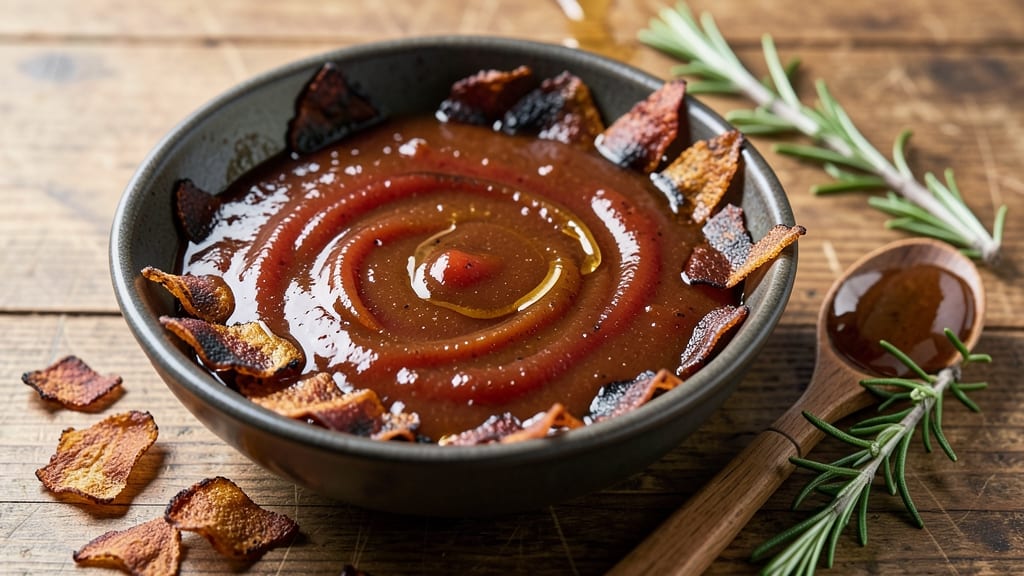
This applewood BBQ sauce recipe transforms grilled meats into finger-licking masterpieces with its deep smoky-sweet balance. The secret lies in smoked applewood chips (or liquid smoke) that infuse the sauce with a campfire aroma, while molasses and brown sugar create that signature caramelized gloss.
I developed this recipe after years of experimenting with store-bought sauces that never quite captured that perfect smoky depth.
The sauce comes together in just 30 minutes with simple pantry staples—apple cider vinegar for tang, Worcestershire for umami, and a blend of spices that enhances rather than overpowers.
What makes this sauce special is its versatility: it caramelizes beautifully on the grill, tenderizes meat when used as a marinade, or adds a glossy finish to baked wings. The consistency is thick enough to cling but still drizzle-friendly for finishing touches.
Once you taste the first bite of ribs or pulled pork glazed with this sauce, you'll understand why it's worth making from scratch. The smoky applewood flavor cuts through rich meats while the sweet caramel notes create that addictive stick-to-your-ribs quality.
Store it in the fridge for up to 2 weeks or can it for long-term use—this sauce is the kind of pantry staple that makes every cookout feel like a special occasion.
Perfect for grilling, smoking, or even drizzling over veggie burgers, this applewood BBQ sauce delivers restaurant-quality flavor at home. The key is patience during the simmering process—letting the flavors meld creates that complex depth you can't find in bottles.
Here's how to make it your new go-to sauce for everything from backyard BBQs to weeknight dinners.
Ingredients for applewood bbq sauce
Eleven pantry staples transform into a smoky-sweet sauce that caramelizes on grills and wings.
| Ingredient | Amount | Notes |
|---|---|---|
| Apple Cider Vinegar 🍏 | ½ cup | Raw, unfiltered preferred |
| Molasses 🍯 | ½ cup | Unsulphured for richer flavor |
| Brown Sugar 🍚 | ½ cup | Light or dark, packed |
| Applewood Smoked Chips 🌳 | 1 tbsp | Or 1 tsp liquid smoke |
| Worcestershire Sauce 🍶 | 2 tbsp | High-quality, anchovy-free |
| Ketchup 🍅 | ½ cup | Heinz preferred for consistency |
| Garlic Cloves 🧄 | 3 cloves | Minced for depth |
| Onion Powder 🧅 | 1 tbsp | Freshly ground preferred |
| Ground Black Pepper 🌶️ | ½ tsp | Freshly cracked |
| Mustard Powder 🥬 | 1 tsp | Yellow or Dijon |
| Salt 🧂 | 1 ½ tsp | Diamond Crystal preferred |
The applewood chips are non-negotiable for that authentic campfire aroma. Grab a bag from a specialty smoke shop or use Traeger brand chips if you're in a pinch—they're widely available at Costco or Home Depot. If you can't find smoked chips, liquid smoke works (just reduce to 1 tsp), but nothing beats the real deal. For the molasses, Goya unsulphured is my go-to—it's affordable and keeps forever. The brown sugar should be packed, not scooped, for accurate measurements. The Worcestershire matters too—Lea & Perrins is the gold standard, but Annie's anchovy-free version works for vegetarians.
No applewood chips? Hickory or cherry wood chips add their own unique smoky depth, though applewood's fruity notes are signature. Short on molasses? Maple syrup at half the amount gives a different but still delicious profile. The ketchup can be swapped for tomato paste plus 1 tbsp water, but Heinz has the perfect balance of acidity and sweetness. Mustard powder missing? Dijon mustard at 1 tbsp adds tang without powdery texture. For the garlic, roast it first—microwave with a splash of water for 30 seconds to mellow the sharpness and deepen the flavor. The onion powder should be freshly ground if possible, but pre-ground works in a bind.
This sauce thickens as it cools, so thin with water or vinegar if needed. Store in a clean glass jar in the fridge for up to 2 weeks—the flavors actually improve over time. For long-term storage, can it using a water bath method for 6-12 months of shelf stability. I always double the batch—one for immediate use, one to gift. The sauce reheats beautifully on the grill or stovetop, perfect for last-minute glazing. If it separates, just stir vigorously before using—it's normal and doesn't affect flavor.
Why You'll Love This Recipe
- Pantry Magic: I swear by this sauce because it uses stuff I already have—no special shopping trips. That molasses and apple cider vinegar combo? It’s the secret to that deep, smoky-sweet balance without breaking the bank.
- Smoke Bomb Flavor: The applewood chips aren’t just for show—they infuse the sauce with that campfire aroma, and the Worcestershire adds this mysterious depth. Honestly, it’s the kind of flavor that makes people ask, “What’s in this?”
- Weeknight & BBQ Hero: Slather it on burgers, drizzle it over grilled chicken, or toss it with baked beans—this sauce does it all. Even better? It’s ready in 20 minutes, so I’m not stuck in the kitchen while everyone waits.
- Leftovers That Work: Make a big batch and store it in the fridge. It only gets better over time, and the cost per serving is laughable. Between us, I’ve used this for three different meals without a single complaint.
Step-by-step instructions for applewood BBQ sauce
This smoky-sweet sauce delivers that perfect caramelized finish on grilled meats and wings every time.
Bloom the Spices and Aromatics
In a medium saucepan over medium-low heat, combine the 0.5 cup apple cider vinegar, 0.5 cup molasses, 0.5 cup brown sugar, 1 tbsp applewood smoked chips, 2 tbsp Worcestershire sauce, and 0.5 cup ketchup. Stir gently to dissolve the brown sugar completely—you should see a smooth, syrupy base forming.
Add the 3 cloves minced garlic, 1 tbsp onion powder, 0.5 tsp ground black pepper, 1 tsp mustard powder, and 1.5 tsp salt. Let the mixture simmer uncovered for 5 minutes while stirring occasionally. This step develops the base flavors and allows the spices to bloom fully. You'll notice the aroma deepening as the molasses and vinegar meld together—this is where the sauce's complexity begins.
Simmer Until Thickened
Increase the heat to medium and bring the sauce to a gentle boil. Once boiling, reduce the heat to low and let it simmer uncovered for 20-25 minutes. Stir occasionally to prevent sticking, but avoid constant stirring—you want the sauce to reduce naturally. The sauce should thicken noticeably, coating the back of a spoon with a glossy sheen.
Watch for the sauce to darken slightly as it reduces. You're aiming for a consistency similar to store-bought BBQ sauce but with a deeper, smokier character. If the sauce thickens too quickly, add 1-2 tablespoons of water to maintain the right balance. The applewood smoked chips will infuse their smoky essence into the sauce during this time, creating that signature applewood flavor.
Strain and Cool
Once the sauce reaches your desired consistency, remove it from heat and let it cool for 5 minutes. Line a fine-mesh strainer with cheesecloth or a coffee filter and strain the sauce into a clean bowl or jar. This step removes any sediment and ensures a smooth, velvety texture. Discard the strained solids—they've done their job infusing flavor.
While the sauce cools, taste and adjust the seasoning. If it needs more sweetness, add a touch of brown sugar. For more tang, add a splash of apple cider vinegar. If the smokiness isn't pronounced enough, you can add an additional ½ teaspoon of applewood smoked chips or a pinch more salt. The sauce should balance sweet, smoky, and tangy flavors harmoniously.
Store and Use
Let the sauce cool completely to room temperature, then transfer it to an airtight container. It will keep in the refrigerator for up to 2 weeks or can be frozen for up to 3 months. The flavor actually improves as it sits, allowing all the components to meld together.
Use this sauce generously on grilled meats, wings, ribs, or even as a glaze for vegetables. For best results, brush it on during the last 5-10 minutes of grilling to achieve that caramelized finish. The applewood smoke will enhance the natural flavors of your food, creating a restaurant-quality result every time.
Pro Tips For Making Applewood Bbq Sauce
- Simmer Slow and Low: After burning the first batch trying to rush it, I learned to keep the heat at a gentle simmer—not a boil. Too much heat turns your sauce bitter, especially with the molasses and vinegar. Let it bubble softly for at least 30 minutes to meld those flavors properly.
- Toast the Smoked Chips: Dump those applewood chips into a dry pan first and toast them for 2-3 minutes until fragrant. This concentrates their smoky goodness before you even add them to the sauce. Skipping this step means you’re just dumping damp wood shavings into your pot.
- Strain the Molasses: Molasses is notorious for grit—unless you strain it first. Use a fine-mesh sieve or cheesecloth to filter out any sediment before adding it to the sauce. Trust me, you don’t want to scrape tiny rocks off your ribs later.
- Balance the Vinegar: Apple cider vinegar is sharp, so taste as you go. If the sauce tastes too tangy, add a splash of water or a pinch of sugar to mellow it out. I usually hold back a little vinegar at first, then adjust—no need to regret that sour punch.
Perfect pairings for this applewood bbq sauce
Meat Pairing Perfection
This applewood BBQ sauce shines brightest on pork shoulder and ribs, where its smoky depth complements the meat's natural richness. I like to apply it generously during the last 5 minutes of grilling to create that signature caramelized crust.
For pulled pork, toss it with the meat while still warm—it clings beautifully and adds a glossy finish. The applewood notes also work wonderfully with chicken thighs, especially when grilled or smoked. 🔥
Vegetarian Adaptations
Don't let this sauce be just for meat lovers! Brush it on portobello mushrooms before grilling for a smoky, sweet umami experience. It also elevates veggie burgers or grilled eggplant—just drizzle it on top after cooking.
For extra flair, mix a spoonful into black bean tacos or use it as a marinade for tofu before baking. The molasses and applewood create a surprisingly meaty flavor profile.
Beverage Pairings
A crisp lager like Peroni or Stella Artois cuts through the sauce's richness beautifully, cleansing your palate between bites. For a non-alcoholic option, try sparkling apple cider—the effervescence mirrors the sauce's tangy-sweet balance.
Red wine lovers should opt for a light Pinot Noir, as its bright acidity complements the smoky notes without overpowering them. Avoid heavy beers or bold wines that would clash with the sauce's delicate complexity. 🍺
Sweet Pairings
Balance the smoky-sweet sauce with tangy sides like pickled onions or sliced jalapeños to keep flavors in harmony. For a dessert twist, drizzle it over vanilla ice cream or apple crisp—the caramelized notes create a surprisingly sophisticated topping.
I've even used it as a glaze for baked apples with a sprinkle of cinnamon. The key is to let the applewood's smokiness shine while balancing it with contrasting flavors.
Global Flavor Twists
For a Caribbean-inspired version, stir in 1 tsp jerk seasoning and ½ tsp allspice for a tropical twist. A Mexican-inspired adaptation calls for 1 tbsp chipotle powder and a pinch of cumin. For an Asian fusion, add 1 tsp ginger and ½ tsp five-spice powder.
Each variation keeps the applewood foundation while introducing exciting new dimensions. The beauty of this sauce is how adaptable it is to global flavors! 🌍
Nutrition facts
Frequently asked questions
Can I substitute applewood chips with another wood type?
Yes! While applewood provides a fruity, mild smoke, hickory adds a stronger, bolder flavor, and cherry offers a sweeter profile. Use 1 tbsp of any wood chips (or 1 tsp liquid smoke if chips aren't available) for the same effect. Just note that hickory can overpower if used in excess.
Why does my sauce turn out too thin?
Sauce thickness depends on simmer time—if yours is too thin, reduce it uncovered over low heat for an extra 5-10 minutes while stirring occasionally. For immediate fixes, mix 1 tbsp cornstarch with 1 tbsp water, stir into the sauce, and simmer for 2 minutes until thickened.
How can I make this sauce spicier?
Add ½-1 tsp cayenne pepper or 1 tbsp hot sauce to the simmering sauce for heat. For smoky-spicy depth, stir in 1 tsp smoked paprika or ½ tsp chipotle powder during the 5-minute initial simmer. Adjust to taste—start with less and add more gradually.
Can I use this sauce as a marinade?
Thin the sauce with ¼ cup apple cider vinegar or water to create a marinade. Reserve ½ cup of the finished sauce for brushing later. Marinate meats for 4-6 hours (or overnight for tougher cuts) in the fridge. The applewood smoke will infuse beautifully into chicken, pork, or even tofu.
What’s the best way to store leftovers?
Transfer cooled sauce to an airtight glass jar and refrigerate for up to 2 weeks. For longer storage, can it using a water bath method (10 minutes for pints, 15 for quarts). Freeze for up to 3 months—leave ½ inch headspace in the container to prevent cracking. Reheat gently on the stove or microwave until warm.