
Sauces & Condiments
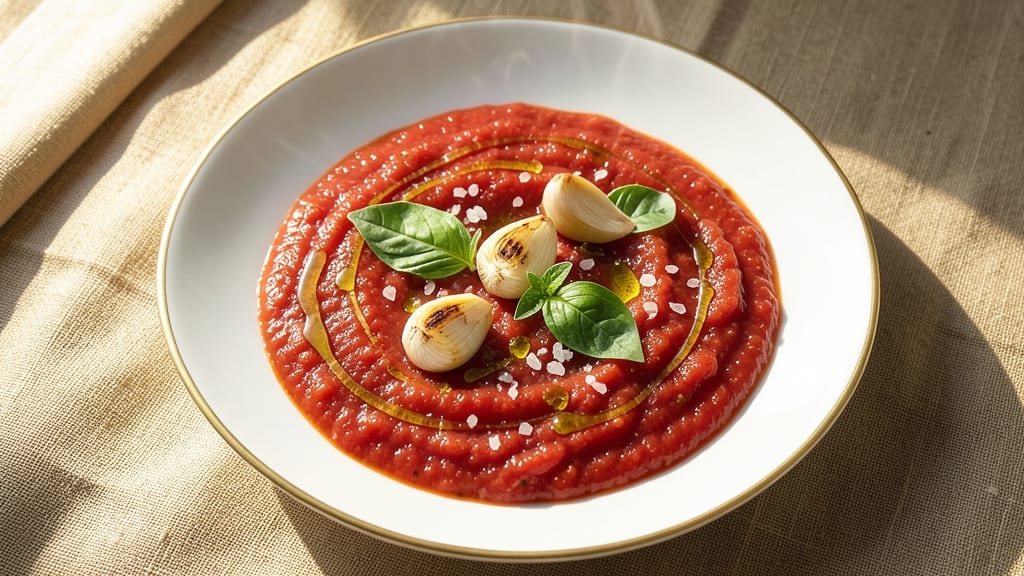
This Appian Way pizza sauce recipe brings ancient Roman flavors to your modern kitchen with its rich tomato-basil depth. 💛 The secret lies in slow-cooked tomatoes, fresh garlic, and aromatic herbs that create a sauce with authentic Mediterranean soul—perfect for both pizza and pasta dishes.
The recipe balances simplicity with authenticity, using just six core ingredients to build layers of flavor. No artificial additives or shortcuts—just high-quality tomatoes, fresh basil, and a touch of olive oil that elevates every bite. The slow simmering process develops a deep, caramelized richness that store-bought sauces simply can't match.
What sets this sauce apart is its versatility—use it as a pizza base for a Roman-inspired pie or toss it with al dente pasta for an equally satisfying meal. The sauce thickens beautifully when reheated, making it ideal for meal prep while maintaining its authentic taste profile.
With a shelf life of up to two weeks in the refrigerator, this sauce becomes your pantry's secret weapon for quick, flavorful meals. The recipe delivers professional-quality results with minimal effort, proving that ancient techniques still reign supreme in modern cooking.
Ingredients for appian way pizza sauce
Six ingredients transform into a sauce with ancient Roman authenticity and modern versatility.
| Ingredient | Amount | Notes |
|---|---|---|
| San Marzano Tomato Crushed 🍅 | 28 oz | Whole peeled tomatoes crushed by hand |
| Extra-Virgin Olive Oil 🫒 | ¼ cup | High-quality, fruity variety preferred |
| Garlic Cloves 🧄 | 4 cloves | Freshly minced for maximum aroma |
| Fresh Basil Leaves 🌿 | ½ cup | Packed, stems removed, lightly torn |
| Diamond Crystal Kosher Salt 🧂 | ½ tsp | Adjust to taste after simmering |
| Freshly Ground Black Pepper 🌶️ | ¼ tsp | Freshly cracked for optimal flavor |
The San Marzano tomatoes are non-negotiable for authentic flavor—look for the bright red, plump varieties at Whole Foods or Italian specialty markets. Their natural sweetness develops deep caramelized notes during the slow simmer. Fresh garlic matters too: Garlic from the bulk bins stays fresher longer than pre-minced. For olive oil, California Extra Virgin brands like Corto or Lucini bring the right balance of peppery bite and smooth finish. The basil should be vibrant green with no yellowing—farmers' market selections often have better flavor than grocery store containers.
No San Marzano tomatoes? High-quality crushed tomatoes in a can will work, but avoid brands with added salt or preservatives. Running short on fresh basil? Dried basil at one-third the amount provides a similar earthy backbone, though fresh is ideal. Pre-minced garlic? Freshly minced is better, but if you're in a rush, use the jarred kind—just add it later to preserve flavor. The olive oil can be swapped for avocado oil if you prefer a neutral profile, though it lacks the fruity depth of olive. For extra umami, add 1 tsp of balsamic vinegar during the final simmer.
This sauce thickens beautifully when reheated—ideal for meal prep. Store in an airtight container in the fridge for up to 2 weeks, where flavors deepen over time. For longer storage, freeze in ice cube trays for 6 months. The sauce thickens further when reheated, making it perfect for pizza bases or pasta sauces. Always stir before using, as the basil may settle. Double batches freeze well for future Roman-inspired meals.
Why You'll Love This Recipe
- Here’s what sold me: this recipe stretches further than store-bought. A single batch feeds a crowd, reheats like a dream, and won’t break the bank. Plus, the leftovers? They taste even better the next day—if that’s possible.
- Five-Minute Miracle: I swear, this sauce is ready before you’ve finished chopping garlic. Just crush those San Marzano tomatoes, toss in a glug of olive oil, and let the stove do the work—no blenders, no strainers, no mess.
- Garlic-Basil Magic: That first bite of crispy crust with this sauce? It’s like a punch to the taste buds. The San Marzano tomatoes give it that sweet, rich depth, while the garlic and basil hit just right—bright, fresh, and impossible to resist.
- Pantry Staple Power: Between us, I’ve used this sauce on pizza, as a marinade for chicken, even drizzled it over grilled fish. The beauty? It’s so simple you’ll want to keep a jar in the fridge at all times—no fancy ingredients, just pure flavor.
Step-by-step instructions for ancient Roman tomato-basil pizza sauce
This sauce captures the essence of Appian Way flavors—simple yet profoundly flavorful.
🍳 Step 1: Bloom the Garlic in Olive Oil
Heat the 0.25 cup Extra-Virgin Olive Oil in a medium saucepan over medium-low heat. Add the 4 cloves Garlic Cloves, freshly minced, and let them cook for 2-3 minutes until fragrant but not browned. This step is crucial—garlic burns quickly and turns bitter, so keep an eye on it.
Here's the thing—you want the garlic to perfume the oil without coloring it. When the aroma fills your kitchen and the garlic pieces are just beginning to turn translucent at the edges, you're ready for the next step. Remove the pan from heat temporarily to prevent overcooking while you prep the tomatoes.
🍳 Step 2: Incorporate the Crushed Tomatoes
Return the pan to the stove and add the 28 oz San Marzano Tomato Crushed. Stir gently to combine, scraping up any browned bits from the bottom of the pan. These fond bits carry concentrated flavor that will deepen your sauce.
Bring the mixture to a gentle simmer over medium heat. You're looking for a steady, low bubble—this helps the tomatoes release their natural sweetness without breaking down their structure. Let it simmer uncovered for 10 minutes to allow excess moisture to evaporate and the flavors to meld.
🥘 Step 3: Season and Simmer to Perfection
Add the 0.5 tsp Diamond Crystal Kosher Salt and 0.25 tsp Freshly Ground Black Pepper. Stir well to distribute evenly. Now, here's where patience pays off—reduce the heat to low and let the sauce simmer gently for 20-25 minutes. You want it to thicken slightly, developing a rich, velvety consistency.
Taste the sauce after 15 minutes and adjust the seasoning if needed. The salt should enhance the tomatoes' natural sweetness, not overpower it. The sauce should coat the back of a spoon but still be pourable—not a thick paste. If it's too thin, simmer uncovered for another 5 minutes to reduce further.
👨🍳 Step 4: Finish with Fresh Basil
Remove the pan from heat and stir in the 0.5 cup Fresh Basil Leaves, packed and stems removed. Let the basil steep in the warm sauce for 5 minutes—this allows the leaves to infuse their bright, aromatic essence without turning bitter. The sauce should take on a vibrant green hue and a fresh, herby aroma.
For best results, use a slotted spoon to remove the basil leaves before serving. This prevents the sauce from becoming too thick, but you can leave a few leaves in if you prefer a slightly chunkier texture. The basil adds a bright contrast to the deep, umami-rich tomato base, creating the perfect balance.
⏰ Step 5: Cool and Store Properly
Transfer the sauce to a clean jar or airtight container and let it cool to room temperature. The flavors will continue to develop as it cools, deepening and mellowing. This sauce keeps well in the refrigerator for up to 5 days or can be frozen for up to 3 months for future use.
When ready to use, reheat the sauce gently over low heat or in the microwave, stirring occasionally. Avoid boiling it, as this can break down the delicate tomato flavors. The sauce should be warm but not simmering—just enough to bring out its full, complex character.
Pro Tips For Making Appian Way Pizza Sauce
- Crush Tomatoes by Hand: Skip the blender—use a potato masher or your clean hands to crush San Marzano tomatoes. The slight texture variation keeps the sauce from turning mushy, and you’ll notice how much better the basil holds up when tossed in later.
- Cook Garlic Low and Slow: I used to burn the garlic every time, but here’s the fix: Add the minced cloves to the olive oil on medium-low heat. Stir constantly until just fragrant—about 2 minutes—so they perfume the sauce without turning bitter. (Yes, even if you’re impatient like me.)
- Salt the Tomatoes First: Sprinkle the crushed San Marzano tomatoes with a full teaspoon of kosher salt before cooking. Let them sit for 10 minutes while you prep the rest—this draws out moisture and concentrates their sweetness, so the sauce won’t taste watered down later.
- Finish with Basil at the End: Toss in the basil leaves after the sauce has simmered and just before serving. If you add them too early, they’ll turn to sludge—trust me, I’ve made that mistake. A handful of fresh leaves at the end keeps the flavor bright and the texture perfect.
Essential equipment for perfect results
Saucepan Essentials
Start with a medium saucepan that has a 3-4 quart capacity—this gives you enough room to stir comfortably while preventing overflow during simmering. I recommend a stainless steel pan like the All-Clad Stainless for even heat distribution and durability.
Avoid nonstick pans for this sauce, as the high heat can degrade the coating and affect flavor. If you don’t have stainless steel, a heavy-bottomed enameled cast iron (like Le Creuset) works beautifully too. 🔥
Heat Control Tools
A long-handled silicone spatula is your best friend for stirring without burning your hands. I use the OXO Good Grips for its heat resistance and easy cleanup. For precise temperature control, keep a kitchen thermometer nearby—aim for medium-low heat (around 180-200°F) during the simmering phase.
A digital thermometer like the Thermoworks Thermapen ensures you don’t overheat the sauce.
Crushing Tomatoes
Hand-crushing San Marzano tomatoes is key for authentic texture and flavor. Use a clean kitchen towel to wipe the tomatoes before crushing to remove any excess moisture or dirt.
For efficiency, I like the OXO Good Grips Tomato Crusher—it’s gentle on the tomatoes and makes quick work of the job. If you’re short on time, a wooden spoon or potato masher works in a pinch, but avoid metal utensils that can bruise the tomatoes.
Storage Containers
For short-term storage, glass mason jars with airtight lids (like Ball or Le Parfait) are ideal—they preserve flavor and allow you to see the vibrant color of your sauce. For longer storage, silicone-free freezer bags (like Stasher bags) are great for freezing in flat layers.
Label everything with the date to track freshness. I also keep a small glass jar in my fridge for quick access to the sauce when I’m craving pizza night. ✨
Basil Handling Tools
Fresh basil should be handled gently to avoid bruising. Use a sharp chef’s knife to remove stems and a small cutting board for chopping. For easy removal after steeping, a slotted spoon (like the OXO Good Grips) works perfectly.
If you’re prepping ahead, store fresh basil in a glass of water in the fridge—it stays fresher longer than in a container. Pro tip: Add a few basil leaves to your sauce just before serving for maximum freshness. 🌿
Reheating Gear
When reheating, a small saucepan or microwave-safe glass bowl is best. For stovetop reheating, I prefer a lightweight stainless steel bowl (like Pyrex) that heats evenly. If using the microwave, cover the sauce with a microwave-safe lid or damp paper towel to prevent splattering.
Avoid reheating in nonstick pans—they can’t handle the heat without risking damage. Always reheat on low power to preserve the sauce’s delicate flavors. 💫
Nutrition facts
Frequently asked questions
Can I use dried basil instead of fresh?
Yes, but use only ⅓ cup dried basil (about 1.5 teaspoons) instead of 0.5 cup fresh. Dried basil has a more concentrated flavor, so too much will overpower the sauce. Add it during the final 5 minutes of simmering to let the aroma infuse properly. For best results, crush the dried leaves lightly between your fingers before adding to release their oils.
How do I adjust the sauce for spicier pizza?
Add ½ teaspoon red pepper flakes or 1 teaspoon hot sauce during the final 5 minutes of simmering. For a smoky depth, stir in ¼ teaspoon smoked paprika with the garlic. Always taste before serving—you can add more heat but can't remove it! For a balanced kick, pair with fresh mozzarella and basil to cool the heat.
Can I make this sauce without San Marzano tomatoes?
Use high-quality crushed tomatoes (like Muir Glen or Cento) without added salt or preservatives. For extra sweetness, add 1 teaspoon sugar or ½ teaspoon balsamic vinegar during simmering. Avoid tomato sauces with thickeners—they can make the sauce too heavy. The key is using ripe, flavorful tomatoes, not just any canned variety.
Why does my sauce look too thin after simmering?
This happens when tomatoes release too much liquid. Simmer uncovered for 5-10 more minutes to reduce it—stir occasionally to prevent sticking. If it's still too thin, mash 1 tablespoon tomato paste into the sauce to thicken it naturally. For pizza, a slightly thinner sauce works well, but for pasta, you may want to reduce it further.
How can I use this sauce beyond pizza?
This versatile sauce works perfectly for pasta (pappardelle, penne), bruschetta, grilled chicken, or even as a dipping sauce for crusty bread. For pasta, toss with al dente spaghetti and top with fresh basil. For bruschetta, spread on toasted baguette slices with ricotta and cherry tomatoes. The sauce's bright acidity cuts through rich proteins beautifully.