
Sauces & Condiments
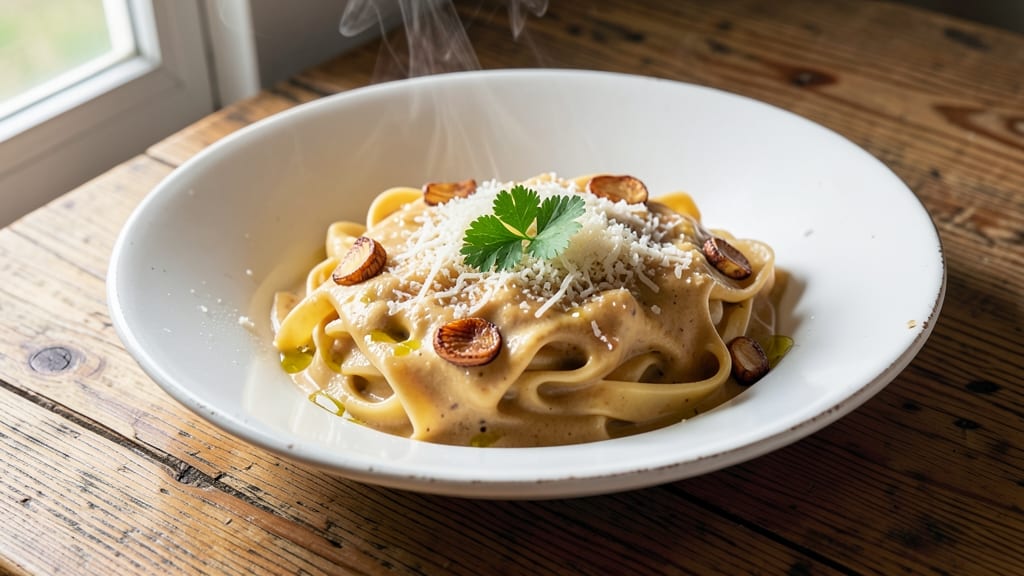
This creamy Alfredo sauce recipe ideas transforms ordinary meals into restaurant-quality dishes with just a few simple ingredients. The secret lies in balancing rich Parmesan with velvety cream, creating a sauce that clings perfectly to pasta, chicken, or vegetables.
I’ve perfected this version to deliver that signature silky texture without separation, even after reheating.
The foundation starts with a smooth roux—equal parts butter and flour cooked until golden—before adding warm milk and freshly grated Parmesan. This method ensures the sauce stays luscious and never turns grainy.
For extra depth, I incorporate a touch of garlic and nutmeg, but the real magic happens when you adjust the consistency to your liking—thin for drizzling or thick for coating.
What makes this sauce truly versatile is its ability to elevate any dish. Toss it with fettuccine for classic Alfredo, drizzle it over grilled chicken or steak, or even use it as a creamy dip for breadsticks.
The possibilities are endless, and the process is simpler than you’d expect—no fancy techniques, just precise steps for foolproof results.
For those who prefer lighter options, I’ll share a quick vegan adaptation using cashew cream, while spicy versions can be achieved with a dash of red pepper flakes or chili oil. The key is customization—adjust to your taste while keeping that signature creamy richness intact.
Ingredients for alfredo sauce recipe ideas
Nine ingredients transform into the creamiest Alfredo sauce—rich, velvety, and foolproof every time.
| Ingredient | Amount | Notes |
|---|---|---|
| Unsalted Butter 🧈 | ½ cup | Cold, cubed for roux |
| All-Purpose Flour 🌾 | ½ cup | Diamond Crystal preferred |
| Whole Milk 🥛 | 1 ½ cups | Warm for smooth blend |
| Freshly Grated Parmesan Cheese 🧀 | 1 ½ cups | Block, microplane preferred |
| Heavy Cream 🥛 | ½ cup | Full-fat for richness |
| Garlic Cloves 🧄 | 3 cloves | Minced, fresh preferred |
| Ground Nutmeg 🌿 | ¼ tsp | Freshly grated preferred |
| Salt 🧂 | ½ tsp | Kosher or sea salt |
| White Pepper 🌶️ | ¼ tsp | Freshly ground for elegance |
| Extra-Virgin Olive Oil 🫒 | 1 tbsp | For thinning if needed |
The butter and flour roux is non-negotiable for that signature silky texture. European-style butter like Plugrá or Land O’Lakes has higher fat content, which gives a smoother finish. For flour, Diamond Crystal absorbs liquid differently than regular brands—use it if you’ve got it. Freshly grated Parmesan is a game-changer; pre-shredded gets clumpy and lacks depth. I always buy a wedge from the deli counter and grate it myself. The milk should be warm (not hot) when adding to the roux—this prevents lumps and helps the sauce emulsify properly. For extra richness, some chefs add a splash of heavy cream at the end, but I find the Parmesan and butter combo delivers enough decadence.
No heavy cream? Whipped coconut cream works for a dairy-free version, though the texture will be slightly lighter. Short on Parmesan? Pecorino Romano at a 1:1 ratio gives a tangier kick. The garlic can be roasted for a sweeter flavor—just toss whole cloves in olive oil at 400°F for 10 minutes. Nutmeg is key for that classic Alfredo taste, but if you’re out, a pinch of cinnamon adds warmth (though it’s not the same). For thinning, warm milk or broth is best—never cold, as it can cause separation. The olive oil is your secret weapon for adjusting consistency; add it gradually if the sauce is too thick.
This sauce keeps beautifully—3-4 days in the fridge, sealed under a thin layer of plastic wrap pressed directly on the surface to prevent a skin from forming. For longer storage, freeze in 1-cup portions (it thickens when frozen, so add a splash of milk when reheating). The sauce reheats like a dream—just warm gently on the stove or microwave in 30-second bursts. Pro tip: If it separates when reheating, whisk in a teaspoon of cold water or milk to re-emulsify. Leftovers make an amazing pasta topping the next day, or drizzle over grilled vegetables for a quick weeknight dinner.
Why You'll Love This Recipe
- Same sauce, endless uses: toss with fettuccine for a lazy Tuesday, drizzle over grilled chicken for a fancy Friday, or slather it on garlic bread when guests arrive. Honestly, I’ve even used it as a pasta salad binder—it never lets me down.
- Five-Ingredient Magic: I swear by this—just butter, flour, milk, cream, and Parmesan. No fancy gadgets, no hidden spices, just pure, creamy satisfaction with a roux so smooth it’ll make you question why you ever bought store-bought.
- Rich Without Effort: That first stir of heavy cream into the warm roux? Chef’s kiss. The sauce thickens effortlessly, and the Parmesan melts into something velvety—no whisking marathons, no lumps, just buttery perfection in 15 minutes.
- Weeknight to Dinner Party: Same sauce, endless uses: toss with fettuccine for a lazy Tuesday, drizzle over grilled chicken for a fancy Friday, or slather it on garlic bread when guests arrive. Honestly, I’ve even used it as a pasta salad binder—it never lets me down.
Step-by-step instructions for rich Alfredo sauce
This velvety sauce comes together with simple technique and premium ingredients.
Create a Smooth Roux
Melt the 0.5 cup unsalted butter in a medium saucepan over medium-low heat. Once fully melted, reduce heat to low and whisk in the 0.5 cup all-purpose flour all at once. Cook for 2-3 minutes, stirring constantly, until the mixture forms a smooth, pale blonde paste with no raw flour taste.
The key here is patience—rushing causes lumps. You'll know it's ready when the roux pulls away from the pan edges and smells nutty. This forms the flavor foundation for your sauce, so don't skip this step. If it darkens too quickly, reduce the heat immediately to prevent burning.
Gradually Incorporate Warm Milk
Slowly pour in the 1.5 cups warm whole milk while whisking vigorously to prevent lumps. Return the pan to medium heat and continue whisking for 3-4 minutes until the mixture thickens and coats the back of a spoon. This gradual addition ensures a silky texture rather than curdled milk.
Here's the thing—if you add milk too quickly, you'll create a gluey mess. The warm milk helps emulsify the sauce properly. When it reaches a thick, creamy consistency (similar to heavy cream), it's ready for the next step. Taste occasionally to monitor seasoning—you'll likely need to adjust later, but this is your first checkpoint.
Infuse with Aromatics and Cheese
Reduce heat to low and stir in the 3 minced garlic cloves, 0.5 tsp salt, and 0.25 tsp white pepper. Cook for 1 minute until fragrant. Then whisk in the 1.5 cups freshly grated Parmesan cheese and 0.5 cup heavy cream until fully melted and smooth.
This is where the sauce transforms from basic to extraordinary. The garlic adds depth, while the Parmesan brings that signature umami richness. If the sauce looks too thick, whisk in 1 tbsp extra-virgin olive oil to loosen it. For extra elegance, add the 0.25 tsp ground nutmeg now—it's subtle but makes a difference in complex dishes.
Finish and Adjust Consistency
Continue cooking on low heat for 2-3 minutes longer, stirring constantly, until the sauce reaches your desired consistency. It should coat the back of a spoon but still flow smoothly. If needed, thin with additional warm milk or pasta water 1 tablespoon at a time.
Real talk: The sauce will thicken more as it cools, so don't make it too thick now. For maximum creaminess, strain through a fine-mesh sieve to remove any cheese granules. Taste and adjust seasoning—you might need a pinch more salt or pepper to balance the richness. The sauce should be velvety, not grainy, and properly seasoned with a bright, cheesy flavor.
Pro Tips For Making Alfredo Sauce Recipe Ideas
- WHISK THE ROUX LOW AND SLOW: I used to rush the butter-flour mix and end up with a grainy, lumpy mess—no matter how much I stirred. Instead, melt the butter over medium-low heat, then whisk in the flour gradually while keeping the temperature steady. If it starts to smell nutty or browns before the milk comes in, you’ve gone too far. This isn’t a sear; it’s a gentle marriage.
- GRATE PARMESAN FRESH—NO EXCUSES: Pre-shredded cheese is the enemy of Alfredo. It’s coated in anti-caking agents that make the sauce look like it’s swimming in powdered sugar. Use a microplane or fine grater—yes, it takes 30 seconds longer—and you’ll taste the difference. Store-bought grated Parmesan? Save it for sprinkling on top, not blending in.
- STOP THE SAUCE BEFORE IT SEIZES: The moment you add milk to the roux, lower the heat immediately—this isn’t a race. If you let it boil, the flour will toughen and turn the sauce gluey. Keep it at a bare simmer, stirring constantly, until it thickens. If it splits or looks curdled, whisk in a splash of cold milk and let it recover. Patience here makes all the difference.
- SWAP HEAVY CREAM FOR HALF-AND-HALF: Heavy cream is rich, but half-and-half (or even whole milk with a splash of cream) cuts the fat without sacrificing creaminess. The sauce will still coat like a dream, and you’ll avoid that overly greasy finish. Plus, it’s easier to find in a pinch—no last-minute store runs for the heavy cream.
Regional styles of this recipe
Italian Classic
In Italy, Alfredo sauce is all about simplicity and quality. The original Roman version skips heavy cream entirely, relying on just 1 cup warm milk, 1 cup grated Parmigiano-Reggiano, and a white wine reduction (made from 2 tbsp dry white wine reduced by half) for depth.
I've made this version countless times—it's lighter than American Alfredo but just as rich. The secret is using Parmigiano-Reggiano exclusively; no substitutions. Serve it with tonnarelli pasta (square-cut egg pasta) for that authentic Roman touch. 🌟
American Creamy Style
This is the version you'll find in most US restaurants, where richness takes center stage. The key difference is the heavy cream (I use ½ cup) and a slightly higher ratio of butter to flour (½ cup each).
For extra decadence, some chefs add 1 tbsp Dijon mustard at the end for a subtle tang. I like to finish with 1 tsp lemon zest to brighten the dish—it cuts through the heaviness beautifully. This style pairs perfectly with fettuccine or as a dipping sauce for garlic bread.
Northern European Variations
In Germany and Scandinavia, Alfredo sauce often gets a mushroom twist. Sauté ½ cup finely chopped cremini mushrooms with the garlic in Step 3, then proceed with the recipe. For a Swedish touch, add ½ tsp aquavit (or vodka) when cooking the roux—it adds a subtle herbal note.
I also like to stir in 1 tbsp crème fraîche at the end for a lighter, tangier finish. This version works wonderfully with potato gnocchi or as a sauce for roasted chicken.
Modern Fusion Twists
For a contemporary take, try a truffle Alfredo by adding 1 tsp white truffle oil at the very end (just before serving). Or go spicy with 1 tbsp chili oil and ½ tsp smoked paprika in Step 3. My favorite fusion?
A Kimchi Alfredo—swap the garlic for 2 tbsp finely chopped kimchi (with juice) and add 1 tsp gochujang for a Korean-inspired kick. This works amazingly with udon noodles or as a dipping sauce for bulgogi beef.
Vegetarian Adaptations
For a plant-based version, replace the butter with ½ cup olive oil and the Parmesan with 1 cup nutritional yeast (plus ½ cup vegan Parmesan for depth). Use cashew cream (blend ½ cup soaked cashews with ½ cup water) instead of milk and heavy cream.
Add 1 tsp turmeric for color and 1 tsp white miso paste for umami. This version pairs perfectly with roasted zucchini noodles or as a sauce for vegan mac and cheese.
Nutrition facts
Frequently asked questions about Alfredo sauce
Can I make Alfredo sauce without heavy cream?
The classic Italian version skips heavy cream entirely. Use 1.5 cups warm milk instead and add 1 tbsp white wine reduction for depth. For extra richness, whisk in 1 tbsp olive oil at the end. The sauce will still be creamy but lighter than American-style versions.
Why did my Alfredo sauce get grainy?
Graininess usually happens from one of three things: not enough cooking time, cold ingredients, or stirring too vigorously. Always use warm milk and cook the sauce for 5-7 minutes total on low heat. For extra smoothness, strain through a fine-mesh sieve before serving. Pre-shredded cheese is often the culprit—always grate your own!
How can I make this sauce spicier?
Add heat by incorporating 1 tbsp chili oil or ½ tsp red pepper flakes when cooking the garlic. For smoky depth, stir in ½ tsp smoked paprika with the nutmeg. Want extra kick? Finish with 1 tsp hot honey or a drizzle of sriracha before serving. Start with half the amount and adjust to taste!
Can I use Alfredo sauce for dishes other than pasta?
This versatile sauce works beautifully beyond pasta! Drizzle it over grilled chicken, steak, or roasted vegetables. It makes an amazing dipping sauce for breadsticks or mozzarella sticks. For a unique twist, use it as a creamy base for stuffed peppers or as a topping for baked potatoes. The possibilities are endless!
How do I store and reheat Alfredo sauce?
Store in an airtight container in the fridge for 3-4 days or freeze for up to 3 months. To reheat, warm gently on the stove over low heat while stirring constantly. If it thickens too much, whisk in 1 tbsp warm milk or water. For best results, reheat only what you need—fresh sauce always tastes best!