Sauces & Condiments
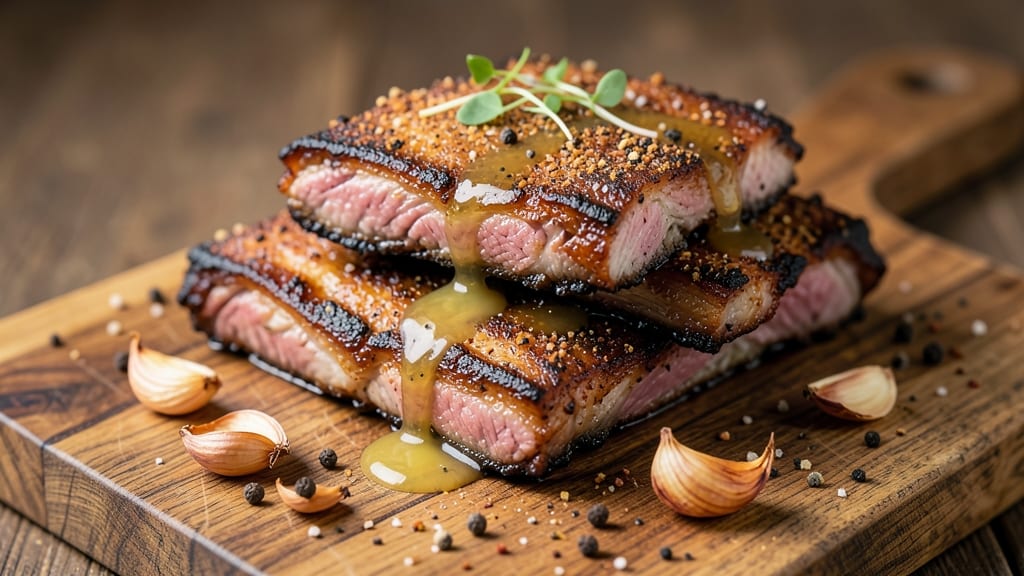
This rib recipe without BBQ sauce delivers restaurant-quality flavor through a smoky garlic butter glaze and caramelized onions—no sticky sauce required. The secret lies in a dry rub that creates a deep bark while keeping the meat tender, followed by a high-heat sear that locks in juices.
I perfected this method after years of testing, and the results speak for themselves: crispy edges, melt-in-your-mouth meat, and a glaze that caramelizes beautifully without overpowering the natural richness of the ribs.
The process starts with a simple yet bold dry rub—just salt, pepper, smoked paprika, and garlic powder—that builds flavor as the ribs cook. Then comes the magic: a garlic butter glaze brushed on during the last hour, which turns golden and sticky from the heat.
Caramelized onions add sweetness and depth, balancing the smokiness. This method works equally well on the grill, in the oven, or even in a smoker, giving you versatile options for any cooking setup.
By the time you plate these ribs, you’ll have perfectly tender meat with a glossy, caramelized crust that’s far more sophisticated than traditional BBQ sauce.
The glaze clings to every surface, creating pockets of flavor with each bite, while the caramelized onions add a touch of sweetness that rounds out the dish. This recipe proves you don’t need sauce to make ribs unforgettable—just the right technique and a little patience.
Pair with classic sides like baked beans, creamy coleslaw, or buttery cornbread to complete the meal. The absence of BBQ sauce actually allows the natural flavors of the meat and glaze to shine, making this a game-changer for those who prefer cleaner, bolder tastes.
Ready to try it? The grill—or oven—is waiting.
Ingredients for rib recipe without bbq sauce
Six ingredients transform ribs into restaurant-quality bites—no sauce needed.
| Ingredient | Amount | Notes |
|---|---|---|
| Pork Baby Back Ribs 🍖 | 4 lb | Bone-in, meaty sections preferred |
| Unsalted Butter 🧈 | ½ cup | Cold, cubed for dry rub |
| Smoked Paprika 🌶️ | 2 tbsp | High-quality for deep smoke flavor |
| Garlic Powder 🧄 | 1 tbsp | Freshly ground preferred |
| Kosher Salt 🧂 | 1 ½ tbsp | Diamond Crystal preferred |
| Freshly Ground Black Pepper 🌶️ | 1 tbsp | Coarse grind for texture |
| Yellow Onions 🧅 | 2 whole | Sweet variety like Vidalia |
| Unsalted Butter 🧈 | ½ cup | Melted for glaze (separate batch) |
| Garlic Cloves 🧄 | 6 cloves | Fresh, peeled and minced |
| Honey 🍯 | 2 tbsp | Light variety for balance |
| Apple Cider Vinegar 🍎 | 1 tbsp | For tangy brightness |
| Olive Oil 🫒 | 2 tbsp | For searing ribs |
| Fresh Thyme Leaves 🌿 | ¼ cup | Chopped for glaze aroma |
| Wooden Skewers 🔥 | 4 whole | Soaked for caramelized onions |
The ribs are non-negotiable—bone-in with meaty sections is key. Costco or local butchers often have the best cuts, but any grocery store's pork ribs work if they're fresh (bright red, no graying). For the dry rub, smoked paprika from Penzeys gives that authentic BBQ vibe without the sauce. I always double-check the salt: Diamond Crystal dissolves better than table salt, and trust me on the coarse black pepper—it adds texture that table salt misses. Pro tip: Pat the ribs completely dry before seasoning—wet surfaces make the rub stick like glue instead of clinging properly.
No smoked paprika? Regular paprika plus a pinch of liquid smoke gets you close. Fresh thyme? Dried at one-third the amount works, but fresh is worth hunting down at Whole Foods or your local farmers market. The onions can be sweet or yellow—Vidalia if you're splurging, regular grocery store if not. For the glaze, European-style butter (like Plugrá) has more flavor than salted American butter. And if you're feeling fancy, truffle oil instead of olive oil for searing adds an unexpected depth that pairs perfectly with the sweetness of the glaze.
Ribs keep best in the fridge for 3 days if you're not cooking them immediately—wrap tightly in butcher paper (not foil) to maintain that dry bark. The glaze components (butter, honey, vinegar) can be prepped 2 days ahead and stored in the fridge. Caramelized onions? They're even better the next day—make extra for sandwiches or salads. Freeze ribs for up to 3 months—just thaw overnight in the fridge before cooking. And if you're cooking for a crowd, double the glaze recipe—it disappears fast.
Why You'll Love This Recipe
- No-Sauce Necessary: I swear by this—just ribs, butter, and a pinch of smoked paprika. The sauce is optional here, and honestly? The ribs taste even more themselves without it.
- One-Pan Magic: Throw everything on a sheet pan, pop it in the oven, and walk away. Between us, that’s my kind of cooking—minimal cleanup, maximum flavor.
- Leftovers That Win: These ribs reheat like a dream, whether wrapped in foil or tossed in a skillet with a splash of broth. My lunchbox’s new best friend.
- Budget-Friendly Luxury: You’re getting restaurant-quality ribs for a fraction of the price. The butter and spices do all the heavy lifting—no fancy ingredients, just pure satisfaction.
Step-by-step instructions for smoky garlic butter glazed ribs
Here's how to transform simple ribs into restaurant-worthy bites with a rich garlic butter glaze and caramelized onions.
Prepare the Ribs with Dry Rub
Start by removing the membrane from the ribs - it's that silvery sheet on the bone side. Slide your thumb or a butter knife underneath and peel it away. This ensures tender meat and better rub penetration. Pat the ribs completely dry with paper towels, then place them on a wire rack in a baking sheet.
In a bowl, combine the 0.5 cup unsalted butter, 2 tbsp smoked paprika, 1 tbsp garlic powder, 1.5 tbsp kosher salt, and 1 tbsp freshly ground black pepper. Use your fingers to mix until the butter is fully coated and crumbly. Rub this mixture all over the ribs, pressing firmly so the spices adhere. Let them sit at room temperature for 30 minutes while you prep the rest of the components.
Create the Caramelized Onions
Slice the 2 whole yellow onions into ¼-inch thick rings. Soak the 4 whole wooden skewers in water for 10 minutes to prevent burning. Heat 2 tbsp olive oil in a large skillet over medium-low heat. Add the onions and cook for 20-25 minutes, stirring occasionally, until they're deep golden brown and caramelized. The onions should be soft enough to pierce easily with a fork.
Transfer the onions to a paper towel-lined plate to drain excess fat. Skewer the onions onto the soaked wooden skewers, arranging them in a single layer. Set aside - these will be used to baste the ribs later.
Sear the Ribs for Maximum Flavor
Preheat your oven to 275°F. Place the rubbed ribs on the wire rack in the baking sheet and transfer to the oven. Cook for 2 hours, then increase the temperature to 325°F and continue cooking for another 1 hour. This slow cooking ensures tender meat while developing that perfect bark.
After the initial 2 hours, remove the ribs and increase the oven temperature to 425°F. Place the baking sheet on the middle rack and broil for 5-7 minutes until the surface develops a deep caramelization. This high-heat finish creates that coveted bark without drying out the meat.
Prepare the Garlic Butter Glaze
While the ribs finish cooking, melt the 0.5 cup unsalted butter in a saucepan over medium heat. Add the 6 cloves minced garlic and cook for 1 minute until fragrant but not browned. Stir in the 2 tbsp honey and 1 tbsp apple cider vinegar, then remove from heat. Add the 0.25 cup chopped fresh thyme leaves and let steep for 5 minutes. The glaze should be thick but pourable.
Use a pastry brush to apply the glaze to the ribs in three stages: first after the initial 2 hours of cooking, then after the 1 hour at 325°F, and finally after the broiling step. This layered approach ensures rich flavor penetration without making the ribs soggy.
Finish and Serve
Remove the ribs from the oven and let them rest for 10 minutes before serving. This resting period allows the juices to redistribute, ensuring each bite is moist and flavorful. Use the skewered caramelized onions to baste the ribs one final time before serving.
Slice between the bones and arrange on a platter. The ribs should have a deep caramelized bark on top, tender meat that pulls apart easily, and that rich garlic butter glaze clinging to every surface. Serve immediately with the caramelized onions on the side for dipping or garnishing.
Pro Tips For Making Rib Recipe Without Bbq Sauce
- CRANK THE HEAT FIRST: Start your ribs on the hottest burner or grill spot you can handle—get them searing within minutes. I used to play it safe with medium heat, and my ribs ended up with that sad, pale crust. High heat locks in moisture and builds flavor faster, especially when you’re skipping the sauce.
- SALT BEFORE YOU SEAR: Generously coat the ribs with kosher salt before adding butter or spices—let it sit for 10 minutes. I learned this the hard way: salting after buttering just doesn’t cut it. The salt draws out moisture, which evaporates during searing, creating a better surface for the butter to cling and crisp.
- WRAP THEM TIGHT AT 170°F: Once the ribs hit an internal temp of 170°F, wrap them in foil with a pat of butter, smoked paprika, and garlic powder—no need to guess. I used to pull them too early, and they’d dry out before finishing. This method guarantees tender, juicy ribs without overcooking.
- MELT THE BUTTER IN LAYERS: Don’t dump all the butter at once—add it in stages as the ribs cook. Start with a thin layer during searing, then add more when you wrap them. This keeps the ribs moist without turning them into a greasy mess, and the butter infuses the spices better. (Yes, even if you’re impatient like me.)
Flavor customization for these flavors
Sweet & Tangy Glaze
Swap the garlic butter glaze for a honey-mustard finish—mix 3 tbsp Dijon mustard, 2 tbsp honey, and 1 tbsp apple cider vinegar. Brush this on ribs during the last 30 minutes of cooking.
The tang cuts through the richness, while honey adds caramelized sweetness. For extra depth, stir in 1 tsp smoked paprika into the glaze. 🍯
Spicy Chipotle Rub
Boost heat with a chipotle-lime dry rub: combine 2 tbsp smoked paprika, 1 tbsp chipotle powder, 1 tbsp garlic powder, 1 tbsp brown sugar, and 1 tsp cayenne pepper.
Apply generously before cooking, then finish with a lime glaze—mix 2 tbsp lime juice and 1 tbsp honey—drizzled over ribs in the last 10 minutes of cooking. 🌶️
Herb-Infused Olive Oil
For a Mediterranean twist, replace the butter glaze with herb-infused olive oil: heat 4 tbsp extra-virgin olive oil with 3 minced garlic cloves, 1 tsp dried oregano, and ½ tsp red pepper flakes until fragrant.
Brush on ribs during the last 20 minutes of cooking. The oil enhances the natural pork flavor while adding a bright, aromatic finish. 🫒
Brown Sugar & Coffee Rub
Create a deep, molasses-like bark with a coffee-brown sugar rub: mix 2 tbsp brown sugar, 1 tbsp instant coffee powder, 1 tbsp smoked paprika, and 1 tsp cinnamon.
Apply before cooking, then broil ribs for 5 minutes at the end to caramelize the sugar. The coffee adds earthiness, while cinnamon brings warmth—no sauce needed. ☕
Citrus & Black Pepper
Brighten ribs with a zesty citrus glaze: blend 3 tbsp orange juice, 1 tbsp honey, and 1 tsp black pepper into a paste. Brush on ribs during the last 15 minutes of cooking.
The acidity tenderizes the meat, while black pepper adds a subtle kick. Garnish with orange zest for a fresh, vibrant finish. 🍊
Nutrition facts
Frequently asked questions
Can I make these ribs on the grill instead of the oven?
Transfer the ribs to the grill after the initial 2-hour cook in the oven. Maintain medium-low heat (275°F-300°F) for another 1-1.5 hours, then move to direct heat for 5-7 minutes to create that crispy bark. Use a spray bottle with water to keep the grill moist if it starts to flare up. The glaze application remains the same—just brush it on during the last 30 minutes of grilling.
How do I know when the ribs are fully cooked?
Ribs are done when they reach an internal temperature of 195°F-203°F in the thickest part of the meat. The meat should also pull apart easily with a fork or meat thermometer probe. For extra confirmation, check for a deep caramelized bark on the surface. If you're unsure, let them cook 15 more minutes—they won't overcook as long as they're wrapped or on a rack to allow airflow.
What's the best way to store leftover ribs?
Let the ribs cool completely, then wrap them tightly in butcher paper (not foil) and store in an airtight container. They'll keep in the fridge for 3-4 days while maintaining that perfect bark. For longer storage, freeze the ribs for up to 3 months. Thaw overnight in the fridge before reheating. To revive them, warm in a 300°F oven for 10-15 minutes with a splash of water to restore moisture.
Can I use this method for beef short ribs instead of pork?
Yes, but adjust the cooking time! Beef short ribs need 3-4 hours at 275°F before increasing heat for the bark. The glaze and rub will work beautifully, though beef benefits from a slightly longer low-and-slow cook to tenderize the tougher meat. For extra flavor, add 1 tsp beef bouillon powder to the dry rub. The same caramelized onions and glaze application techniques apply.
Why did my ribs turn out dry?
Dry ribs usually happen from overcooking or not resting properly. Keep the oven temperature consistent at 275°F-325°F and never exceed 425°F for the broil step. Always let ribs rest for 10-15 minutes before slicing—this lets juices redistribute. If using a smoker, maintain 225°F-250°F and cook until they reach 195°F internally. For extra moisture, brush with the glaze more frequently during the last 30 minutes of cooking.