
Sauces & Condiments
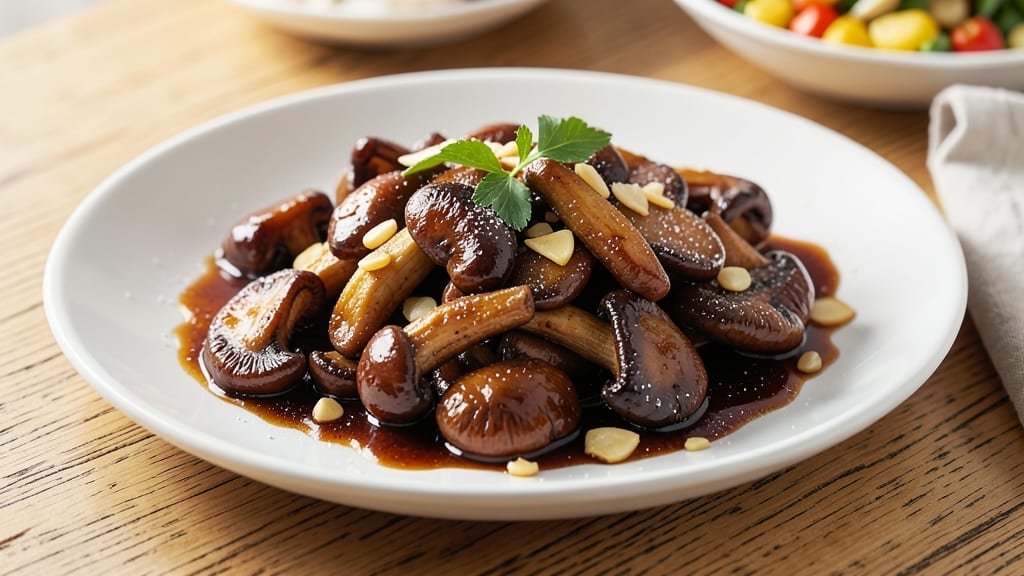
This mushroom oyster sauce recipe transforms ordinary stir-fries into restaurant-worthy masterpieces with its deep, umami-rich depth. 💛 The secret lies in simmering dried shiitake mushrooms with traditional oyster sauce, garlic, and ginger until the flavors meld into a glossy, velvety sauce that clings to every bite.
I developed this recipe after years of testing—it’s the one sauce that elevates simple weeknight meals into something extraordinary. What sets this sauce apart is the dual umami punch: the earthy intensity of mushrooms pairs perfectly with the salty-sweet complexity of oyster sauce.
A touch of cornstarch thickens it just enough to coat proteins and vegetables without overpowering them. The result? A sauce that’s versatile enough for stir-fries, marinades, or even drizzling over noodles, yet rich enough to stand alone as a dipping sauce.
The process is straightforward but requires patience—simmering until the liquid reduces to a glossy consistency takes time, but the reward is a sauce that’s far more complex than store-bought versions. Fresh mushrooms add texture, while dried ones deepen the flavor, giving you control over the intensity.
Store it in the fridge for up to a week, or freeze for longer shelf life. Whether you’re cooking for a crowd or prepping for meal prep, this sauce is a game-changer.
It’s the kind of condiment that turns a simple dinner into a memorable experience—one that’ll have everyone asking for seconds. Ready to elevate your cooking?
Ingredients for mushroom oyster sauce
Nine ingredients transform into a velvety sauce that elevates stir-fries to restaurant quality.
| Ingredient | Amount | Notes |
|---|---|---|
| Dried Shiitake Mushrooms 🍄 | ½ cup | Rehydrated in warm water |
| Oyster Sauce 🍶 | ½ cup | High-quality, dark variety |
| Garlic Cloves 🧄 | 4 cloves | Peeled and minced finely |
| Fresh Ginger 🌿 | 1 tbsp | Grated, not powdered |
| Cornstarch 🌾 | 1 tsp | For thickening consistency |
| Light Soy Sauce 🥢 | 2 tbsp | For depth of flavor |
| Brown Sugar 🍯 | 1 tbsp | Balances umami richness |
| Sesame Oil 🫒 | 1 tsp | For aromatic finish |
| Vegetable Oil 🫒 | 1 tbsp | For smooth texture |
| Water 💧 | 1 cup | For simmering base |
The shiitake mushrooms are the flavor foundation—dried is best for concentrated umami, but fresh works in a pinch if you soak them first. Trader Joe's has a great selection of dried shiitake, or check the Asian aisle at Whole Foods for premium options. The oyster sauce should be dark and thick—Lee Kum Kee or Hinode are my go-tos, but any quality brand will work. Fresh ginger is non-negotiable here; powdered lacks the bright, zesty kick that cuts through the richness. Look for knobby, firm ginger roots at the store—they keep longer and taste better.
No dried shiitake? Fresh cremini or portobello mushrooms work, but you'll need about 1 cup sliced—soak them in warm water for 10 minutes first. Swapping the oyster sauce? Hoisin sauce plus a dash of soy sauce mimics the sweet-salty balance, though it won't have the same depth. The cornstarch is key for that glossy finish—arrowroot powder works too if you're avoiding gluten. For extra richness, add 1 tbsp of mushroom powder (blend dried mushrooms into a fine powder) to the simmering sauce. The sesame oil should be toasted—Kadoya or La Choy are reliable brands for that nutty aroma.
This sauce keeps beautifully—1 week in the fridge or 3 months in the freezer. Store it in a glass jar with a tight seal to preserve the flavors. For meal prep, divide into small containers so you can grab just what you need. The sauce thickens as it cools, so stir in a splash of water if it gets too stiff. A little goes a long way—1-2 tbsp per serving is perfect for stir-fries, or drizzle generously over noodles and rice.
Why You'll Love This Recipe
- Fridge-to-Table Magic: Honestly, I keep dried shiitake in my pantry just for this—no fresh mushrooms needed. Soak them for 20 minutes while you chop garlic and ginger (which takes, like, three minutes), then toss everything into one pot. That’s it. Zero fancy steps, zero stress.
- Umami Bomb: The combo of rehydrated shiitake and oyster sauce? It’s like a flavor explosion in your mouth. The ginger adds a little kick, and the cornstarch slurry gives it that glossy, clingy finish—perfect for coating noodles or meat without tasting like glue.
- Weeknight Workhorse: This sauce is my go-to for stir-fries, dumplings, or even a quick pasta. I make a big batch on Sundays (it reheats beautifully) and use it all week—no takeout menus needed. My roommates still ask where I learned to cook like this.
- Pantry Goldmine: Between us, dried shiitake and oyster sauce are some of the most budget-friendly flavor boosters out there. A single jar of sauce lasts months, and shiitake soak up liquid like sponges—no waste. Plus, the leftovers taste just as good cold in rice bowls or fried rice.
Step-by-step instructions for mushroom oyster sauce
Here's how to transform simple ingredients into a velvety umami sauce that elevates every dish.
🍳 Step 1: Rehydrate and Sauté the Shiitake Mushrooms
Place the 0.5 cup dried shiitake mushrooms in a heatproof bowl and pour over 1 cup hot (not boiling) water. Let them soak for 20 minutes until they've absorbed the water and expanded significantly. Drain, reserving the soaking liquid.
Heat the 1 tablespoon vegetable oil in a medium saucepan over medium heat. Add the rehydrated mushrooms and cook for 5-6 minutes until they release their moisture and begin to brown slightly. Here's the thing—don't overcrowd the pan or they'll steam instead of develop that deep umami flavor we're after.
🍳 Step 2: Build the Aromatic Base
Add the 4 cloves minced garlic cloves and 1 tablespoon grated fresh ginger to the pan. Stir for 30 seconds until fragrant—you should smell that bright, zesty aroma that tells you they're ready. Be careful not to let them brown too much or they'll turn bitter.
Pour in the reserved mushroom soaking liquid and bring to a gentle simmer. Let it reduce by half, which should take about 5 minutes. This step concentrates the mushroom flavors and creates the foundation for our rich sauce. Watch the pan carefully—you want a steady simmer, not a rolling boil.
🥘 Step 3: Combine Sauce Elements
Lower the heat to medium-low and stir in the 0.5 cup oyster sauce, 2 tablespoons light soy sauce, and 1 tablespoon brown sugar. Let the mixture simmer for 3-4 minutes until it begins to thicken slightly. The sauce should smell complex—sweet, salty, and deeply umami all at once.
This is where the magic happens. The brown sugar balances the saltiness while the oyster sauce provides that signature depth. If you're using a high-quality dark oyster sauce, you'll notice that rich, almost caramel-like aroma developing as it cooks.
𰴏 Step 5: Rest and Adjust
Let the sauce rest for 10 minutes before using. This resting period allows the flavors to meld completely and the sauce to reach its perfect consistency. Taste and adjust seasoning if needed—you might want to add a touch more soy sauce for saltiness or a pinch of sugar to balance flavors.
This sauce keeps beautifully in the refrigerator for up to 1 week or can be frozen for 3 months. Use it to elevate stir-fries, glazes, or even as a dipping sauce. The umami depth will make every dish taste like it came from a high-end restaurant.
Pro Tips For Making Mushroom Oyster Sauce
- SOAK SHIITAKES LONG ENOUGH: Dried shiitakes need at least 30 minutes in hot water to soften properly—don’t rush this or they’ll turn to mush mid-cook. I learned this the hard way when my first batch fell apart like wet cardboard.
- MINCE GINGER FINE: Use a microplane or knife to get ginger into tiny, almost invisible pieces—this prevents clumps and lets the flavor blend smoothly. My grandmother swore by this, and she was right: you’ll taste the difference.
- SIMMER DON’T BOIL: Keep the sauce at a gentle simmer after adding oyster sauce, or it’ll turn gluey and lose its gloss. Too much heat ruins the texture, and nobody wants a thick, pasty mess.
- SLURRY THE CORNSTARCH: Mix cornstarch with a splash of cold water first—this prevents clumping when it hits the hot sauce. I was skeptical until I tried it, and now I never go back.
Make-ahead tips for leftovers
Prep Ahead
Make this sauce a day in advance—I always do when I'm prepping for the week. The flavors deepen as it sits, and the texture becomes even more velvety.
Store it in a glass jar in the fridge, and it'll be ready to grab whenever you need to toss it with stir-fries or noodles. Honestly, this is one of those recipes that actually tastes better the next day. 💛
Freezer-Friendly
Freezing this sauce is a total game-changer for busy weeks. Portion it into ice cube trays first—this makes it super easy to grab just the right amount later. Once frozen, transfer the cubes to a ziplock bag or airtight container.
When you're ready to use it, thaw overnight in the fridge or pop a cube directly into your hot stir-fry for instant flavor. I've kept this sauce frozen for up to 3 months without any loss of quality.
Double the Batch
This sauce is so versatile that I always double the recipe when I make it. The extra portion gives me confidence to experiment—drizzle it over grilled meats, use it as a marinade, or even mix it into soups.
If you're short on space, store one batch in the fridge and freeze the other. That way, you always have a backup ready for when inspiration (or hunger) strikes. Trust me, you'll want to make this often.
Meal Prep Hack
Prep your proteins and veggies for stir-fries the same day you make the sauce. Store them separately in airtight containers in the fridge, and keep the sauce in a small jar nearby. When it's time to cook, just toss everything together with a splash of the sauce.
This cuts your cooking time in half and ensures you always have a restaurant-quality meal ready. I keep my prepped ingredients in glass containers with snap lids—they're easier to stack and look better in the fridge.
Flavor Boost
Want to take your sauce to the next level? Add 1 tsp of fish sauce or ½ tsp of white pepper while it's simmering. These small additions add layers of complexity that make the sauce even more irresistible.
I also like to finish with a drizzle of toasted sesame oil right before serving—it adds a nutty aroma that pairs perfectly with the umami flavors. The key is to taste as you go and adjust to your preference.
Sauce Versatility
This isn't just a stir-fry sauce—think of it as your secret weapon for weeknight meals. Use it as a glaze for grilled chicken or tofu, a dipping sauce for spring rolls, or even a marinade for seafood.
The possibilities are endless, and the best part is that it keeps well, so you can always have it on hand. I've even used it to deglaze pans after cooking—it picks up all those delicious browned bits and turns them into a flavorful sauce. 🌟
Nutrition facts
Frequently asked questions
Can I use fresh mushrooms instead of dried shiitake?
Yes, but you'll need about 1 cup sliced fresh cremini or portobello mushrooms to match the umami depth. Soak them in warm water for 10 minutes first to release their moisture, then drain before using. Fresh mushrooms add texture but won't have the same concentrated flavor as dried shiitake.
How do I adjust this sauce for spicier dishes?
Add ½ teaspoon of chili paste or ¼ teaspoon of red pepper flakes during the simmering step. For a smoky kick, stir in ½ teaspoon of smoked paprika at the end. Start with small amounts—you can always add more, but you can't remove the heat once it's in!
What's the best way to use this sauce in marinades?
Mix 2 tablespoons of sauce with 1 tablespoon of honey and 1 tablespoon of olive oil for a perfect marinade. Let proteins like chicken or tofu soak for 30-60 minutes before cooking. The sauce's umami will tenderize while adding that signature depth. For seafood, use 1 tablespoon per pound and marinate for 15-20 minutes max.
Why did my sauce turn out too thick?
This usually happens if you simmered too long or didn't account for cooling. Thin with 1 teaspoon of water at a time while stirring constantly. For future batches, reduce the cornstarch to ½ teaspoon or simmer for 1-2 minutes less. The sauce should coat the back of a spoon but still drizzle easily.
Can I make this sauce vegetarian?
Yes! Replace the oyster sauce with ½ cup vegetarian oyster sauce (made with mushrooms) or ¼ cup soy sauce plus 1 tablespoon hoisin sauce. For extra umami, add 1 teaspoon of mushroom powder (blend dried mushrooms into powder) to the simmering sauce. The flavor will be slightly different but still delicious.