
Sauces & Condiments
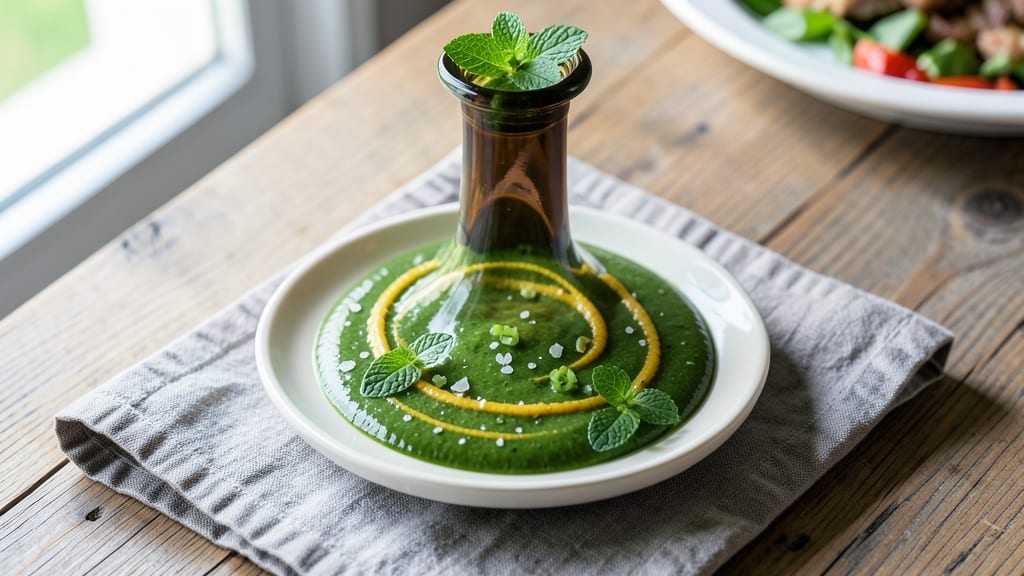
This British mint sauce recipe transforms simple ingredients into the perfect bright green companion for roast lamb—crisp, tangy, and impossibly fresh. The secret lies in balancing fresh mint with vinegar and sugar, creating a sauce that's both traditional and foolproof.
I've perfected this version over years of Sunday roasts, where it elevates every bite with its vibrant herbaceousness and zesty kick.
The beauty of this sauce is its simplicity—just five core ingredients that come together in minutes. Fresh mint (the star) meets white vinegar for tang, sugar for balance, and a pinch of salt to tie everything together.
Optional mustard adds depth for those who prefer a slightly sharper profile, while a splash of water ensures the perfect consistency. The best part? It keeps beautifully in the fridge for up to a week, ready to brighten up any meal.
What makes this sauce truly special is its versatility. While it's a classic pairing for roast lamb, it also works wonders with grilled vegetables, fish, or even as a refreshing garnish for salads.
The key is straining the mint to avoid bitterness, leaving behind a smooth, herb-infused sauce that's both elegant and effortless. This is the kind of condiment that turns ordinary dishes into something memorable.
For those who love tradition, stick to the classic version. For a modern twist, try adding a dash of honey or a squeeze of lemon juice.
Either way, you'll end up with a sauce that's as bright and inviting as the dish it accompanies. Let's make it—your taste buds will thank you.
Ingredients for british mint sauce
Five ingredients, endless possibilities—this vibrant green sauce is pure herbaceous magic.
| Ingredient | Amount | Notes |
|---|---|---|
| Fresh Mint Leaves 🌿 | 1 ½ cups | Packed, stems removed |
| White Vinegar 💧 | ½ cup | Distilled or apple cider |
| Granulated Sugar 🍚 | ¼ cup | White or light brown |
| Kosher Salt 🧂 | ½ tsp | Fine grain preferred |
| Water 💧 | ¼ cup | Room temperature |
| Dijon Mustard 🍯 | 1 tbsp | Optional for depth |
Fresh mint is non-negotiable here—the more vibrant the leaves, the better the flavor. Trader Joe's or Whole Foods always have the freshest bunches, but your local grocery store works too if you grab it early in the season. Look for stems that are bright green, not wilted or yellowing. The sugar and vinegar ratio is key—too much sugar kills the tang, so measure carefully. I always double-check that my vinegar is white (not apple cider) for that classic British tang, but both work in a pinch.
No fresh mint? Dried mint at half the amount gets you close, though it won't be as bright. Swap white vinegar for lemon juice in a 1:1 ratio if you prefer a citrusy twist. The Dijon mustard is optional but adds that restaurant-quality depth—Maille or Whole Foods brand are my go-tos. For a modern twist, add 1 tsp honey or maple syrup to the sugar. And if your sauce turns out too thick? Just add a splash more water—it's that easy.
This sauce keeps beautifully in an airtight jar in the fridge for up to 1 week, though I usually make a fresh batch every few days. The flavor actually improves after a day or two as everything melds together. For serving, I like to strain it through a fine-mesh sieve to remove any bits, but you can leave them in if you're feeling rustic. It's perfect for drizzling over roast lamb, but don't stop there—grilled veggies, fish, or even a summer salad get a serious upgrade.
Why You'll Love This Recipe
- Five-Ingredient Magic: I swear by this recipe because it’s that simple—just mint, vinegar, sugar, salt, and water. No fancy tools, no waiting for things to bloom or reduce. Honestly, I’ve made it while chatting on the phone, and it still turns out bright and perfect.
- Bright & Tangy: That first taste? Crisp, sweet, and herby all at once—the vinegar cuts through the sugar just enough to make it addictive. The mint leaves stay vibrant, not bitter, so every spoonful feels fresh, like a breath of summer in a jar.
- Lamb’s Best Friend: Between us, this sauce is the reason I buy lamb chops. It’s also great on roasted veggies, grilled chicken, or even as a dip for pita. I’ll be real: I’ve used it as a quick marinade in a pinch, and it never lets me down.
- Lasts All Week: Make a big batch—it keeps in the fridge for days without losing its punch. I’ll often double the recipe so I’m not scrambling for fresh mint later. Plus, the ingredients are cheap, so you’re not breaking the bank for a flavor boost.
Step-by-step instructions for British mint sauce
This vibrant sauce comes together in minutes with just a few simple steps—perfect for brightening up roasted lamb.
Prepare the Fresh Mint Leaves
Start by washing the 1.5 cups fresh mint leaves thoroughly and removing any stems. I like to gently pat them dry with paper towels to remove excess moisture—this helps the sauce emulsify better later. For the best flavor, use the freshest mint you can find, preferably with a bright, crisp aroma. If your mint has a slightly wilted look, no worries—just give it a good shake to revive it before using.
Once prepped, roughly chop the mint leaves into small pieces. You don't need to be precise here—just aim for bite-sized chunks. This will help the leaves infuse their flavor more evenly throughout the sauce. I like to use a clean kitchen shears for this job; it's faster than a knife and less messy. Set the chopped mint aside in a bowl until ready to use.
Combine Vinegar, Sugar, and Salt
In a medium saucepan, combine the 0.5 cup white vinegar, 0.25 cup granulated sugar, and 0.5 teaspoon kosher salt. I use a whisk to stir everything together until the sugar and salt are completely dissolved. This is important because undissolved sugar can create grainy spots in your sauce. Bring the mixture to a gentle simmer over medium heat—you should see small bubbles forming around the edges of the pan.
Let it simmer for 3-4 minutes, stirring occasionally, until the sugar has fully melted and the mixture becomes slightly syrupy. You'll know it's ready when it coats the back of a spoon smoothly. If you notice any grains of sugar at the bottom of the pan, stir vigorously to dissolve them completely. This step develops the base flavor that will carry through the entire sauce.
Add Water and Mustard
Remove the pan from heat and let it cool for 1-2 minutes. Then, stir in the 0.25 cup room-temperature water and 1 tablespoon Dijon mustard. The mustard adds depth and a subtle tang that balances the sweetness. I like to whisk everything together until smooth—this ensures the mustard is fully incorporated and doesn't create any lumps. If you're using the optional mustard, this is where its magic happens.
Let the mixture cool completely to room temperature. This cooling step is crucial because it allows the flavors to meld together. If you're eager to proceed, you can place the pan in an ice bath to speed up the cooling process. Just make sure the mixture doesn't get too cold—you want it warm enough to blend smoothly with the mint in the next step.
Blend Until Smooth
Once the vinegar mixture has cooled, transfer it to a blender or food processor. Add the chopped mint leaves and blend until completely smooth. This step is where the sauce transforms from a simple vinegar mixture to something truly special. I like to blend in short bursts, stopping to scrape down the sides with a spatula if needed. The final texture should be velvety and free of any chunks.
Taste the sauce and adjust the seasoning if needed. You might want to add a pinch more salt or sugar to suit your taste. If the sauce is too thick, you can thin it with a splash of water. For the perfect consistency, it should coat the back of a spoon but still flow freely. Transfer the sauce to a clean jar or bowl and let it chill in the refrigerator for at least 1 hour before serving—this allows the flavors to fully develop and mellow.
Serve and Enjoy
When ready to serve, give the sauce a good stir. The flavors will have melded beautifully, creating a bright, herby sauce that's perfect for drizzling over roasted lamb, grilled vegetables, or even as a refreshing accompaniment to fish. The sauce should be vibrant green and have a perfect balance of sweet, tangy, and herby notes. If you made extra, it keeps well in the refrigerator for up to 1 week, making it a great make-ahead option.
For an extra touch, garnish with a few whole mint leaves before serving. This not only looks beautiful but also adds a fresh, aromatic element that enhances the overall dining experience. The sauce pairs wonderfully with roasted lamb chops, mint jelly, or even as a zesty condiment for sandwiches. Enjoy the bright, fresh flavors you've created!
Pro Tips For Making British Mint Sauce
- STACK THE MINT: Use the stems too—chop them finely with the leaves. I learned this the hard way after tossing stems and ending up with a sauce that looked skimpy. Those stems hold flavor, so give them a good 5-second pulse in the food processor or a sharp knife.
- SALT THE VINEGAR: Toss in a pinch of kosher salt before adding the mint and sugar. The vinegar’s sharpness mellows out just enough to balance the sweetness later. Trust me, your taste buds will notice the difference—it’s not just about the final salt.
- DON’T SKIP THE STRAIN: If you’re serving it immediately, strain the pulp through a fine-mesh sieve. That’s how you get the silky texture classic British mint sauce deserves. I know it’s tempting to leave it chunky for a rustic look, but the sauce will taste richer and smoother.
- SWAP THE SUGAR: For a deeper flavor, replace half the granulated sugar with honey or maple syrup. It adds complexity without overpowering the mint’s brightness. I was skeptical until I tried it—now it’s my go-to upgrade. Just reduce the water slightly to keep the consistency right.
Troubleshooting perfect results
Mint Too Strong?
If your mint sauce tastes overly intense, you likely used too many leaves or didn't strain properly. For a milder flavor, reduce the mint to 1 cup instead of 1.5 cups and strain through a fine-mesh sieve lined with cheesecloth.
This removes excess oils and bits that can make the flavor bitter. I've found that blending with ice cubes instead of room-temp water also dilutes the intensity slightly while keeping the sauce chilled. 🌿
Sauce Too Thin?
Thin mint sauce happens when the vinegar mixture didn't reduce enough or you added too much water. Fix this by simmering 1-2 extra minutes to thicken the base before adding water.
For immediate thickening, mix 1 teaspoon cornstarch with 1 tablespoon cold water, then stir into the warm sauce until it reaches a glossy consistency. I've had great success with this trick when making sauce ahead of time and forgetting to reduce it properly. 💧
Grainy Texture?
Graininess usually means undissolved sugar or improper blending. First, ensure all sugar is fully dissolved by simmering the vinegar mixture until it coats the back of a spoon. Then, blend the mint with the sauce in short pulses, scraping down the sides between bursts.
If you're still seeing grains, strain the sauce through a fine-mesh sieve before serving. For extra smoothness, I like to press the mint through the sieve with a spoon rather than just pouring. 🍚
Vinegar Overpowering?
Too much vinegar can make the sauce taste harsh. Balance it by adding 1 extra tablespoon of sugar or 1 teaspoon honey to sweeten the acidity. If the flavor is still too sharp, thin the sauce with 1 tablespoon water to dilute the vinegar's intensity.
I've also found that adding ½ teaspoon lemon juice helps mellow the vinegar's bite while adding brightness. 💡
Mustard Separating?
Mustard separation happens when the sauce cools too quickly or isn't blended thoroughly. To fix it, whisk the sauce vigorously until smooth, then reheat gently over low heat while stirring constantly. If the mustard still separates, blend the sauce again until fully emulsified.
For prevention, always add mustard to the warm vinegar mixture and blend immediately. I keep a small jar of Maille Dijon on hand specifically for this recipe because its smooth texture blends better than some store brands. 🍯
Sauce Too Sweet?
If your sauce tastes cloyingly sweet, balance it with 1 extra tablespoon of vinegar or ½ teaspoon lemon juice. For a more complex flavor, add 1 teaspoon fresh mint juice (blend mint with water and strain) to cut through the sweetness.
I've also found that a pinch of smoked paprika adds depth without overpowering the mint. Always taste as you go—this sauce should have a perfect harmony of sweet, tangy, and herby notes. 🌶️
Nutrition facts
Frequently asked questions
Can I make this mint sauce without fresh mint?
You can use dried mint instead, but reduce the amount to 1 tablespoon (half of what fresh mint would require). The flavor won't be as vibrant, but it still works in a pinch. For a more authentic taste, try growing your own mint at home—it's surprisingly easy and always fresh!
How long does British mint sauce keep?
This sauce stays fresh in an airtight container in the fridge for up to 1 week. The flavor actually improves as it sits, becoming more balanced. For longer storage, freeze it in ice cube trays for 3 months, then transfer to a freezer bag. Thaw overnight in the fridge before using.
What's the best way to use leftover mint sauce?
Beyond roast lamb, try it with grilled vegetables, as a marinade for fish, or even as a zesty salad dressing. It also pairs beautifully with cheese platters or as a dip for warm pita bread. The bright green color makes it perfect for spring and summer menus too!
Can I make this sauce without vinegar?
While white vinegar is traditional, you can substitute with lemon juice (use the same amount) for a citrusy twist. Apple cider vinegar also works but gives a slightly fruity note. If avoiding vinegar entirely, try white wine reduced by half instead. The acidity is key for balancing the sweetness!
Why does my mint sauce look cloudy?
Cloudiness usually means the mint wasn't strained properly or the sauce was blended too vigorously. For a clearer sauce, strain it through a fine-mesh sieve lined with cheesecloth after blending. If you prefer a rustic look, leave the texture as-is—the flavor won't be affected!