
Sauces & Condiments
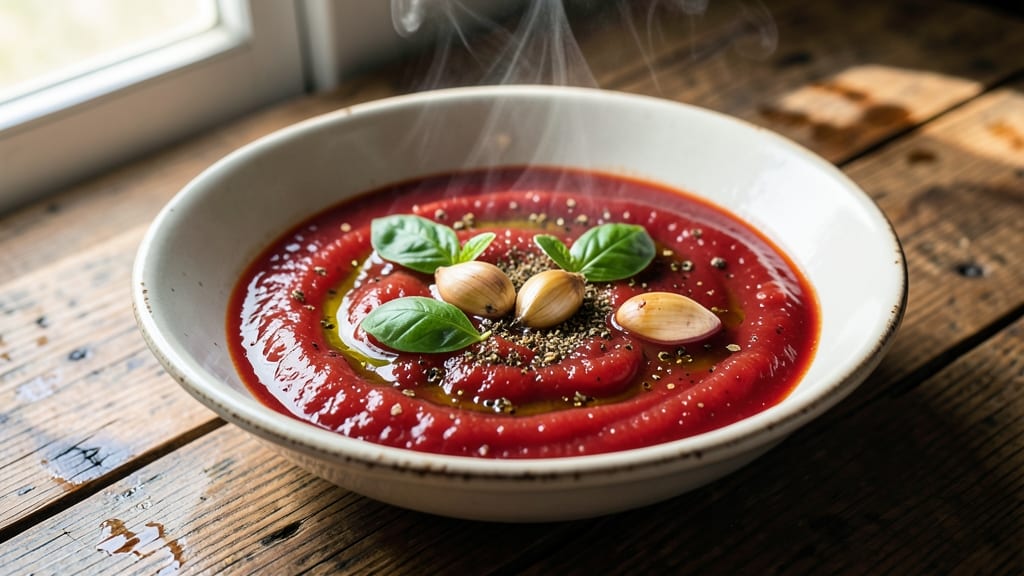
This basic Italian tomato sauce recipe transforms simple ingredients into the velvety, aromatic foundation of classic Italian cooking. The secret lies in slow simmering fresh tomatoes with garlic, olive oil, and basil—allowing flavors to meld into a rich, balanced sauce that clings perfectly to pasta or pizza.
I developed this version after years of testing, ensuring every batch delivers that authentic, restaurant-quality depth without requiring fancy techniques.
The process is straightforward but critical: sauté garlic until fragrant (never let it brown), add crushed tomatoes, and simmer uncovered for at least 30 minutes. This slow reduction concentrates flavors while developing that signature Italian acidity.
A quick blend at the end creates a silky texture, though purists can skip this step for rustic texture. The result is a versatile sauce that improves with time—better the next day as flavors deepen.
What sets this sauce apart is its balance: bright tomato sweetness, garlicky warmth, and fresh basil notes that cut through richness. Unlike store-bought versions, this recipe builds flavor through technique rather than salt or sugar.
The sauce keeps for 5 days in the fridge or 3 months frozen, making it perfect for meal prep. Whether drizzled over al dente pasta, spread on bruschetta, or used as a pizza base, this sauce elevates every dish it touches.
For extra depth, add a splash of red wine or a pinch of sugar to balance acidity. The key is patience—rushing this sauce sacrifices its soul. Let's build flavor the Italian way, one simmer at a time.
Ingredients for basic italian tomato sauce
Nine essential ingredients for restaurant-quality Italian tomato sauce that builds rich, aromatic depth through slow simmering.
| Ingredient | Amount | Notes |
|---|---|---|
| Extra-Virgin Olive Oil 🫒 | ½ cup | High-quality, fruity variety preferred |
| Garlic Cloves 🧄 | 4 cloves | Freshly minced for optimal aroma |
| Fresh Basil Leaves 🌿 | ½ cup | Packed, stems removed |
| San Marzano Whole Canned Tomatoes 🍅 | 28 oz | Crushed by hand for texture |
| Dried Oregano 🍃 | 1 tsp | Italian variety preferred |
| Red Wine 🍷 | ¼ cup | Dry, bold variety like Chianti |
| Granulated Sugar 🍚 | 1 tsp | Balances acidity |
| Diamond Crystal Kosher Salt 🧂 | 1 tsp | Adjust to taste |
| Freshly Ground Black Pepper 🌶️ | ½ tsp | Freshly cracked preferred |
The foundation of this sauce begins with San Marzano tomatoes, known for their sweetness and low acidity—ideal for Italian cooking. Whole peeled tomatoes from a reputable brand like Mutti or Cirio ensure superior quality, but any high-quality canned tomatoes will work in a pinch. Fresh basil and garlic are non-negotiable for authentic flavor; grab organic basil from the grocery store's produce section or a local market for maximum potency. The olive oil should be extra-virgin, with a fruity aroma—California Olive Ranch or Colavita are excellent choices. For the wine, any dry red like Chianti or Cabernet Sauvignon will add depth, though you can substitute with additional tomato juice if needed.
No fresh basil? Dried oregano at double the amount provides a similar earthy note, though it lacks the bright freshness. Short on San Marzano tomatoes? Crushed Roma tomatoes work well, but you may need to add a pinch more sugar to balance the acidity. Running out of red wine? Tomato paste mixed with water (1 tbsp paste + 2 tbsp water) offers a concentrated tomato flavor. The garlic should be minced finely to release its oils without burning—toast the minced garlic in olive oil for 30 seconds before adding tomatoes to deepen its flavor. For a smoother texture, blend the finished sauce briefly, though purists prefer a rustic, chunky consistency.
This sauce develops richer flavor over time, so make a double batch and store it for future meals. In the fridge, it keeps for 5-7 days in an airtight container, with flavors deepening daily. For longer storage, freeze in ice cube trays or small portions for easy thawing—it maintains quality for up to 3 months. To reheat, simmer gently on the stove, adding a splash of water or pasta water if it thickens too much. The sauce is versatile: drizzle over pasta, spread on bruschetta, or use as a pizza base—its balanced flavors elevate any dish it touches.
Why You'll Love This Recipe
- No-Chop Needed: I swear by this—just crush the garlic cloves with the flat of my knife, no mincing required. The San Marzano tomatoes handle all the work while I sip my coffee, and by the time I tear the basil, the sauce is already singing.
- Garlic-Basil Magic: That first sizzle of olive oil with garlic? Pure alchemy. The dried oregano rounds out the brightness, but it’s the fresh basil—torn in at the end—that makes it taste like I actually spent hours simmering (even though I didn’t).
- Pasta Party Starter: This sauce is my secret weapon for game nights, potlucks, or when my college-aged kid calls for “real food.” Dump it over spaghetti, toss with grilled chicken, or freeze half for lazy Mondays—it’s always the dish that gets raved about.
- Fridge Goldmine: I make double batches on Sundays because this sauce only gets better after a day in the fridge. The flavors meld like a cozy blanket, and it stretches my grocery budget without sacrificing taste—proof that simple ingredients can be my wallet’s best friend.
Step-by-step instructions for simmered Italian tomato sauce
This method delivers a balanced sauce with depth from wine and fresh herbs.
Sauté Garlic Until Fragrant
Heat the 0.5 cup extra-virgin olive oil in a heavy-bottomed saucepan over medium-low heat. Add the 4 cloves minced garlic and cook for 2-3 minutes until the garlic becomes golden and fragrant—not browned. This gentle heat prevents bitterness while developing flavor. Stir constantly to avoid burning.
Watch for the moment when the garlic releases its aroma into the oil. That's your cue to move quickly to the next step. If the oil starts to smoke, reduce the heat immediately—garlic burns faster than you might expect.
Deglaze with Wine and Tomatoes
Pour in the 0.25 cup red wine and scrape up any browned bits from the bottom of the pan with a wooden spoon. This deglazing step captures all the garlic flavor. Let the wine simmer for 3-4 minutes until reduced by half, intensifying its flavor profile.
Add the 28 oz San Marzano whole canned tomatoes, crushing them by hand with your fingers as you add them. This creates a slightly rustic texture that's more appealing than smooth pureed sauce. Stir well to combine, then sprinkle in the 1 tsp dried oregano and 1 tsp granulated sugar. The sugar helps balance the acidity of the tomatoes.
Simmer Until Thickened
Bring the sauce to a gentle boil, then reduce heat to low and let it simmer uncovered for 25-30 minutes. Stir occasionally to prevent sticking. You're looking for a sauce that coats the back of a spoon with a velvety consistency—this typically happens around the 25-minute mark for this quantity.
Taste and adjust seasoning with the 1 tsp diamond crystal kosher salt and 0.5 tsp freshly ground black pepper. The sauce should be well-seasoned but not overwhelmingly salty. If it's too acidic, add another pinch of sugar. If it's too thick, whisk in 1-2 tablespoons of water to reach your desired consistency.
Finish with Fresh Basil
Remove the sauce from heat and stir in the 0.5 cup fresh basil leaves, stems removed. Let the basil infuse for 5 minutes—this allows its bright, aromatic qualities to permeate the sauce without overpowering it. The basil should be just visible in the finished sauce, adding freshness to the deep tomato flavor.
For best results, use the sauce immediately over pasta or with your favorite Italian dishes. If storing, let it cool completely, then refrigerate in an airtight container for up to 5 days or freeze for 3 months. The flavors will continue to develop as it sits, becoming even more complex over time.
Pro Tips For Making Basic Italian Tomato Sauce
- CRUSH THE GARLIC: Low and slow is your friend here—after adding minced garlic to the olive oil, drop the heat to medium-low and stir constantly. I learned this the hard way: burning garlic turns your sauce bitter faster than you can say "pasta al pomodoro." Let it color gently, about 2-3 minutes, until it smells like heaven, not smoke.
- PEEL THOSE TOMATOES: San Marzano cans come pre-peeled, but if you’re using whole tomatoes, take the extra 30 seconds to peel them—yes, even if it’s a pain. The skins turn rubbery and bitter when cooked, and no one wants that fighting their sauce. Drop them in boiling water for 30 seconds, then ice bath, and they’ll slide off like butter.
- SALT THE WATER FIRST: Add a pinch of salt to the pot before crushing the tomatoes. It’s not just about flavor—it helps break down the tomato flesh faster and keeps the sauce from tasting flat. I used to skip this, and my sauce always felt dull until I realized I was missing this simple step. (Your future self will notice.)
- STIR LESS, LET IT BUBBLE: After adding tomatoes, resist the urge to stir constantly—just give it a gentle shake every few minutes. A steady simmer (not a boil) is what you want, and too much stirring makes the sauce thicken unevenly. I was skeptical until I tried it: the sauce develops deeper flavor when left to its own devices for 20-30 minutes. (Yes, even if you’re impatient like me.)
Troubleshooting great basic italian tomato sauce
Garlic Burns Too Fast
If your garlic turns bitter or browns too quickly, you're cooking it at too high a heat. The key is medium-low heat—just enough to make the garlic fragrant without browning. I recommend using a heavy-bottomed saucepan like All-Clad Stainless Steel to distribute heat evenly.
If your oil starts to smoke, immediately reduce the heat to low and stir constantly. For extra insurance, add the garlic to the cold oil and turn the heat on afterward—this gives you more control over the cooking process. 🌡️
Sauce Too Thin or Watery
A watery sauce usually means the tomatoes weren’t simmered long enough or the heat wasn’t low enough. After the initial 25 minutes, let the sauce reduce uncovered on low heat for another 10-15 minutes, stirring occasionally.
If it’s still too thin, remove the pan from heat and let it sit uncovered for 5 minutes—the residual heat will continue to evaporate moisture.
For a thicker sauce, blend ½ cup of the sauce and stir it back in, or mix 1 tbsp tomato paste with 1 tbsp water and whisk it in while simmering. 💧
Sauce Too Thick or Gluey
Over-reducing can turn your sauce into a thick paste. If this happens, whisk in 1-2 tablespoons of water, pasta water, or even a splash of red wine to loosen it up. For a smoother texture, blend the sauce briefly—just 10-15 seconds—to break up any lumps.
If the sauce is still too thick after reheating, add another ½ cup of water and simmer gently until it reaches your desired consistency. The goal is a coating consistency, not a glue-like texture. 🥣
Sauce Tastes Bland or Flat
Bland sauce often means the tomatoes weren’t cooked long enough or the seasoning wasn’t balanced. First, simmer uncovered for at least 30 minutes—this concentrates the flavors.
If it’s still bland, boost it with ½ tsp more salt, ¼ tsp black pepper, or a pinch of red pepper flakes for depth. For extra richness, add 1 tbsp of unsalted butter or 1 tsp of balsamic vinegar at the end.
Fresh basil is non-negotiable—if your sauce lacks brightness, add another ¼ cup of fresh leaves and let it infuse for 5 minutes off the heat. 🌿
Sauce Separates or Splits
Separation happens when the sauce isn’t stirred enough or the heat isn’t consistent. To fix it, remove the pan from heat and whisk vigorously for 1-2 minutes to recombine the layers. If the issue persists, blend the sauce until smooth—this breaks up any oil or tomato skin separation.
For prevention, stir the sauce every 5 minutes during simmering and avoid rapid temperature changes. A slow, steady simmer is your best friend here. 🔥
Tomatoes Too Acidic
If your sauce tastes overly tangy, it’s likely from the tomatoes or insufficient sugar. Balance the acidity by adding ½-1 tsp more granulated sugar and simmering for another 5-10 minutes.
For a deeper flavor, stir in 1 tbsp of tomato paste or a splash of red wine to mellow the sharpness.
If the sauce is still too acidic, a pinch of baking soda (just ⅛ tsp) can neutralize it—use sparingly, as too much will make the sauce taste soapy. 🍷
Nutrition facts
Frequently asked questions
Can I make this sauce without fresh basil?
Yes! Use 2 teaspoons of dried basil instead, but add it with the oregano at the beginning rather than at the end. The flavor won't be as bright, but it will still work well. For extra depth, add ½ teaspoon of red pepper flakes to compensate for the missing freshness.
How do I adjust this recipe for a smoother texture?
Simmer the sauce for an extra 10-15 minutes to thicken naturally, then blend ½ cup of the sauce until smooth and stir it back in. For a rustic look, skip blending and simply stir the sauce vigorously after simmering to break up any tomato skins.
Can I use tomato paste instead of canned tomatoes?
Yes, but you'll need to adjust the liquid. Replace the 28 oz canned tomatoes with 2 tablespoons tomato paste mixed with 1 cup water or broth. Simmer for 5-10 minutes longer since tomato paste is more concentrated. The result will be thicker and more intense.
Why does my sauce taste bland after simmering?
Blandness usually means the sauce didn't reduce enough or wasn't seasoned properly. First, simmer uncovered for at least 30 minutes to concentrate flavors. Then, boost with ½ teaspoon more salt, ¼ teaspoon black pepper, or 1 tablespoon of unsalted butter at the end for richness.
How can I use this sauce beyond pasta?
This versatile sauce works perfectly as a pizza base, bruschetta topping, or marinade for grilled chicken. For extra flavor, stir in 1 teaspoon of honey or ½ cup of grated Parmesan before serving. It also freezes beautifully for future meals!