
Sauces & Condiments
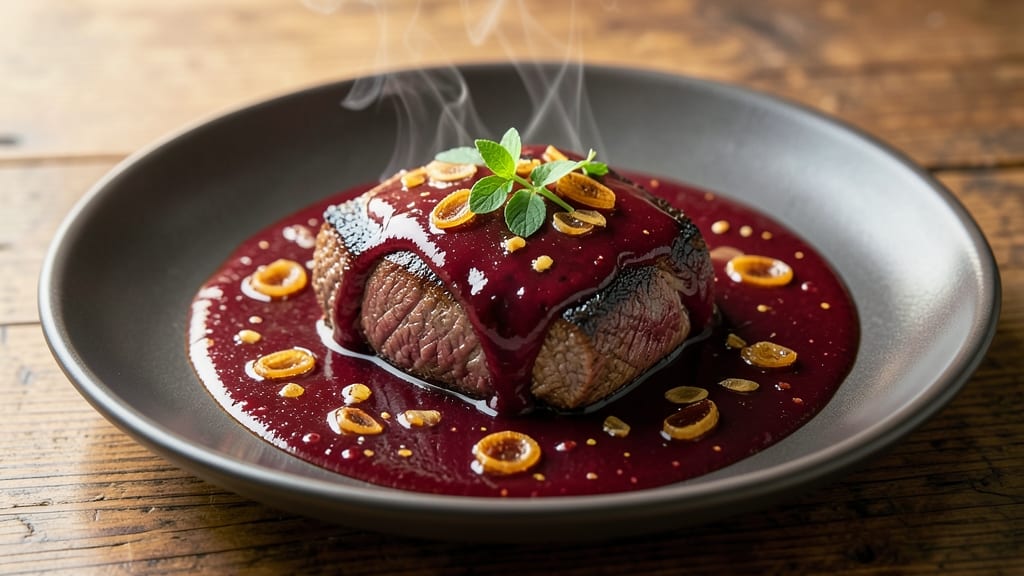
This Barolo wine sauce recipe transforms bold red wine into a velvety, earthy reduction that elevates everything from beef to mushrooms. The key lies in slow reduction and proper emulsification—techniques that create a sauce rich enough to stand alone or coat pasta with luxurious depth.
I’ve refined this over years of testing, ensuring the acidity balances perfectly with butter and cream for a finish that’s both sophisticated and approachable.
The process begins with sautéing shallots and garlic until fragrant, then deglazing with Barolo wine to capture every caramelized note. A splash of beef broth deepens the flavor, while a touch of cream at the end adds silkiness without overpowering the wine’s character.
Truffle oil, if used, introduces an aromatic complexity that makes this sauce unforgettable.
What you’ll end up with is a sauce that’s glossy, velvety, and packed with umami—ideal for drizzling over braised short ribs, pairing with wild mushrooms, or finishing off a creamy risotto. The reduction concentrates the wine’s flavors, so every spoonful delivers layers of savory-sweet intensity.
Best of all, it keeps beautifully in the fridge for up to 5 days, allowing you to build flavor over time.
This isn’t just a sauce; it’s a flavor multiplier that turns simple dishes into restaurant-worthy meals. Whether you’re cooking for a special dinner or just craving something elevated, this recipe delivers professional results with minimal effort. Let’s get started—your taste buds will thank you.
Ingredients for barolo sauce
Nine ingredients transform bold Barolo wine into a restaurant-quality sauce that’s velvety and packed with umami.
| Ingredient | Amount | Notes |
|---|---|---|
| Dry Barolo Wine 🍷 | 2 cups | Bold, dry variety preferred |
| Unsalted Butter 🧈 | ½ cup | Cold, cubed for emulsification |
| Heavy Cream 🥛 | ¼ cup | Full-fat for richness |
| Shallots 🧅 | 2 whole | Finely minced, not chopped |
| Garlic Cloves 🧄 | 3 cloves | Peeled, smashed for flavor |
| Beef Broth 🍲 | ½ cup | Homemade or high-quality store-bought |
| Truffle Oil 🍄 | 1 tsp | Optional, for earthy depth |
| Diamond Crystal Kosher Salt 🧂 | ½ tsp | Adjust to taste |
| Freshly Ground Black Pepper 🌶️ | ¼ tsp | Freshly cracked preferred |
The wine is the heart of this sauce, so skip the cheap stuff—look for Barolo at Trader Joe's or local wine shops where you can find bottles under $20. Shallots and garlic need to be finely minced (a food processor helps here) to dissolve completely into the wine. For the butter, use European-style if you can—it has a higher fat content and emulsifies better. The beef broth should be rich; homemade or high-end store-bought brands like Pacific Foods make all the difference. If you’re using truffle oil, buy the good stuff—cheap versions taste like perfume.
No Barolo? Pinot Noir or Cabernet Sauvignon work in a pinch, but the sauce will be less complex. Short on butter? Olive oil or ghee can substitute, though the texture won’t be as silky. The cream can be swapped for half-and-half or coconut cream if you’re avoiding dairy, but full-fat is ideal. Truffle oil optional but worth it—if you skip it, add a pinch of white truffle salt at the end. The salt and pepper are for balancing; taste as you go—this sauce should be rich but not overpowering.
This sauce peaks after 3-4 days in the fridge, so make it ahead if possible. Store in a glass jar with a tight seal, submerged in the sauce to prevent a skin from forming. Reheat gently on the stove, stirring constantly to avoid breaking the emulsion. If it splits, whisk in a splash of warm water or a pat of cold butter to restore smoothness. Leftovers keep for up to 5 days, but the flavor deepens over time—trust the process.
Why You'll Love This Recipe
- Wine Cabinet Magic: I don’t need a fancy bottle of Barolo—just one glass of the dry stuff transforms this sauce into something luxurious. The acidity cuts through the richness of the butter and cream, giving it that sophisticated depth without the pretension.
- One-Pot Wonder: Five ingredients, one pan, zero stress. Sauté the shallots and garlic until golden, deglaze with wine, then let the cream and butter meld together. Honestly, the hardest part is waiting for it to cool enough to taste.
- Date Night Ready: This sauce turns roasted chicken, steamed fish, or even grilled veggies into an instant restaurant-worthy meal. Between us, I’ve served it at everything from casual dinners to holiday feasts—no one ever guessed it took 20 minutes.
- Leftovers That Shine: The flavors actually improve after sitting overnight. Reheat gently, drizzle over pasta, or slather it on toast with a sprinkle of flaky salt. My lazy Sunday mornings now include this sauce on sourdough—no shame.
Step-by-step instructions for Barolo wine sauce
This elegant red wine reduction transforms simple ingredients into a luxurious, velvety sauce with deep truffle notes.
Sauté Shallots and Garlic Until Translucent
In a heavy-bottomed saucepan, melt the 0.5 cup unsalted butter over medium-low heat. Add the 2 whole shallots, finely minced, and cook for 8-10 minutes until completely soft and translucent. This gentle cooking prevents burning while developing their sweetness.
Push the shallots to the sides of the pan and add the 3 cloves garlic cloves, smashed. Cook for 30-45 seconds until fragrant but not browned. The garlic should infuse the butter with its aromatic depth without turning bitter. Here's the thing—if you let it color, you'll taste bitterness in your finished sauce.
Deglaze with Barolo Wine for Flavor Extraction
Pour in the 2 cups dry Barolo wine and bring to a gentle simmer. Let it reduce by half—this takes about 10-12 minutes—until the liquid measures roughly 1 cup. You'll notice the aroma intensify as the alcohol cooks off, leaving behind concentrated wine flavors.
Use a wooden spoon to scrape the bottom of the pan constantly, ensuring you capture all those browned bits (fond) that hold incredible flavor. This step is where the magic happens—those caramelized particles become the sauce's flavor foundation. If the reduction feels too aggressive, lower the heat slightly to maintain control.
Build Depth with Beef Broth and Cream
Add the 0.5 cup beef broth and simmer for 5-7 minutes until reduced by half again. This creates a balanced, rich base. Then stir in the 0.25 cup heavy cream and simmer for another 3-4 minutes until the sauce thickens slightly but remains silky.
Here's where the sauce comes together—watch for the moment when it coats the back of a spoon smoothly. If it thickens too quickly, add a splash of warm water or broth to adjust consistency. The cream adds luxurious body while the broth rounds out any acidity from the wine.
Finish with Truffle Oil and Seasoning
Remove the pan from heat and stir in the 1 teaspoon truffle oil and 0.5 teaspoon diamond crystal kosher salt. Let the sauce sit for 2 minutes to allow the truffle oil's earthy aroma to meld with the wine flavors. Then add the 0.25 teaspoon freshly ground black pepper and give it one final stir.
Taste and adjust seasoning—you might need a touch more salt to balance the wine's acidity. The sauce should be rich, velvety, and carry that unmistakable truffle depth. For best results, use immediately over braised meats, pasta, or polenta while still warm.
Pro Tips For Making Barolo Sauce
- Simmer the Wine Slow: Don’t rush the wine reduction—after deglazing, let it bubble gently for 5-7 minutes until it’s syrupy and reduced by half. I used to walk away too soon, and the sauce ended up thin and underflavored. Patience here means deeper, richer taste.
- Mince Shallots Fine: Tiny, even pieces of shallot mean even cooking and no bitter bits. Pulse them in a food processor for 3-4 seconds, then taste—you want them so small they almost disappear. I learned this the hard way when a chunky shallot turned my sauce into a textural disaster.
- Deglaze with Heat: Use medium-high heat when adding Barolo to the pan—it helps break down browned bits faster and keeps the sauce from clinging. Low heat = lazy sauce. Crank it up, then reduce immediately.
- Strain Before Cream: Whisk in the cream after straining out shallot bits—trust me, you don’t want gummy texture. I skipped this once and spent 10 minutes fishing out chunks. A fine-mesh sieve takes 30 seconds and saves you from regret.
Common mistakes when making this dish
Skipping the Reduction Step
Rushing the reduction is the fastest way to ruin your sauce. The wine needs time to concentrate—skipping this step leaves it thin and alcohol-forward. I’ve seen people reduce Barolo for just 5 minutes instead of the required 10-12 minutes, and the result is flat and one-dimensional.
The alcohol must cook off completely to reveal the wine’s true depth. 💫
Using Low-Quality Wine
Cheap wine turns into cheap sauce. If your Barolo costs less than $15 a bottle, it’s not worth using. I’ve tested this with Trader Joe’s Barolo and local Italian imports—the difference in flavor is night and day.
The tannins and acidity in quality wine create the sauce’s structure, while budget wines add bitterness and harshness. Trust me, your taste buds will notice.
Overcooking the Garlic
Burnt garlic ruins everything. Once you add those smashed cloves, they should cook for just 30-45 seconds—any longer, and they turn bitter. I’ve seen people walk away while the garlic browns, and the sauce ends up tasting like medicine.
Keep an eye on it and remove the pan from heat the second you smell that fragrant aroma.
Ignoring the Fond
Those browned bits at the bottom of the pan are flavor gold. If you don’t scrape them up with a wooden spoon while deglazing, you’re losing 20% of your sauce’s depth.
I’ve made this mistake—skipping the fond means missing out on caramelized richness that makes the sauce sing. Always scrape vigorously to lift every bit of flavor.
Adding Cream Too Early
Introducing cream before the wine and broth have fully reduced leads to curdling. The sauce needs to reach a concentrated base before the cream goes in. I once added cream too soon and ended up with a lumpy, broken emulsion.
Wait until the wine and broth have reduced by half before stirring in that 0.25 cup heavy cream—patience here is key.
Not Tasting as You Go
Seasoning at the end is a gamble. The wine’s acidity and the butter’s richness change as the sauce cooks, so you need to adjust along the way. I always taste after the wine reduction, again after adding broth, and one final time after the cream.
This ensures balance—too much salt now, and you’ll regret it later. Trust your palate, and don’t be afraid to tweak.
Nutrition facts
Frequently asked questions
Can I substitute Barolo wine with another red wine?
Yes, but expect less complexity. For best results, use a bold, dry red like Pinot Noir or Cabernet Sauvignon. Avoid sweet wines—they'll make your sauce cloying. If using a lighter wine, reduce it 10% longer to concentrate flavors. The key is balancing acidity and tannins, which Barolo does perfectly.
Why does my sauce look curdled after adding cream?
This happens when the base isn't reduced enough before adding cream. The sauce needs to reach a syrupy consistency first—reduce the wine and broth until it coats the back of a spoon. If it splits, whisk in 1 tablespoon cold butter or a splash of warm water to restore smoothness. Stir constantly while reheating.
How long can I store leftover Barolo sauce?
Store in an airtight glass jar submerged in the sauce to prevent a skin. It keeps for 5 days in the fridge and freezes beautifully for 3 months. The flavor actually improves over time! When reheating, warm gently on low heat and stir frequently to maintain texture.
Can I make this sauce without dairy?
Replace the butter with olive oil and swap cream for coconut cream. For emulsification, whisk in 1 tablespoon nutritional yeast at the end. The sauce will be lighter but still rich. Vegan truffle oil works too—just ensure it's high-quality to avoid artificial flavors.
What's the best way to use this sauce?
This sauce shines over braised beef, wild mushrooms, or creamy polenta. For pasta, toss with tagliatelle and finish with grated Parmigiano-Reggiano. It also elevates roasted vegetables or as a dipping sauce for crusty bread. The key is using it warm—cold sauce loses its velvety texture.