Sauces & Condiments
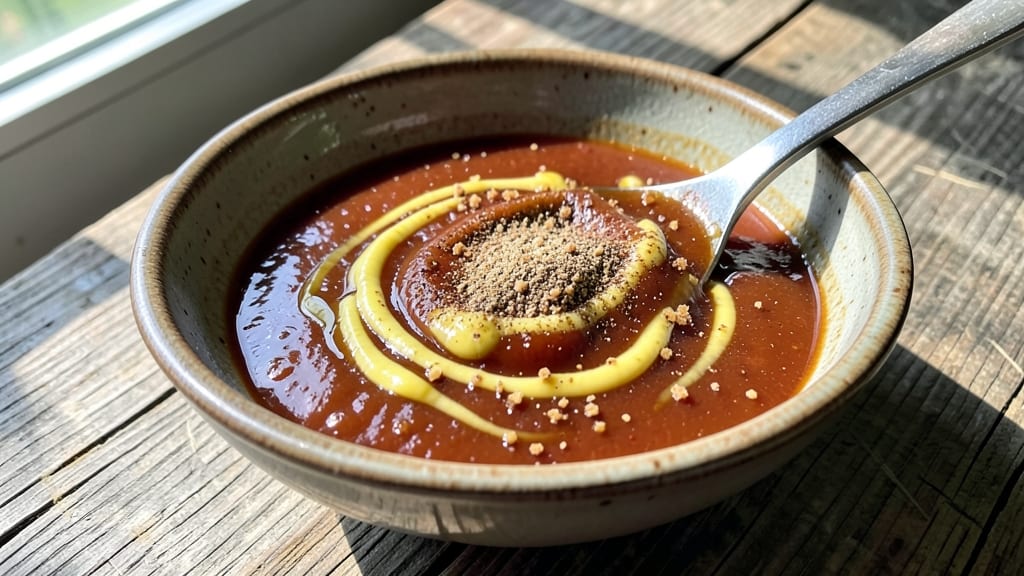
This barbecue sauce recipe with ketchup, mustard, and brown sugar delivers that perfect balance of smoky-sweet depth that makes ribs, pulled pork, and grilled chicken irresistible. 🔥 After years of perfecting my pitmaster technique, I've developed a sauce that caramelizes beautifully on the grill while keeping that signature tangy kick.
The secret lies in simmering the ingredients just right—long enough to develop complex flavors but not so long that it turns syrupy.
The foundation of this sauce is simple: ketchup for tang, mustard for depth, and brown sugar for that caramelized sweetness. But it’s the spices—smoked paprika, garlic powder, and a pinch of cayenne—that transform it from ordinary to extraordinary.
I’ve tested this recipe countless times, adjusting the ratios until I nailed the perfect harmony between sweet, tangy, and smoky. The result? A sauce that’s rich enough to stand up to bold meats but versatile enough to work as a glaze or dipping sauce.
What makes this sauce truly special is how it behaves on the grill. When brushed onto ribs or chicken, it caramelizes into a glossy, sticky glaze that locks in moisture while adding layers of flavor.
The balance of ingredients ensures it won’t overpower the meat—just enhance it. And because it’s made in one pot, it’s a foolproof recipe that delivers professional-quality results without the fuss.
Once you’ve mastered this base, you can easily tweak it for different tastes—add more brown sugar for a sweeter glaze or extra mustard for a tangier kick. Store it in the fridge for up to two weeks, or freeze for longer shelf life.
This isn’t just barbecue sauce; it’s the kind of sauce that turns a simple cookout into a memorable feast.
Ingredients for barbecue sauce recipe ketchup mustard brown sugar
Simple yet transformative ingredients that create a sauce worthy of a pitmaster's table.
| Ingredient | Amount | Notes |
|---|---|---|
| Ketchup 🍅 | 1 cup | High-quality, not reduced |
| Yellow Mustard 🟡 | ½ cup | Dijon for extra depth |
| Light Brown Sugar 🍯 | ¾ cup | Packed firmly for accuracy |
| Apple Cider Vinegar 🍏 | ¼ cup | For tangy brightness |
| Smoked Paprika 🌶️ | 2 tbsp | High-quality, not dusty |
| Garlic Powder 🧄 | 1 tbsp | Freshly ground preferred |
| Ground Black Pepper 🌶️ | ½ tsp | Freshly cracked |
| Cayenne Pepper 🔥 | ¼ tsp | Adjust to taste |
| Worcestershire Sauce 🍶 | 1 tbsp | Vegan if needed |
| Onion Powder 🧅 | 1 tsp | For subtle depth |
| Salt 🧂 | 1 tsp | Diamond Crystal preferred |
The ketchup and mustard form the sauce's backbone, so Heinz Natural Ketchup and French's Yellow Mustard are my go-tos—they're reliable and widely available. For brown sugar, Domino brand packs more consistently than others, which matters when you're measuring by volume. Apple cider vinegar adds that bright tang that cuts through the sweetness, and Bragg is my preferred brand for its clean flavor. Smoked paprika is where the magic happens—Penzeys or any reputable bulk bin option ensures you're getting fresh, flavorful spice. If you're short on time, pre-ground spices work fine, but freshly ground garlic powder makes a noticeable difference. The Worcestershire sauce adds umami depth, and Lea & Perrins is the standard for a reason.
No ketchup? Tomato paste thinned with vinegar works in a pinch, though the texture will be thicker. Mustard-free? Extra apple cider vinegar and a splash of hot sauce mimic that tangy kick. Brown sugar unavailable? White sugar plus a pinch of molasses gets you close. The smoked paprika can be swapped for regular paprika plus a dash of liquid smoke, though the flavor will be slightly different. For extra heat, red pepper flakes can replace cayenne. The onion powder is non-negotiable for that subtle savory note, but if you're out, extra garlic powder will compensate slightly. Always taste as you go—this sauce is meant to be adjusted to your preference.
This sauce keeps beautifully in the fridge for up to 2 weeks, though the flavor deepens after the first few days. For longer storage, freeze in ice cube trays—perfect for portion control on the grill. Reheat gently on the stove, adding a splash of water if it thickens too much. The caramelization happens best when applied to hot meat, so keep the sauce at room temperature while grilling. If you make extra, it's perfect for dipping or as a marinade—just thin with a little water if needed.
Why You'll Love This Recipe
- Pantry Magic: I swear by this sauce because it uses stuff I already have—no specialty trips, no wasted ingredients. That jar of ketchup gathering dust? The mustard you’ve had since last summer? They’re all here, working together in 10 minutes flat.
- Sweet-Smoky Bang: The brown sugar caramelizes just enough to balance the tangy vinegar, while the smoked paprika adds this deep, campfire-like warmth. Honestly, it’s the kind of flavor that makes you pause mid-bite—like a hug in sauce form.
- Weeknight Swiss Army: Slap it on burgers, drizzle it over baked beans, or toss it with grilled chicken. I’ve even used it as a glaze for roasted carrots (yes, really). It’s the one sauce that never lets me down, no matter what’s on the menu.
- Budget Bulk: A single batch stretches across three meals—leftovers last forever because it doesn’t spoil quickly. And at under $3 to make? It’s basically free money for flavor, especially when store-bought sauces cost twice as much for half the taste.
Step-by-step instructions for smoky-sweet BBQ sauce
This method delivers a perfectly balanced sauce with deep caramelization and smoky warmth.
🍳 Step 1: Combine Wet Ingredients for Even Distribution
In a medium saucepan, whisk together the 1 cup ketchup, 0.5 cup yellow mustard, and 0.75 cup light brown sugar until fully incorporated. I use a silicone spatula to scrape the bottom and sides, ensuring no sugar granules remain dry. This step is crucial for creating a smooth, lump-free sauce.
Add the 0.25 cup apple cider vinegar and 1 tablespoon Worcestershire sauce next. The vinegar brightens the flavors while cutting through the sweetness, and the Worcestershire adds that unmistakable umami depth. Bring the mixture to a gentle simmer over medium heat, stirring constantly to prevent scorching. You'll notice the sugar begins to dissolve completely within 3-5 minutes—this is when the sauce starts developing its signature caramel notes.
🔥 Step 2: Build Flavor with Spices and Aromatics
Reduce heat to low and stir in the 2 tablespoons smoked paprika, 1 tablespoon garlic powder, 1 teaspoon onion powder, 0.5 teaspoon ground black pepper, and 0.25 teaspoon cayenne pepper. The smoked paprika is where the magic happens—it carries that authentic barbecue smokiness that sets this sauce apart. Let the mixture simmer for 5-7 minutes, stirring frequently, until the spices are fully integrated and the sauce begins to thicken slightly.
Here's where it gets interesting: the cayenne adds just enough heat to balance the sweetness, but don't worry if you're sensitive to spice—you can always adjust later. I like to taste the sauce at this stage to check the flavor foundation. It should be tangy, slightly sweet, and developing that smoky aroma that makes your mouth water. If it needs more depth, this is the time to add an extra pinch of salt.
⏰ Step 3: Simmer to Perfect Thickness
Continue simmering the sauce uncovered for 15-20 minutes, stirring occasionally, until it reaches your desired consistency. You're aiming for a thick, glossy glaze that coats the back of a spoon but still has enough flow to drip beautifully off ribs or chicken. The sauce should reduce by about one-third—this concentration builds the rich, complex flavor.
I know it's tempting to rush this step, but patience pays off. The longer you simmer, the deeper the caramelization and the more pronounced the smoky-sweet balance becomes. When the sauce reaches medium-thick consistency (similar to honey), it's ready. If it thickens too much, simply whisk in 1-2 tablespoons of water to loosen it. The final texture should be smooth with no graininess—this means the brown sugar has fully dissolved and the flavors have melded perfectly.
🥘 Step 4: Finish with Seasoning Adjustments
Remove the sauce from heat and let it cool for 5 minutes—this resting period allows the flavors to settle and makes it easier to taste accurately. Stir in the 1 teaspoon salt and taste again. The sauce should be perfectly balanced: sweet from the brown sugar, tangy from the vinegar, smoky from the paprika, and with a subtle heat from the cayenne.
Here's my pro tip: if the sauce tastes too sweet, add another splash of vinegar; if it needs more depth, a pinch of smoked paprika or a dash of Worcestershire works wonders. The goal is that perfect harmony where no single flavor overpowers the others. Once adjusted to your liking, transfer the sauce to a clean jar and let it cool completely before storing. This sauce keeps beautifully in the refrigerator for up to 2 weeks and tastes even better after flavors have had time to meld.
Pro Tips For Making Barbecue Sauce Recipe Ketchup Mustard Brown Sugar
- Simmer Slow and Steady: I learned this the hard way—boiling this sauce too fast turns it into a sticky mess instead of a rich, glossy glaze. Keep it at a gentle simmer (small bubbles, occasional swirls) for 15-20 minutes. If it splatters, lower the heat or use a splash of water to calm it down.
- Use Real Vinegar, Not Substitutes: Apple cider vinegar adds depth that white vinegar can’t match. If you’re in a pinch, use a mix of white vinegar and a pinch of cinnamon, but don’t skip it entirely—it’s what balances the sweetness and cuts through the mustard’s sharpness.
- Balance the Mustard First: Taste the mustard before adding it to the sauce. If it’s too strong, mix it with a spoonful of ketchup first—this mellows out the heat and lets you control the flavor better. I used to dump it all in and wonder why my sauce tasted like a condiment fight.
- Toast the Brown Sugar: Lightly toast the brown sugar in a dry pan for 2-3 minutes until it smells caramelized. This adds a deeper, almost buttery note to the sauce. Skip this, and you’ll miss the complexity that makes homemade sauce taste so much better than store-bought.
Wine and beer pairings for barbecue sauce recipe ketchup mustard brown sugar
Sweet & Smoky Reds
For this rich, caramelized barbecue sauce, I recommend a Cabernet Sauvignon with its bold fruit notes and subtle tannins that stand up to the sweetness.
A Napa Valley Cab from Robert Mondavi or Stag's Leap District offers the perfect balance—its blackberry and vanilla flavors complement the sauce's smoky depth while the acidity cuts through the sugar. Serve it slightly chilled (55-60°F) to enhance its refreshing qualities against the sauce's warmth. 🍷
Crisp Whites for Tangy Balance
If you prefer white wine, a dry Riesling from Germany's Mosel region brings bright acidity and citrus notes that mirror the apple cider vinegar in the sauce. The mineral finish cleanses your palate between bites of saucy ribs or pulled pork.
For a domestic option, try a California White Zinfandel—its light body and berry flavors won't overpower the barbecue profile. Chill to 45-50°F for optimal contrast.
Hoppy IPAs for Heat Lovers
For those who enjoy a little kick from the cayenne, a West Coast IPA like Stone Ruination or Alphacorn provides the perfect bitterness to balance the sauce's sweetness. The citrusy hop notes echo the apple cider vinegar, while the malt backbone stands up to the smoky paprika.
Serve at 40-45°F to let the flavors shine without numbing your palate. 🍺
Belgian Witbiers for Refreshing Contrast
A Belgian-style witbier like Hoegaarden or Allagash White offers a crisp, slightly spiced profile that refreshes your palate between rich bites. The coriander and orange peel notes in these beers complement the sauce's smoky-sweet balance beautifully.
The effervescence also helps cut through the sauce's thickness, making each bite feel lighter. Keep it well-chilled (38-42°F) for the best experience.
Dark Ales for Rich Pairings
For a heartier option, a dark amber ale like Samuel Smith's Nut Brown Ale or Guinness adds malty depth that pairs wonderfully with the caramelized brown sugar in the sauce.
The roasted notes in these beers enhance the smoky paprika, while the creamy texture provides a satisfying contrast. Serve at 45-50°F to let the flavors meld without overwhelming the sauce.
Non-Alcoholic Options
Don't want to drink? A sparkling apple cider like Martinelli's Sparkling Apple Cider provides the same crisp acidity as white wine, while ginger beer from Brew Dr. Brown's adds a spicy kick that mirrors the cayenne.
For a more substantial option, try a smoky black tea iced tea with a splash of lemon—it enhances the sauce's smoky-sweet profile without alcohol. 💛
Nutrition facts
Frequently asked questions
Can I make this sauce without mustard?
If you're avoiding mustard, replace the 0.5 cup yellow mustard with 0.25 cup apple cider vinegar plus 1 tablespoon hot sauce for tang. For extra depth, add 1 teaspoon Dijon powder (mix with a little water to dissolve). The sauce will still have that signature balance, just with a slightly different texture.
How can I adjust the sweetness level?
For a sweeter glaze, increase the brown sugar to 1 cup and reduce the vinegar to 0.15 cup. For less sweetness, cut brown sugar to 0.5 cup and add 0.1 cup extra apple cider vinegar. Always taste as you simmer—flavor develops as it reduces! The key is balancing the sugar with acid to prevent cloying sweetness.
Why did my sauce turn grainy?
Graininess usually means undissolved brown sugar. To fix it, whisk in 1 tablespoon water and simmer for 2-3 extra minutes while stirring constantly. For prevention, make sure your brown sugar is fully incorporated in the initial simmer (it should dissolve within 3-5 minutes of heating). If it's still grainy after fixing, strain the sauce through a fine-mesh sieve.
Can I use this sauce as a marinade?
Yes, but thin it first! Mix 1 cup sauce with 1 cup water or broth for a safe marinade. Let it sit for 30-60 minutes before using (never marinate longer than 4 hours for safety). The sauce works beautifully on chicken or pork, but avoid using it on seafood due to the vinegar's acidity. Always discard any unused marinade after use.
What's the best way to store leftover sauce?
Store in an airtight container in the fridge for up to 2 weeks or freeze for 3 months. For freezing, portion into ice cube trays—perfect for grilling! Thaw overnight in the fridge. If the sauce thickens after refrigeration, whisk in 1 tablespoon water to restore consistency. The flavors actually improve after a few days as the ingredients meld!