
Sauces & Condiments
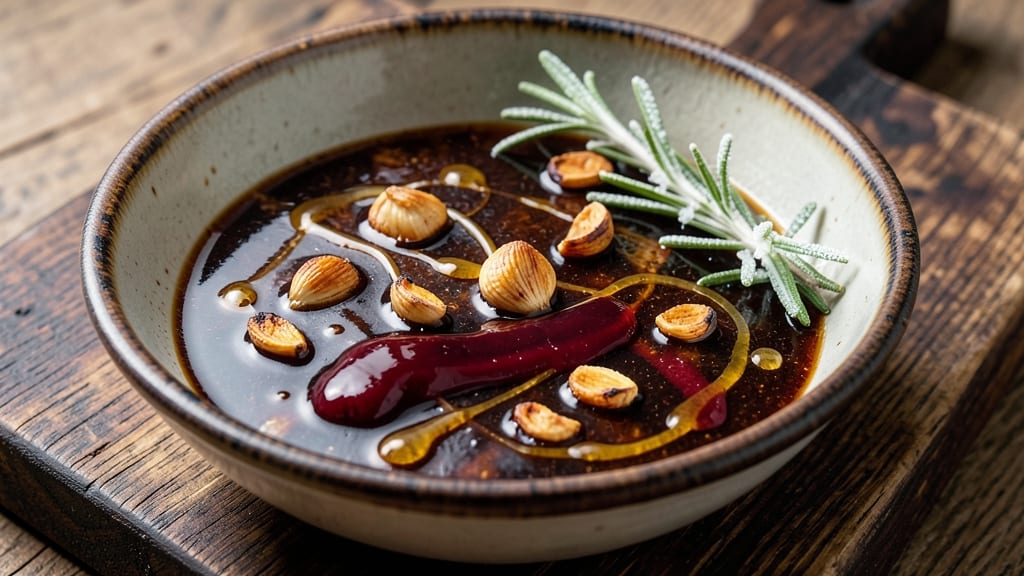
This barbecue marinade sauce recipe transforms grilled meats into smoky-sweet masterpieces that caramelize beautifully on the grill. 🔥 The secret lies in balancing sweet molasses with tangy vinegar and a touch of liquid smoke, creating a glaze that's both bold and versatile.
I developed this after years of perfecting my pitmaster technique, and it's now my go-to for everything from ribs to chicken thighs.
The sauce starts with a base of honey and molasses for natural sweetness, then builds depth with apple cider vinegar and Worcestershire sauce. A splash of liquid smoke adds that unmistakable barbecue aroma, while garlic and onion powder bring savory warmth.
The blend of spices—paprika, cayenne, and black pepper—creates layers of heat that caramelize beautifully on the grill.
What makes this marinade sauce special is its dual purpose: it tenderizes meat while creating a stunning caramelized crust. Simply brush it on meats 1–2 hours before grilling, and watch as the sugars caramelize into a glossy glaze.
The sauce keeps well in the refrigerator for up to 2 weeks, making it perfect for meal prep or bulk cooking sessions.
Whether you're grilling ribs, chicken, or pork, this marinade sauce delivers restaurant-quality results with minimal effort. The balance of sweet, smoky, and tangy flavors ensures every bite is packed with depth. Here's how to make it—your next cookout just got an upgrade.
Ingredients for barbecue marinade sauce
Sweet, smoky, and tangy—this marinade transforms grilled meats into restaurant-quality masterpieces.
| Ingredient | Amount | Notes |
|---|---|---|
| Honey 🍯 | ½ cup | Raw for best flavor |
| Molasses 🍯 | ⅓ cup | Unsulphured preferred |
| Apple Cider Vinegar 🍎 | ¼ cup | Raw and unfiltered |
| Worcestershire Sauce 🍶 | 2 tbsp | Vegetarian version if needed |
| Liquid Smoke 🔥 | 1 tbsp | Adjust for smokiness |
| Garlic Powder 🧄 | 1 tbsp | Fresh ground preferred |
| Onion Powder 🧅 | 1 tbsp | Not onion salt |
| Smoked Paprika 🌶️ | 1 tbsp | For deeper smoke flavor |
| Cayenne Pepper 🔥 | ½ tsp | Adjust for heat level |
| Ground Black Pepper 🌶️ | ½ tsp | Freshly ground preferred |
The honey and molasses are your sweet base—raw honey has more depth, but store-bought works too. For molasses, unsulphured is key (it's less processed). Apple cider vinegar should be raw and unfiltered—those fancy glass bottles at Whole Foods or Trader Joe's have the best flavor. Liquid smoke is non-negotiable for that authentic barbecue aroma. I grab mine from Amazon or the spice aisle at Costco—just a few drops go a long way. The spices? Freshly ground garlic and onion powders make all the difference (the canned stuff tastes like dust).
No Worcestershire? Soy sauce plus a dash of balsamic works in a pinch. Short on liquid smoke? A few drops of smoked salt (like Morton Smoked Salt) or even charred onion powder adds depth. Want less heat? Skip the cayenne entirely or swap for red pepper flakes at half the amount. The paprika can be regular or smoked—smoked gives that extra campfire vibe. And if you're making this ahead, store the spices separately until ready to mix (they'll keep their punch longer).
This sauce keeps for 2 weeks in the fridge, sealed tight. I like to store it in a glass jar—the flavors meld even better overnight. For grilling, shake well before each use (the spices settle). Freezes beautifully for up to 6 months, though it'll be thinner when thawed. Brush it on meats 1-2 hours before grilling—the sugars caramelize beautifully, creating that glossy crust you crave. Leftovers? Toss them in a bowl with some cooked beans for a quick barbecue dip.
Why You'll Love This Recipe
- Five-Ingredient Magic: I swear, this sauce is the kind of recipe you’ll make just to have on hand—no fancy steps, no measuring cups that make you question your life choices. Just dump honey, molasses, vinegar, Worcestershire, and a splash of liquid smoke into a bowl, stir, and let it sit. That’s it. No peeling garlic, no mincing onions, no waiting for the oven to preheat. Honestly, it’s the kind of simplicity that makes me want to high-five the pantry.
- Smoky-Sweet Obsession: Between us, the combo of molasses and liquid smoke is ridiculously good—deep, caramelized, with this subtle tang that cuts through the richness. The apple cider vinegar brightens it up so it doesn’t get cloying, and the Worcestershire adds this umami punch that makes it taste like you’ve been slow-cooking for hours. I’ve used it on everything from ribs to grilled chicken, and my kids still ask for seconds. (Yes, even on a Tuesday night.)
- Weeknight Superhero: This sauce is my go-to when I’m scrambling to feed a crowd or just don’t feel like slaving over a stove. Slather it on chicken thighs before roasting, toss it with pork chops for the grill, or even drizzle it over baked beans—it works. I’ll be real: I’ve had it in the fridge for a week, and it’s still brought the flavor. That’s the kind of reliable sauce that deserves a permanent spot in your fridge.
- Budget-Friendly Game: Here’s what sold me—this costs next to nothing to make, but it feels like a restaurant-quality secret. A little goes a long way, and the ingredients? You’re probably already using them. The molasses and honey add depth without breaking the bank, and the vinegar and Worcestershire stretch the flavor. I’ve made enough to cover two whole dinners for under five bucks. That’s not just practical—it’s genius.
Step-by-step instructions for smoky-sweet BBQ glaze
This sauce delivers deep caramelization and smoky depth when brushed on grilled meats.
🍳 Step 1: Combine Wet Ingredients in a Saucepan
In a medium saucepan, combine the 0.5 cup honey and 0.33 cup molasses. Place over medium heat and stir constantly until both ingredients melt completely and the mixture reaches a gentle simmer. You'll see tiny bubbles form around the edges—that's your signal the heat is right.
Here's the thing—molasses can be thick, so don't rush this step. Stirring prevents scorching while melting the sugars. Once fully combined, add the 0.25 cup apple cider vinegar and 2 tbsp Worcestershire sauce. The vinegar will help balance the sweetness and add tangy brightness to the finished glaze.
🔥 Step 2: Simmer Until Thickened
Continue simmering the mixture for 10-12 minutes, stirring occasionally, until it reduces by about one-third and becomes syrupy. You're looking for a consistency where the sauce coats the back of a spoon but still flows smoothly. If it thickens too quickly, add 1-2 tablespoons of water to maintain the right texture.
Don't walk away during this step. The sauce should reduce to about 1 cup total volume. When it reaches this point, it'll start to darken slightly—that's when the caramelization begins. This is where all that smoky-sweet flavor develops, so pay attention to the color changes from golden amber to deep caramel.
👨🍳 Step 3: Add Dry Seasonings and Liquid Smoke
Remove the saucepan from heat and let it cool slightly for 2-3 minutes. This prevents the spices from burning when added. Then whisk in the 1 tbsp garlic powder, 1 tbsp onion powder, 1 tbsp smoked paprika, 0.5 tsp cayenne pepper, and 0.5 tsp ground black pepper. The spices will sink to the bottom, so give it a good stir to distribute them evenly.
Real talk: the smoked paprika and liquid smoke are what give this glaze its signature depth. Add the 1 tbsp liquid smoke now, stirring well. You'll notice the aroma become more intense—this is when the sauce transforms from sweet to properly smoky. Let the mixture sit for 5 minutes to allow all the flavors to meld together.
⏰ Step 4: Strain and Cool Before Using
Transfer the sauce to a fine-mesh strainer lined with cheesecloth or a coffee filter. This removes any undissolved spice particles that could make the glaze grainy when applied. Gently press on the solids to extract all the flavor, then discard the filter. The strained sauce should be smooth and glossy.
Let the glaze cool completely to room temperature before using. This prevents it from cooking off too quickly when brushed on hot meat. For best results, store any unused glaze in an airtight container in the refrigerator for up to 2 weeks. The flavors actually improve as it sits, developing even more complexity.
🔥 Step 5: Caramelize on the Grill (Optional Finishing Step)
For maximum flavor, brush the cooled glaze onto grilled meats just before serving. The residual heat from the grill will cause the sugars to caramelize beautifully, creating that perfect balance of smoky, sweet, and tangy flavors. Apply generously and let it sit for 2-3 minutes before serving to allow the glaze to set slightly.
This sauce works perfectly on ribs, chicken, pork shoulders, or even vegetables. The key is to use it as a finishing touch rather than a marinade—its concentrated flavors shine when applied hot. If you're using it on tougher cuts like ribs, you can apply it during the last 30 minutes of cooking for that perfect caramelized crust.
Pro Tips For Making Barbecue Marinade Sauce
- Simmer, Don’t Boil: This sauce needs time to marry, not a violent reaction. Heat it on medium-low—just until it’s hot enough to smell the liquid smoke release, then let it bubble gently for 10 minutes. I learned this the hard way when I rushed it and ended up with a bitter, vinegary mess that needed more honey to fix.
- Strain the Molasses: Cheap molasses has sediment that turns your sauce gritty. Use a fine-mesh strainer or coffee filter to remove it before mixing—it’s worth the 30 seconds. I was skeptical until I tasted the difference; suddenly, the sauce had that smooth, velvety depth instead of a mouthful of tiny grains.
- Add Liquid Smoke Last: Heat kills the smoky flavor, so toss in the liquid smoke only after the sauce has cooled slightly. Stir it in right before serving or brushing—this keeps that campfire aroma sharp and vibrant. I used to add it early, and the smell would fade like a ghost in the wind.
- Balance the Vinegar: Apple cider vinegar’s tang can overpower if you’re not careful. Start with 2 tablespoons, taste, then adjust—you can always add more Worcestershire or honey to round it out. I once made a batch so sour I had to dump half in my compost bin. Now I taste as I go.
Creative variations of barbecue marinade sauce
Smoky-Honey Glaze
Swap the molasses for ½ cup maple syrup and reduce the honey to ¼ cup for a lighter, more delicate glaze. Add 1 tsp vanilla extract and ½ tsp cinnamon to create a sweet, aromatic finish perfect for pork tenderloin or grilled peaches.
The maple gives a smoother texture while keeping that signature smokiness. 🍯
Spicy Chipotle Twist
For heat lovers, replace the cayenne with 1 tbsp adobo sauce from chipotle peppers (strained) and add ½ tsp ground cumin. This version works amazingly on chicken thighs or steak, delivering a deep, smoky heat that lingers.
I like to add a pinch of smoked sea salt to enhance the complexity.
Asian-Inspired Fusion
Infuse the glaze with 1 tbsp soy sauce and 1 tsp grated fresh ginger, then reduce the Worcestershire to 1 tbsp. Finish with ½ tsp sesame oil for a glaze that pairs beautifully with teriyaki-marinated meats or grilled tofu.
The ginger adds a bright, zesty kick that balances the sweetness perfectly.
Herb-Forward Variation
Fresh herbs elevate this glaze to new heights. After straining, stir in 1 tbsp finely chopped fresh rosemary and 1 tbsp fresh thyme leaves. This works wonderfully on lamb chops or grilled vegetables, adding an earthy, aromatic depth.
I often make a small batch of this just for grilling asparagus—it’s a game-changer. 🌿
Sweet & Tangy Fruit Glaze
Add ¼ cup orange juice and 1 tbsp orange zest to the base, then reduce the vinegar to 2 tbsp. This citrusy twist brightens the flavor and pairs exceptionally with grilled shrimp or pork chops. The orange zest adds a beautiful pop of color too—great for presentation.
Low-Sugar Option
For a lighter version, replace ¼ cup of the honey with ¼ cup unsweetened applesauce and reduce the molasses to 2 tbsp. This keeps the moisture and sweetness while cutting sugar content by nearly half.
It’s perfect for those watching their sugar intake but still craving that smoky-sweet flavor. 💪
Nutrition facts
Frequently asked questions
Can I use this marinade sauce as a dry rub instead?
This recipe is designed as a liquid glaze, but you can create a dry rub version by mixing the spices (1 tbsp smoked paprika, 1 tbsp garlic powder, 1 tbsp onion powder, 0.5 tsp cayenne, 0.5 tsp black pepper) with 2 tbsp brown sugar and 1 tbsp liquid smoke. Apply it directly to meats before grilling for a smoky crust without the sweetness.
How long should I marinate meat in this sauce?
For tenderizing, use it as a marinade for 4-6 hours (or overnight for tougher cuts like pork shoulder). However, this sauce excels as a finishing glaze—brush it on 1-2 hours before grilling to create that perfect caramelized crust. Never marinate delicate fish or chicken for longer than 2 hours to avoid over-tenderizing.
Can I make this sauce without liquid smoke?
Yes! Replace the 1 tbsp liquid smoke with 1 tsp smoked salt or 1 tbsp charred onion powder (toast onion slices in a dry pan until blackened, then grind). For extra depth, add ½ tsp coffee granules—they mimic smoke's earthy notes. The flavor will be slightly different but still delicious.
What's the best way to store leftover sauce?
Transfer cooled sauce to an airtight glass jar and refrigerate for up to 2 weeks. For longer storage, freeze in ice cube trays—thaw and reheat gently before using. The sauce thickens when chilled, so stir well before applying. Pro tip: Label with the date to track freshness.
Why did my sauce turn too thick when simmering?
This happens when sugars caramelize too quickly. If it thickens beyond 1 cup, add 1-2 tbsp water while simmering to restore balance. For future batches, reduce heat slightly during simmering or cover the pan to slow evaporation. The ideal consistency should coat a spoon but still flow smoothly.