
Sauces & Condiments
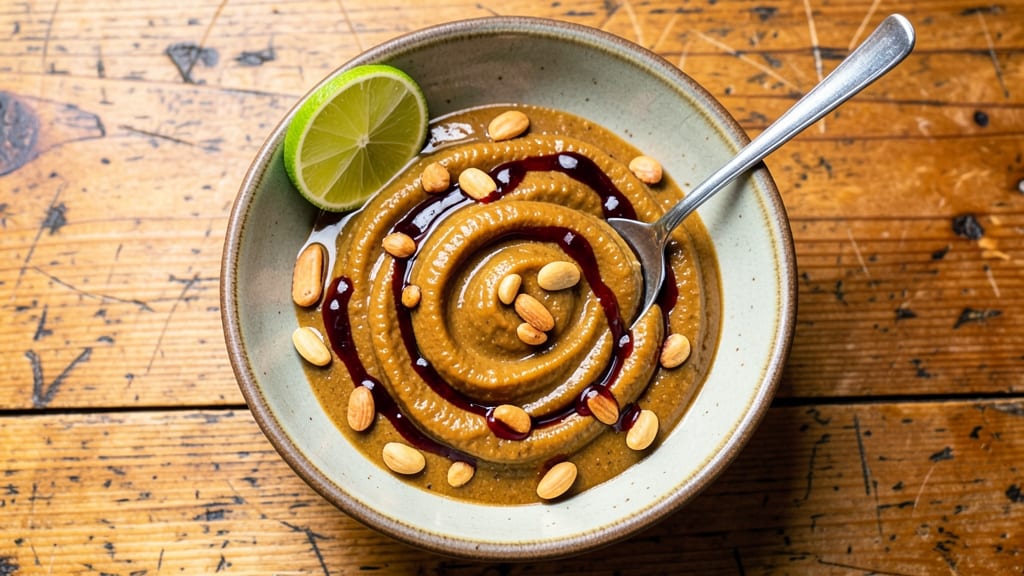
This Bali peanut sauce recipe transforms simple pantry staples into a velvety, aromatic condiment that bridges rich nutty depth with bright lime zing. The secret lies in properly toasting the peanuts until they develop that irresistible golden aroma and subtle bitterness that elevates everything from grilled meats to steamed vegetables.
My version keeps the traditional Balinese balance of sweet, salty, and tangy without relying on hard-to-find ingredients.
The sauce begins with creamy coconut milk as its base, where toasted peanuts and aromatic spices create a luxurious texture. Tamarind paste delivers that signature tangy depth while fish sauce adds umami complexity, though vegetarian versions work beautifully with soy sauce.
What sets this apart is the final touch of fresh lime juice and chili flakes—just enough to brighten the richness without overpowering the nutty foundation.
What you'll end up with is a sauce that's smooth yet textured, with perfect balance between creamy coconut and toasted peanut intensity.
The lime zing cuts through the richness, making it versatile enough for drizzling over noodles, topping grilled chicken, or even serving as a dipping sauce for fresh spring rolls.
The beauty of this recipe is its adaptability—you can make it thicker for dipping or thinner for drizzling, all while maintaining that authentic Balinese flavor profile.
Ready in just 30 minutes with minimal active time, this sauce keeps well in the refrigerator for up to a week, allowing you to build flavor over time. The key is letting the spices bloom properly and adjusting the consistency with more coconut milk or lime juice as needed.
Whether you're preparing a special meal or simply craving that restaurant-quality peanut sauce at home, this recipe delivers restaurant-quality results with simple ingredients.
Ingredients for bali peanut sauce
Simple pantry staples create this aromatic, velvety sauce with nutty depth and tangy brightness.
| Ingredient | Amount | Notes |
|---|---|---|
| Peanuts 🥜 | 1 cup | Toasted until golden and fragrant |
| Coconut Milk 🥥 | 1 can | Full-fat, unsweetened (13.5 oz) |
| Tamarind Paste 🍋 | 2 tbsp | Or substitute lime juice for tang |
| Fish Sauce 🍜 | 1 tbsp | Vegetarian: soy sauce instead |
| Lime Juice 🍋 | 2 tbsp | Freshly squeezed for brightness |
| Brown Sugar 🍯 | 2 tbsp | Packed for sweetness balance |
| Garlic Cloves 🧄 | 3 cloves | Minced for aromatic depth |
| Red Chili Flakes 🌶️ | 1 tsp | Adjust for heat preference |
| Ground Cumin 🌿 | ½ tsp | Toasted for enhanced flavor |
| Salt 🧂 | ½ tsp | Kosher or sea salt preferred |
The peanuts are non-negotiable—raw, unsalted work best, and toasting them until they're golden and fragrant unlocks their full flavor. Trader Joe's and Costco sell them in bulk, but any grocery store carries them. Skip the pre-toasted ones—they lack that nutty aroma. For coconut milk, full-fat, unsweetened is crucial—it creates that luxurious texture. The canned variety works perfectly, but if you're using carton coconut milk, use 1.5 cups instead. Tamarind paste can be tricky to find; Asian markets usually have it, or you can make a quick substitute with lime juice and a pinch of sugar.
Running short on tamarind? Double the lime juice and add 1 tsp sugar—it won't be identical, but it works in a pinch. Fish sauce is the umami anchor, but soy sauce makes a solid vegetarian swap. The garlic and chili flakes are where the magic happens—toast the garlic in the peanut oil first to deepen its flavor. For extra heat, add a pinch of cayenne, but start light. The brown sugar balances the tang, so don't skip it—it rounds out the sauce beautifully. If you're making this ahead, reduce the lime juice slightly since it'll mellow over time.
This sauce keeps beautifully in the fridge for up to 1 week, with flavors deepening over time. For longer storage, freeze it in ice cube trays—just thaw and whisk before using. The texture thickens when chilled, so thin with a splash of coconut milk or water before serving. I like to make a double batch—one for immediate use, one to freeze. The peanut oil separates when stored, so give it a good stir before using. Perfect for drizzling, dipping, or tossing—just adjust the consistency with more coconut milk or lime juice as needed.
Why You'll Love This Recipe
- Five-Ingredient Magic: I swear by this—just peanuts, coconut milk, tamarind, fish sauce, and lime. That’s it. No fancy prep, no hidden pantry items. The tamarind gives it that tangy depth while the fish sauce adds umami punch, and the lime brightens everything up. It’s the kind of sauce where you taste each ingredient but they all come together like a dream.
- Smooth & Tangy: Between us, this sauce is ridiculously good. The coconut milk makes it creamy without being heavy, while the tamarind and lime cut through the richness. Honestly, the first time I made it, I dipped everything—veggies, chicken, even toast—because it’s that good.
- Meal Prep MVP: This sauce keeps in the fridge for weeks and only gets better. I double the batch and toss it with noodles, stir-fry it with tofu, or drizzle it over grilled fish. It’s my go-to for lazy Sundays or when I need to feed a crowd without stressing.
- Budget-Friendly Luxury: Peanuts and coconut milk are cheap staples, and a little fish sauce goes a long way. I’ll be real: this sauce costs next to nothing to make but tastes like you spent hours slaving away. It’s the kind of flavor that makes you feel fancy without breaking the bank.
Step-by-step instructions for Bali peanut sauce
This vibrant sauce delivers perfect balance—creamy, nutty, and bright with just the right kick.
Toast the Peanuts for Maximum Flavor
Heat a dry skillet over medium heat and add the 1 cup peanuts. Toast them for 3-5 minutes, stirring constantly, until they turn a rich golden brown and release their nutty aroma. Watch closely—they burn quickly once they darken. Transfer the toasted peanuts to a bowl and set aside to cool slightly.
This step is crucial—raw peanuts won't develop that deep, toasty flavor. The slight cooling also prevents the sauce from turning oily later. I like to press them gently with a spoon while toasting to ensure even browning on all sides.
Build the Sauce Base with Aromatics
In the same skillet (no need to clean it—the peanut oils add flavor), add the 3 cloves minced garlic, 0.5 tsp ground cumin, and 1 tsp red chili flakes. Cook over medium-low heat for 1-2 minutes until the garlic turns light golden and fragrant—don't let it brown or it'll turn bitter.
Stir in the 2 tbsp tamarind paste and 1 tbsp fish sauce, cooking for another 30 seconds until the tamarind dissolves completely. This creates the perfect balance of tangy, umami-rich foundation. If using the lime juice substitution, add it now instead of the tamarind.
Combine Wet Ingredients for Creamy Texture
Pour in the 1 can coconut milk and stir to combine with the aromatic mixture. Bring to a gentle simmer over medium heat, then reduce heat to low. Add the 2 tbsp brown sugar and 0.5 tsp salt, stirring until the sugar dissolves completely—about 2 minutes. The sauce should thicken slightly but remain pourable.
Taste and adjust seasoning: add more brown sugar for sweetness, fish sauce for saltiness, or lime juice for tang. I find this sauce needs about 1-2 extra tablespoons of lime juice for that authentic Bali brightness. Keep it simmering gently while you prepare the next step.
Blend for Silky Smooth Consistency
Transfer the sauce to a blender and add the cooled toasted peanuts. Blend until completely smooth, stopping to scrape down the sides as needed. For extra creaminess, I recommend blending in short pulses first, then longer continuous blends. The final texture should be thick but still spreadable—like a rich peanut butter.
If the sauce is too thick, thin with 1-2 tablespoons of warm water or coconut milk. For extra heat, add ½ tsp more chili flakes at this stage. The sauce should coat the back of a spoon with a glossy sheen—this indicates proper consistency for dipping or drizzling.
Finish with Lime and Rest Before Serving
Return the blended sauce to the skillet and stir in the 2 tbsp lime juice. Simmer gently for 1-2 minutes to let the flavors meld. The sauce should smell bright, nutty, and slightly spicy—this is your quality check. Remove from heat and let it rest for 10 minutes before using.
This resting period allows all the flavors to fully integrate. For best results, serve the sauce immediately over grilled meats, noodles, or fresh spring rolls. The sauce keeps well in the refrigerator for up to 5 days—just reheat gently before serving to maintain its creamy texture.
Pro Tips For Making Bali Peanut Sauce
- TOAST PEANUTS LOW: Skip the high-heat roast—peanuts burn fast and lose their nutty depth. Instead, dry-toast them in a skillet over medium-low (about 325°F) for 5-7 minutes, stirring often, until they’re fragrant and just turning golden. Over-toasted peanuts taste bitter, and you’ll regret it when blending.
- BLEND TAMARIND FIRST: Mix the tamarind paste with a splash of warm water or coconut milk before adding it to the sauce—this prevents clumpy, grainy texture. I learned this the hard way: dry tamarind lumps make the sauce look (and taste) like you rushed it.
- SIMMER COCONUT MILK GENTLY: Don’t boil the coconut milk—just warm it to 160°F (like a gentle shiver) while you toast peanuts and fry aromatics. Boiling splits the milk into curds and water, turning your sauce into a sad, separated mess.
- TASTE WITH LIME BEFORE FINISHING: Add lime juice last—after simmering all other ingredients—and adjust to taste. The acid cuts through richness, but too much too soon makes the sauce taste raw. Start with 1 tsp, then add more if needed. (Yes, even if you’re impatient like me.)
Flavor customization for these flavors
Sweet Heat Balance
Adjust the sweetness and heat ratio to suit your taste. For a sweeter version, add an extra 1 tbsp brown sugar and reduce the tamarind to 1 tbsp.
If you prefer more heat, increase the red chili flakes to 1.5 tsp and add a pinch of cayenne pepper during blending. I like to start with the original recipe and taste as I go—this sauce is forgiving, so small adjustments work best.
Spicy Variations
For a fiery kick, blend in ½ tsp sambal oelek or 1 tsp gochujang with the peanuts. If you love smoky flavors, add ½ tsp smoked paprika when toasting the garlic.
For a balanced heat, stir in 1 tsp honey at the end to mellow the spice—this works especially well with grilled chicken or tofu. 🌶️
Creamy or Chunky Texture
Blend the sauce longer for a completely smooth finish, or leave it slightly chunky by blending in short pulses only. For extra thickness, simmer the sauce uncovered for 5 extra minutes to reduce it slightly.
If you prefer a thinner consistency for drizzling, add 2-3 tbsp warm water or coconut milk. I find the slightly chunky version pairs best with fresh spring rolls.
Vegetarian Adaptations
Swap the fish sauce for soy sauce (use 1.5 tbsp for extra umami) and add ½ tsp miso paste for depth. For a nutty boost, blend in 1 tbsp tahini with the peanuts.
This version works beautifully with grilled vegetables or tofu skewers. The sauce will still have that rich, savory profile without animal products.
Fruity Twist
Add 1 tbsp mango puree or 1 tsp grated fresh ginger for a tropical twist that balances the peanut's richness. For a citrusy note, zest 1 lime and add it with the lime juice.
This variation pairs perfectly with grilled shrimp or coconut rice. The fruitiness cuts through the creaminess beautifully, creating a refreshing contrast.
Smoky Depth
Infuse the sauce with smoky flavor by adding ½ tsp liquid smoke during blending or toasting ½ tsp smoked salt with the garlic. For a more intense smoke, char 1 clove garlic directly over a gas flame before mincing.
This works especially well with grilled meats like pork or beef, adding a campfire-inspired depth to the sauce. 🔥
Nutrition facts
Frequently asked questions
Can I make this peanut sauce without tamarind paste?
Yes! For every 2 tbsp tamarind paste called for, substitute 2 tbsp lime juice plus 1 tsp sugar to mimic the tangy sweetness. The sugar helps balance the acidity, though the flavor won't be identical. For extra depth, add ½ tsp grated ginger to the sauce base during simmering.
How do I adjust the consistency for drizzling vs. dipping?
For drizzling (like over noodles), thin the sauce with 1-2 tbsp warm water or coconut milk until it reaches a pourable consistency. For dipping (like spring rolls), simmer uncovered for 5 extra minutes to reduce it slightly, or blend in 1 tbsp extra toasted peanuts for thickness. The ideal dipping sauce should coat a spoon with a glossy sheen.
What's the best way to store leftover peanut sauce?
Store in an airtight container in the fridge for up to 5 days. The sauce thickens when chilled, so stir in 1 tbsp warm water or coconut milk before reheating. For longer storage, freeze in ice cube trays—thaw and whisk to restore smoothness. The peanut oil may separate; just stir vigorously before using.
Why does my sauce taste bitter or overly salty?
Bitterness usually comes from over-toasted peanuts or burnt garlic. For saltiness, reduce the fish sauce by ½ tsp next time. To fix: balance with 1 extra tbsp brown sugar (for bitterness) or 1 tsp lime juice (for saltiness). Always taste as you go—this sauce is highly adjustable! The ideal ratio should have sweet, salty, tangy, and spicy notes all working together.
Can I use peanut butter instead of toasted peanuts?
Not recommended—peanut butter lacks the toasted nutty depth and can make the sauce greasy. If you must substitute, use ½ cup creamy natural peanut butter (no sugar added) and blend it with 2 tbsp coconut milk first to mimic the texture. For best results, stick with toasted peanuts—they're the flavor foundation!