
Sauces & Condiments
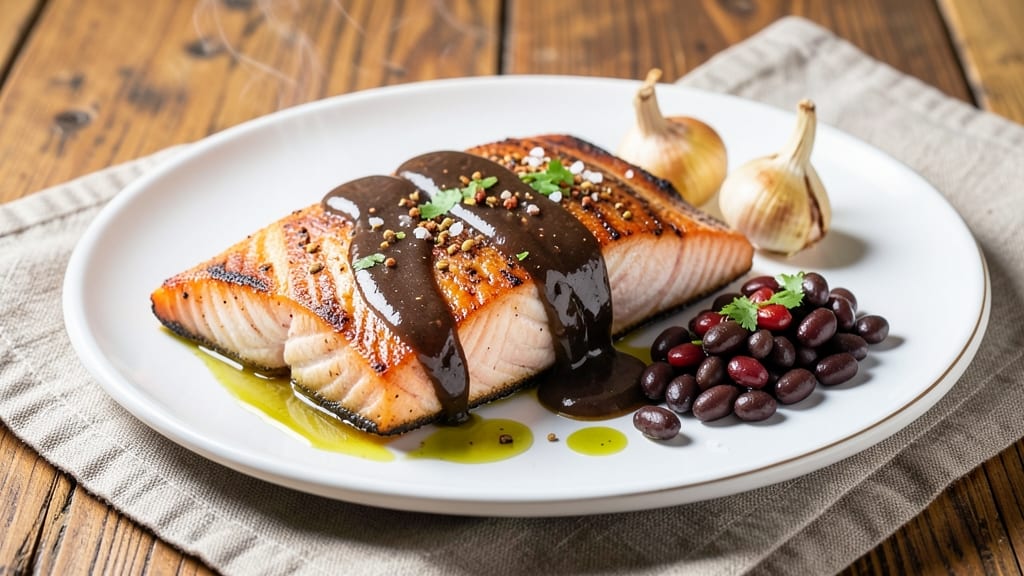
This baked salmon with black bean sauce delivers restaurant-quality flakiness and a smoky-spiced glaze that transforms simple weeknight dinner into a standout meal.
The secret lies in the black bean sauce—a blend of umami-rich black beans, aromatic spices, and a touch of sweetness—that caramelizes beautifully on the salmon while keeping the fish perfectly tender.
I developed this recipe after years of perfecting the balance between bold sauce and delicate fish, ensuring every bite is packed with flavor without overpowering the natural taste of the salmon.
The beauty of this dish is its simplicity: just 15 minutes of prep and 20 minutes in the oven, yet the result feels like a special occasion.
The black bean sauce isn’t just a topping—it’s a flavor infusion, with black beans adding depth, cumin and smoked paprika lending warmth, and a hint of lime brightening the richness. Meanwhile, the salmon bakes to flaky perfection, its skin crisping just enough to hold the sauce without breaking apart.
This is the kind of recipe that proves home cooking can rival takeout, but with healthier ingredients and better results.
What makes this dish truly special is how versatile it is. Serve it over jasmine rice for a complete meal, pair it with a simple mixed greens salad for freshness, or add a squeeze of lemon to cut through the richness.
The black bean sauce also works as a marinade if you prefer grilled salmon, or as a dip for extra portions. It’s pescatarian-friendly, packed with protein, and ready in under an hour—ideal for busy weeknights or weekend brunches.
The combination of textures and flavors will have everyone asking for seconds.
Once you try this baked salmon with black bean sauce, you’ll never go back to plain baked fish again. The sauce clings to every flake, turning each bite into a harmonious blend of smoky, spicy, and slightly sweet notes.
The best part? The leftovers reheat beautifully, making it a meal-prep favorite. Let’s get cooking—your taste buds (and dinner guests) will thank you.
Ingredients for baked salmon with black bean sauce
Restaurant-quality flakiness meets smoky-spiced black bean sauce—just 15 ingredients for a weeknight standout.
| Ingredient | Amount | Notes |
|---|---|---|
| Center-Cut Salmon Fillets 🐟 | 4 pieces | Skin-on, 6-8 oz each, patted dry |
| Canned Black Beans 🫘 | 1 can | Drained, rinsed, high-quality brand |
| Extra-Virgin Olive Oil 🫒 | 2 tbsp | For salmon, plus extra for sauce |
| Smoked Paprika 🌶️ | 1 tbsp | For smoky depth, not sweet paprika |
| Ground Cumin 🌿 | 1 tsp | Toasted for deeper aroma |
| Garlic Cloves 🧄 | 3 cloves | Minced, fresh preferred |
| Fresh Lime 🍋 | 1 whole | Juiced, zest optional for brightness |
| Honey 🍯 | 1 tbsp | Sub maple syrup for vegan option |
| Fresh Ginger 🌿 | 1 tbsp | Grated, fresh for zing |
| Jasmine Rice 🌾 | 1 cup | Uncooked, for serving |
| Diamond Crystal Kosher Salt 🧂 | 1 tsp | For seasoning, not iodized |
| Freshly Ground Black Pepper 🌶️ | ½ tsp | Cracked peppercorns preferred |
| Red Bell Pepper 🌶️ | ¼ cup | Diced, for garnish |
| Fresh Cilantro 🌿 | ¼ cup | Chopped, stems removed |
| Avocado Oil Spray 🫒 | 1 tbsp | For crisping salmon skin |
The salmon is non-negotiable here—center-cut fillets with skin ensure perfect flakiness without falling apart. Wild-caught or sustainably farmed makes all the difference in flavor and texture. I always grab mine from Whole Foods or the seafood counter at Trader Joe's, where they're freshest. Look for fillets with a vibrant orange-pink hue and firm, bouncy flesh. Pat them dry before baking—this helps the skin crisp beautifully. For the black beans, low-sodium canned brands like Amy's or Bush's work best, but rinse thoroughly to remove any residual sodium.
No smoked paprika? Substitute half the amount with chipotle powder for heat, or regular paprika plus a pinch of liquid smoke. Fresh ginger and lime are ideal, but bottled lime juice and powdered ginger work in a pinch (use half the amount). The honey adds just enough sweetness to balance the smokiness—sub maple syrup or agave if you prefer vegan. For extra umami, add a splash of soy sauce or coconut aminos to the sauce. The red bell pepper and cilantro are purely for garnish, but if you're short on time, skip them and add an extra squeeze of lime instead.
Salmon stays fresh for 2 days in the fridge if wrapped tightly in parchment. The black bean sauce keeps for 5 days in an airtight container, and freezes beautifully for 3 months. I always make extra sauce—it's perfect as a dip for veggies or a marinade for grilled salmon. For meal prep, bake the salmon ahead and reheat gently with a splash of water. The rice? Cook it fresh the day you serve—jasmine rice takes 15 minutes, but it's worth it for that fragrant aroma.
Why You'll Love This Recipe
- No-Fuss Pantry Staples: I swear by this recipe because it uses what’s already in my cupboard—no last-minute grocery runs. The canned black beans and smoked paprika add depth without extra shopping, and the salmon cooks itself while I toss the sauce together in minutes.
- Smoky, Savory Magic: That black bean sauce? It’s where the magic happens. The smoked paprika and cumin give it a warm, earthy kick, while the olive oil keeps it silky. The salmon comes out with a crispy edge and flaky center—like a restaurant-worthy bite at home.
- Weeknight to Weekend: Between us, this is my go-to for busy nights and when I want to impress. Serve it with rice and avocado for a quick weeknight meal, or drizzle it over grilled salmon at a summer BBQ. (Yes, even on a Tuesday night.)
- Leftovers That Don’t Suck: Honestly, I make double batches because the leftovers are just as good. The sauce clings to the salmon perfectly, and it reheats beautifully—no sad, dry fish here. Plus, the black beans stretch the meal further, so it’s a budget win too.
Step-by-step instructions for smoky-spiced salmon with black bean glaze
Here's how to create perfectly flaky salmon with a rich, smoky black bean sauce that ties everything together.
Prepare the Black Bean Sauce Base
In a medium saucepan, combine the drained black beans, minced garlic cloves, grated fresh ginger, smoked paprika, ground cumin, and the 2 tablespoons extra-virgin olive oil. Cook over medium heat for 5-6 minutes, stirring occasionally, until the mixture becomes fragrant and slightly thickened. You'll notice the spices release their aromatic oils and the beans begin to soften slightly.
Add the honey and cook for another 2 minutes, stirring constantly. This helps caramelize the spices and create a deeper flavor foundation. Then pour in the juice from the whole fresh lime and reduce the heat to low. Let it simmer gently for 3-4 minutes until the sauce reaches a smooth, slightly thickened consistency—it should coat the back of a spoon without being overly viscous.
Season and Prep the Salmon
While the sauce simmers, pat the 4 center-cut salmon fillets completely dry with paper towels—this is crucial for crispy skin. Place them skin-side down on a clean work surface and season both sides generously with the 1 teaspoon diamond crystal kosher salt and 0.5 teaspoon freshly ground black pepper. I like to press the salt crystals into the flesh gently to ensure even seasoning.
Lightly brush both sides of each fillet with the avocado oil spray, focusing on the skin side. This creates a barrier that prevents sticking and helps render the skin beautifully crisp. Arrange the fillets on a parchment-lined baking sheet, skin-side up, and let them sit at room temperature for 10 minutes before baking.
Bake the Salmon to Flaky Perfection
Preheat your oven to 400°F. Once preheated, carefully transfer the salmon to the oven and bake for 10-12 minutes. You'll know it's done when the skin is crispy and golden brown and the flesh flakes easily with a fork—this is your visual cue that the salmon is perfectly cooked through. The internal temperature should reach 145°F when measured at the thickest part.
During the last 2 minutes of baking, spoon about 1 tablespoon of the black bean sauce over each fillet. This ensures the sauce soaks into the fish slightly while the top gets a beautiful glaze. The combination of the sauce's acidity and the oven's heat will create a caramelized crust on the salmon.
Assemble and Garnish
Remove the salmon from the oven and let it rest on a wire rack for 5 minutes. This resting period is essential for redistributing the juices throughout the fillets, preventing them from running out when sliced. While the salmon rests, return the saucepan with the black bean mixture to low heat and stir in the diced red bell pepper and chopped fresh cilantro. Let it warm through for just 1-2 minutes—no longer, or the cilantro will wilt.
Serve the salmon immediately over the cooked jasmine rice, spooning the black bean sauce generously over each portion. Garnish with additional chopped cilantro if desired. The contrast between the flaky salmon, rich sauce, and fragrant rice creates a balanced, restaurant-quality meal that's surprisingly easy to prepare at home.
Pro Tips For Making Baked Salmon With Black Bean Sauce
- Pat the salmon dry: I learned this the hard way—wet skin means a sad, steamed salmon instead of crisp edges. Grab paper towels and press firmly, especially if your fillets look glistening from the package. The difference in texture is night and day.
- Sauté the beans first: Skipping this step makes the sauce taste flat. Drain and rinse the black beans, then warm them in a dry pan for 2-3 minutes until fragrant—this deepens their flavor before mixing with the sauce. (Yes, even if you're impatient like me.)
- Use a mix of oils: Extra-virgin olive oil is great for finishing, but for baking the salmon, swap in a neutral oil like avocado or grapeseed. It handles higher heat better without burning, and your crust won’t turn bitter. About 1 tablespoon per fillet is plenty.
- Don’t overmix the sauce: After mashing the beans with spices, resist the urge to blend it into a smooth paste. A few small lumps add texture and prevent the sauce from turning gluey when baked. Stir just until combined—about 10 seconds with a fork.
Essential equipment for perfect results
Must-Have Kitchen Tools
Start with a high-quality baking sheet—I recommend a half-sheet pan lined with parchment paper for even heat distribution. The 400°F oven is ideal, but any oven between 375-425°F works if you adjust baking time.
A wire rack is essential for resting salmon to prevent soggy skin—place it directly on the baking sheet. 🌡️
Sauce Prep Essentials
Use a medium saucepan with a tight-fitting lid for the black bean sauce—it helps concentrate flavors. A wooden spoon prevents scratching nonstick surfaces, and a fine-mesh strainer comes in handy if you want ultra-smooth sauce (though I prefer the textured texture).
For measuring, a small ladle helps portion sauce evenly over salmon fillets.
Salmon-Specific Gear
Invest in a meat thermometer to check salmon's internal temp at 145°F—this ensures perfect doneness without overcooking. A sharp fillet knife (like Victorinox 8-inch) makes clean cuts through the skin.
For crispy skin, avocado oil spray (like Misto) works better than brushing—it creates a fine mist that doesn't pool.
Optional Upgrades
A stand mixer with a paddle attachment blends the sauce ultra-smooth if you prefer silky texture. For meal prep, glass storage containers with snap lids keep leftovers fresh for 5 days. A microplane for fresh ginger and lime zest adds brightness—no need for pre-grated versions. 💫
Budget-Friendly Swaps
Skip the stand mixer—use an immersion blender for smooth sauce. A digital instant-read thermometer (like Thermoworks) is cheaper than a full thermometer set. For crispy skin, olive oil spray works in a pinch, though avocado oil has a higher smoke point.
A sharp chef's knife can replace a fillet knife if you're careful with technique.
Nutrition facts
Frequently asked questions
Can I use frozen salmon for this recipe?
Yes, but thaw it properly first! Place frozen salmon fillets in the refrigerator overnight or use the quick thaw method: seal in a leak-proof bag and submerge in cold water (change water every 30 minutes) until fully thawed. Never microwave—this creates uneven cooking. Pat the fillets completely dry before seasoning to ensure crispy skin.
How do I make this recipe spicier?
Add a pinch of cayenne pepper or a dash of hot sauce to the black bean sauce for immediate heat. For deeper spice, include 1-2 chipotle peppers in adobo sauce (finely chopped) when making the sauce. Start with ½ teaspoon cayenne and adjust to taste—you can always add more later.
What's the best way to reheat leftovers?
Gently reheat in a skillet over low heat for 2-3 minutes with a splash of water to prevent drying. For the sauce, warm it in a saucepan with 1 tablespoon water to restore its smooth consistency. Never microwave salmon—it turns rubbery. Store leftovers for 2 days max in the fridge.
Can I substitute another type of bean?
Black beans are ideal for their rich, earthy flavor, but you can use pinto or kidney beans in a pinch. For a lighter texture, mash them slightly before cooking. Avoid white beans—they'll make the sauce too light and watery. If using canned beans, always rinse thoroughly to remove excess sodium.
Why did my salmon skin not get crispy?
Most likely, the fillets weren't dry enough before baking or the oven temperature wasn't hot enough. Pat them thoroughly with paper towels and ensure your oven reaches 400°F (use an oven thermometer if needed). Also, avoid overcrowding the baking sheet—leave 1 inch between fillets for proper airflow.