
Sauces & Condiments
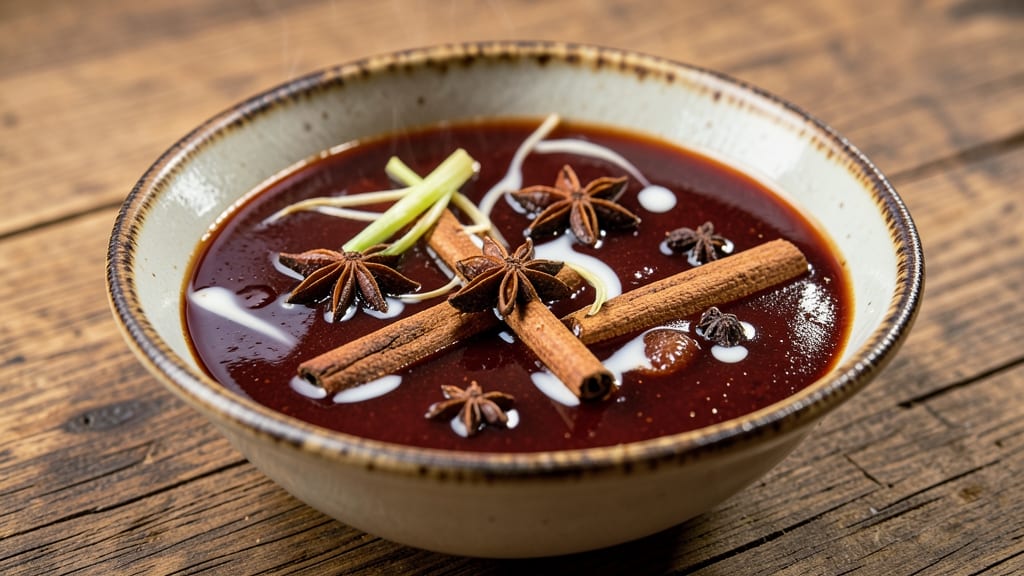
This bak kut teh sauce recipe transforms humble pork ribs into a fragrant, melt-in-your-mouth masterpiece through slow-simmered spices and coconut milk. The secret lies in whole spices—star anise, cinnamon, and cloves—that infuse the sauce with deep, aromatic warmth while fermented bean sauce adds umami depth.
What starts as a simple braise becomes a rich, velvety sauce that clings to every rib, balancing sweet, savory, and slightly funky notes.
The process is all about patience: simmering for hours allows the spices to bloom and the sauce to reduce into a concentrated, fragrant liquid. No shortcuts here—this sauce rewards slow cooking with layers of complexity that store-bought versions can't match.
The coconut milk adds a subtle creaminess that rounds out the bold flavors, while a touch of sugar caramelizes during simmering for natural sweetness.
What you'll end up with is a sauce so rich and aromatic that it transforms simple pork ribs into a restaurant-worthy dish. The texture is velvety yet slightly thickened, perfect for basting or serving as a dipping sauce.
It keeps well in the refrigerator for up to a week, deepening in flavor with each passing day—ideal for meal prep or gifting to fellow food lovers.
This sauce isn't just for ribs—it elevates braised meats, noodle dishes, or even as a marinade for grilled proteins. The key is letting the spices work their magic, so don't rush the process. Here's how to create it step by step.
Ingredients for bak kut teh sauce
Nine aromatic ingredients that transform into velvety, spice-kissed sauce perfection.
| Ingredient | Amount | Notes |
|---|---|---|
| Fermented Bean Sauce 🥫 | ½ cup | Dark soy sauce for depth |
| Star Anise Pods 🌿 | 4 whole | Crushed lightly for aroma |
| Cinnamon Sticks 🌿 | 2 whole | 2-inch pieces preferred |
| Cloves 🌿 | 6 whole | Whole, not ground |
| Dried Lemongrass 🌿 | ½ cup | Finely chopped stems |
| Coconut Milk 🥥 | 13 ½ oz | Full-fat canned preferred |
| White Sugar 🍚 | ¼ cup | Granulated, not powdered |
| Fresh Ginger 🧄 | ½ cup | Finely grated, not sliced |
| Garlic Cloves 🧄 | 6 cloves | Peeled, smashed slightly |
| White Peppercorns 🌶️ | ½ tsp | Crushed lightly |
| Salt 🧂 | 1 ½ tsp | Adjust to taste |
The whole spices are the soul of this sauce—star anise, cinnamon, and cloves need to be fresh and aromatic. Asian markets have the best selection, but the grocery store works too if you spot plump, fragrant pods. Fermented bean sauce? Lee Kum Kee is the go-to brand, but any dark soy sauce will do. Ginger and garlic should smell vibrant—no musty aromas. The coconut milk matters too: full-fat canned (like Thai Kitchen) gives the best creaminess. Skip the light versions—they won't cut through the spices right.
No star anise? 1 tsp anise seeds or 0.5 tsp ground anise works in a pinch, but the flavor won't be identical. Out of cinnamon sticks? 1 tsp ground cinnamon is fine, but the sticks infuse better. Fresh lemongrass hard to find? Dried lemongrass powder at half the amount gets you close. The sugar can be swapped for palm sugar or brown sugar—just dissolve it first. For extra depth, add 1 tbsp of soy sauce if you're feeling fancy. And if your ginger's old, ginger powder at half the amount won't ruin it, just won't be as bright.
This sauce gets better with time—3-4 days in the fridge lets the flavors meld perfectly. Store in an airtight jar with a layer of oil on top to preserve freshness. Freezes beautifully for up to 3 months—just thaw in the fridge overnight. I always double the batch because it disappears fast. The first time I made this, I used it on grilled chicken and noodles—turned out amazing. Trust me, you'll want to make extra.
Why You'll Love This Recipe
- Pantry Magic: I swear by this sauce because it uses spices I already have—no special shopping trips. Toss in fermented bean sauce, a few star anise pods, and dried lemongrass, and suddenly my weeknight meals taste like I slaved over them.
- Umami Bomb: That fermented bean sauce is the MVP—deep, salty, and complex all at once. The star anise and cinnamon add warmth, but it’s the lemongrass that makes it sing, bright and citrusy without overpowering.
- Leftovers That Shine: Make a big batch and use it for days—pork ribs, stir-fries, even noodles. I’ve had it last a week in my fridge, and it only gets better as the flavors meld. Honestly, it’s my lazy genius move for busy nights.
- Budget-Friendly Luxury: A few cents’ worth of spices transform simple ingredients into something restaurant-worthy. No fancy ingredients, just bold flavor that makes me feel like I’m eating out—without the price tag. (Yes, even on a Tuesday night.)
Step-by-step instructions for bak kut teh sauce
Here's how to build this aromatic, slow-simmered sauce layer by layer—no shortcuts, just deep flavor.
Toast the Whole Spices for Maximum Aroma
Heat a dry skillet over medium-low heat and add the 4 whole star anise pods, 2 whole cinnamon sticks, and 6 whole cloves. Toast for 2-3 minutes, stirring constantly, until you smell that warm, earthy aroma—this releases their essential oils. You want them just fragrant, not browned.
Remove the spices immediately when they're perfuming the air and set aside. Over-toasting turns them bitter. These whole spices will infuse the sauce with subtle, complex warmth without overpowering the coconut milk's creamy base.
Bloom the Ginger and Garlic in Coconut Milk
In a large pot, combine the 13.5 oz coconut milk, 0.5 cup finely grated fresh ginger, and 6 smashed garlic cloves. Bring to a gentle simmer over medium heat. The mixture should bubble softly—this ensures the ginger and garlic release their oils without burning.
Simmer uncovered for 5 minutes, stirring occasionally. You'll see the mixture turn cloudy and smell intensely aromatic. This step extracts maximum flavor from the ginger and garlic while preventing them from turning bitter. Don't rush this—it's where the sauce's soul develops.
Add the Fermented Bean Sauce and Sugar
Stir in the 0.5 cup fermented bean sauce and 0.25 cup white sugar. The sauce will darken slightly as it incorporates. Bring the mixture back to a gentle simmer, then reduce heat to low. This is where the magic happens—let it bubble quietly for 10 minutes without stirring.
You're building layers of flavor here: the fermented bean sauce adds umami depth, while the sugar balances the acidity. The sauce should thicken slightly but remain silky. If it starts to stick, add 1-2 tablespoons water to maintain consistency.
Incorporate the Toasted Spices and Simmer Slowly
Return the toasted spices to the pot along with the 0.5 cup finely chopped dried lemongrass, 0.5 tsp crushed white peppercorns, and 1.5 tsp salt. Stir gently and return to a simmer. Cover partially and cook for 20-25 minutes on low heat, stirring occasionally.
The sauce should reduce slightly, becoming thicker and more concentrated. You'll notice the lemongrass releasing its citrusy aroma and the spices melding into a cohesive, aromatic blend. The sauce is ready when it coats the back of a spoon smoothly—no graininess, just velvety texture.
Strain and Adjust for Perfection
Remove from heat and strain through a fine-mesh sieve into a clean bowl, pressing gently on the solids to extract every last drop of flavor. Discard the solids. Taste the sauce and adjust seasoning—add more salt if needed or a touch of sugar to balance acidity.
This strained sauce is now ready to use. It should have a rich, caramel-like color with layers of spice, coconut creaminess, and subtle sweetness. For best results, use it immediately to coat pork ribs or serve over noodles while still warm.
Pro Tips For Making Bak Kut Teh Sauce
- CRUSH THE SPICES: Toss whole star anise, cinnamon sticks, and cloves into a dry pot first—no oil—and toast them over medium heat for 30 seconds until fragrant. I learned this the hard way: skipping this step means your sauce will taste like medicine instead of something you’d slurp up with pork ribs.
- SOAK THE LEMONGRASS: Dried lemongrass is useless straight from the jar—soak it in hot water for 10 minutes to rehydrate before adding to the sauce. Sounds weird, but it works: the flavor extracts properly, and you won’t end up with a bitter, scratchy texture lurking in your sauce.
- CONTROL THE HEAT: Simmer the sauce on low heat once you add the fermented bean sauce—high heat makes it bitter fast. After burning three batches, I finally figured out that a gentle bubble is all you need to meld the flavors without turning your hard work into a dark, acrid mess.
- STRAIN THE GOOD STUFF: Don’t skimp on straining—use a fine-mesh sieve or cheesecloth to remove all the spice pods and lemongrass stalks after simmering. I know, I know, but trust the process: leftover fibers make the sauce gritty, and nobody wants to deal with that while eating.
Pro cooking tips for this dish
Spice Toasting Mastery
Toast your whole spices—star anise, cinnamon sticks, and cloves—just until fragrant (2-3 minutes on medium-low heat). This releases their essential oils without burning them, which would turn bitter.
I use a 10-inch cast iron skillet for even heat distribution. Stir constantly and remove immediately when you smell that warm, earthy aroma. 🌿
Low-and-Slow Simmering
Simmer the sauce on low heat for at least 20-25 minutes after adding all ingredients. This slow reduction concentrates the flavors and creates that signature velvety texture. I recommend using a heavy-bottomed pot to prevent scorching. If the sauce starts to stick, add 1-2 tablespoons water to maintain consistency.
Straining for Smoothness
Strain the sauce through a fine-mesh sieve to remove any solids, pressing gently on the spices with a spoon to extract every last drop of flavor. This step ensures a silky, restaurant-quality texture.
I use a stainless steel sieve because it holds up better to repeated use. The strained sauce should coat the back of a spoon smoothly—no graininess at all. ✨
Flavor Layering Technique
Add the fermented bean sauce and sugar after blooming the ginger and garlic. This order ensures the spices infuse gradually, building layers of flavor. Let the sauce simmer quietly for 10 minutes before adding the toasted spices—this prevents the spices from overpowering the delicate coconut milk base.
Patience here is key to a balanced sauce.
Adjusting Seasoning
Always taste and adjust the seasoning before serving. The sauce should balance sweet, savory, and aromatic notes. If it needs more depth, add a pinch of salt or a splash of soy sauce.
If it's too acidic, a touch of sugar or a pinch of white pepper can help. I like to let the sauce rest for 30 minutes before adjusting—flavors evolve as it cools. 💡
Storage Secrets
Store the sauce in an airtight container in the refrigerator for up to 1 week. For longer storage, freeze it in ice cube trays or small jars—this makes it easy to thaw only what you need.
The sauce actually improves in flavor over time, deepening as the spices meld further. I always double the batch because it disappears faster than I expect! ❄️
Nutrition facts
Frequently asked questions
Can I make this sauce without fermented bean sauce?
Yes, but the flavor will be less authentic. Replace the 0.5 cup fermented bean sauce with 0.3 cup soy sauce plus 1 tablespoon dark soy sauce for depth. The sauce will still work well, though it won't have the same rich umami complexity. Fermented bean sauce is key for that signature bak kut teh taste.
How long can I store the sauce in the fridge?
The sauce stays fresh for up to 1 week in an airtight container. For longer storage, freeze it for 3 months—thaw overnight in the fridge. The flavors actually develop more over time, becoming richer and more aromatic. Store with a thin layer of oil on top to preserve freshness.
What's the best way to use leftover sauce?
This versatile sauce works beautifully on grilled pork, chicken, or even noodles. Use it as a marinade for 30 minutes to 2 hours before cooking, or drizzle over braised meats. It also elevates stir-fries or rice dishes—just simmer it briefly to warm through. Double the batch if you plan to use it this way!
Why does my sauce smell stronger than it tastes?
This happens when spices aren't simmered long enough. The sauce needs 20-25 minutes of low-and-slow cooking to fully meld flavors. If it smells potent but tastes mild, try reducing it further over low heat for another 10 minutes—this concentrates the aromatics. Also ensure you're using fresh spices and coconut milk.
Can I substitute coconut milk with something else?
Not recommended—coconut milk provides the creamy base that balances the spices. For a lighter version, use half coconut milk and half chicken broth, but the texture will be thinner. If you're avoiding dairy, ensure all ingredients are coconut-free (some brands contain traces). The sauce's signature richness comes from the coconut!