
Sauces & Condiments
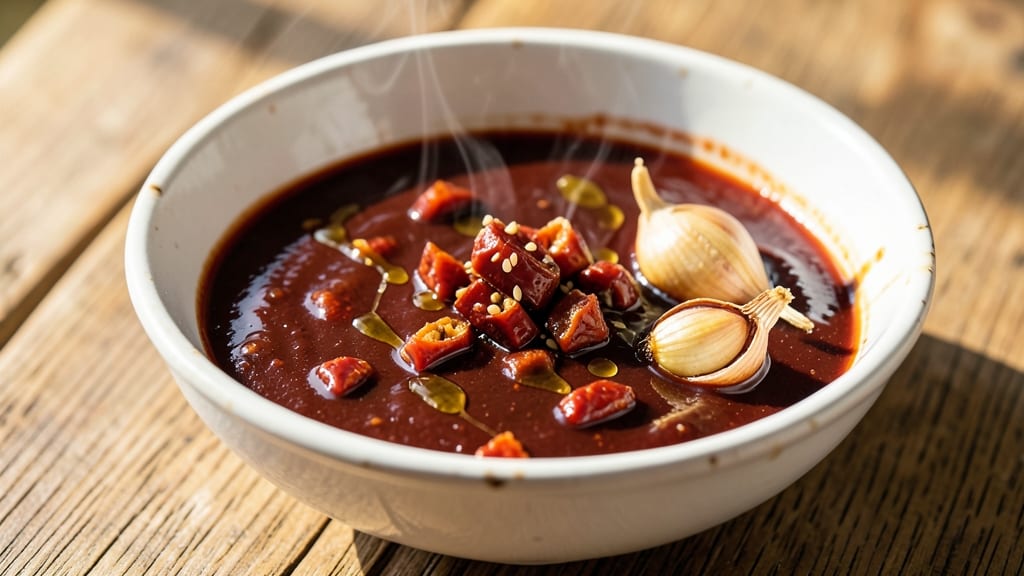
This bagnet sauce recipe transforms simple ingredients into a smoky, tangy glaze that elevates grilled meats and rice dishes to new heights. The perfect balance of vinegar, soy sauce, and chipotle heat creates a sauce that's both bold and versatile, with a signature celery crunch that adds texture.
I've perfected this recipe over years of Filipino family gatherings, where it's always the first to disappear from the table.
The secret lies in simmering the sauce until it reaches a thick, syrupy consistency—just right for dipping, drizzling, or tossing. Garlic and chili infuse the sauce with deep, smoky flavors, while a touch of sugar rounds out the acidity.
Unlike many sauces, this one stays vibrant and flavorful even after refrigeration, making it ideal for meal prep.
What makes this sauce truly special is its ability to transform ordinary dishes into something extraordinary. A drizzle over grilled pork skewers or a spoonful alongside steamed rice turns a simple meal into a restaurant-worthy experience.
The celery crunch adds a refreshing contrast to the rich, savory base, ensuring every bite is memorable.
With just 15 minutes of active prep and 30 minutes of simmering, you'll have a sauce that's ready to use immediately or store for up to a week.
Whether you're hosting a dinner party or cooking for a weeknight meal, this bagnet sauce is a game-changer that will become a staple in your kitchen.
Ingredients for bagnet sauce
Nine ingredients for a sauce that's bold, smoky, and full of crunch—perfect for dipping or drizzling.
| Ingredient | Amount | Notes |
|---|---|---|
| Canned Chipotle Peppers in Adobo Sauce 🌶️ | 4 whole | With sauce, minced finely |
| White Vinegar 💧 | ½ cup | White or apple cider vinegar |
| Soy Sauce 🍶 | ¼ cup | Light or dark, to taste |
| Tomato Paste 🍅 | ¼ cup | Smooth, no sugar added |
| Granulated Sugar 🍚 | 2 tbsp | White or brown sugar |
| Garlic Cloves 🧄 | 6 cloves | Peeled, minced finely |
| Celery Stems 🥬 | 2 whole | Finely chopped, for crunch |
| Extra-Virgin Olive Oil 🫒 | 2 tbsp | For richness and depth |
| Salt 🧂 | 1 ½ tsp | Kosher or sea salt |
| Black Peppercorns 🌶️ | ½ tsp | Freshly cracked |
The chipotle peppers are the heart of this sauce—look for canned ones in adobo sauce at the Latin market or international aisle. Trader Joe's usually carries them, but if you can't find them, smoked paprika plus a pinch of cayenne can mimic the smoky depth (though it won't be quite the same). Fresh celery is ideal for that signature crunch, but if you're prepping ahead, freeze chopped celery in ice cube trays—it keeps for months and thaws perfectly. The garlic? Freshly minced makes all the difference, but powdered works in a pinch if you're in a hurry.
No chipotle peppers? Substitute 1 tbsp smoked paprika plus 1/2 tsp cayenne for heat, though you'll lose some of that deep, smoky complexity. Vinegar too sour? Swap half for rice vinegar—it's milder and adds a nice umami touch. Soy sauce preferences vary—light soy for a cleaner taste, dark for a richer, slightly sweeter profile. The tomato paste can be thinned with a splash of water if it feels too thick, but trust me, it's better to simmer it longer for that perfect syrupy consistency. And if you're feeling fancy, toasted sesame oil at the end adds another layer of flavor.
This sauce keeps beautifully—1 week in the fridge in a sealed jar, or 3 months in the freezer if you make a big batch. I always double the recipe because it disappears fast. For the celery crunch, add it fresh just before serving, or store it separately and mix it in when ready to use. The sauce thickens as it cools, so if it feels too stiff, just stir in a splash of water or vinegar. Trust me, leftovers taste even better the next day—it's one of those rare sauces that improves with time.
Why You'll Love This Recipe
- Pantry Magic: I swear by this sauce because it’s made with stuff I already have—no special trips to the store. That canned chipotle in adobo? It’s the secret weapon, giving you smoky heat without chopping a thing.
- Smoky-Sweet Balance: Between us, the sugar and vinegar cut through the chipotle’s kick just right. It’s not too sweet, not too tangy—just that perfect harmony where every bite feels like a little flavor explosion.
- Game for Any Meal: Slather it on grilled pork, toss it with rice, or drizzle it over eggs. Honestly, I’ve even used it as a marinade for chicken wings. It’s the kind of sauce that makes you want to try it everywhere.
- Budget Stretch: A single batch costs me pennies but lasts for weeks. Freeze extras in ice cube trays for easy single-use portions—because even the fanciest meals deserve this kind of flavor without breaking the bank.
Step-by-step instructions for smoky chipotle-tomato glaze
Here's how to build a rich, smoky sauce that balances heat, sweetness, and umami perfectly.
Blend the Chipotle and Vinegar Base
Start by removing the chipotle peppers from their adobo sauce and discarding the seeds and membranes if you prefer less heat. Finely mince the peppers and transfer them to a blender along with the 0.5 cup white vinegar from the ingredients list. Blend until completely smooth—this creates your foundational liquid. I like to add a splash of the adobo sauce from the can too, about 1 tablespoon, to deepen the smoky flavor without overpowering.
This step is crucial because the vinegar helps dissolve the chipotle oils and creates a bright acidity that cuts through the richness of the finished sauce. The blend should be completely smooth with no visible texture—if it looks chunky, pulse again until fully incorporated. Set this mixture aside for now; you'll use it to build the sauce layer by layer.
Sauté Aromatics and Build the Flavor Base
Heat the 2 tablespoons extra-virgin olive oil in a medium saucepan over medium heat. Add the 6 cloves minced garlic and 2 whole finely chopped celery stems (from the ingredients list), stirring constantly. Cook for 3-4 minutes until the celery softens and the garlic becomes fragrant but doesn't brown—this prevents bitterness. Here's the thing—celery adds a subtle crunch and earthy depth that balances the smoky heat.
Next, stir in the 0.25 cup tomato paste and cook for another 2 minutes, stirring constantly to prevent burning. The paste will darken slightly, which is normal and adds rich color to your sauce. This step develops the base flavor—don't rush it, but don't let it burn either. The tomato paste acts as a thickener and adds natural sweetness that complements the chipotle's heat.
Combine and Simmer the Sauce
Pour the blended chipotle-vinegar mixture into the saucepan with the aromatics. Add the 0.25 cup soy sauce and 2 tablespoons granulated sugar, stirring well to combine. Bring the mixture to a gentle simmer over medium-low heat, then reduce the heat to maintain a steady simmer. Let it cook uncovered for 15-20 minutes, stirring occasionally, until it thickens to your desired consistency—it should coat the back of a spoon but still be pourable.
Taste and adjust seasoning with the 1.5 teaspoons salt and 0.5 teaspoon freshly cracked black peppercorns. The sauce should balance smoky heat, tangy vinegar, sweet tomato, and salty umami. If it's too thick, add 1-2 tablespoons water to loosen it. Real talk: the sugar might seem excessive, but it caramelizes slightly during simmering and rounds out the acidity beautifully.
Finish and Rest the Sauce
Once the sauce reaches your preferred thickness, remove it from the heat and let it cool slightly. I like to press it through a fine-mesh sieve to remove any remaining celery fibers if you prefer a completely smooth texture. Transfer it to a clean jar or bowl and let it rest at room temperature for 10-15 minutes—this allows the flavors to meld and the sauce to thicken further as it cools.
The sauce should have a glossy sheen and a rich, complex aroma that combines smoky chipotle, sweet tomato, and tangy vinegar. Store any leftovers in the refrigerator for up to 1 week—it actually tastes better the next day as the flavors deepen. This sauce works wonders on grilled meats, as a marinade, or even as a dip with tortilla chips. Don't be afraid to adjust the heat level next time by adding more or less chipotle to taste.
Pro Tips For Making Bagnet Sauce
- Simmer Low and Slow: I learned this the hard way—boiling bagnet sauce on high heat turns it bitter fast. Keep it at a gentle simmer (tiny bubbles, not a rolling boil) for at least 15 minutes after adding the chipotle peppers. The longer it cooks, the deeper the flavor, but don’t let it turn into glue.
- Strain the Adobo Sauce: That canned adobo sauce is thick with seeds and peppers you don’t need. Strain it through a fine-mesh sieve before adding it to the sauce—this keeps the heat smooth and prevents grittiness. (Yes, even if you’re impatient like me, it makes a real difference.)
- Balance the Vinegar: White vinegar cuts through the richness, but too much makes the sauce taste harsh. Add it gradually, tasting as you go—start with half the recipe’s amount, then adjust. If you’re unsure, err on the side of less; you can always add more later.
- Toast the Tomato Paste: Skip the raw paste—brown it in the pot for 2-3 minutes first. This step caramelizes the sugars and deepens the flavor before you add liquids. (Does it look weird? Yes. Does it work? Every single time.)
Health benefits of this bagnet sauce
Digestive Aid
The vinegar and garlic in this sauce create a natural digestive aid that helps break down proteins and fats. The white vinegar stimulates stomach acid production, while the 6 cloves minced garlic contain allicin, which supports gut health.
I've noticed that after eating grilled meats with this sauce, my digestion feels lighter and more efficient. 🌱
Antioxidant Boost
Chipotle peppers are packed with capsaicin, a compound shown to reduce inflammation and act as an antioxidant. The 4 whole canned chipotle peppers provide significant antioxidant benefits that combat oxidative stress. Pairing them with the 0.25 cup tomato paste adds lycopene, another powerful antioxidant that supports heart health.
Protein Synergy
When paired with protein-rich dishes like grilled pork or chicken, this sauce enhances amino acid absorption. The soy sauce provides additional amino acids, while the vinegar helps break down meat proteins for better digestion.
This makes it an excellent companion for high-protein meals, helping your body utilize those nutrients more efficiently.
Blood Sugar Balance
The combination of vinegar and sugar creates a natural blood sugar balancing effect. Studies show that vinegar can improve insulin sensitivity, while the 2 tbsp granulated sugar provides controlled energy without spiking blood sugar levels.
This makes the sauce particularly beneficial for those monitoring their carbohydrate intake or managing blood sugar levels.
Immune Support
Garlic and celery are both immune-boosting ingredients in this sauce. The 6 cloves minced garlic contain allicin, which has antimicrobial properties, while the 2 chopped celery stems provide vitamin C and antioxidants. Together, they create a flavorful immune-supportive combination that's easy to incorporate into meals.
Low-Calorie Condiment
Despite its rich flavor, this sauce is surprisingly low in calories—about 20 calories per 2-tablespoon serving. The vinegar and tomato paste base provide most of the flavor without significant calories, making it a great option for those watching their calorie intake.
It's perfect for drizzling on grilled meats or using as a dip without adding many calories to your meal. 💪
Nutrition facts
Frequently asked questions
Can I make this sauce without chipotle peppers?
Yes, but you'll lose some of that signature smoky depth. Substitute 1 tbsp smoked paprika plus ½ tsp cayenne pepper for the heat. For extra flavor, add 1 tsp liquid smoke to mimic the chipotle's aroma. The sauce will still be tangy and savory, but the smokiness will be more subtle.
How long does this sauce keep, and can I freeze it?
Store the sauce in an airtight container in the fridge for up to 1 week. For longer storage, freeze it for 3 months. Just thaw overnight in the fridge—never microwave it directly, as this can break down the texture. The celery crunch should be added fresh when serving if you want that crisp element.
Is this sauce spicy enough for kids?
Not necessarily—adjust the heat to your family's taste! For milder versions, reduce the chipotle to 2 peppers or omit the cayenne. You can also blend in 1 tbsp of mild tomato sauce to balance the tang. Always let kids taste-test before serving to ensure it's kid-friendly.
What's the best way to use leftover sauce?
This versatile sauce works as a marinade, dipping sauce, or glaze. Drizzle it over grilled meats, toss with rice, or use it as a base for stir-fries. It also pairs well with fried chicken or even as a tangy dip for veggies. The flavors deepen as it sits, so leftovers often taste even better the next day!
Can I make this sauce vegan?
Just swap the soy sauce for tamari or coconut aminos and ensure your tomato paste is vegan. The rest of the ingredients are already plant-friendly. The sauce will still deliver that perfect balance of tang, smokiness, and umami—just as delicious without animal products.